Ignateva Cave: Cave Art and Archaeological Evidence in Russia
Site at a Glance
- Popularity
- High
- Country
- Russia
- Primary era
- Stone Age
- Eras represented
- Stone Age
- Civilizations
- Unclassified
- Site type
- Civic
- Remains
- Rock Art
On this page8 sections
History
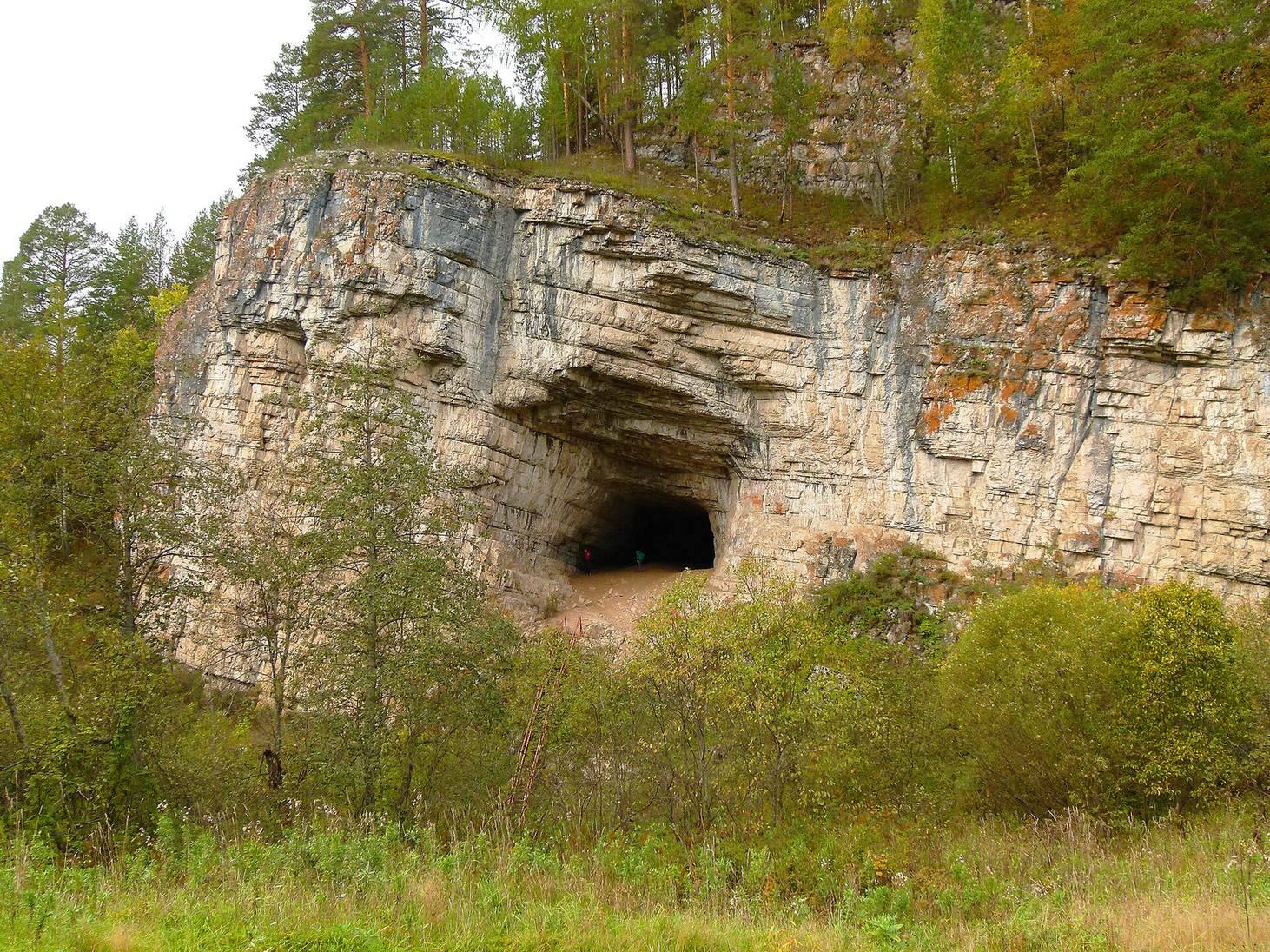
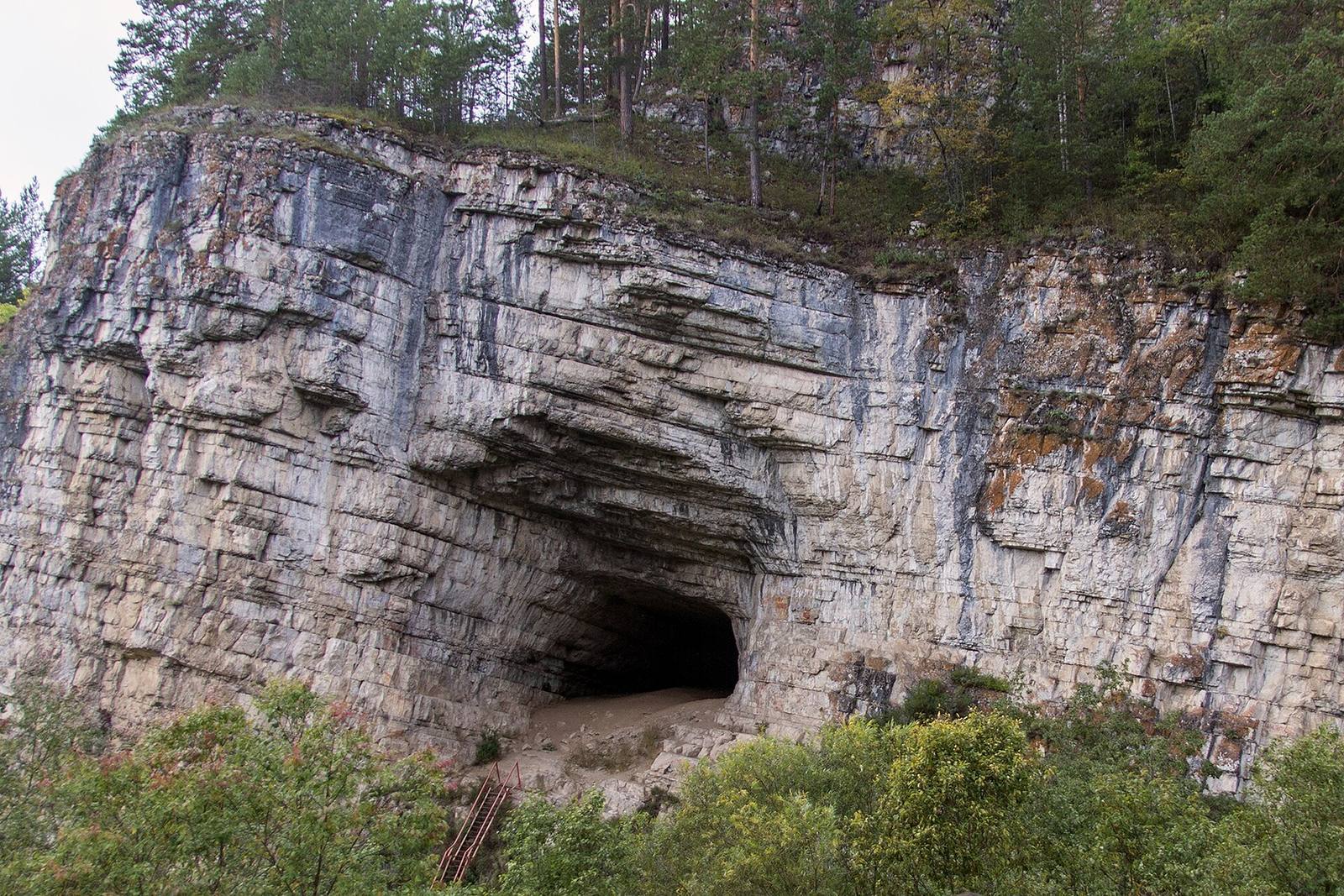
Ignateva Cave is a large limestone cave near Serpievka in the southern Ural Mountains of Russia. Its paintings have been assigned widely differing ages, and their date remains disputed. Along with the art at Kapova Cave, its paintings are regarded as world-significance cave art.
Early accounts and traditions
The cave is also known as Ignatievka and Yamazy-Tash. Its Russian name, Ignatievskaya, is traditionally linked to Ignat, a hermit said to have lived there in the nineteenth century, preached religion, and been buried in one of its halls. A more speculative legend identifies him with Alexander I, emperor of Russia from 1801 to 1825, who was said to have renounced the throne and disappeared.
The earliest published description appeared in 1762 in a book by P. I. Rychkov, an eighteenth-century Russian geographer and writer. Rychkov had written the book in 1755.
Cave art and early use
An Iron Age settlement layer indicates activity during the Iron Age, a later archaeological period associated with the widespread use of iron. Some local interpretations suggest that the cave served for religious ceremonies and rites marking transitions in life, rather than primarily as a dwelling.
Radiocarbon dating, which estimates ages from organic material, has yielded estimates of about 6,000 to 8,000 years for the paintings. In 2017, South Ural rock-art specialist V. S. Zhitenev argued that a substantial share of the red images belonged to the Late Paleolithic, the later part of the Old Stone Age.
A 2021 study used uranium-thorium dating, a method for dating mineral deposits, on flowstone, layers of minerals deposited by water over cave surfaces. Deposits formed before and after the paintings placed artistic activity within a broad interval of about 78,000 to 10,000 years ago, when permafrost conditions prevented flowstone from forming. Radiocarbon dates from ochre-bearing cultural layers associated with the images gave a narrower range of 18,300 to 15,800 years ago after calibration, consistent with the Upper Paleolithic, the later part of the Old Stone Age. The paintings’ age remains contested. If a Paleolithic date is accepted, the cave would be the northernmost known site of Paleolithic cave art.
Protection
Since 1983, the cave has been a branch of the Ilmensky Nature Reserve, a protected natural area in the southern Urals. It is also protected as a federal-level Russian cultural heritage site. In 2010, President Vladimir Putin accepted for consideration a proposal to grant it state-reserve status.
Remains
Passages and halls
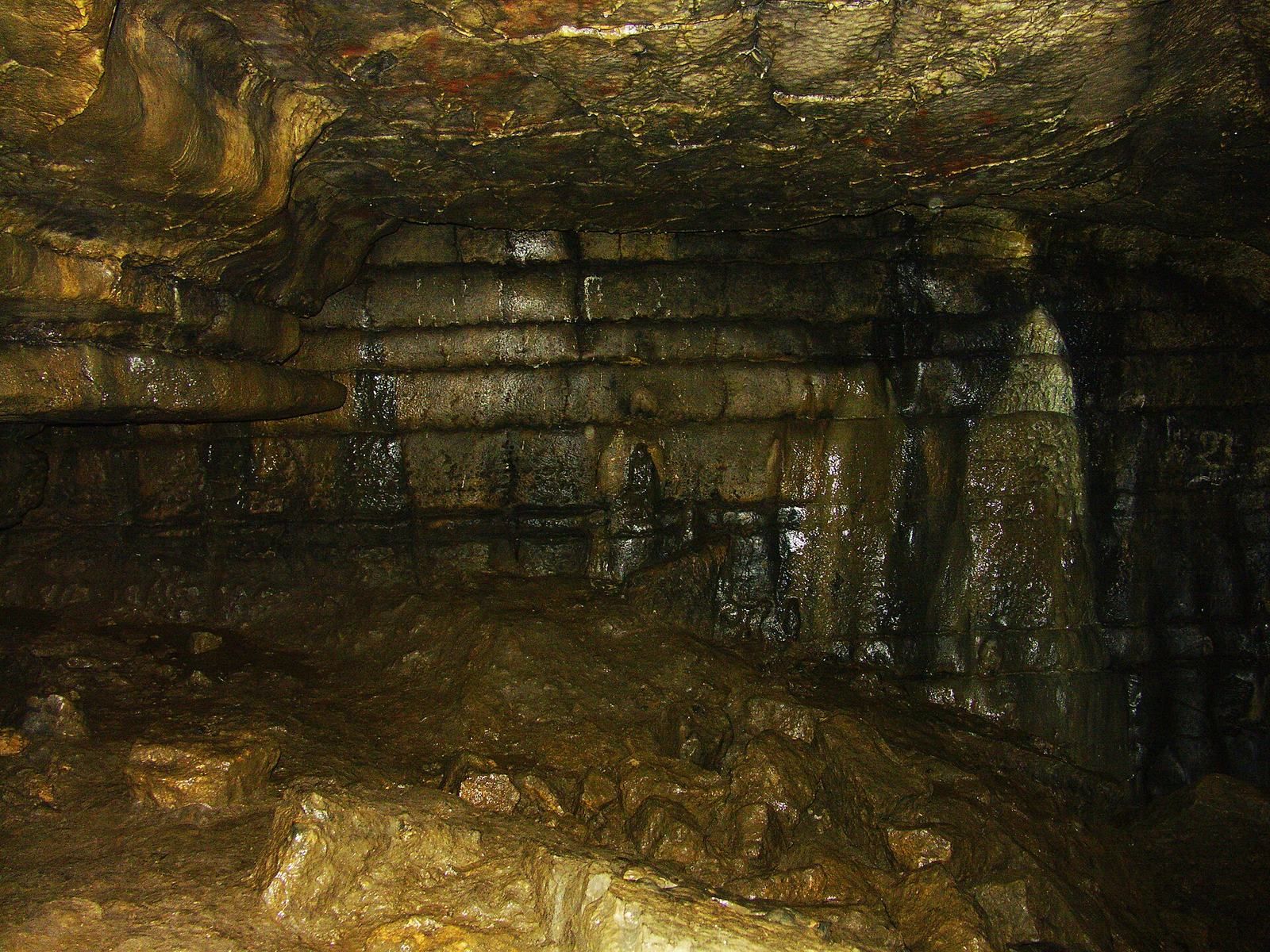
The cave lies on the bank of the Sim River, a tributary of the Belaya, with its entrance about 18 metres above the river. It forms part of the Serpievka cave complex, which also includes Kolokolnaya Cave; both are known for ancient paintings. Inside, the ceiling descends to around one metre before rising above two metres. A passage only about half a metre high leads to an inner section. Beneath a sloping rock is the entrance to a hall associated with the hermit Ignat.
Painted imagery
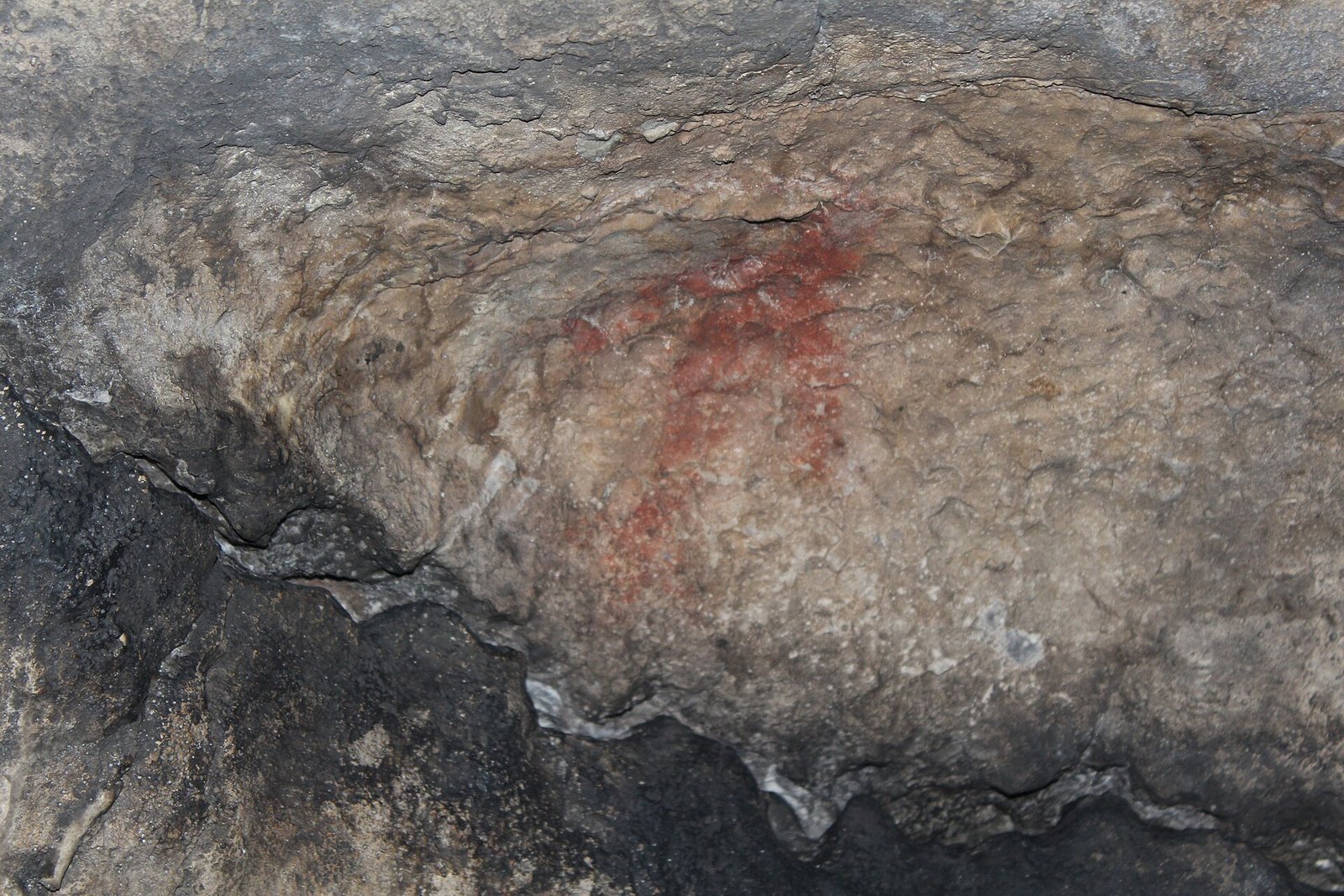
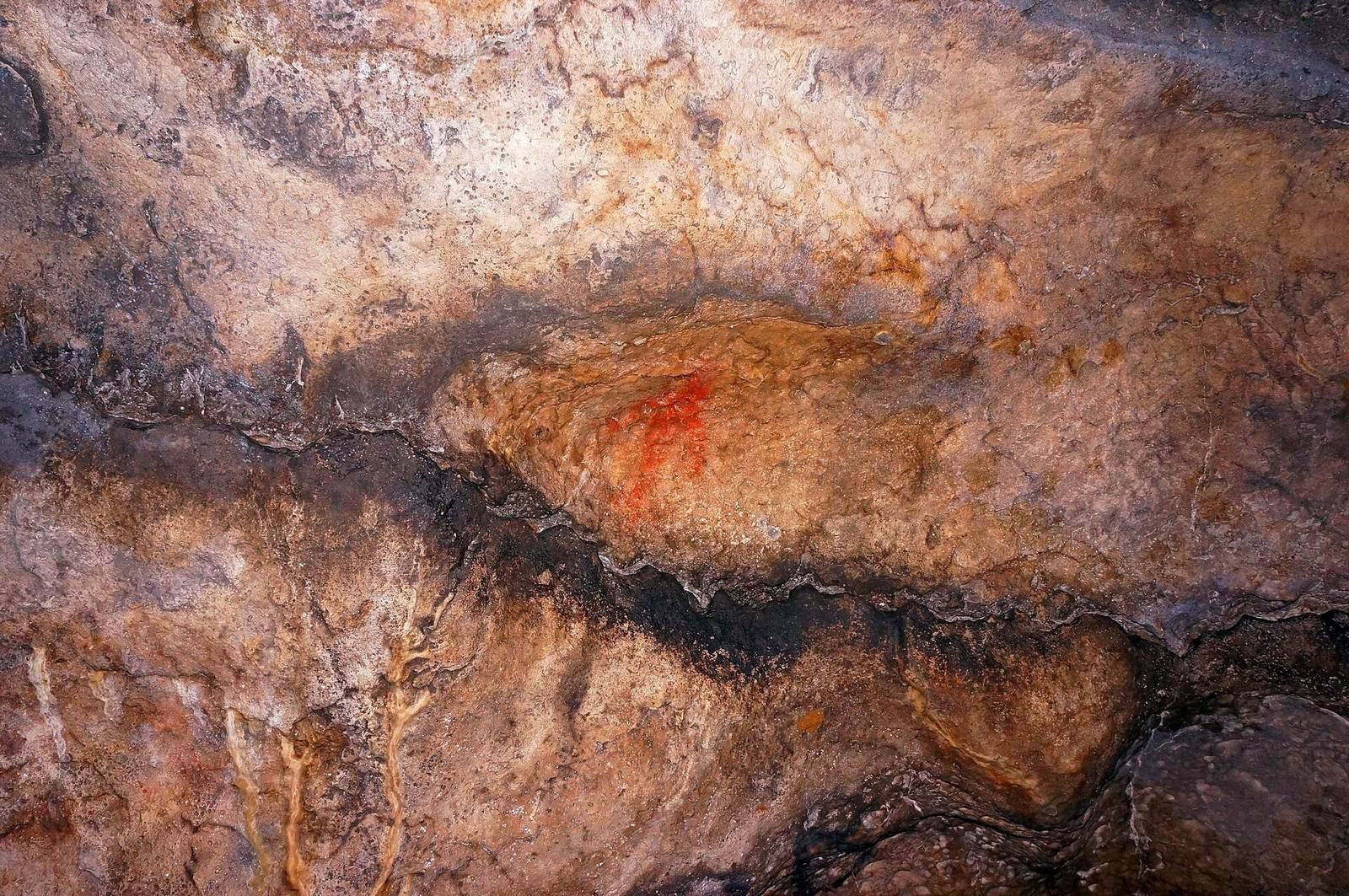
About 160 images have been described since 1980. They include horses, mammoths, rhinoceroses, animal tracks, a snake, human figures, and symbols. One scene shows an animal with an arrow flying toward it. A red image of a woman has 28 dots between her legs, interpreted as a possible reference to the menstrual cycle. Other images include an ochre-colored human figure and one resembling the Virgin Mary. In one hall, a stalagmite, a mineral formation that grows upward from a cave floor, is venerated as an image of the Virgin Mary, the mother of Jesus in Christian belief, with a child. This association drew pilgrims from Russia and abroad.
Archaeological finds
Finds from the cave include microliths, small stone tools or tool components, animal remains, and objects from the Iron Age.