Church of Santa Maria Assunta: Sermoneta’s Collegiate Church in Italy
Site at a Glance
- Popularity
- Very Low
- Country
- Italy
- Primary era
- Medieval
- Eras represented
- Medieval, Early Modern
- Civilizations
- Papal States
- Site type
- Religious
- Remains
- Church
On this page14 sections
History
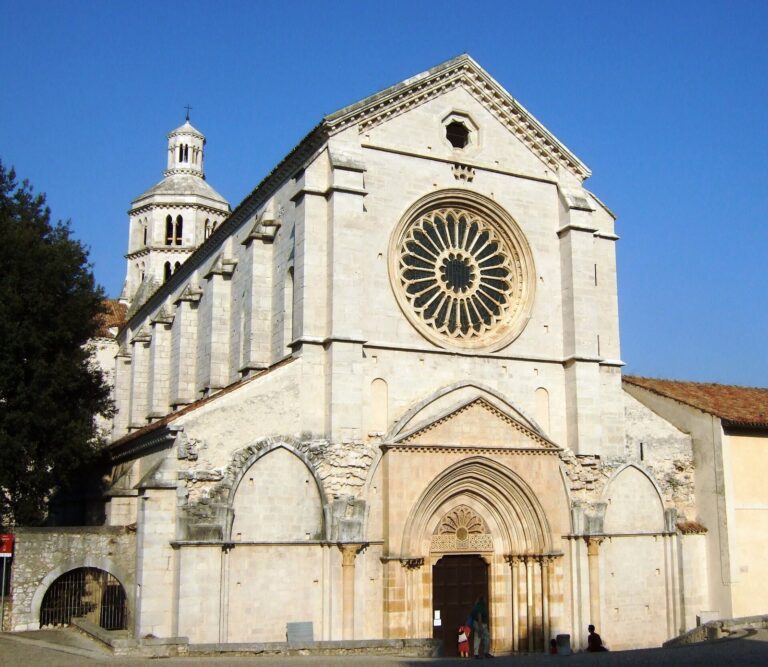
The Church of Santa Maria Assunta is the principal Catholic place of worship in Sermoneta, Italy. Dedicated to the Assumption of the Virgin Mary, the Christian belief that Mary was taken bodily into heaven, it may stand on a site where a Christian church existed as early as the fifth century, above a pagan temple of unknown dedication. The church appears in records from 1149 to 1160.
Medieval origins and rebuilding
The earliest recorded church was Romanesque, a medieval architectural style associated with rounded arches and substantial masonry. In the thirteenth century, an incursion led by Lando di Ceccano, lord of Ceccano and Sezze, caused serious damage. The church was subsequently transformed in a Cistercian Gothic style, a form of Gothic architecture associated with the Cistercian monastic tradition and influenced here by Fossanova Abbey.
Later changes and church status
Family chapels and Baroque decoration later altered the medieval building. Twentieth-century restoration work sought to reveal its earlier construction phases. Santa Maria Assunta is a collegiate church, served by a chapter of clergy, and belongs to the Diocese of Latina-Terracina-Sezze-Priverno, a territorial jurisdiction of the Catholic Church overseen by a bishop. Although often called a cathedral, it has never been a bishop’s seat.
Remains
Plan and medieval fabric
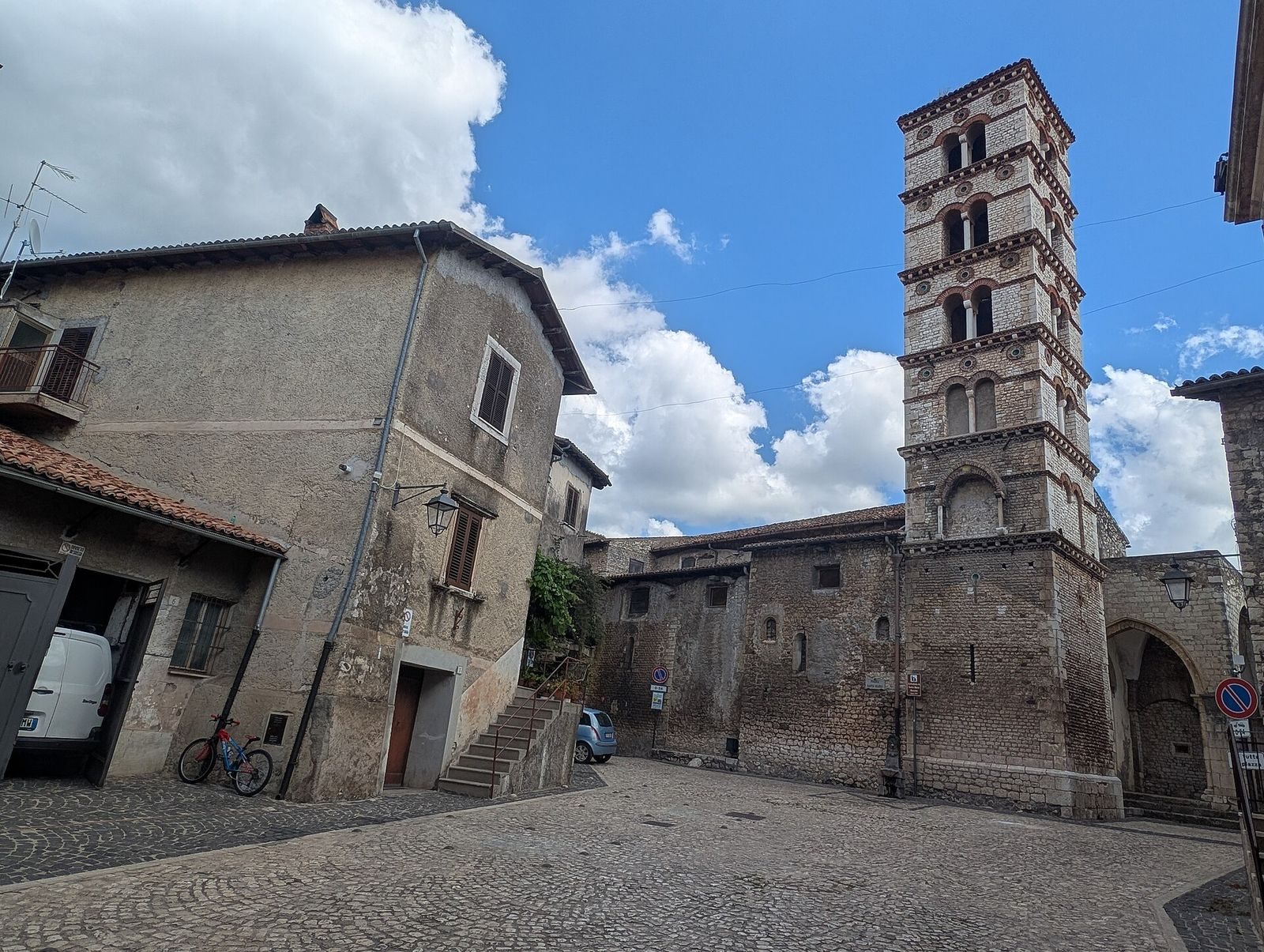
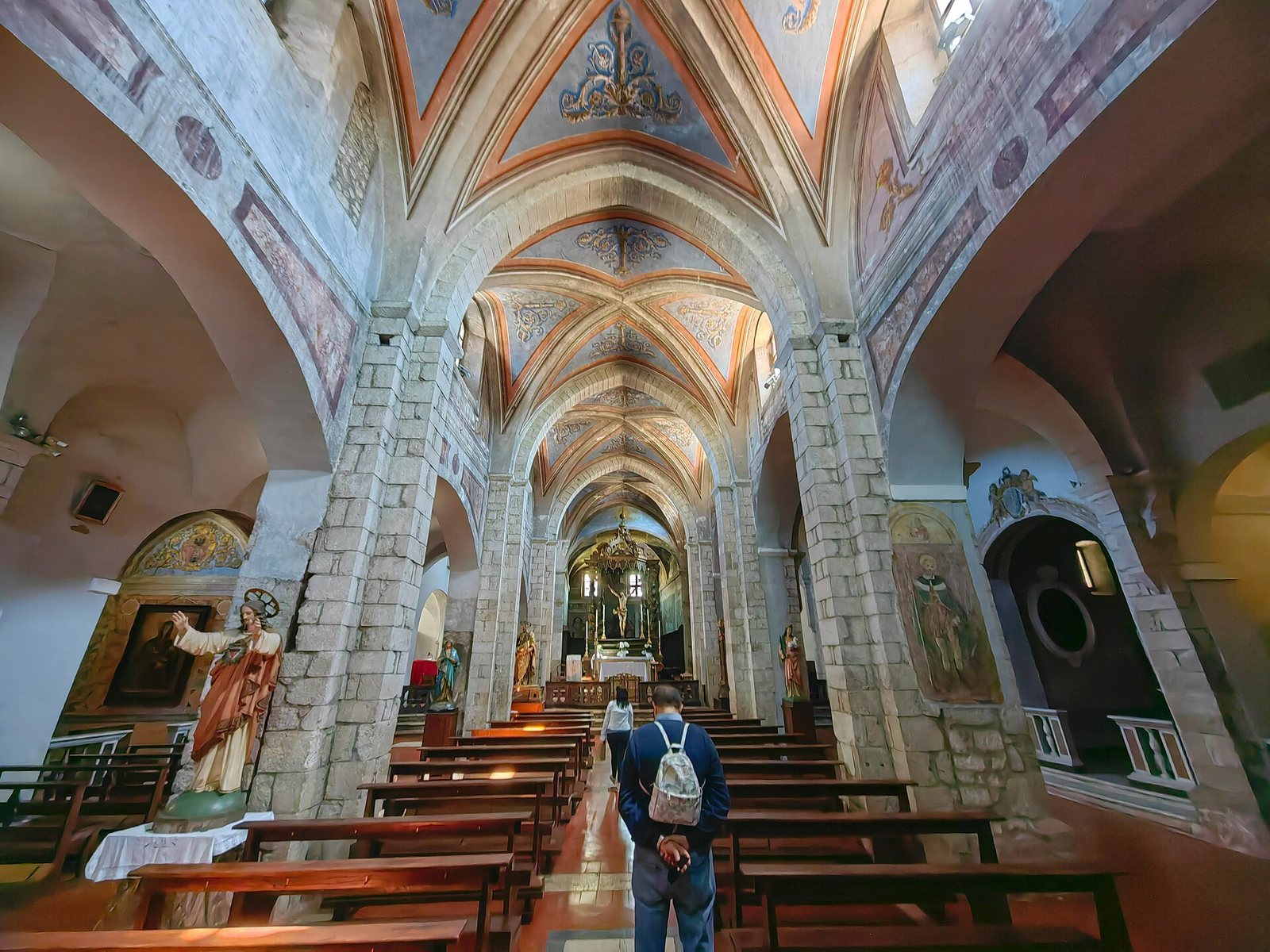
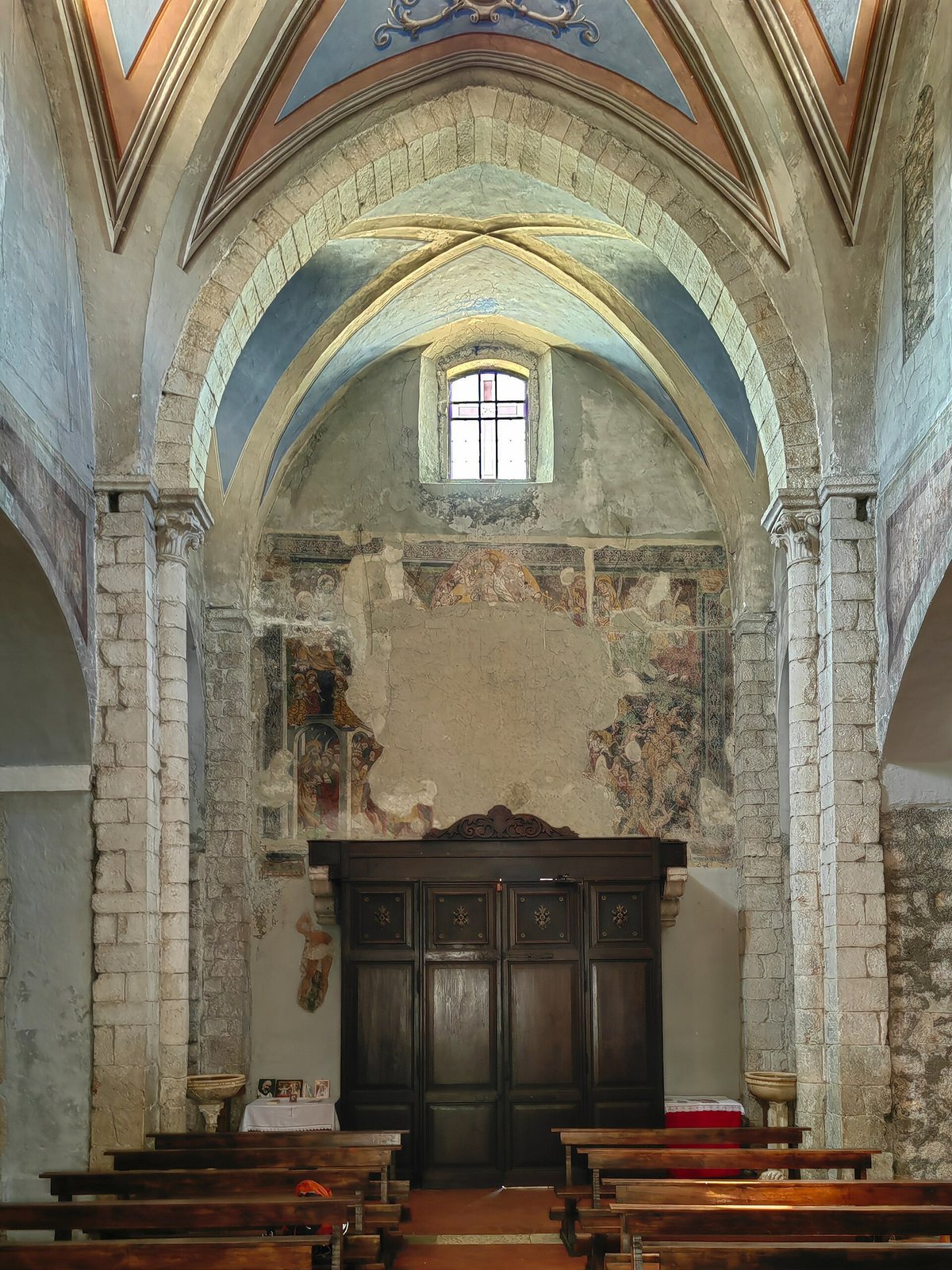
The church’s interior is divided into three aisles, with marble columns supporting the nave. A Gothic portico with two arches and an intersecting vaulted ceiling stands before the entrance. The square bell tower, built from limestone blocks and rising 24 metres, has rounded arches and is one of the few surviving features of the original Romanesque phase.
Chapels and wall paintings
De Marchis Chapel
The De Marchis family refurbished this chapel in the 1590s. Its wall frescoes include contemporary figures and donors, among them Carlo Borromeo, a cardinal and archbishop of Milan who was later honored as a saint. The chapel also contains the Madonna of the Angels, an altarpiece dated to about 1452 and attributed to Benozzo Gozzoli. Its detailed depiction of Sermoneta offers a view of the town in the fifteenth century.
Other chapels and altarpiece
Other chapels are dedicated to De Paolis, Saint Mary Magdalene, Our Lady of Victory, the Rosary, the Redeemer and the Passion, and Saints Joseph, Bartholomew and Peter. These interior chapels were added after the church’s original construction, and they also contain frescoes. The church also holds a sixteenth-century altarpiece by a Neapolitan artist depicting the Holy Family with Saint Anne and John.
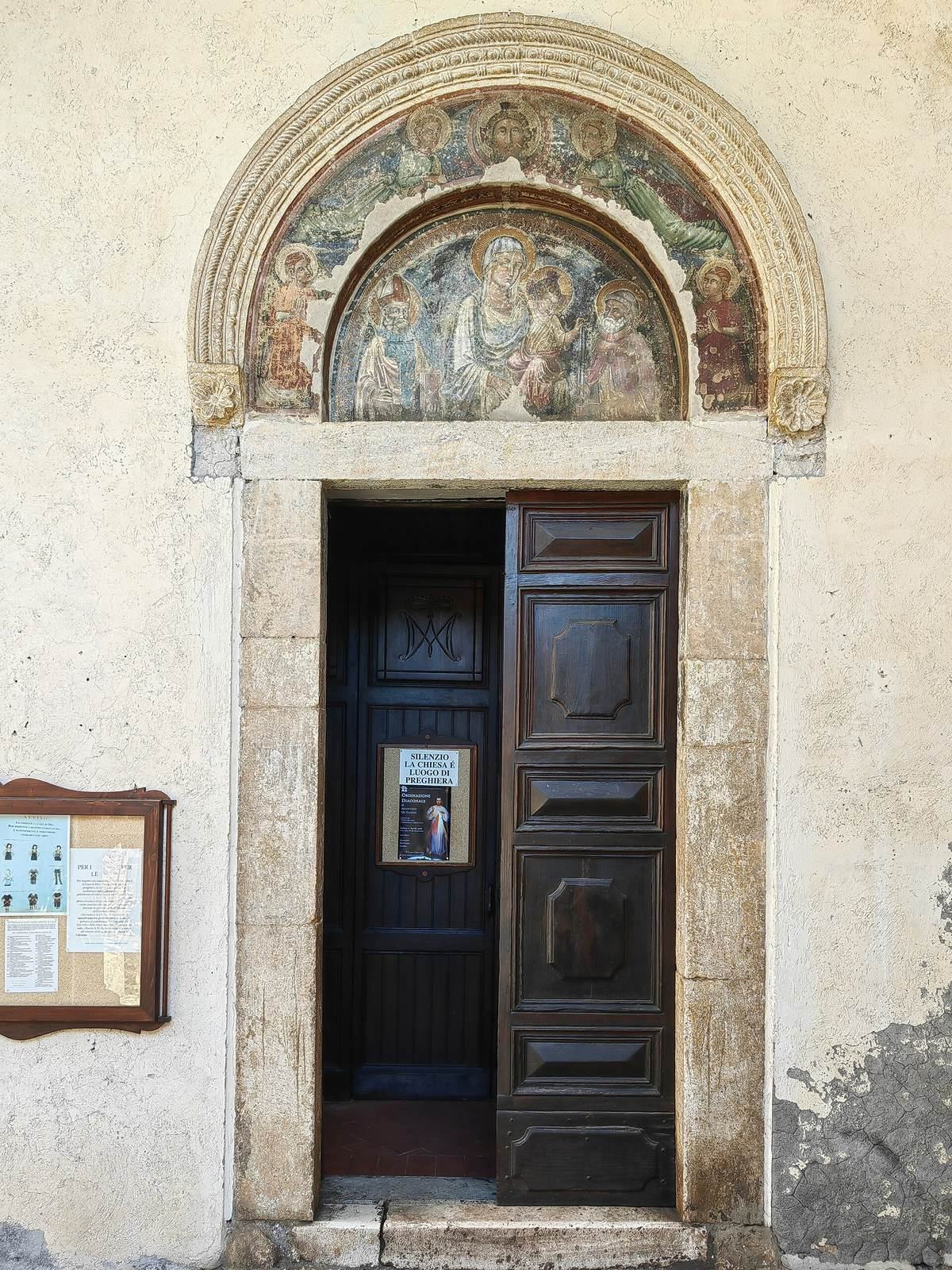
Portico lunette
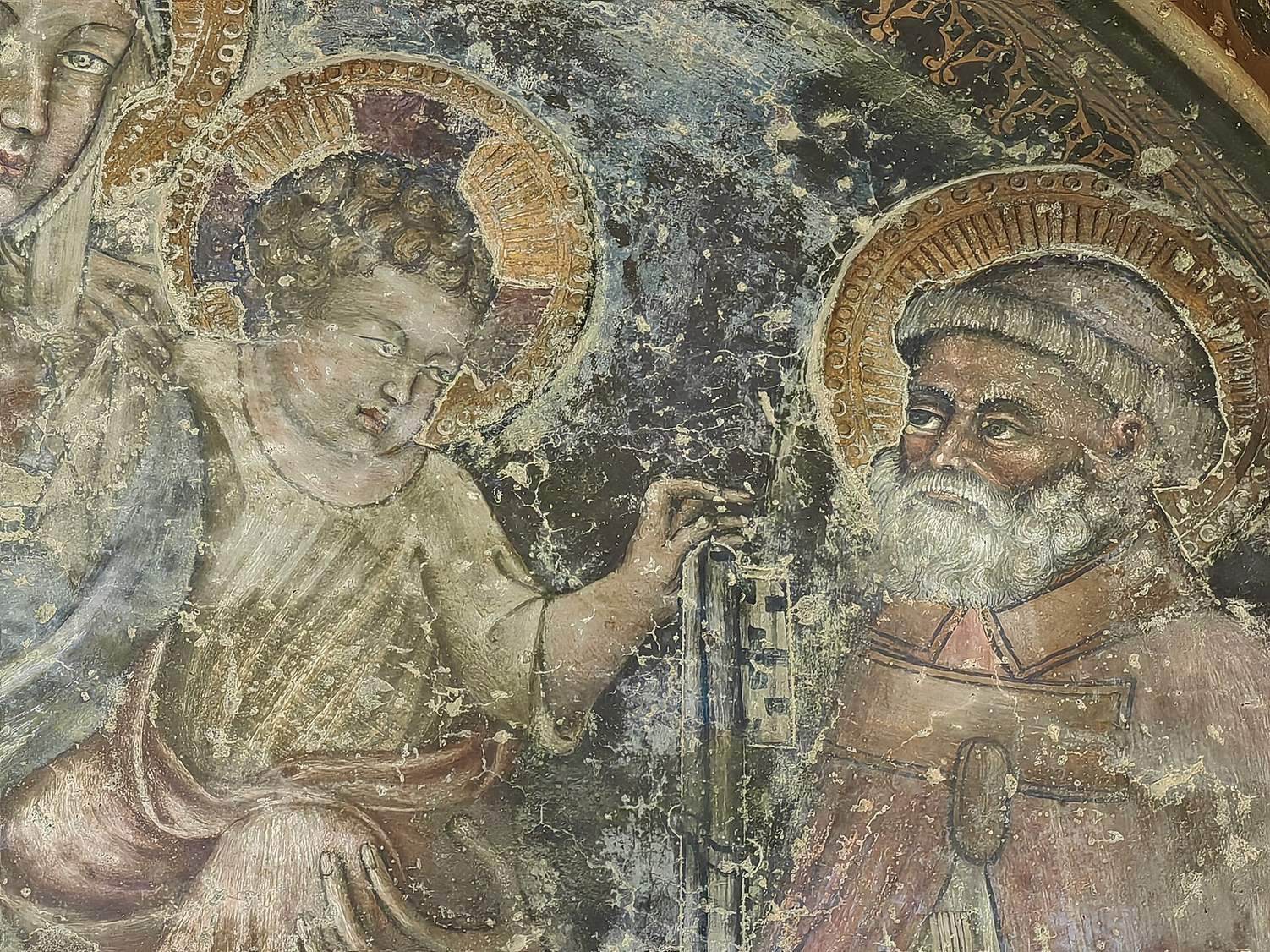
A fifteenth-century fresco by Pietro Colaberti fills the portico lunette. It depicts the Virgin and Child with Saint Peter and a second saint identified as Epaphroditus, traditionally regarded as Terracina’s first bishop, as well as Christ with four angels.
Last Judgment fresco
A fresco attributed to Desiderio da Subiaco was discovered on the inner entrance wall in 1954. The fifteenth-century Last Judgment shows Christ as judge among angels and saints, with the damned being swallowed by a giant monstrous figure.
Altar and furnishings
Main altar and choir
A crucifix rises above the main altar beneath a carved wooden canopy made in 1740 by local artist Giuseppe Baccari. The choir in the apse contains a fresco cycle of the Stories of the Virgin, commissioned by Flaminio Americi and attributed to Bernardino Cesari.
Stone furnishings and Roman altar
Two limestone holy-water basins made in 1549 by a craftsman named Giovanni were commissioned by the archpriest Alessandro Cianca. An archpriest is a senior priest with responsibilities for a church or district. The basins rest on crouching lion supports. A Roman votive altar of marble, probably dedicated to Cybele, an ancient mother goddess worshipped across the Roman world, was later adapted as a priest’s seat.
Diocesan Museum of Art
The adjacent Diocesan Museum of Art holds altarpieces associated with the church. These include Girolamo Siciolante’s Coronation of the Virgin (1576), Francesco da Castello’s Saint Michael the Archangel (1595), a seventeenth-century Madonna and Child with Saints Stephen and Lawrence, and Matteo Rosselli’s Annunciation (1606). The collection also includes Giovanni Domenico Fiorentini’s Madonna of the Rosary with Saints Francis, Jerome, Dominic, and Catherine of Siena, and Odoardo Vicinelli’s Madonna and Child with Saints Ignatius, Francesco Borgia, Stanislao Kostka, Aloysius Gonzaga, Francis Xavier, and Blessed Claudio Acquaviva.