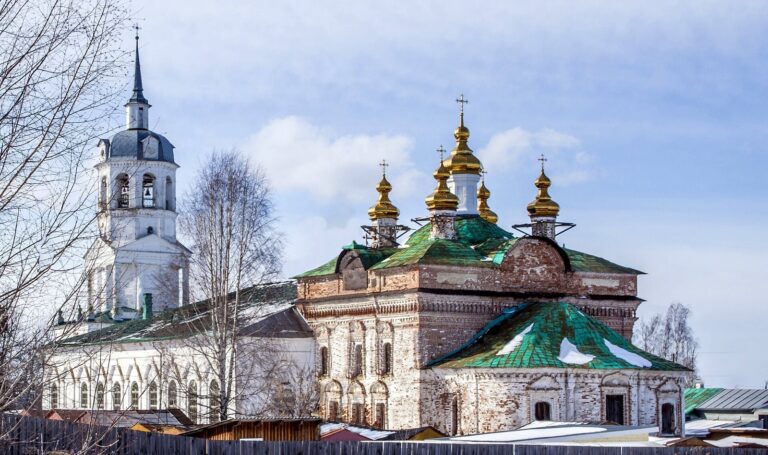
Nikulchino Hillfort: Fortified Site of the Medieval Rus Town of Nikulitsyn
Site at a Glance
- Popularity
- Medium
- Country
- Russia
- Primary era
- Iron Age
- Eras represented
- Iron Age, Classical, Medieval
- Civilizations
- Novgorod Republic
- Site type
- Military
- Remains
- Fortified Town
On this page12 sections
History
Nikulchino hillfort, in Slobodskoy District, Kirov Region, Russia, occupies the site of the medieval Rus town of Nikulitsyn. Its earliest fortifications date to the fourth–third centuries BC, during the Ananyino period, an archaeological classification based on material remains. The site later became a regional center and a defended town in the Vyatka region.
Early defenses and Novgorodian conquest
Later fortifications were strengthened in phases associated with the Khudyakov and Yemanaev archaeological cultures. Khudyakov-classified finds date from the first through fifth centuries AD. These culture labels classify material remains and do not, by themselves, establish an unchanged population over time. The Tale of the Vyatka Land describes an indigenous community living at the settlement and resisting Novgorodians. Archaeologist L. D. Makarov associated that community with the Kochergino archaeological culture.
Nikulitsyn’s first recorded mention is traditionally dated to 1181, the year local tradition also assigns to its capture. In the Tale of the Vyatka Land, a Novgorodian war band reaches a fortified settlement on the high right bank of the Vyatka River, where residents call it Bolvansky Gorodok. The newcomers vow to Saints Boris and Gleb that they will not eat or drink before taking the place. Boris and Gleb were princely brothers of early Rus, later revered as Christian saints and invoked as military patrons in this tradition. The capture is traditionally placed in 1181. Some defenders die, while others escape into the forests, and the victors establish Nikulitsyn on the site.
Growth as a regional center
Nikulitsyn expanded in the second half of the thirteenth and during the fourteenth century as people fled lands devastated by the Mongol-Tatar invasions. In the first half of the fourteenth century, above-ground log houses began to take the place of damp, cold dugouts, changing the settlement’s layout. The Novgorodians’ first act after establishing the town was to build a church.
The town served as a center for a surrounding rural district. About ten settlements have been identified within 20 kilometers; the oldest date to the twelfth and thirteenth centuries, and some lay within the territory of the later city of Khlynov. Fortified settlements at Podchurshinskoye, Krivoborskoye, Chizhevskoye, and Vyatskoye guarded the presumed district boundaries. Nikulitsyn’s residents farmed, raised livestock, fished, hunted, and practised crafts. The range of weapons found at the site points to the town’s particular role in regional defense. Christian crosses and icons found alongside pagan amulets have been interpreted as evidence that pagan magical practices persisted.
The name Nikulitsyn may derive from a local vernacular form of the name of Nicholas the Wonderworker, known as Saint Nicholas and long venerated in the Vyatka region. A sixteenth-century charter and a seventeenth-century historical work preserve an earlier form of the town’s name.
Decline and later use
After Vyatka became part of the Moscow state in 1489, Nikulitsyn ceased to function as a town. Settlement continued in its outlying quarter, which developed into the village of Nikulchino. A settlement below the riverbank, outside the fortifications, continued into the mid-sixteenth century. The hilltop church remained, and the hillfort gradually became an Orthodox cemetery.
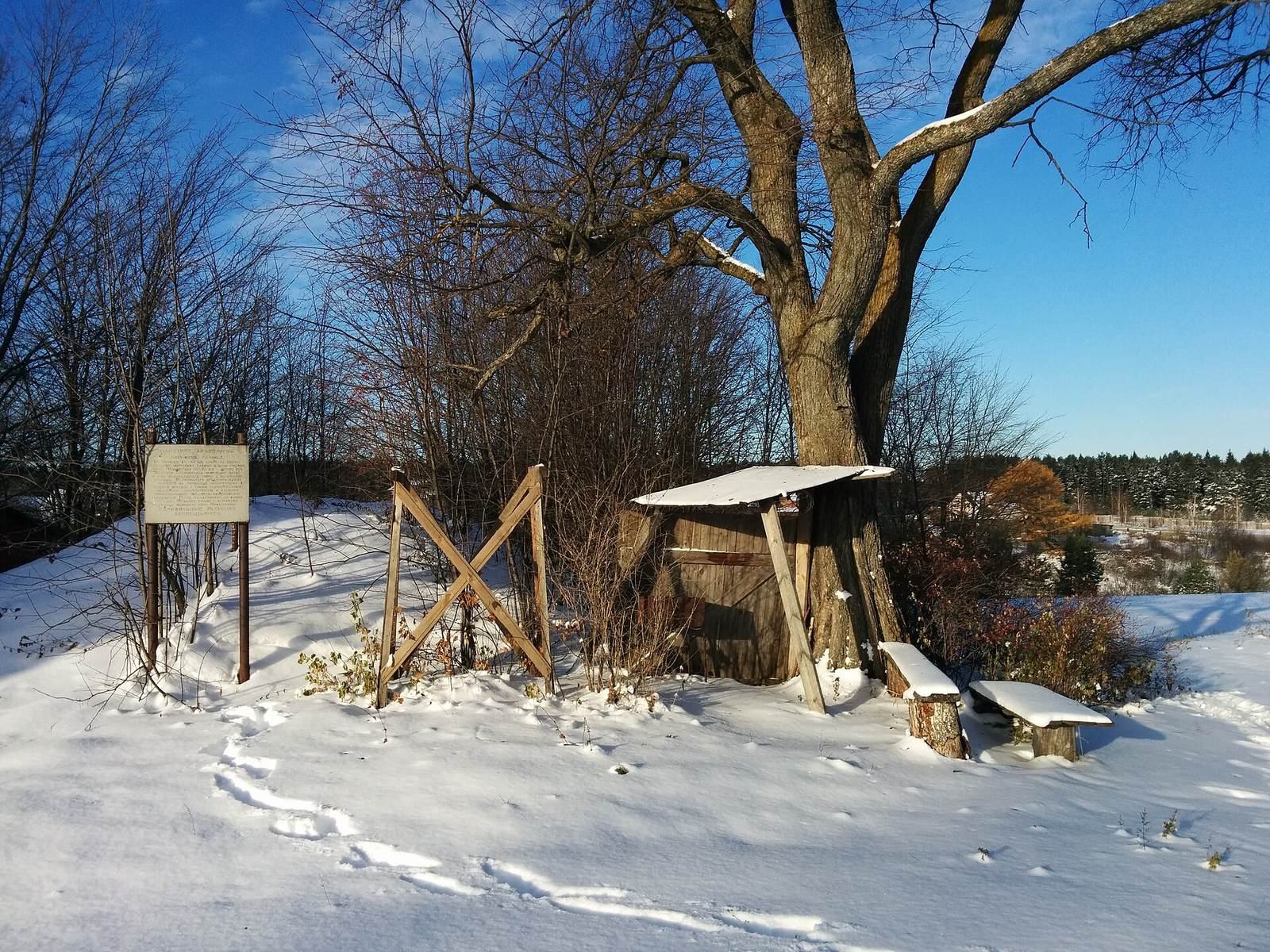
L. P. Gussakovsky excavated at the hillfort in the second half of the 1950s, followed by L. D. Makarov. Their work investigated only part of the site. The hillfort is protected as an archaeological monument of federal significance.
Remains
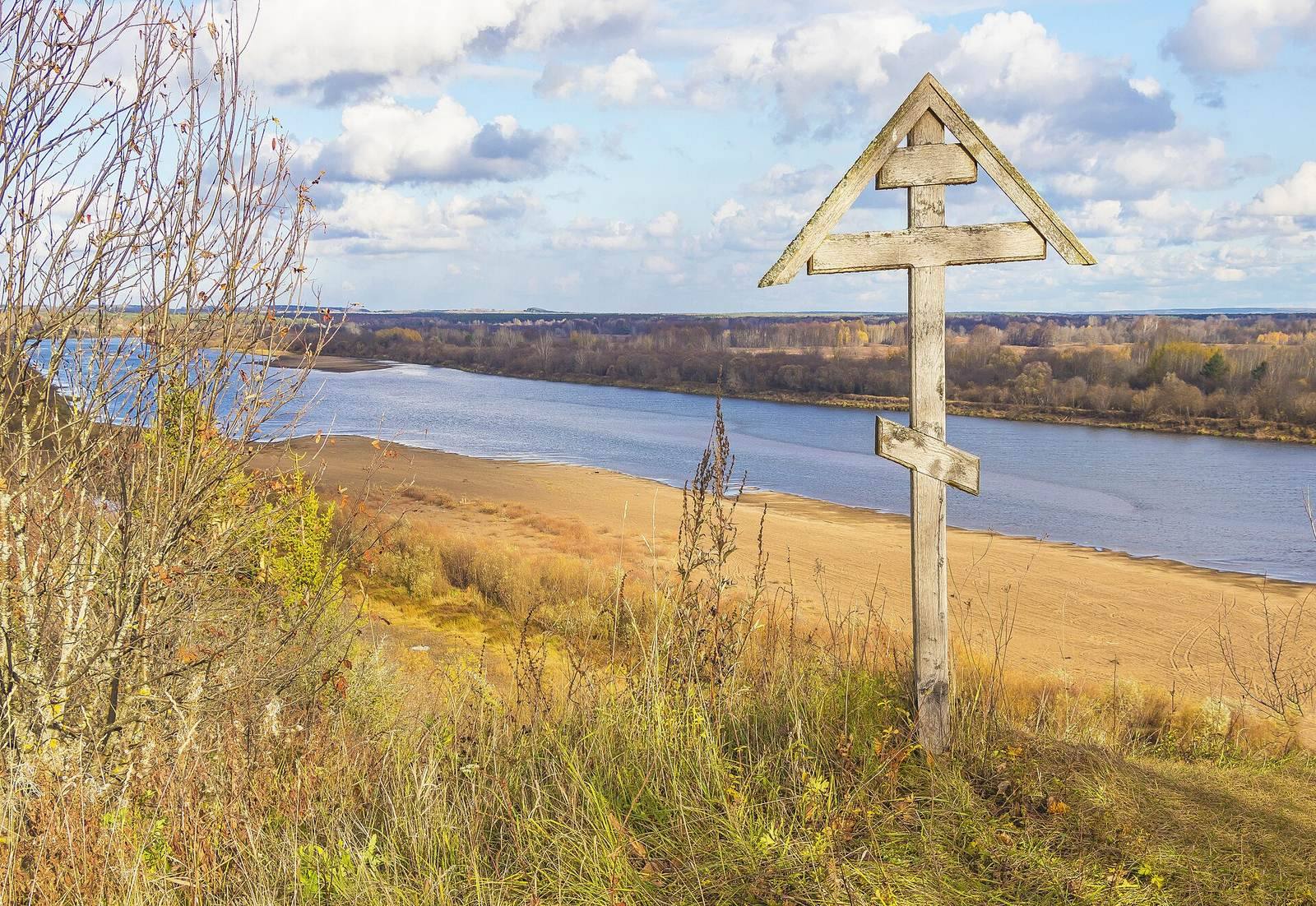
The hillfort occupies a roughly triangular position, with the steep bank of the Vyatka River and a deep ravine protecting two sides. Its defenses combine earthen ramparts and a ditch with timber structures. The fortified center, smaller enclosure at the site’s projecting point, settlement beyond the defenses, and remains below the riverbank represent distinct parts of the settlement.
Enclosure and defenses
Central fortification
The hillfort covers about one hectare and was enclosed by two ramparts and a ditch. The outer rampart now rises about one meter, the inner one about four meters, and the ditch reaches three meters deep. At the projecting point, an older rampart and a silted ditch enclose the small hillfort, the oldest part of the site and the area excavated. The larger enclosure has been almost entirely destroyed by a church cemetery dating from the sixteenth to nineteenth centuries. Timber walls stood on the ramparts, and a fence of upright stakes ran along the steep slopes. Four towers stood at the corners; two also formed passages, with bridges spanning the ditches.
Settlement beyond the enclosure
Outside the central defenses, the town probably had a walled outer settlement covering two to three hectares. An unwalled settlement lay below the riverbank.
Settlement and excavated features
Dwellings
More than 20 pits and structures associated with the town’s expansion in the second half of the thirteenth and fourteenth centuries have been identified, including 12 dugouts used for living or work. The earliest houses stood in rows beside the river. Later log houses were arranged in rows almost perpendicular to it, along the landward side. Set close together, they formed additional defensive lines on the side most exposed to attack.
Workshops and finds
Remains of a pottery kiln and a forge point to craft production, alongside evidence of iron and copper smelting, bone- and stone-working, weaving, and work in metal and wood. Finds include many kinds of weapons, an iron writing stylus, chess pieces, gaming counters, and children’s toys.
Church and burial
A church dedicated to Saints Boris and Gleb stood on the hillfort and housed an icon of the saints that was revered across the Vyatka region. Religious finds include an encolpion, a small devotional object worn on the chest, and a pendant icon depicting Nicholas the Wonderworker. A burial ground was also found near the hillfort.