San Bartolomeo in Rovigo: A Catholic Church and Former Olivetan Monastery
Site at a Glance
- Popularity
- Low
- Country
- Italy
- Primary era
- Early Modern
- Eras represented
- Medieval, Early Modern, Modern
- Civilizations
- Duchy of Ferrara, Italian, Venetian
- Site type
- Religious
- Remains
- Church
On this page9 sections
History
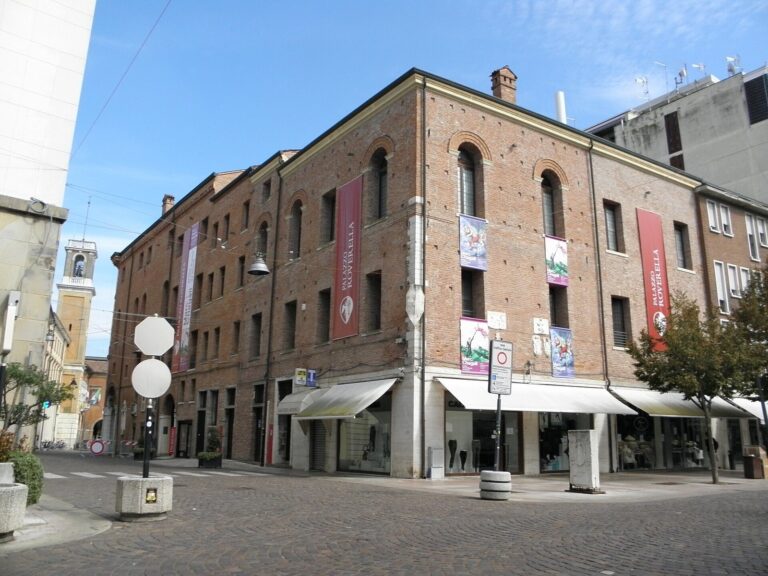
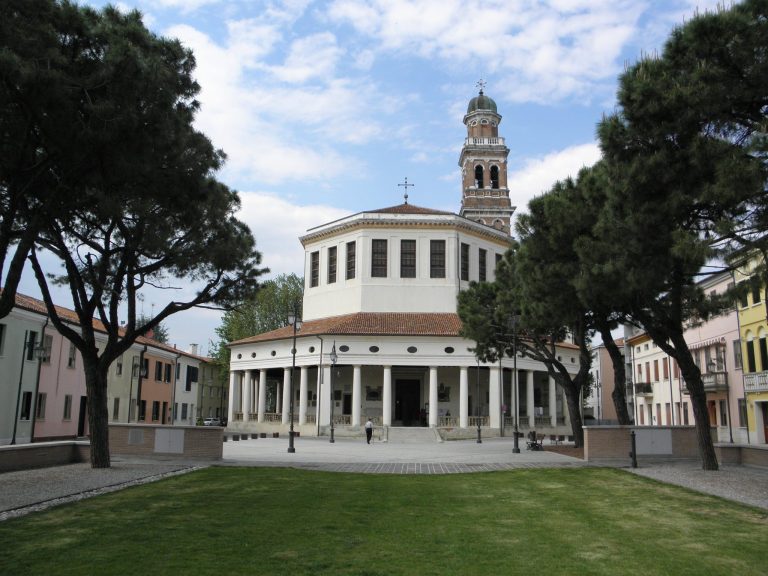
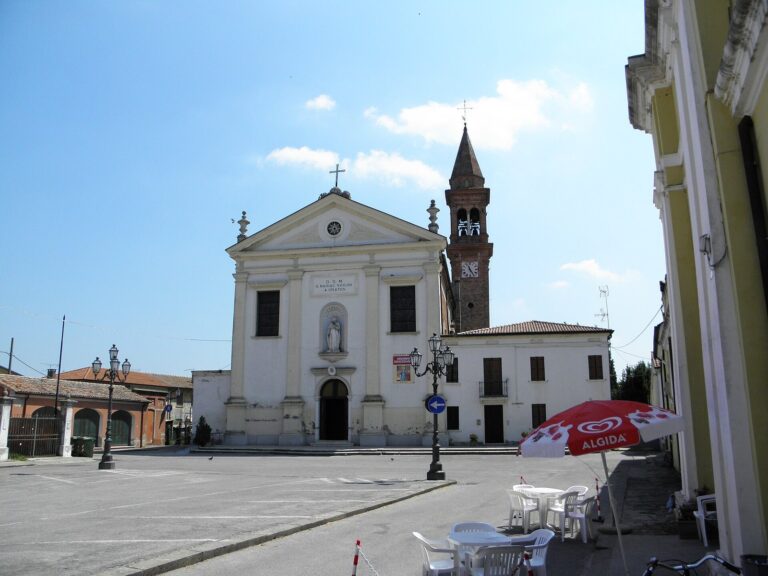
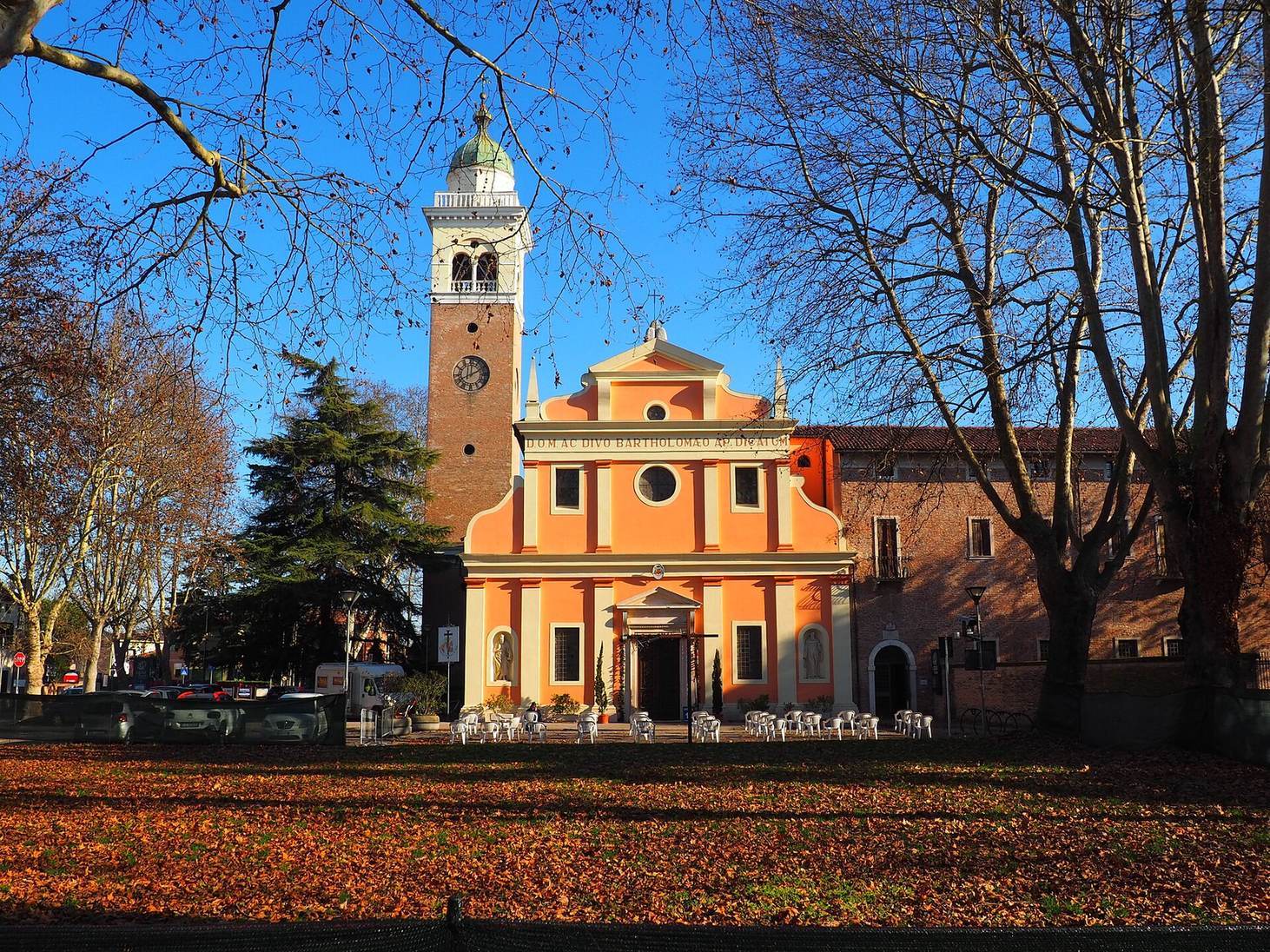
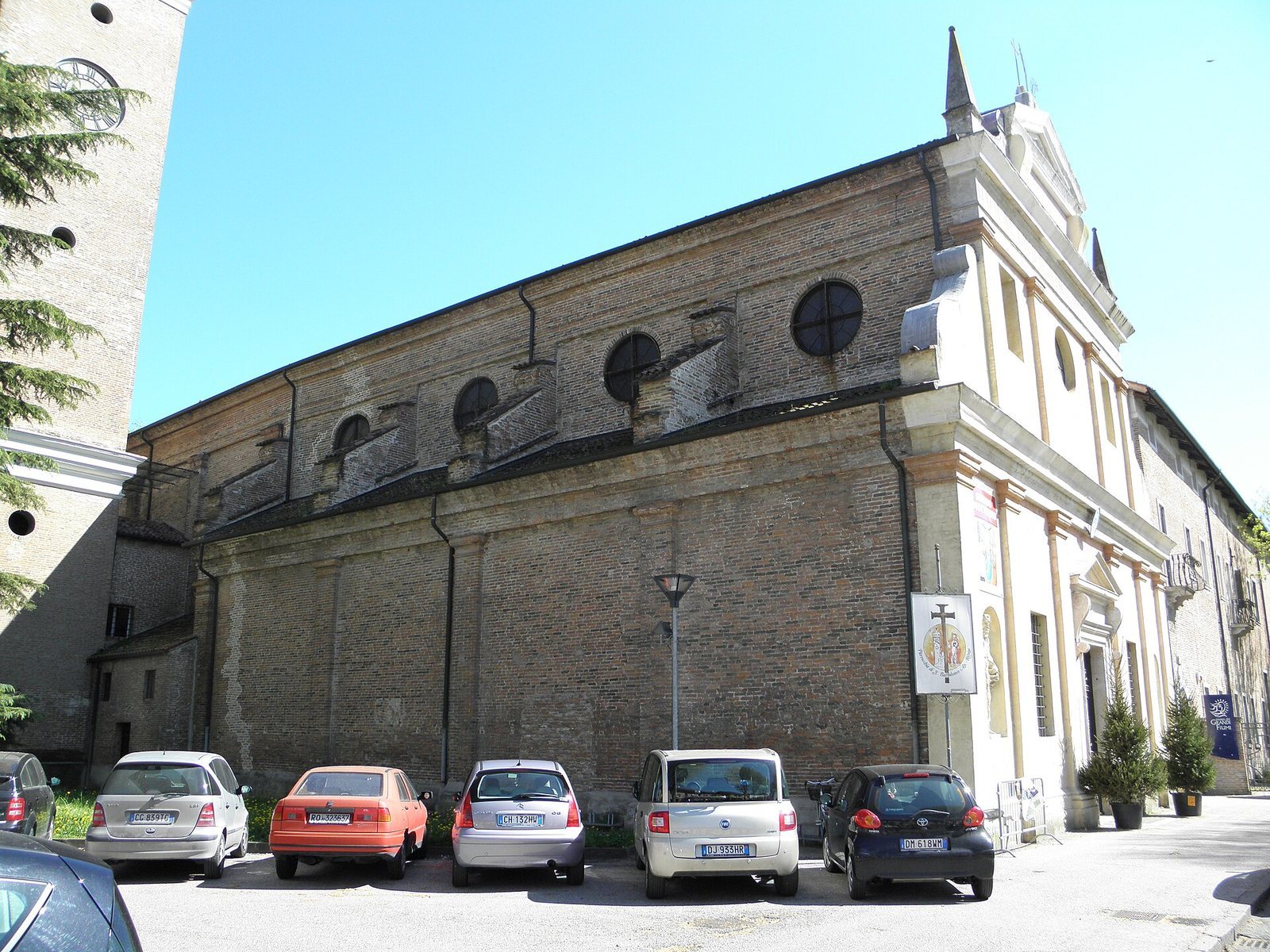
San Bartolomeo in Rovigo is a Catholic church in Italy, dedicated to the Apostle Bartholomew. Its present building was constructed between 1562 and 1565, replacing an earlier Renaissance church at the monastery. Classified as Baroque, it is also a rare example of sixteenth-century religious architecture in the Polesine, the low-lying area of Veneto around Rovigo.
The Humiliati foundation and decline
A church for the Humiliati, a medieval religious congregation, was authorized in Rovigo on 10 June 1255 by Guglielmo d’Este, bishop of Adria. The congregation had settled in the eastern part of the city, beyond its outer walls, near the Adigetto, then a major northern branch of the Adige. Its predecessor church was built during the thirteenth century.
The community’s income from wool production was no longer being invested in property by 1283, and its membership dwindled. By 1407 only one superior remained after the number of monks had fallen to five. The last known record of a Humiliati superior in Rovigo dates to 1436. The community then disappears from the record, and its already deteriorating complex fell further into disrepair.
Transfer to the Olivetans
In 1444 the complex was entrusted in commendam to Bartolomeo Roverella, the newly appointed bishop of Adria. A grant in commendam assigned a cleric the administration and income of a religious institution, without necessarily requiring him to live there. The Roverella family helped bring new monastic use to the site. Nicolò Roverella, who became abbot general of the Olivetans in 1472, sought the transfer of Bartolomeo’s rights so that the property could be given to the Olivetans, a monastic congregation in the Benedictine tradition.
On 21 October 1474, Pope Sixtus IV authorized the convent’s incorporation into an emerging Olivetan monastery associated with the Abbey of San Pietro in Maone and the church of Santa Maria dei Sabbioni. The Humiliati institution was formally suppressed on the same date. The prior of the Olivetan convent of San Giorgio in Ferrara took possession in 1478.
The present church and later use
The current church replaced the monastery’s earlier Renaissance building. Bartolomeo Bonrizzo was commissioned to develop its design, and construction began with the laying of the first stone on 21 March 1562, the feast of Saint Benedict. Work continued until 1565. The Ferrarese architect Alberto Schiatti also worked on the project, although his precise contribution is uncertain.
The monastery was suppressed in 1797. Its buildings remained structurally intact but ceased to serve their former purpose. San Bartolomeo belongs to the Diocese of Adria-Rovigo and has served as the seat of the parish of St Bartholomew the Apostle since 1956.
Remains
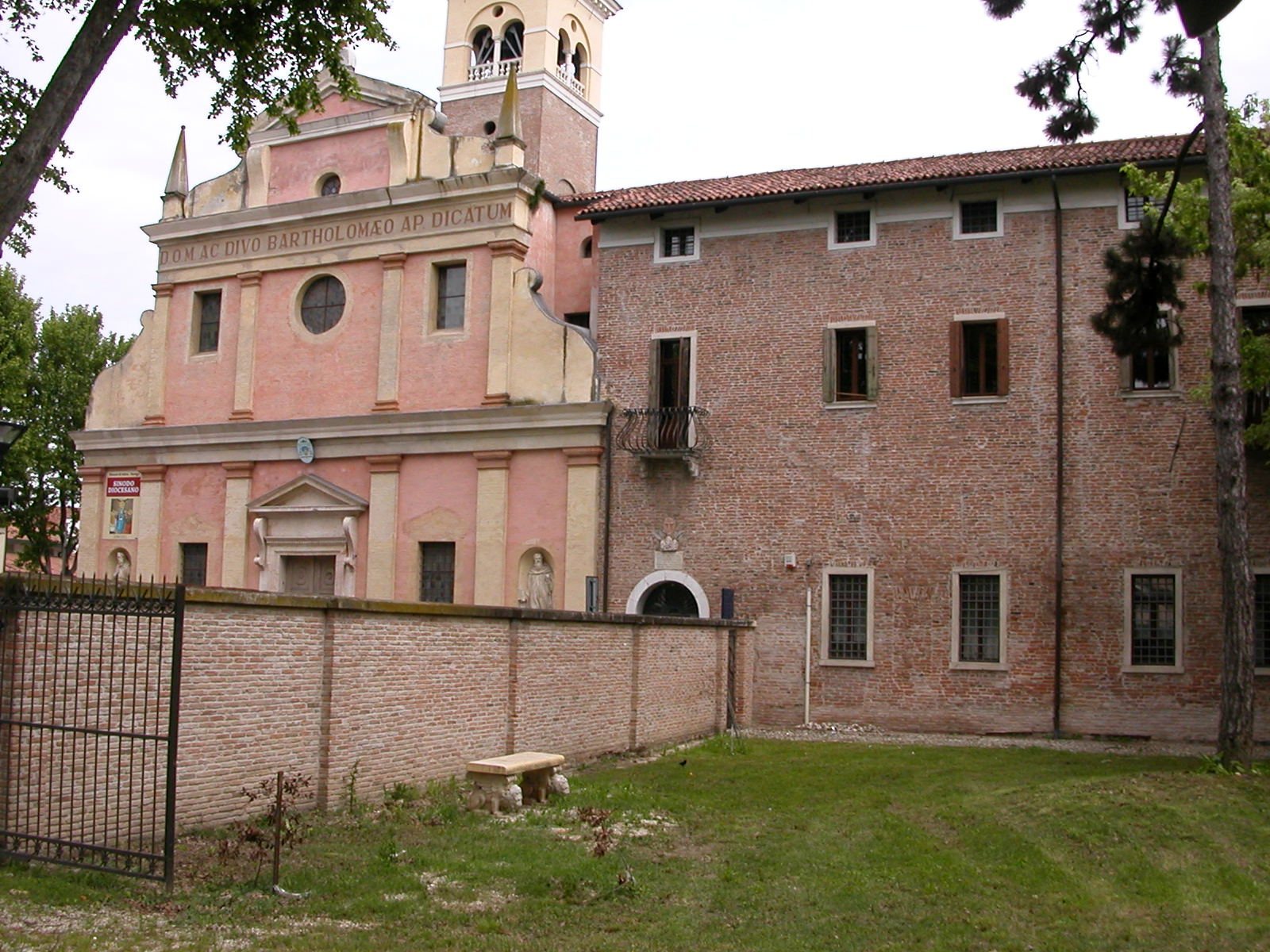
The site brings together the church and the monastery’s cloister and associated rooms. The church’s sixteenth-century fabric includes later Baroque interior decoration, while the cloister and service buildings reflect the monastery’s changing layout.
Church and monastic buildings
Church and bell tower
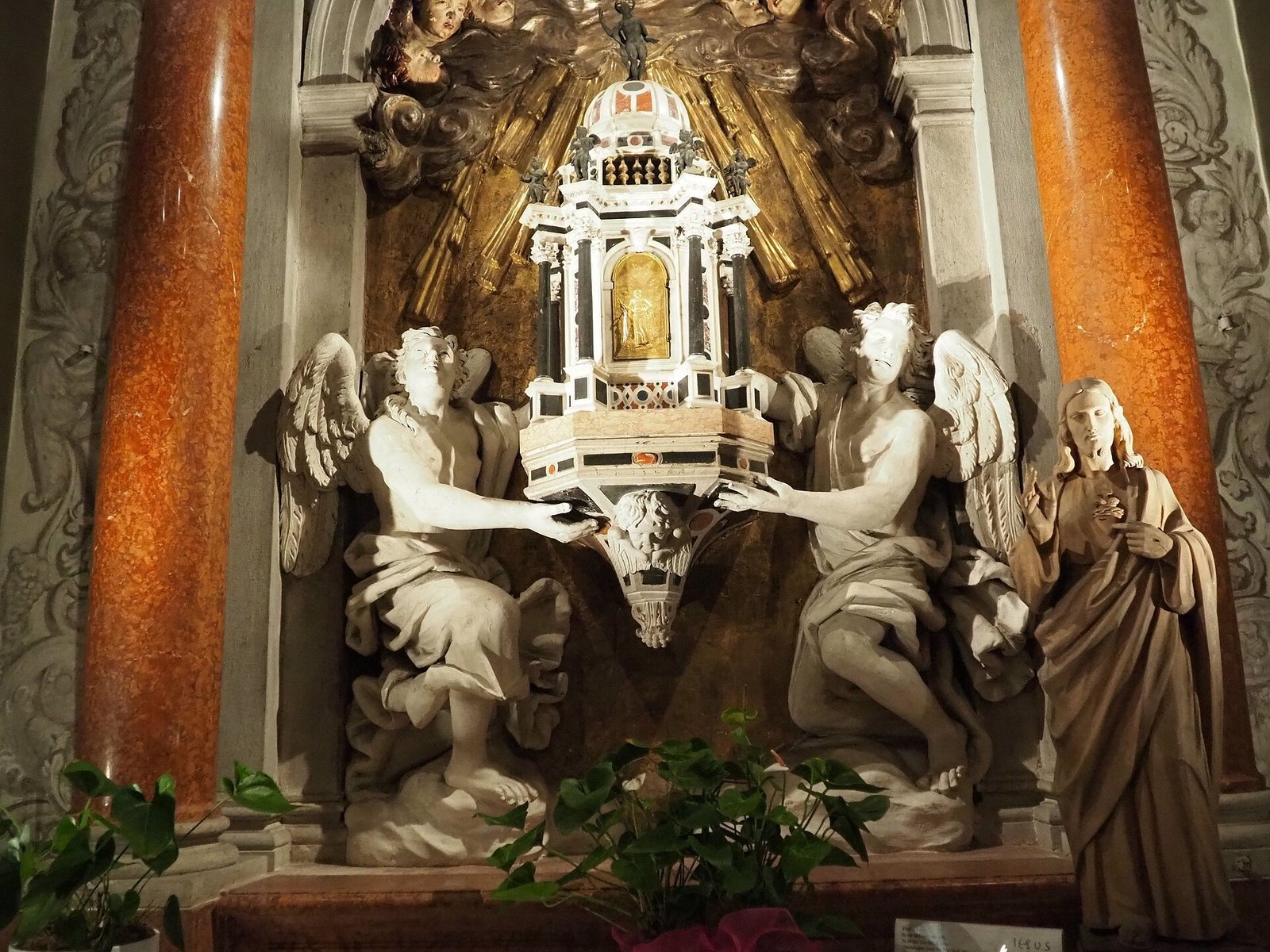
The church stands in Piazza San Bartolomeo beside Via Antonio Oroboni. Seventeenth-century stucco work and frescoes contribute to its Baroque interior. The bell tower was begun shortly after the church and measured 30 feet, about 10 metres, in 1576. It was completed in 1592. Local historian Alberto Gabrielli attributed its design to Schiatti.
Cloister and service buildings
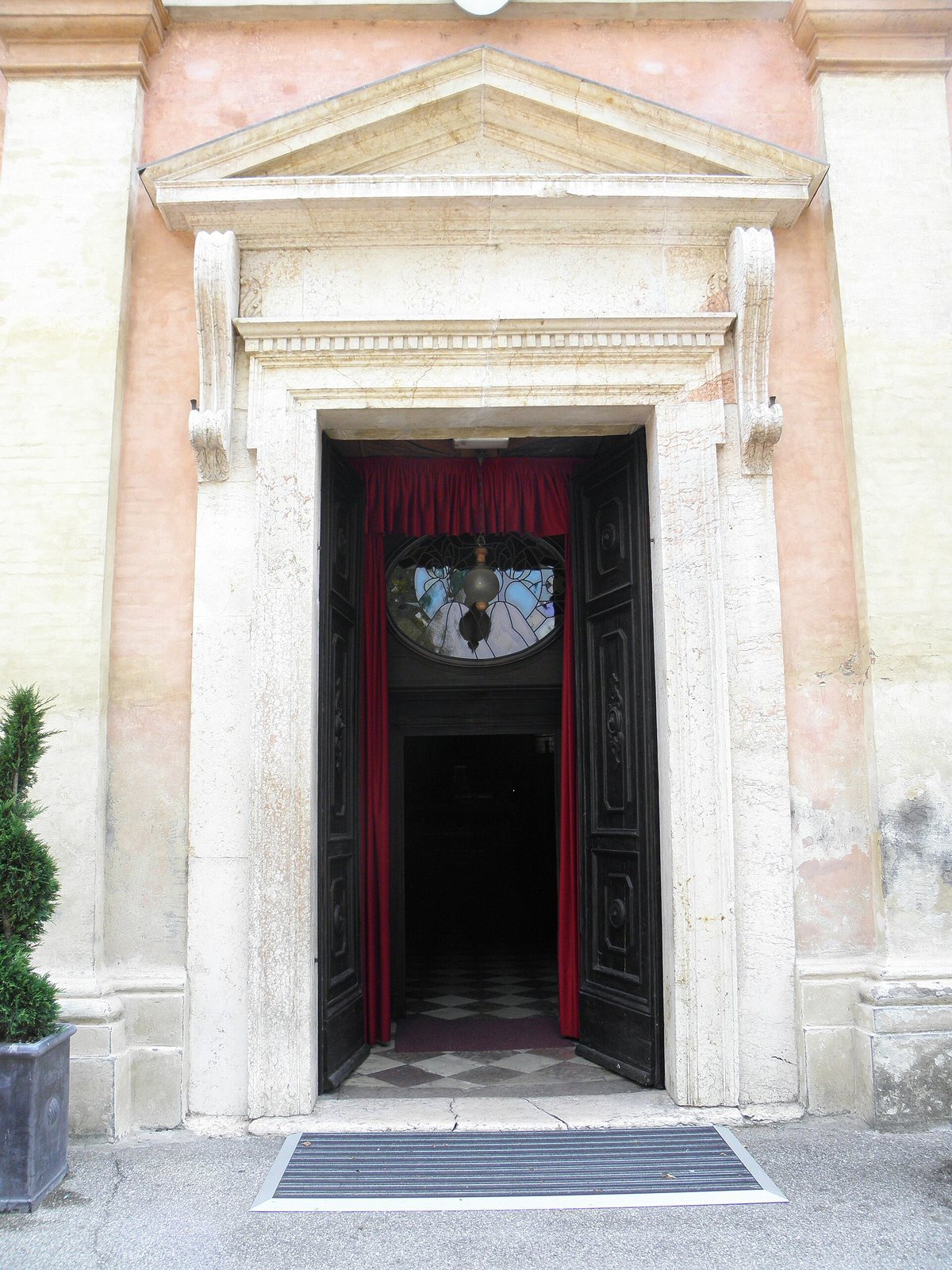
The monastery rebuilt in 1480 included the present cloister, with twelve rooms arranged around it and further rooms for domestic work. A small portal connected the complex with the exterior. A plaque above it carries Pope Gregory XI’s anathema, a formal ecclesiastical condemnation, against anyone who violated an Olivetan monastery.
In 1550 the monks established a brick kiln to supply an extension to the complex. The addition extended south from the eastern side of the cloister. Its position and date record an expansion of the monastic buildings before construction of the present church.
The organs
An organ was already in the church during the seventeenth century. It stood on a loft on the Gospel side and had an ornate front with carvings, gilded friezes and a decorative imitation of a second organ. It began with five stops, each of which selects a set of pipes to produce a particular sound, and later had seven. A separate positive organ, a small instrument used for accompaniment, stood in the choir’s centre for monastic services. The main organ accompanied the abbot’s pontifical services and public celebrations. A 1606 entry names a player called Giacomo Baldi; a possible identification with the Italian composer and organist Girolamo Frescobaldi is doubtful, given Frescobaldi’s brief stay in Ferrara.
Gaetano Callido installed the present organ in 1778, replacing the earlier instrument. It stands on a loft beside the high altar and remains functional. Its keyboard has 45 keys and a short-octave arrangement, which alters or omits notes in the lowest octave; the arrangement is described as being in sixth, from C to C. The lectern-shaped pedalboard has 18 pedals, the last operating the rollante, an effect that produces a rolling sound.
The stops include 8-foot bass and treble principals, an octave, and sets named Fifteenth, Nineteenth, Twenty-second, Twenty-sixth and Twenty-ninth. The instrument also has contrabasses and a contrabass octave at 16 and 8 feet on the pedal, a Human Voice stop, two flutes, a cornet, small-trombone stops for bass and treble, and a pedal Trombone reconstructed to period measurements. The control for the full chorus of stops is positioned on the right side of the pedalboard.
In 1980 the Alfredo Piccinelli firm of Padua restored the organ and identified several components as later additions, including the stop-label board, its knobs and the pedalboard. The keyboard covering is now boxwood rather than bone, and the wooden pedalboard was rebuilt to dimensions associated with Callido’s workshop. Before the restoration, the full-chorus control had been altered by removing its crank and combining it in a small pedal. A pedal Trombone had also replaced the Bass 8-foot stop; Piccinelli noted that its pipes are 4-foot.