Santa Maria ad Nives: A Roman Catholic Church in Faenza, Italy
Site at a Glance
- Popularity
- Low
- Country
- Italy
- Primary era
- Early Modern
- Eras represented
- Medieval, Early Modern, Modern
- Civilizations
- Italian, Papal States
- Site type
- Religious
- Remains
- Church
On this page13 sections
History
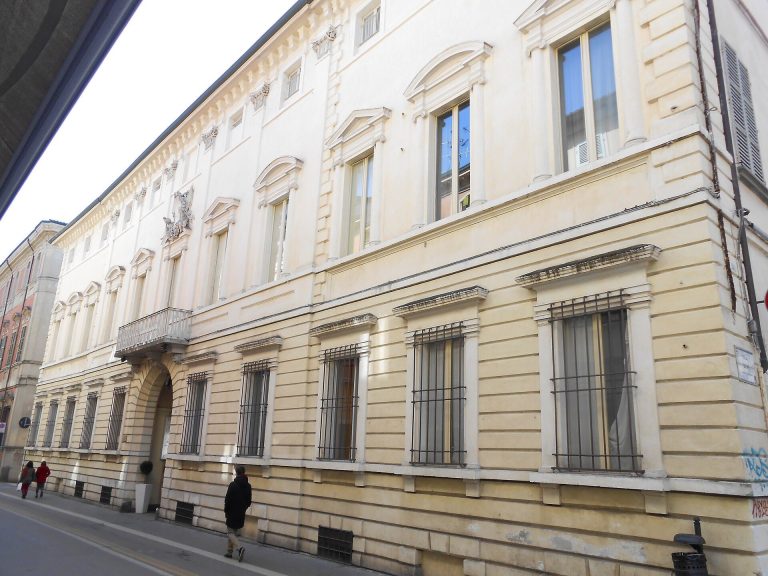
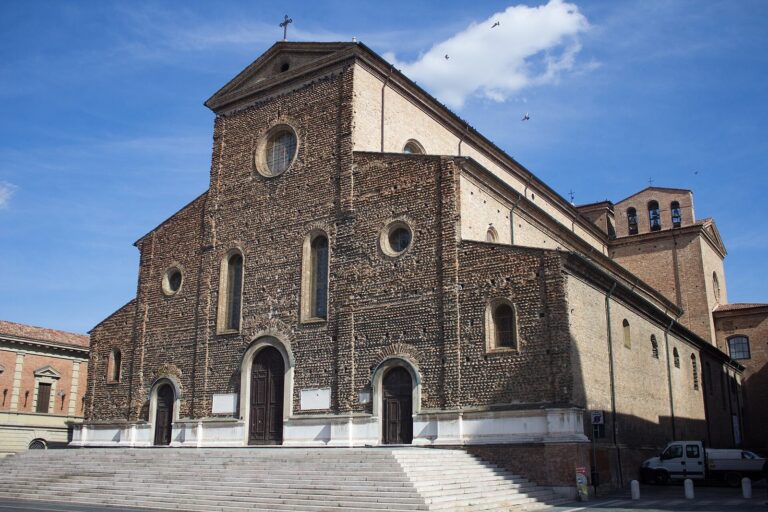
Santa Maria ad Nives is a Roman Catholic church in Faenza, Italy, probably founded in the sixth century and now characterized by Neoclassical architecture, a style drawing on Greek and Roman forms. Its name means Saint Mary of the Snows, and its early history is linked to Faenza’s episcopal seat, the central church of a diocese.
Early church and episcopal seat
The church originally stood beyond Faenza’s Manfredian walls, fortifications associated with the city’s medieval ruling family. The walls enclosed it after 1450. It was also known as Santa Maria Foris Portam, or Saint Mary Outside the Gate, and Santa Maria Vecchia, meaning Old Saint Mary. The latter name distinguished it from the newer Santa Maria dell’Angelo.
Santa Maria ad Nives may have been Faenza’s first cathedral. The medieval chronicler Maestro Tolosano, who died in 1226, called it the cathedral and described the episcopal seat as having moved there from San Pietro, a church inside the walls. Tolosano attributed the transfer to a massacre carried out by Liutprand, the eighth-century king of the Lombards, during Easter Saturday services in 740. The move is also connected with a fire that destroyed San Pietro. Excavations in the late twentieth century supported the interpretation that Santa Maria ad Nives served as the cathedral after that fire.
Monks from Santa Maria in Afri, a Benedictine monastery whose members followed the Rule of Saint Benedict, settled at the church in 740. Saint Peter Damian, an eleventh-century Italian Benedictine monk and religious reformer, visited while travelling to the hermitage of Gamogna, where he died during the winter of 1072.
Monastic changes and rebuilding
In 1168 the church passed to the monks of Fonte Avellana, an Italian monastic hermitage. Cistercians, a monastic order that developed as a reform movement within Benedictine life, took it over in 1515 and remained until 1778. That year they moved to Santa Maria Nuova, taking Saint Peter Damian’s remains, the church furnishings, and a painted panel of the Virgin with them.
In 1655 Bartolomeo Sauli rebuilt and enlarged the interior, reversing the church’s orientation. The new entrance and its portico occupied the end where the earlier church’s apse had stood. Today the church belongs to the Diocese of Faenza-Modigliana.
War damage and changes to the bells
British artillery fire during the Second World War virtually destroyed the bell tower, which was rebuilt afterward with an altered upper form. The bells also suffered. On 4 December 1944, a bell cast in 1331 broke and was damaged beyond repair; the other bells were removed to be melted down for military use.
Five replacement bells, cast by the Pasqualini foundry of Fermo, were installed in 1952. They were dedicated to the Guardian Angel, Saint Peter Damian, Saint Severus, and Our Lady of the Snows, and weighed 147, 204, 355, and 500 kilograms respectively. The fifth weighed 695 kilograms. Parish priest Luigi Tellarini had strongly advocated for the new bells but died before hearing them. Their first concert took place on the occasion of his death that year. In 2018, five new bells from the Allanconi foundry of Bolzone di Ripalta Cremasca replaced the 1952 set, which was considered poor in quality.
Remains
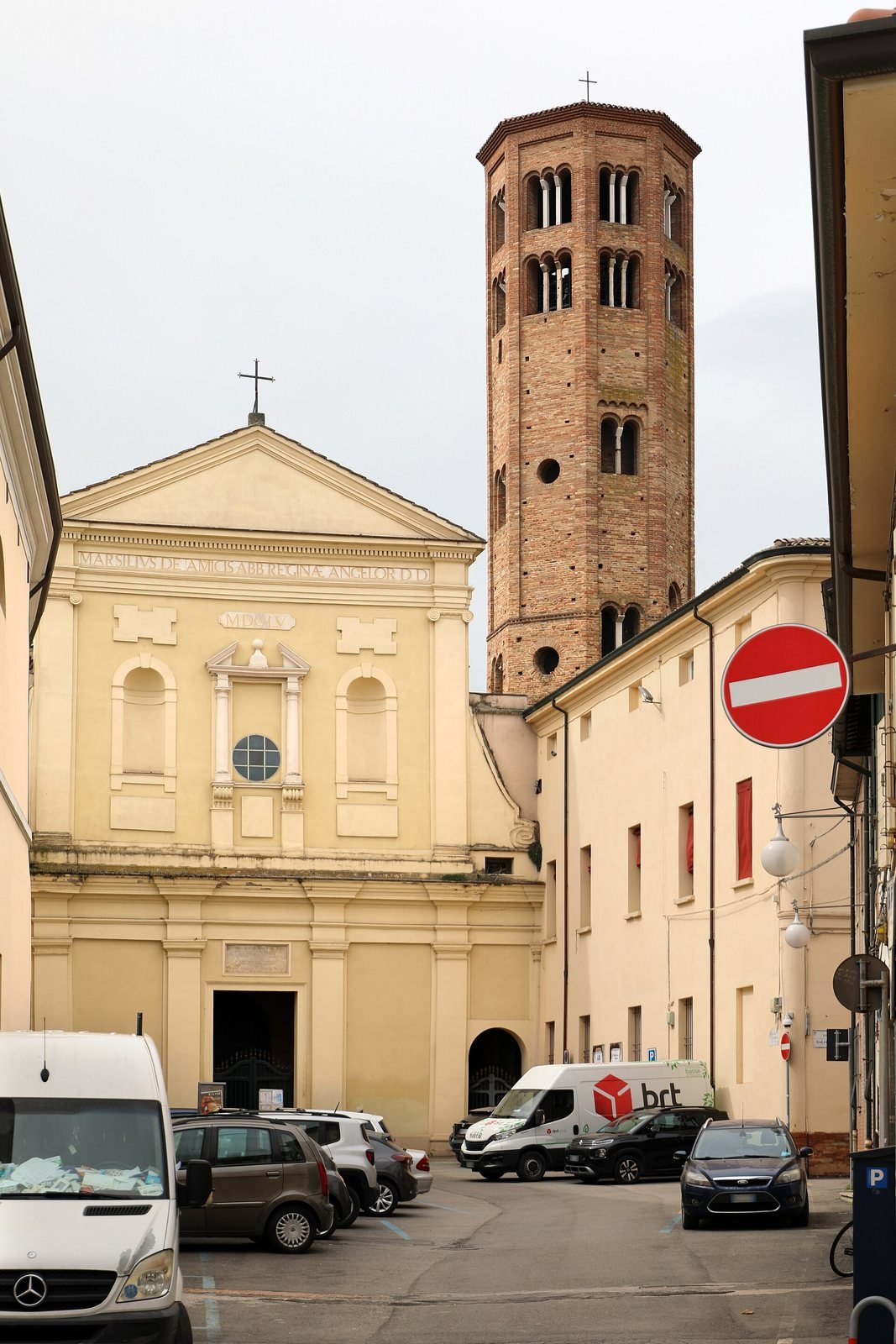
The present church has a Neoclassical design, with its entrance portico at the end formerly occupied by the apse. Its fabric combines this later arrangement with surviving elements from earlier phases. A circular building is also associated with the church.
Church and associated structures
Walls and layout
The church’s upper side walls survive from an earlier phase. They contain large windows framed by blind arches, decorative arches that do not form openings. This treatment is associated with the basilicas of Ravenna. The original church faced east, with its apse at that end, in keeping with early Christian practice.
Entrance columns
Two columns of African breccia flank the entrance, each topped by a finely carved marble capital. The columns are probably sixth-century pieces reused from older buildings. Devotional tradition held that touching them with both hands and the head brought the protection of Saint Peter Damian.
Paintings and devotional image
At the first altar on the left is Gaspare Sacchi’s 1522 altarpiece, Virgin and Saints. Small paintings of episodes from the life of Saint Bernard of Clairvaux, the twelfth-century Cistercian abbot and church leader, are attributed to Niccolò Paganelli and date to around 1610. They are in the chapel of Saint Bernard to the right of the main altar. A frescoed image of the Virgin was also venerated at the church, with tradition holding that an angel had painted it. A panel reproducing the image was made around 1400.
Circular building
The associated circular building has been interpreted either as a baptistery, a building used for baptism, or as a cemetery church.
Romanesque bell tower
Structure and construction
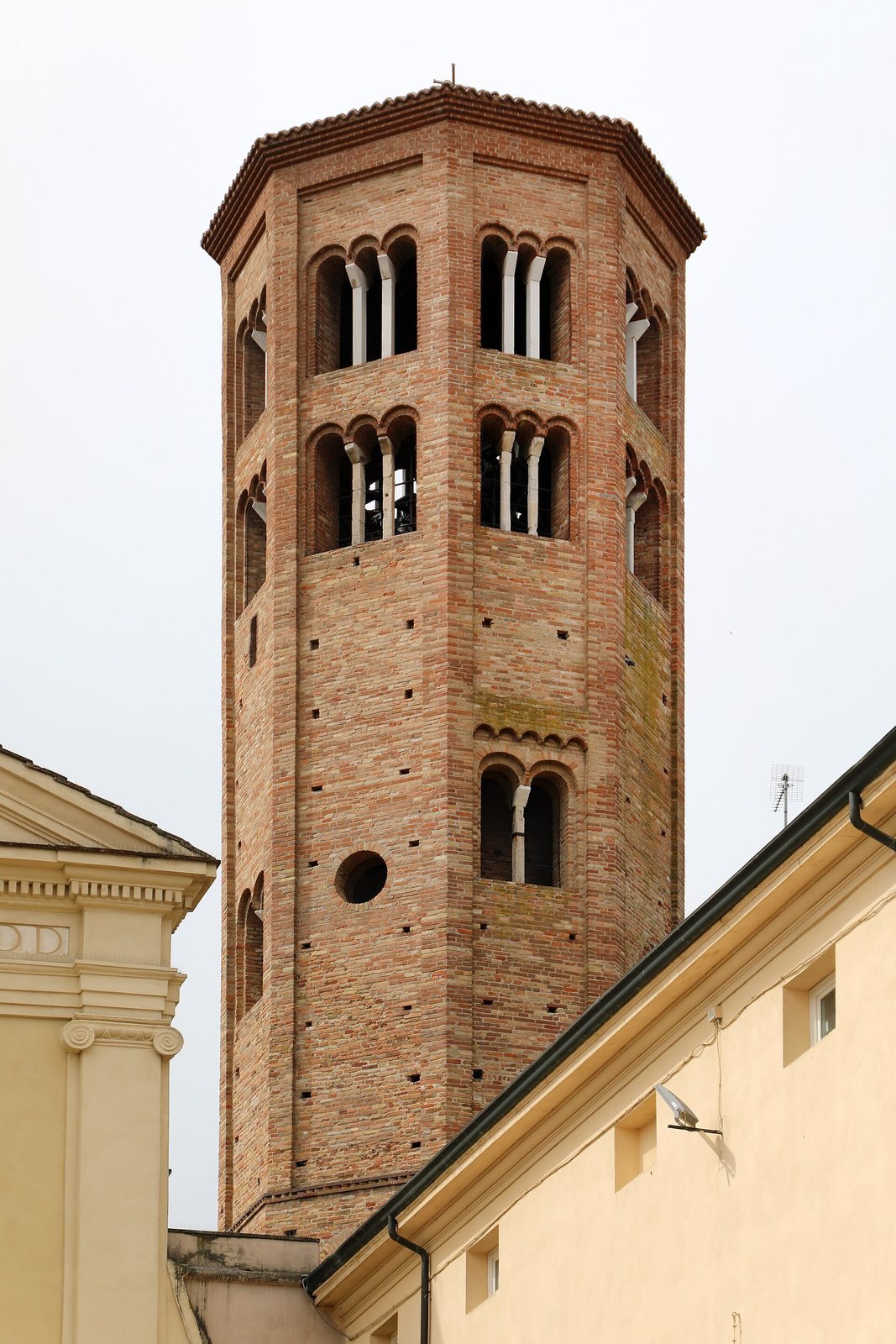
The tall tower is Romanesque, a medieval European style associated with rounded arches and massive forms. Built between the ninth and tenth centuries, it probably incorporates reused elements from ancient Roman buildings. Its outer plan is octagonal around a cylindrical core, with a ramp running between them. Projecting supports rise from a square base to the octagonal shaft, which has single openings, round windows, and narrow slits. The belfry above has two tiers of openings grouped in threes, some of them original.
The tower has two internal cells. The lower one, built around 1000, rests on six small columns and has a star-shaped vaulted ceiling; the upper cell serves as the belfry. In the early twentieth century, a fig tree grew at the tower’s top, probably from a seed carried there by birds.
Current bells
The five bells installed in 2018 are tuned to F3, B-flat3, C4, D4, and F4. The four largest can be rung together in a sixth-tone peal, while the four smallest form a major-tone peal. They are hung in the Bolognese style, a traditional regional method of hanging and ringing bells, and are operated entirely by hand. Local bell-ringers also use a double-peal pattern, a traditional sequence of ringing.