Maria Santissima Assunta: The Parish Church of Petralia Sottana, Italy
Site at a Glance
- Popularity
- Low
- Country
- Italy
- Primary era
- Early Modern
- Eras represented
- Medieval, Early Modern, Modern
- Civilizations
- Crown of Aragon, Habsburg, Kingdom of Sicily, Norman, Spanish
- Site type
- Religious
- Remains
- Church
On this page20 sections
History
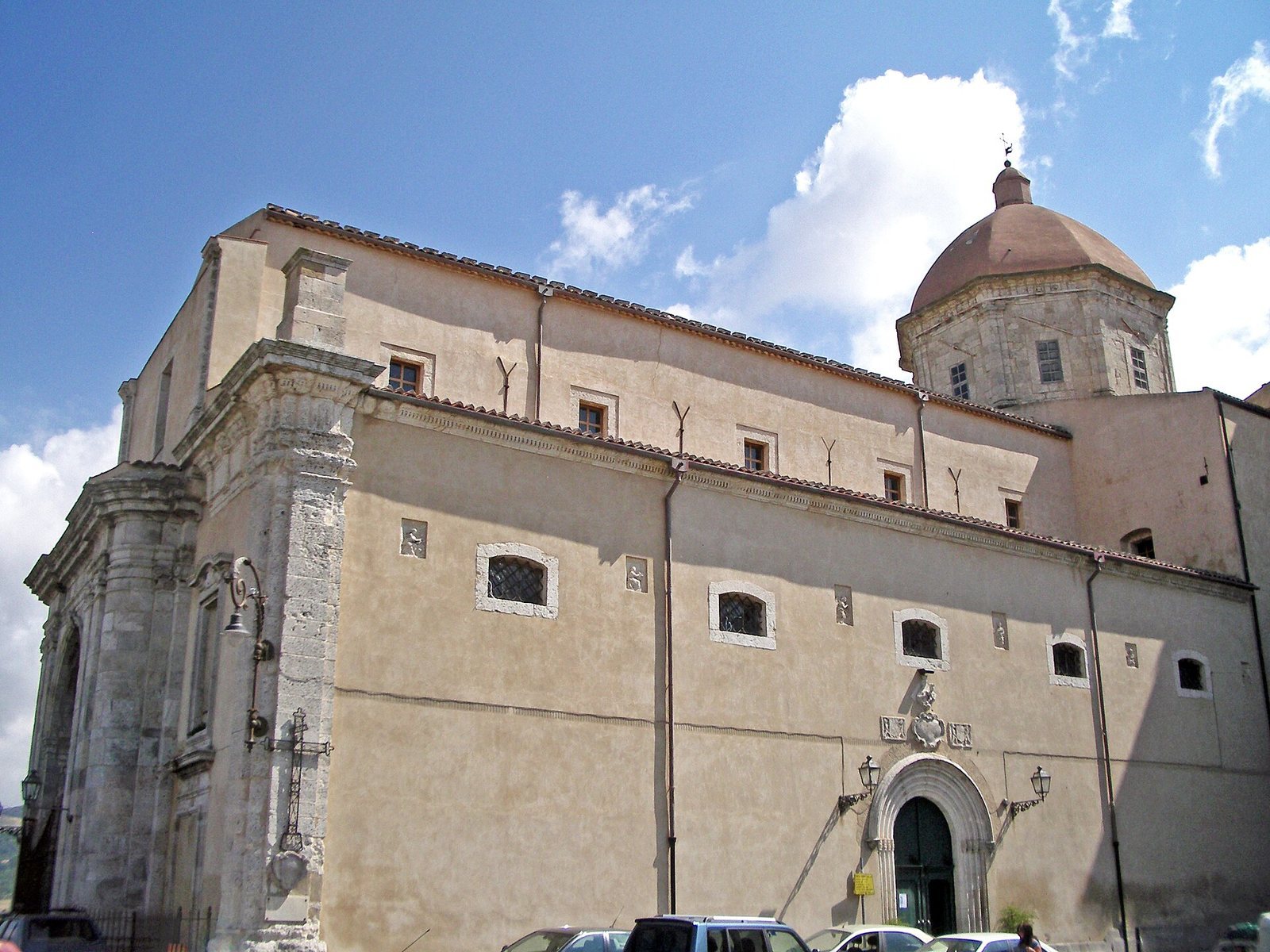
Maria Santissima Assunta is the principal Catholic church and parish church of Petralia Sottana, Italy, in the Diocese of Cefalù. Dedicated to the Assumption, the Catholic belief that Mary was taken body and soul into heaven, the church combines Catalan Gothic, a Gothic tradition shaped by Catalan influences, with Sicilian Baroque, the regional form of Baroque architecture in Sicily. Its present form took shape through extensive rebuilding from 1633 to 1680.
Early church and seventeenth-century rebuilding
A building used for another purpose probably stood on the site by the ninth century. A temple from the Norman period formed an earlier phase of the church and had a bell tower on its façade. By the seventeenth century, the medieval church had become too small for Petralia Sottana’s growing population. The town, once a rural agricultural center, was developing into an important center of the Madonie area.
During the period of Spanish rule in Sicily, the church’s interior was enlarged and reorganized. Work between 1633 and 1680 moved the sacristy and added a transept, a large choir chapel, and chapels dedicated to the Blessed Sacrament and the Nativity. The choir had previously occupied the middle of the church. In 1658, notary and baron Paolo Agliata acquired patronage rights to the Blessed Sacrament chapel for himself and his family. He also established a charitable foundation that operated the hospital named after him, and he was buried in the chapel.
Earthquake, completion, and later restoration
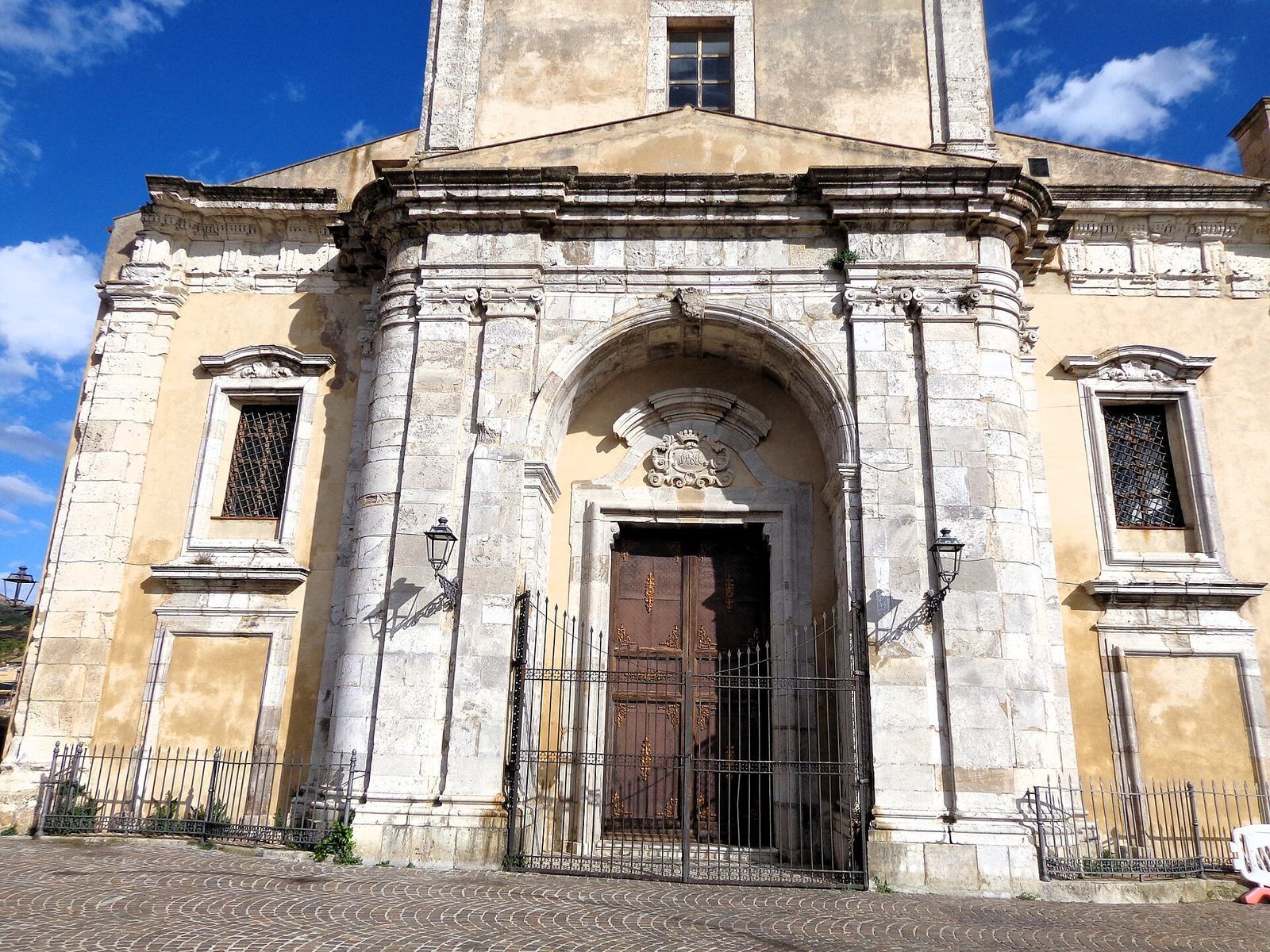
The 1693 earthquake left the main façade at risk of collapse. In 1725, Sicilian architect Girolamo Palazzotto designed it to serve as a supporting structure. The church was consecrated in 1790 and became Petralia Sottana’s principal Catholic place of worship.
During the nineteenth century, workers added stucco decoration to the interiors, restored the dome and its lantern several times, and remade the altars in almost all the chapels. In 2017, residents voted for a proposal to restore the Immaculate Conception chapel and presbytery. Interior restoration followed in 2018 and 2019, supported by substantial donations from local residents.
Remains
Plan and exterior
Plan and dome
The church has a basilica plan, with a central nave and two side aisles separated by six pairs of single-block Tuscan-style columns. The transept, the crosswise arm of the church, meets the nave beneath a dome. Its octagonal, windowed drum is the structure supporting the dome. The dome is hemispherical on the inside and pointed on the exterior. Above it, a lantern is crowned by a sphere, weather vane, and iron cross. Beneath the dome hangs the 80-arm crystal chandelier called the “Ninfa,” made in 1862.
Main façade
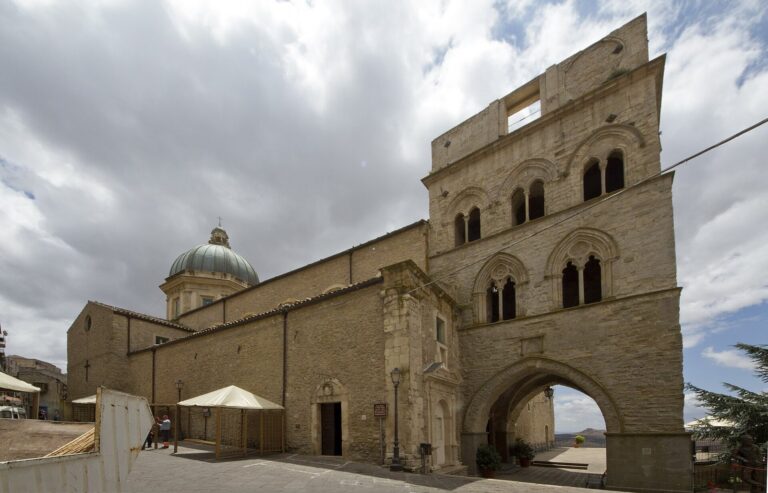
The main façade is arranged in two levels. On the lower level, large flat supports and a broad cornice frame a projecting arched entrance. The stone-block arch stands between windows with marble surrounds; paired supports on either side carry carved Corinthian capitals, the leafy tops of the columns, and a richly moulded stone band. Above, a low triangular crown sits over the portal. The central section has further supports and a large window, while a second triangular crown aligns with the roof. The façade’s design also serves a structural purpose.
South portal and sculpted panels
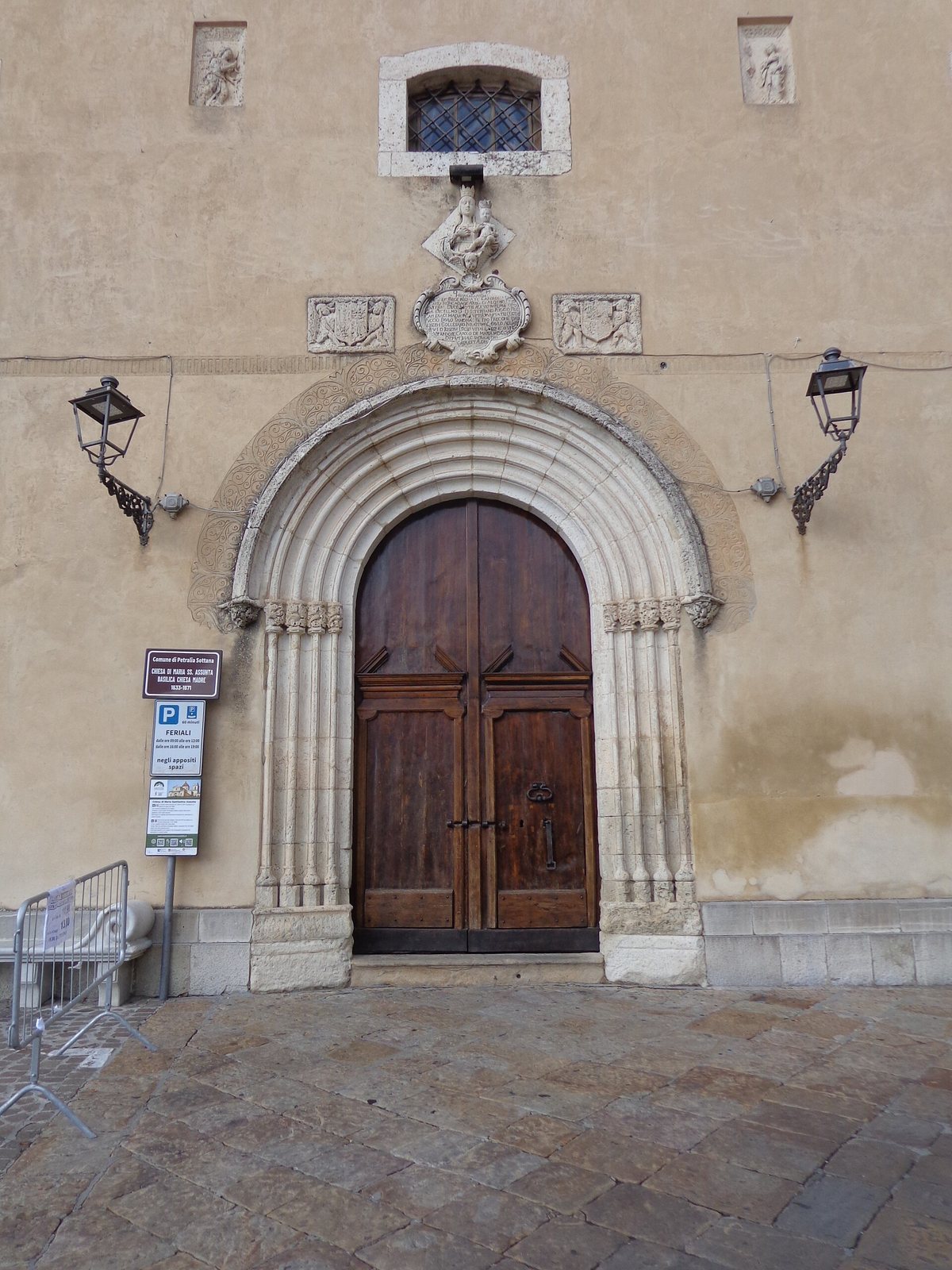
The south side retains a fifteenth-century portal in Catalan Gothic style. Its opening widens outward and is bordered by slender supports and rounded arches resting on capitals carved with thistle leaves. An arched portico with columns once sheltered the entrance and was still there in 1839. Above an inscription concerning the completion of the church’s second building campaign is a relief of the Madonna and Child. Panels showing the four Evangelists and the Annunciation probably belonged, with the relief, to a sixteenth-century interior furnishing. The reused panels are attributed to Giorgio da Milano.
Bell tower
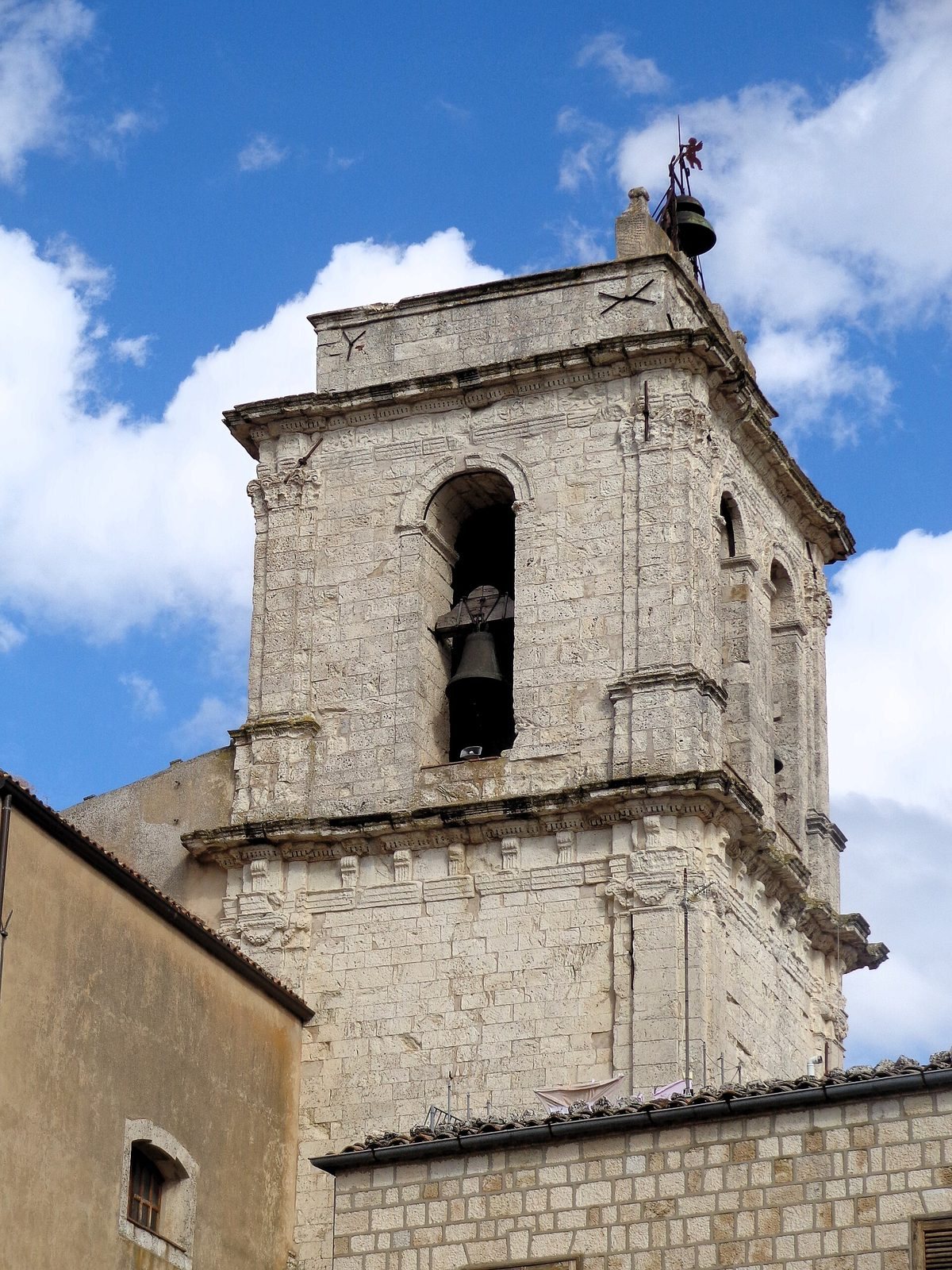
The attached bell tower is built of white stone and has three levels. A large pointed arch occupies most of the lowest level. The upper level has single arched openings through which the bells can be seen. They include the St Joseph and Madonna bells, both dated 1626, the middle and Rosary bells, both dated 1721, and the bell of the Holy Souls, whose date is not stated.
Nave and side aisles
Nave and entrance chapels
Baroque stucco ornament covers the interior. Its sky-colored decoration refers to the Assumption of Mary, and restoration returned the stucco to its former white appearance. Above the main entrance, a choir loft reached by a spiral staircase at the side contains a pipe organ made by Santo Romano in 1659. It is described as the oldest surviving organ in the Madonie area.
A niche to the right of the entrance holds a sixteenth-century baptismal font behind an iron grille. A painted wooden cupola by Giuseppe Salerno tops the niche. The niche to the left contains an altar and a painting of Saint Anthony Abbot among hermits in the Thebaid, a region of ancient Egypt associated with early Christian hermit life. A small picture nearby shows the Magi adoring the Christ Child.
Right-aisle chapels
The Chapel of the Holy Family contains Giuseppe Salerno’s painting of the Flight into Egypt, commissioned in 1617, and a wooden statue of Saint Anthony of Padua dated 1649. The statue is attributed to Friar Macario of Nicosia, with the figure of the Child attributed to Filippo Quattrocchi. In the Chapel of Our Lady of Monserrato, a painting by Ottaviano Basile dated 1625 accompanies wooden statues of the Archangel Michael in gilded wood and Saint Gabriel of Our Lady of Sorrows.
The Chapel of Saint Vincent has Matteo Sammarco’s 1655 painting of the Martyrdom of Saint Vincent of Zaragoza and a seventeenth-century wooden statue identified as Saint James the Greater. The statue, by an unknown maker, uses estofado, a technique in which layers are worked to reveal gilding beneath. In the Chapel of the Most Holy Crucifix, a large sixteenth-century crucifix combines wood and painted terracotta. Corrado Vasto’s 1719 frescoes show the Three Marys and John the Evangelist mourning Christ.
Below the Crucifix chapel’s altar is a wax statue identified as the Assumption of the Virgin, or Dormitio Virginis, a representation of Mary’s death or “falling asleep.” Santa Piraino donated it as an ex-voto, an offering made in fulfillment of a vow or in thanks for a perceived divine favor. At the foot of the cross stands a Baroque processional throne of Our Lady of Alto.
Left-aisle chapels
In the Chapel of Saint Ursula, Giuseppe Salerno’s 1617 painting, the Triumph of the Eucharist, includes Saint Catherine of Siena and Saint Peter Martyr. Its altar also holds a wooden statue of Saint Francis of Paola, signed by Vincenzo Genovese of Palermo and made in 1785, and a statue of Saint Sebastian Martyr. The Chapel of Our Lady of the Rosary has monumental marble cladding commissioned in 1670 and a sculpted group of the Virgin and Child with Saint Dominic of Guzmán and Saint Catherine of Siena.
The Chapel of the Five Wounds contains Salerno’s 1629 painting of Christ at the Sepulchre. In the Chapel of the Souls in Purgatory, an early-sixteenth-century polychrome stone Pietà is attributed to Francesco del Mastro. Its other furnishings include a gilded wooden altarpiece with mirrors, made in the first half of the eighteenth century in the Rococo style, and an eighteenth-century Exaltation of the Cross.
Dated 1620, the Chapel of the Immaculate Conception has gold-leaf stucco and a balustrade made of different marbles. Its marble altar has twisted columns and a statue of the Immaculate Conception from the Serpotta school. A separate altar of Our Lady of Graces holds a statue made in 1732 by Mario Ciotta, a sculptor from Trapani.
Transept chapels
Nativity chapel and left transept
The small apse on the left contains the Chapel of the Nativity, with a sixteenth-century marble group made by Bartolomeo Berrettaro and Francesco del Mastro. Antonello Gagini is credited with completing the figure of the Child. The altar also holds a wooden bust of Saint Cecilia made by Antonio Mancuso in 1666. In the left arm of the transept, the Chapel of Our Lady of Graces dates to 1662 and contains an eighteenth-century statue of the Madonna and Child by Mario Ciotta.
Blessed Sacrament chapel and right transept
A marble-inlaid balustrade encloses the Chapel of the Blessed Sacrament in the small apse on the right. Fine marbles appear throughout the chapel and its furnishings. Frescoes on the vault use Eucharistic subjects, and the altarpiece shows Saint Gandulf of Binasco at prayer. The right transept arm contains the Chapel of Our Lady of the Odigitria, a Byzantine type of image showing Mary with the Child. Its altar painting depicts hermit monks carrying Mary and the Child on their shoulders from Byzantium.
Apse, presbytery, and church treasury
Apse and marble altarpiece
The apse, the curved end of the church around the altar, has two windows and a rose window. Beneath them is a marble, multi-panel altarpiece made in 1521 and attributed to Giorgio da Milano. Its central scene shows the enthroned Virgin and Child between Saints Peter and Paul. The next register presents the Visitation and Nativity; above these, the Dormition of the Virgin is flanked by scenes of the Annunciation. Along the base, a lower panel, or predella, shows the Pietà with figures of the Apostles.
Presbytery and paintings
The presbytery, the area around the main altar, has choir seating made by Francesco Mancuso between 1722 and 1725. Eight paintings are placed high on its side walls. Among them is a fifteenth-century oil-on-panel Gothic triptych known as the Madonna of Victories. It depicts the Virgin and Child enthroned between Saints Peter and Paul, with God the Father above and the Annunciation divided between two panels. Its maker was once identified as the “Master of the Madonie,” an anonymous Sicilian painter influenced by the Marche school; the painter is now identified as belonging to Pietro Ruzzolone’s circle.
The other named works include Giuseppe Salerno’s Saint Maurus Abbot, dated 1623, and his Saint Onuphrius the Anchorite, brought from the former church of Saint Peter. The group also includes seventeenth-century canvases of Saint Nicholas Bishop and Saint Agatha, Virgin and Martyr, as well as paintings of the Assumption of the Virgin and Saint Charles Borromeo.
Treasury and archive
The church treasury includes gold- and silversmith work from medieval, Baroque, and Neoclassical periods, along with an Arabic candelabrum engraved in Kufic, a historic style of Arabic script. Other holdings include a processional cross, vestments, liturgical furnishings, and an ancient archive.