San Vittore alle Chiuse: Romanesque Abbey Church in Genga, Italy
Site at a Glance
- Popularity
- High
- Country
- Italy
- Primary era
- Medieval
- Eras represented
- Medieval
- Civilizations
- Unclassified
- Site type
- Religious
- Remains
- Church
On this page9 sections
History
San Vittore alle Chiuse is an abbey church in Genga, in Italy’s Marche region, built as the convent church of a Benedictine monastery. Benedictines belonged to a Western Christian monastic order shaped by the Rule of Saint Benedict. The church was probably built between 1060 and 1080 in the Romanesque style, a medieval European tradition characterized by substantial masonry and rounded arches. The monastic complex is documented by 1007.
Medieval authority and decline
The abbey reached its greatest prominence in the early 13th century. Its jurisdiction extended over 42 churches, alongside extensive properties and territories. After a long decline, the abbey was suppressed in the 15th century.
Restoration and present status
The church was declared a national monument in 1902, and substantial restoration work took place during the 20th century. It remains a Roman Catholic church within the Diocese of Fabriano, a territory under a bishop’s ecclesiastical authority.
Remains
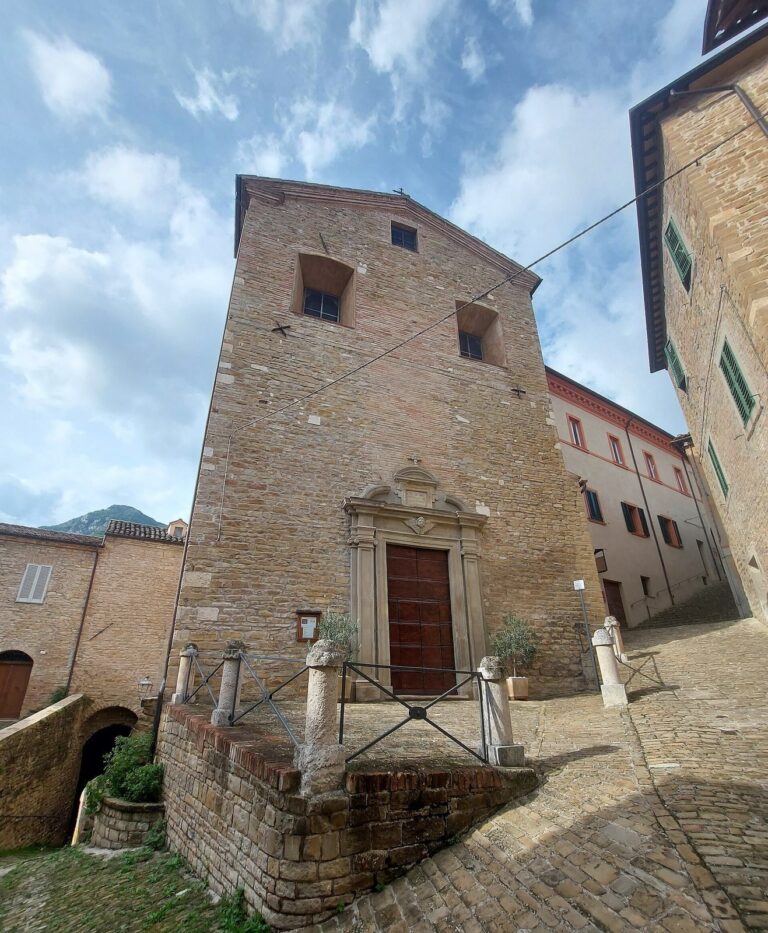
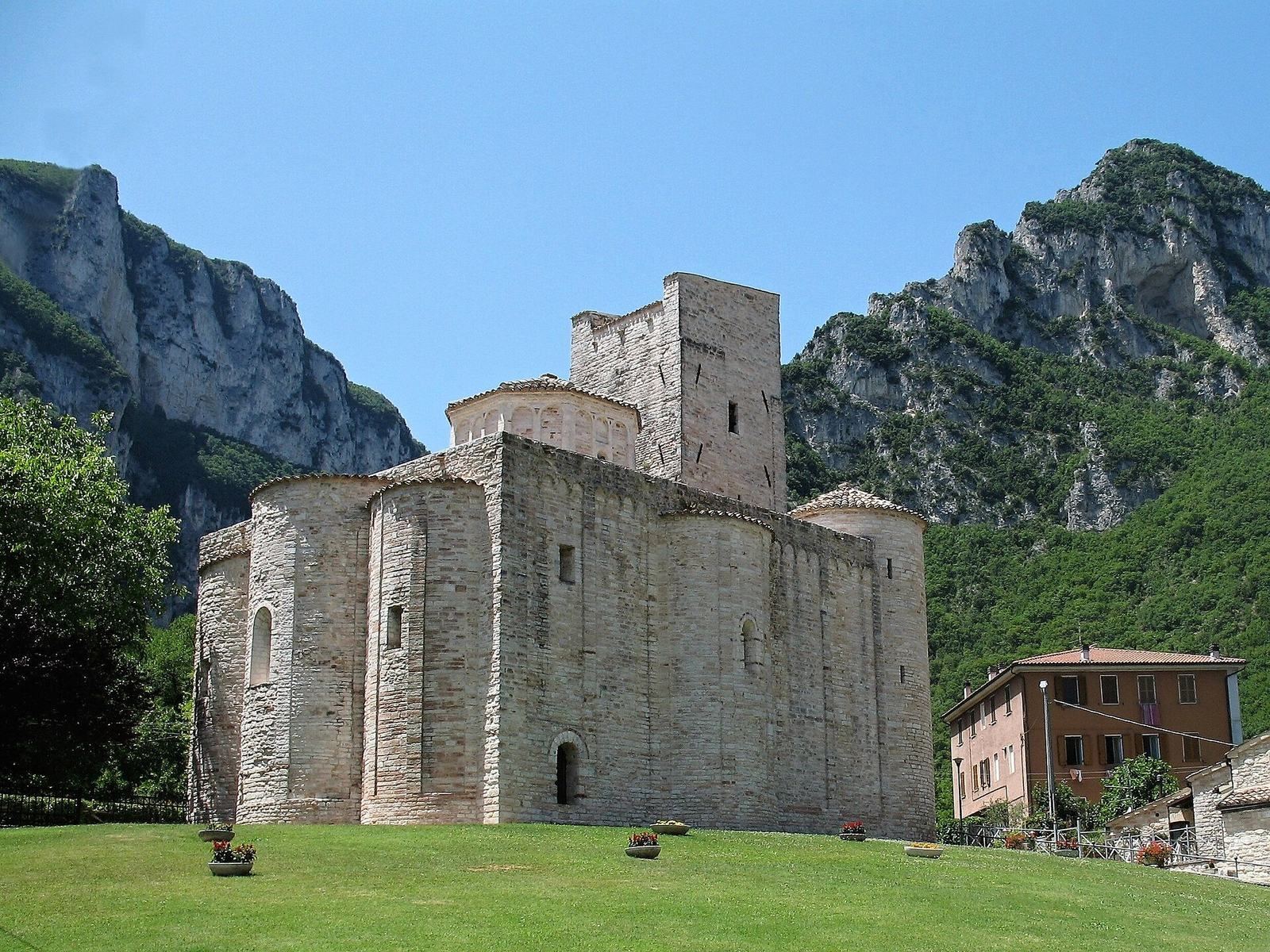
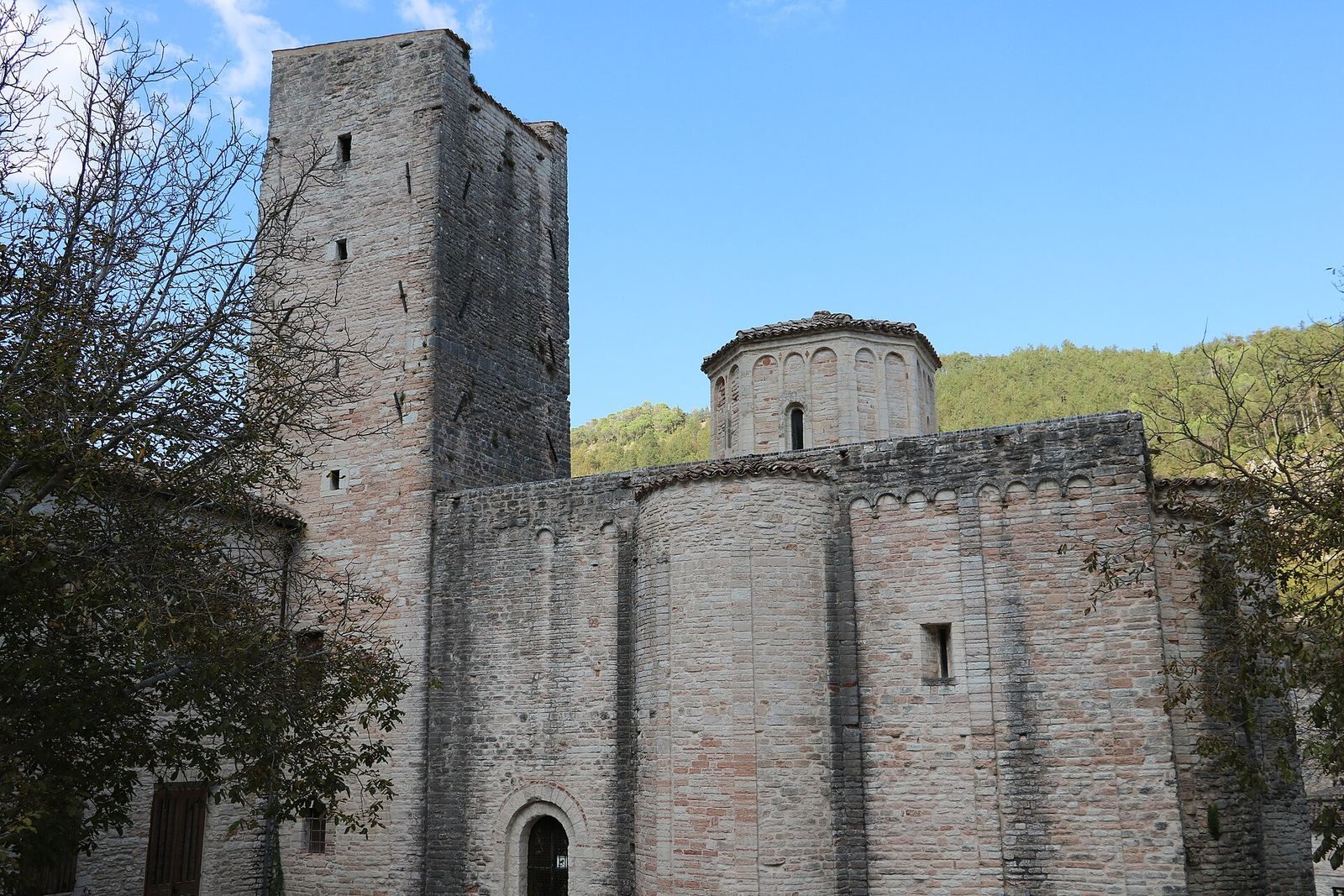
The church stands in an isolated position at the meeting of the Sentino and Esino rivers, near the Frasassi gorge and caves. Its compact limestone structure has a massive, fortress-like appearance. A Greek-cross plan, with four arms of similar length, fits within an almost square outline.
Church structure
Central plan and interior
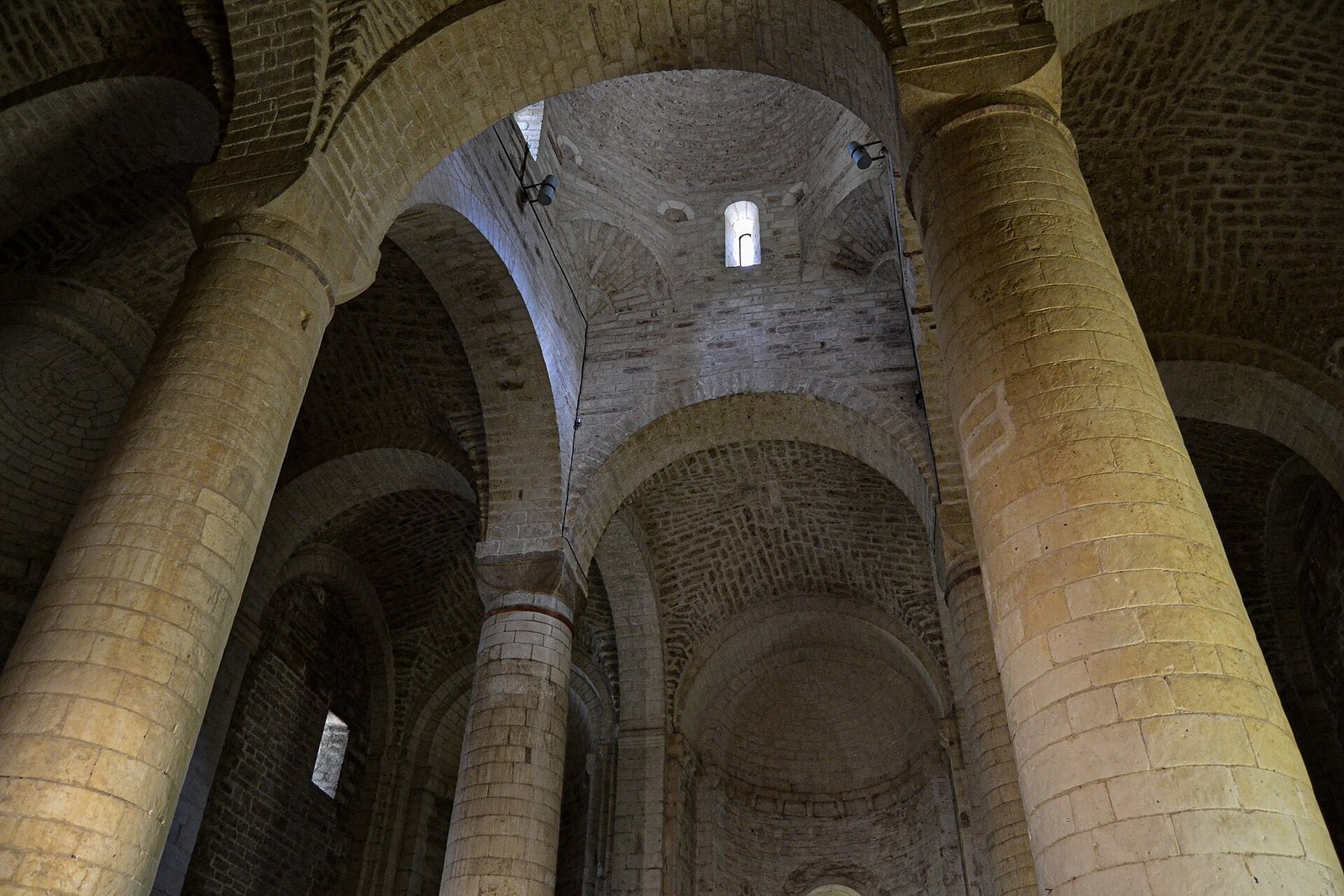
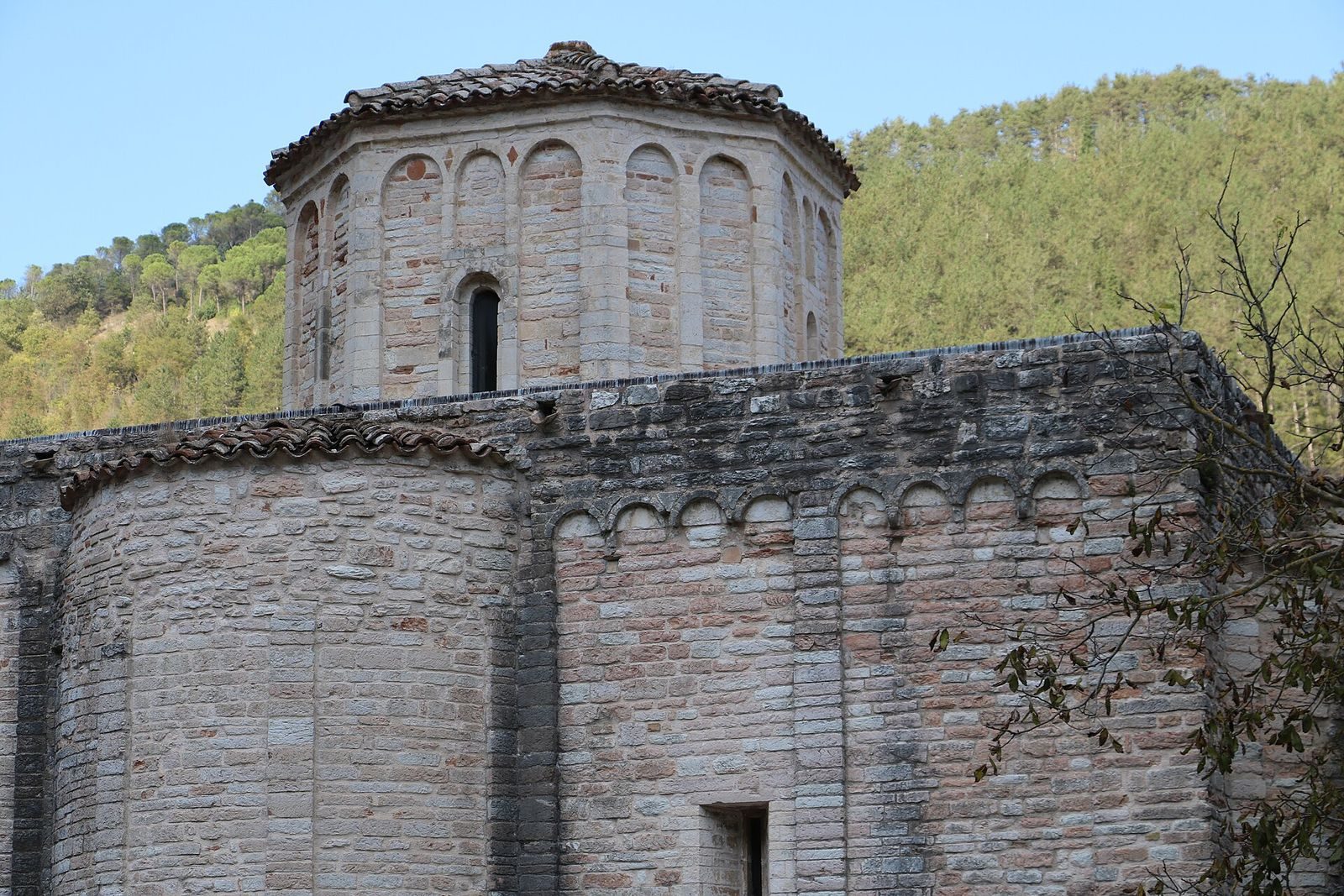
Four columns divide the interior into nine bays, or compartments. Groin vaults, ceilings formed where two vaults cross, cover the eight outer bays; a dome occupies the centre. Arches and trumpet squinches, supports that bridge the corners below a dome, carry the dome above the columns. An octagonal lantern, a raised structure around a dome, encloses it. Five semicircular apses, projecting spaces, extend around the perimeter: one on either side and three at the eastern end. The eastern apses are tall, with the central one slightly larger than its neighbours. The columns also have decorative brickwork. Near the doorway to the left of the altar, an engraving resembles either an upright figure eight or a vertical infinity symbol; its meaning is uncertain.
Exterior and western entrance
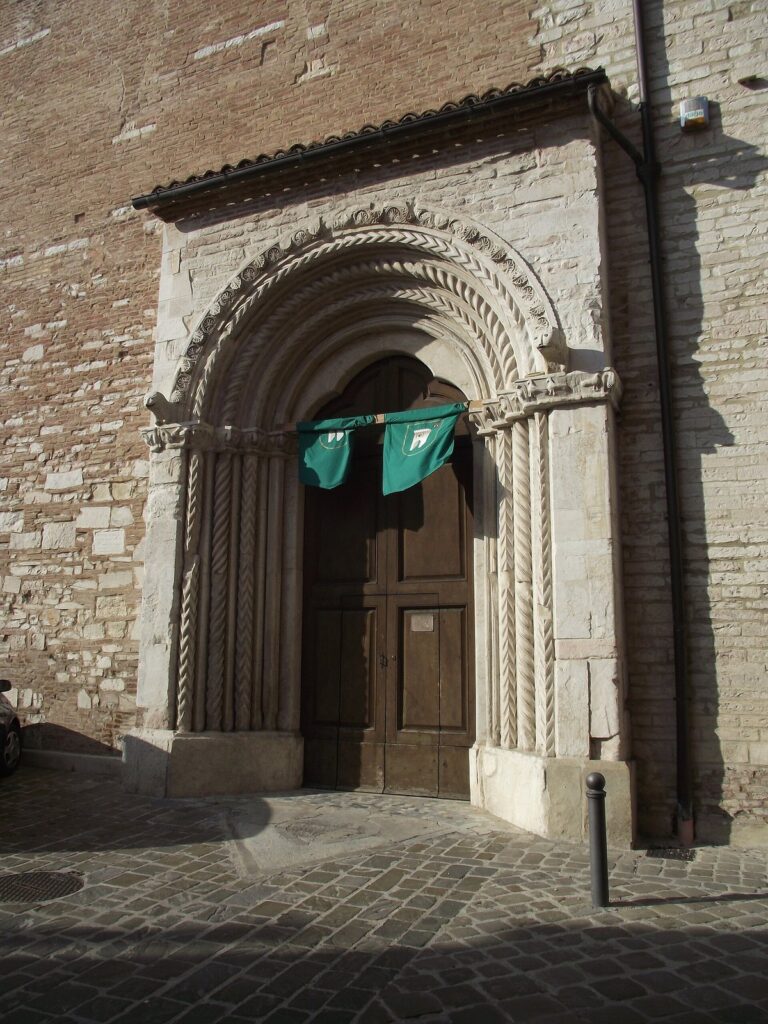
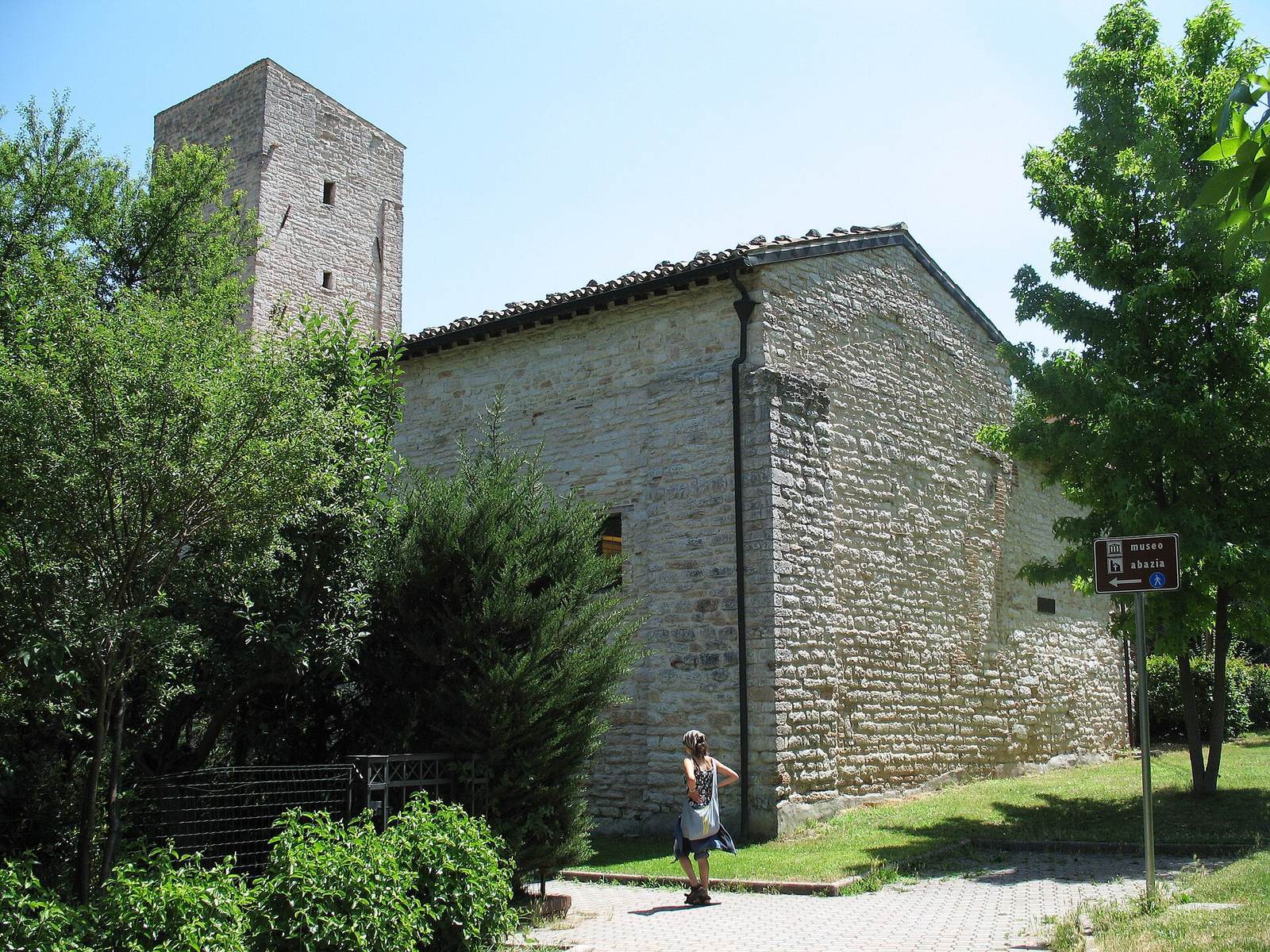
The west front has a low cylindrical tower and a taller four-sided tower. One replaced an earlier tower, although the predecessor’s form and the precise sequence of replacement remain uncertain. An enclosed atrium between the towers creates an entrance arrangement resembling a westwork, a monumental western entrance organized around towers and an enclosed space. A projecting entrance section with a pointed doorway was added on the western side during the 13th or 14th century. The exterior includes blind arches, set into the wall without openings, small arches supported by projecting stone blocks, and pilasters, shallow vertical wall projections. The northern apse retains its original decoration of vertical strips and small arches.
Regional architectural relationships
San Vittore belongs to a group of churches outside towns in the Marche, characterized by central plans and massive, nearly cubical exteriors. The group, dated to 1070–1110, also includes the Abbey of Santa Maria delle Moie and the Church of Santa Croce di Sassoferrato, and takes the Church of San Claudio al Chienti as its model. The central plan has often been linked to Byzantine architecture, which developed in the Eastern Roman Empire. Another interpretation sees the design as an independent development drawing on northern and western traditions found in German, Norman, Lombard, and Apulian churches. The exterior masonry has also been compared with Lombard architecture, while the raised lantern has similarities to Armenian-Byzantine features associated with Armenian and Byzantine traditions.
Associated abbey remains
A small number of rooms from the former monastic complex survive. A medieval bridge crossing the Sentino is also associated with the abbey.