Church of the Resurrection of Christ in Lebedyn: A Historic Wooden Parish Church
Site at a Glance
- Popularity
- Very Low
- Country
- Ukraine
- Primary era
- Early Modern
- Eras represented
- Early Modern, Modern
- Civilizations
- Russian
- Site type
- Religious
- Remains
- Church
On this page9 sections
History
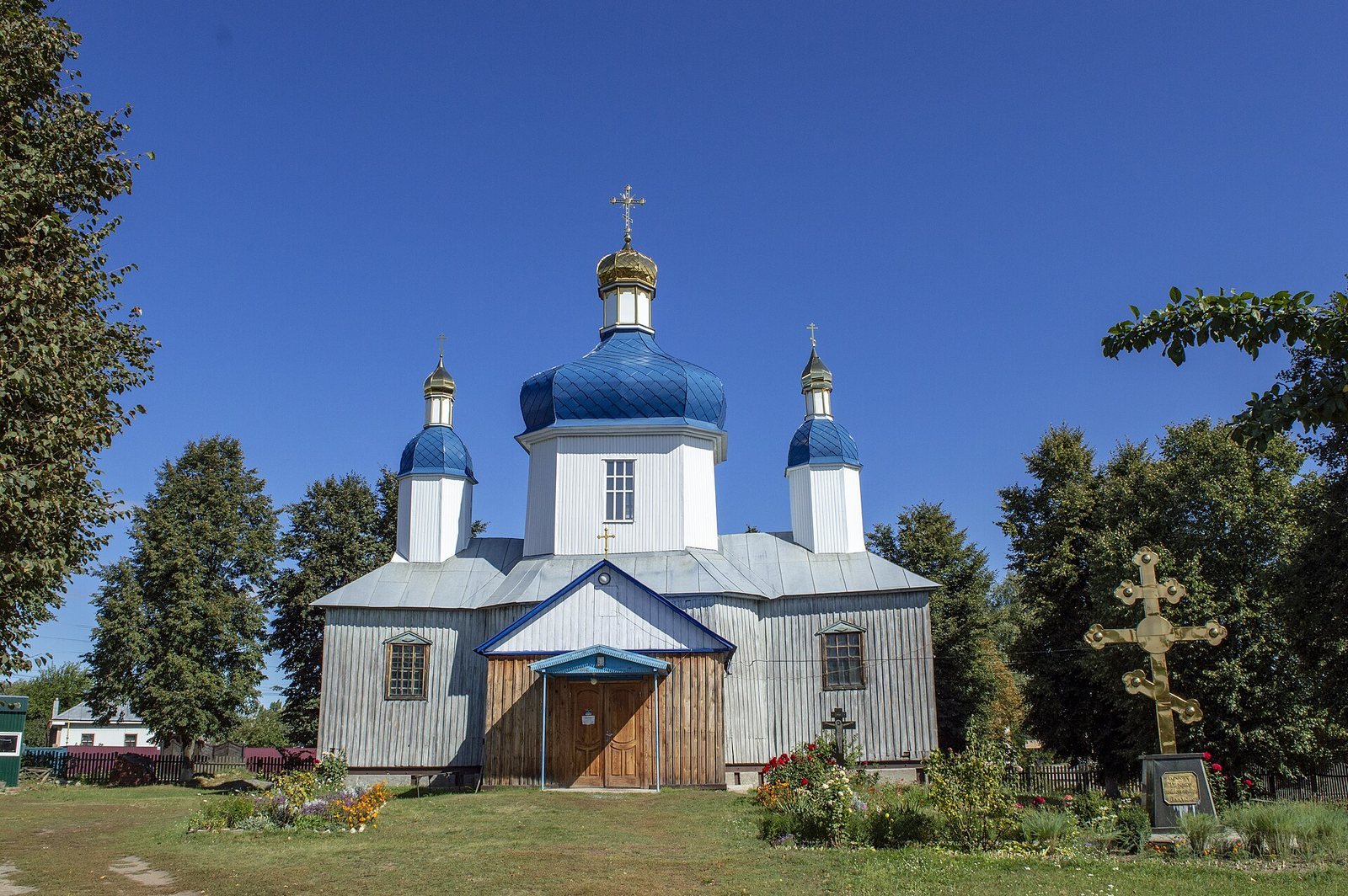
The Church of the Resurrection of Christ in Lebedyn is a wooden parish church in Ukraine whose foundation dates to the seventeenth century. It belongs to the folk wooden-architecture tradition of Slobozhanshchyna, the historical region of northeastern Ukraine, and is described as the oldest church in modern Lebedyn and the region.
Foundation and rebuilding
The first priest, Ioan, was ordained in 1701, and another priest of the church, Stefan, died in 1709. Its oldest surviving register entry dates to 1742 and was written by Ioan Ivanovych Shkurka. A document from 1783 described the church as needing no repairs, placing the fire that destroyed it between 1783 and 1789.
In 1788, after tsarist authorities decided to close the Hermitage of the Forerunner, a monastic establishment named for John the Baptist, whose traditional Christian title is the Forerunner, landowners A. H. Ivanenko, a major general, and I. S. Miklashevskyi, a major, gave its refectory church for the rebuilding. The refectory church was dedicated to the Entry of the Mother of God into the Temple, a Christian feast. The replacement church was completed in 1789, largely through the efforts of priest Hryhorii Shkurskyi and parishioners.
Expansion and parish growth
In 1816, the Bishop of Sloboda Ukraine and Kharkiv described the church as sound and newly roofed. It later became a three-altar church. Repairs in 1867 enlarged the building with side chapels; their altars were installed in 1880 and consecrated the following year. The parish grew from 1,170 people in 1790 to 1,572 in 1868 and 2,324 in 1904.
Closure, damage, and renewed worship
In 1929, Soviet Communist Party leader and senior official Lazar Kaganovich signed a circular urging intensified anti-religious activity. All churches in Lebedyn, including the Resurrection Church, were subsequently closed. From 1937 to 1939, half the building was dismantled, and its materials were used for a pigsty at the Stalin collective farm. By spring 1941, the bell tower, entrance vestibule, and enclosure had also been dismantled. Before the war, the remaining church served as a collective-farm storehouse.
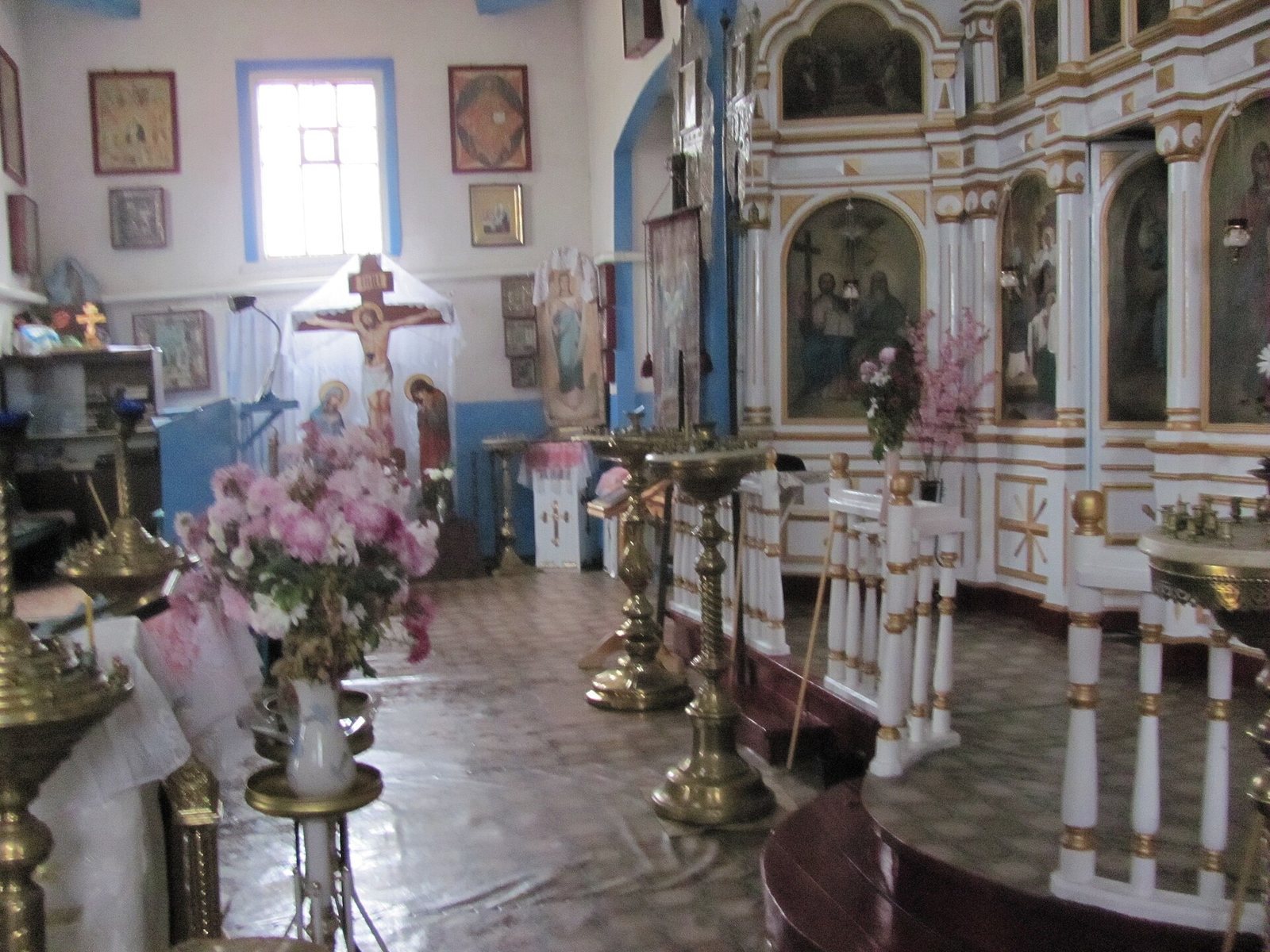
Local recollection connects the halt in demolition to a fatal incident: a man who had knocked the cross from the central dome fell and died, an event regarded as divine punishment. During the German occupation, parishioners repaired the church, made a new iconostasis, a screen of icons separating the sanctuary from the main body of the church, and resumed services. Worship continued after the war.
Postwar survival
The church was closed again during the 1950s and 1960s, and its parish group of twenty was dispersed. Under Soviet law, twenty lay believers were required to register a religious community. The persistence of parishioners helped save the building from complete destruction. Priest Ivan Dmytrovych Prykhodko served there for many postwar years. During Stalin’s rule, he spent 25 years in penal labor in Siberia because of his religious faith and activity. With his own resources and help from parishioners, he rebuilt and reopened 12 churches in Sumy region. He died on 31 December 1997, aged 97.
In 1993, rector Mykhailo Andriiovych Kudlai undertook repairs, and gas heating was installed. Later, rector Mykola led efforts to save the church as substantial restoration was considered necessary to halt its deterioration. The building is protected by the state as an architectural monument.
Remains
Wooden church
The church is built of pine logs, with parts of oak posts surviving beneath its central timber structure. Its log frames were erected on brick foundations in 1867; the central octagonal structure and five-sided altar apse, the sanctuary end of the church, are identified as original. It is regarded as the only wooden church on the Left Bank, the lands east of the Dnieper River, built without a single nail, and as a now-unique example of the final phase of the Slobozhanshchyna folk wooden-architecture school. The 1789 church began as a single-altar building with three domes covered in white iron and painted green. It had 24 large and small windows and four doors. Later, side chapels and altars honored the Resurrection, the Christian belief that Jesus rose from the dead; the Transfiguration, a Christian feast; and Saint Basil the Great, a fourth-century bishop and theologian.
Bell tower and enclosure
The bell tower was originally a separate wooden structure crowned by one dome and was later joined to the church. A description of the joined structure notes an iron foundation and iron roofing. The enclosure was replaced with a wooden one in 1993.
Movable heritage and churchyard
The church preserves eighteenth-century processional banners, examples of metalwork from their period. Parishioner Oleksii Zelenyi saved them from destruction. The church’s earlier holdings included a Psalter, a book of biblical psalms, dated 1749; an akathist, a hymn of praise used in Eastern Christian worship, dated 1737; and a service book containing liturgical texts and directions, dated 1747. The akathist and service book were printed in Chernihiv. Prykhodko’s grave lies in the churchyard to the right of the entrance.