Naukan: A Naukan Yupik Settlement on the Bering Strait
Site at a Glance
- Popularity
- Very High
- Country
- Russia
- Primary era
- Medieval
- Eras represented
- Medieval, Modern
- Civilizations
- Unclassified
- Site type
- City
On this page12 sections
History
Naukan was a settlement founded by Naukan Yupik people in the 14th century on Cape Dezhnev, on Russia’s Chukotka Peninsula shore of the Bering Strait. Its name comes from Nuvuqaq, meaning “sod-covered.” Until 1958, Naukan was the easternmost settlement in Eurasia; that distinction then passed to Uelen, about 16 km to the northwest.
Settlement on the Bering Strait
In 1648, one of the vessels of Semyon Dezhnev, a Russian explorer and navigator whose travels took him through northeastern Siberia and Arctic waters, was wrecked near Naukan. Travelers moving from Uelen and Naukan toward Lavrentiya and Nunyamo also stopped at Cape Leimin to collect snow.
Soviet relocation and disbandment
In 1947, Soviet authorities forced residents of Big Diomede, an island in the Bering Strait, to leave their home and transferred them to Naukan. During the 1950s, a wider Soviet resettlement program affected Siberian Yupik communities. Authorities first proposed combining Naukan’s community with neighboring Yupik communities. In 1954, Naukan’s local assembly approved a move to nearby Dezhnevo, but housing planned for Dezhnevo and Naukan was never built, and the relocation did not happen.
An unofficial eviction process began in 1954, apparently linked to strategic preparations for a possible military confrontation with the United States. In 1958, Soviet authorities forcibly moved Naukan’s inhabitants, mostly to Nunyamo, around 60 km away, a settlement previously inhabited by Chukchi people. The transfer happened quickly, largely over the summer. Naukan then had about 400 residents belonging to 13 clans. Residents were promised that their settlement would remain available as a hunting base.
Naukan was formally disbanded during a campaign to consolidate rural districts. On November 20, 1958, a decision by the executive committee of the Chukotka District Council of Workers’ Deputies formally ended the eviction and declared the territory uninhabited.
Dispersal and later recognition
Relocation scattered Naukan people among Chukchi communities and settlements where other Siberian Yupik languages were spoken. Most initially went to Nunyamo, where differences in language and customs made integration difficult. In 1967, most residents asked to move to Pinakul, but the authorities refused. Pinakul closed in 1969 and Nunyamo in 1977, bringing another move within two decades. Many people were then transferred to Uelen and Lavrentiya. Naukan families are also associated with Lorino, Chaplino, Sireniki, Uelkal, Anadyr, Magadan, and Vologda. The dispersal brought the Naukan language close to extinction; only a few dozen people speak it today.
In 2018, a proposed installation of memorial signs honoring “Orthodox conquerors of Chukotka” near Naukan caused a dispute between the Beringia park administration and Orthodox activists. Naukan is a Russian federal-level cultural heritage site and appears on Russia’s Tentative List for UNESCO World Heritage, a list of places the country may consider nominating. In 2019, it was included in a proposed heritage group for the culture of Arctic marine hunters of Chukotka, alongside the Ekven settlement and burial ground and the Nunak settlement. Naukan is now within the Uelen sector of the Russian section of Beringia Nature-Ethnic Park, a protected area intended to conserve natural landscapes and support Indigenous cultural heritage.
Remains
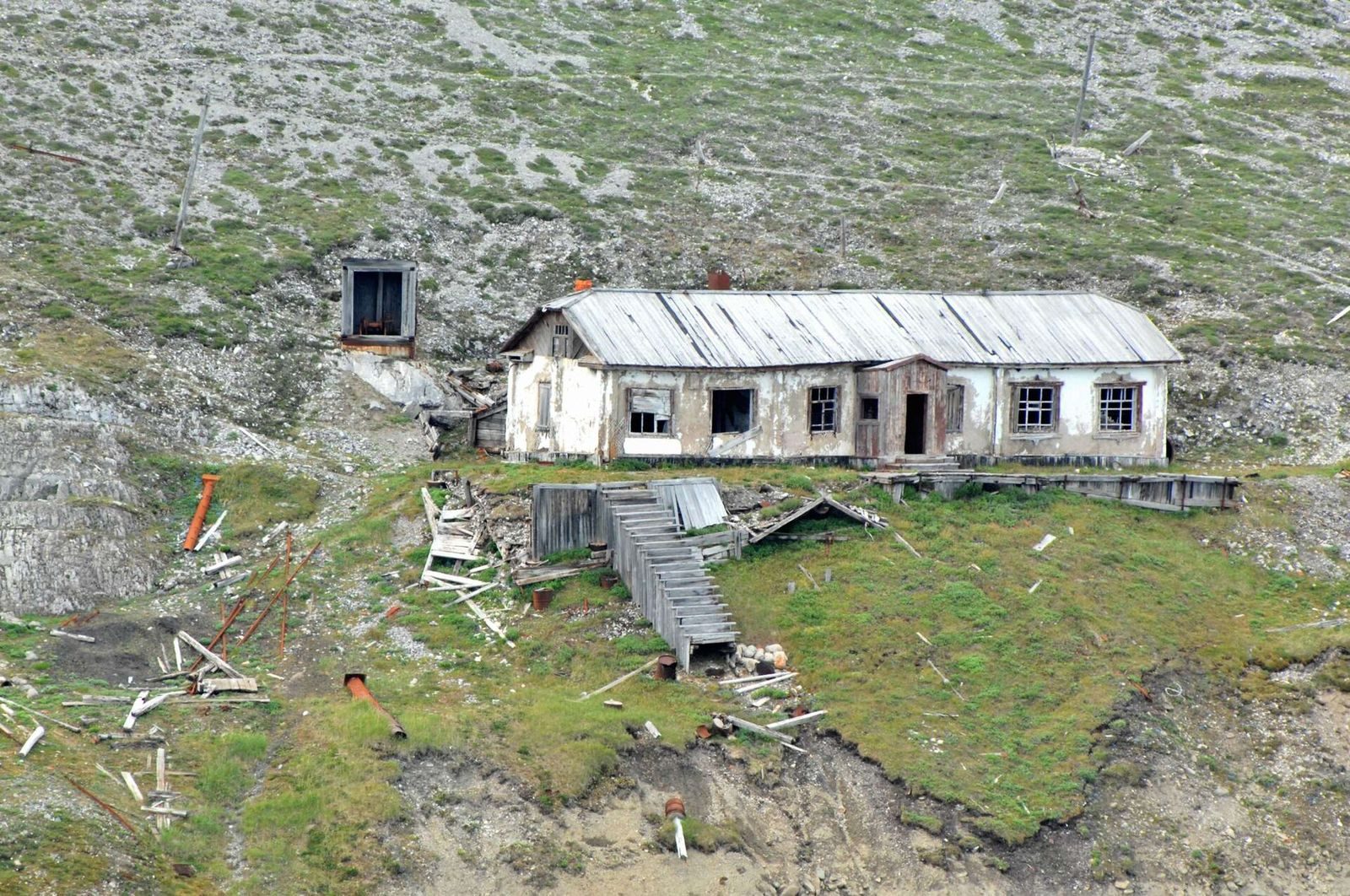
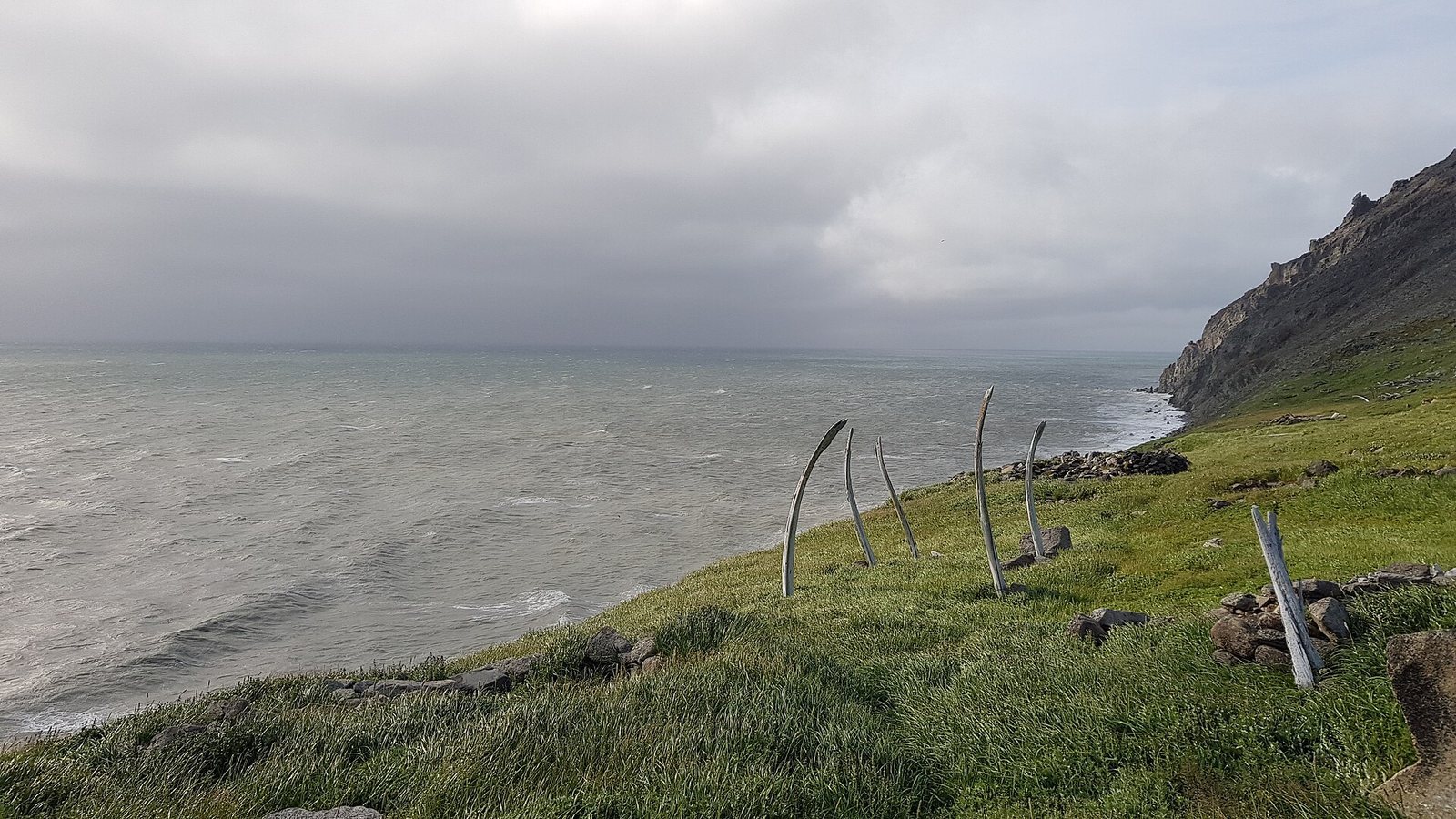
On Cape Dezhnev, Naukan’s surviving physical features include stone walls from dwellings, upright whale lower jaws used in winter as boat racks, and later memorial structures. These remains preserve traces of both settlement life and commemoration.
Settlement remains
Dwelling walls
Stone walls are the surviving remains of Naukan’s dwellings. They provide the principal recorded evidence of the settlement’s buildings.
Boat racks
Lower whale jaws were set upright in the ground to serve as racks for walrus-hide boats. During winter, the boats were hung on them to keep dogs from gnawing the hides.
Memorial structures
Dezhnev bust
A bust on Mount Ingegruk commemorates Dezhnev’s shipwreck near Naukan.
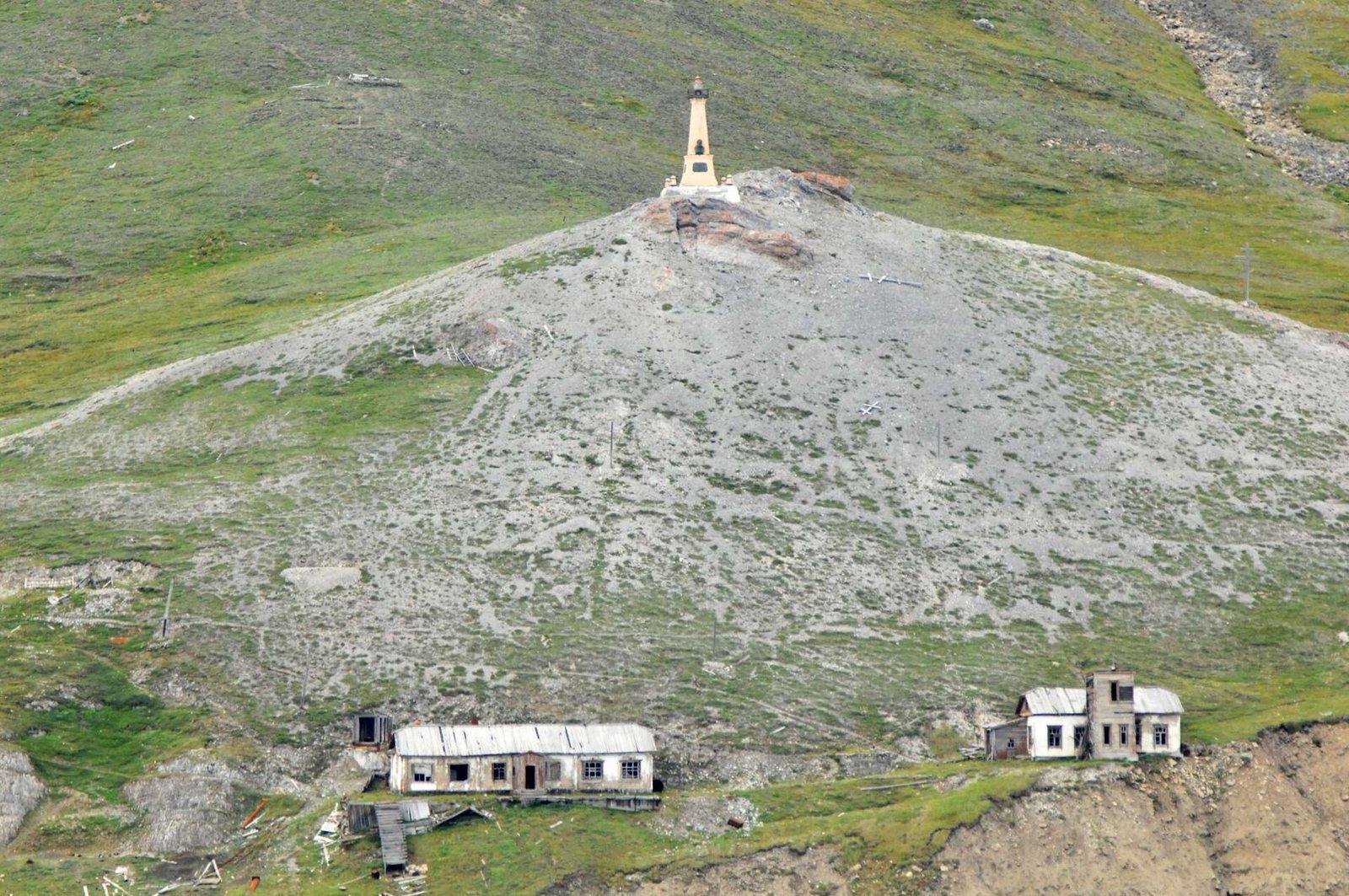
Lighthouse monument
A lighthouse monument was built at Naukan in 1956.
Wooden cross
A wooden cross stands near the lighthouse. It replaced an earlier wooden cross erected there in 1910 on the initiative of Paul Simon Unterberger, a Russian military officer and administrator active in the Russian Far East.