Church of the Resurrection of Christ at Matigory: An Orthodox Church in Russia
Site at a Glance
- Popularity
- Low
- Country
- Russia
- Primary era
- Early Modern
- Eras represented
- Early Modern
- Civilizations
- Russian
- Site type
- Religious
- Remains
- Church
On this page8 sections
History
The Church of the Resurrection of Christ at Matigory is an Orthodox church in Khetka, within Upper Matigory in Arkhangelsk Region, Russia. Its dedication refers to the Christian belief that Jesus rose from the dead. Begun in 1686 and consecrated on 10 July 1694, the stone church replaced two earlier wooden churches.
Wooden predecessors and stone church
In 1597, Upper Matigory had wooden churches dedicated to St Nicholas, a fourth-century bishop of Myra revered in Orthodox Christianity, and St Paraskeva, an early Christian martyr venerated in that tradition. The churches had deteriorated by 1652, when they were dismantled and replaced with new wooden buildings. Fire destroyed both in 1685. Work on a stone church with three altars began on the same site the following year.
Closure and return to parish use
The church closed in 1937 and was assigned to the Kalinin collective farm for use as a grain and bread store. At the start of the Great Patriotic War, the Soviet Union’s war against Nazi Germany during the Second World War, its bells were taken to be melted down. A decision by the USSR Council of Ministers returned the church to its parish on 14 April 1948, and a handover and acceptance record was made on 23 May. It is now an active Orthodox church affiliated with the Arkhangelsk and Kholmogory Diocese, a bishop-led area of church administration, and has federal-level cultural heritage status in Russia.
Remains
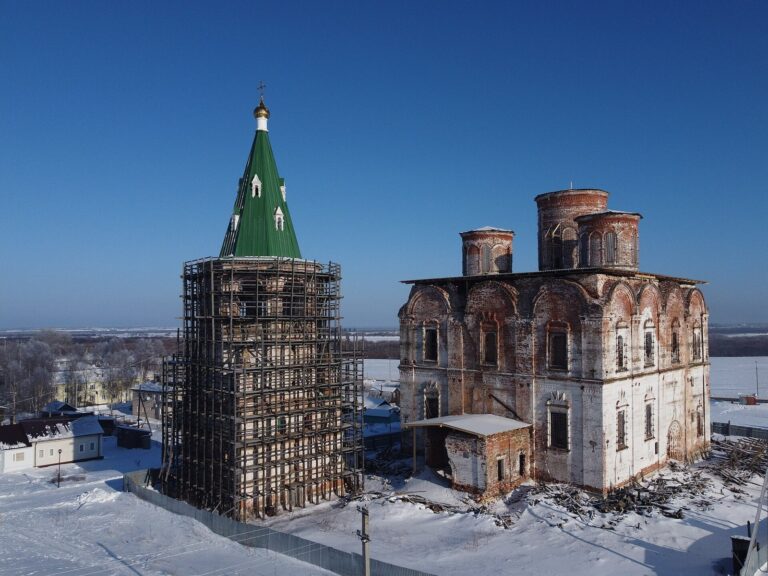
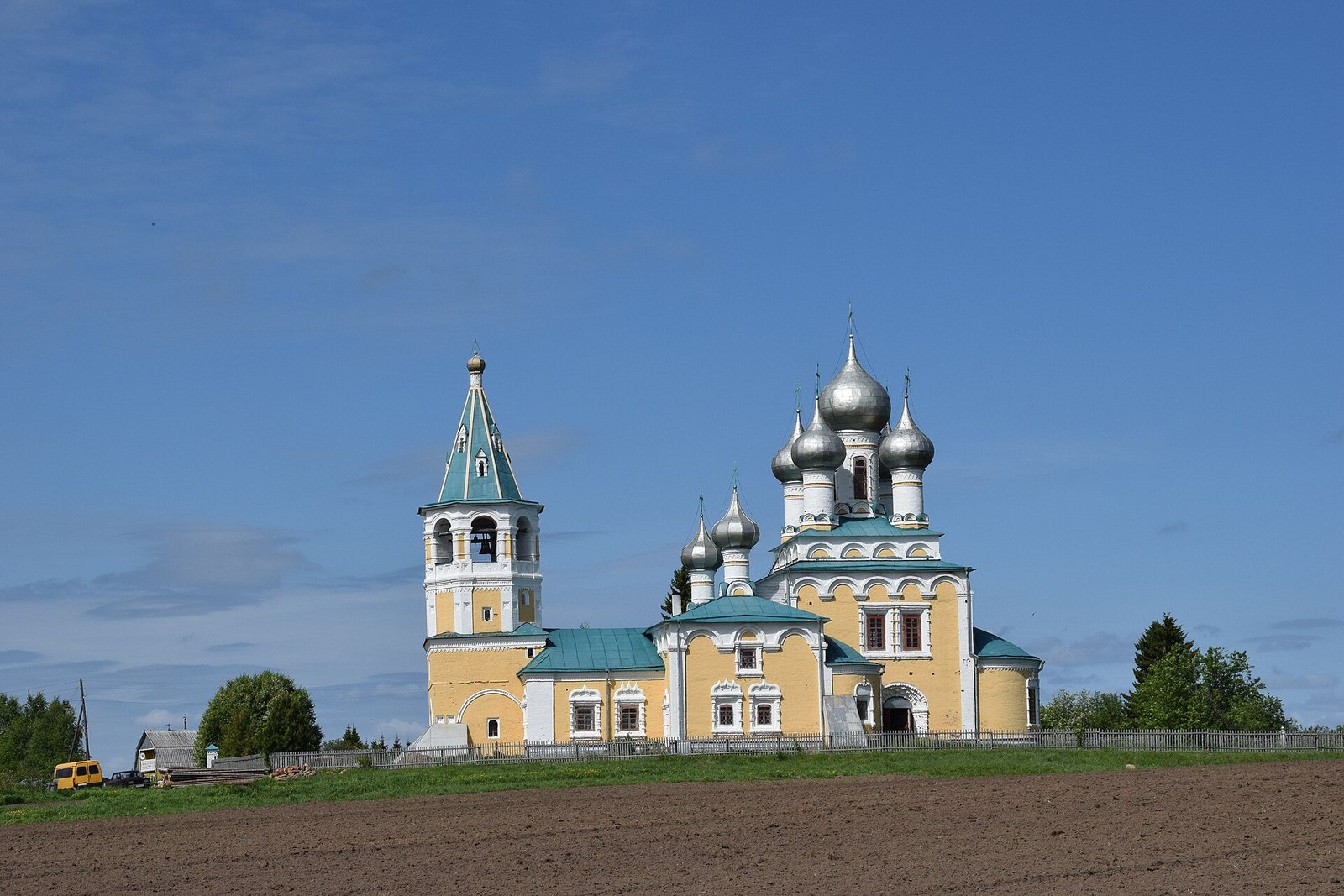
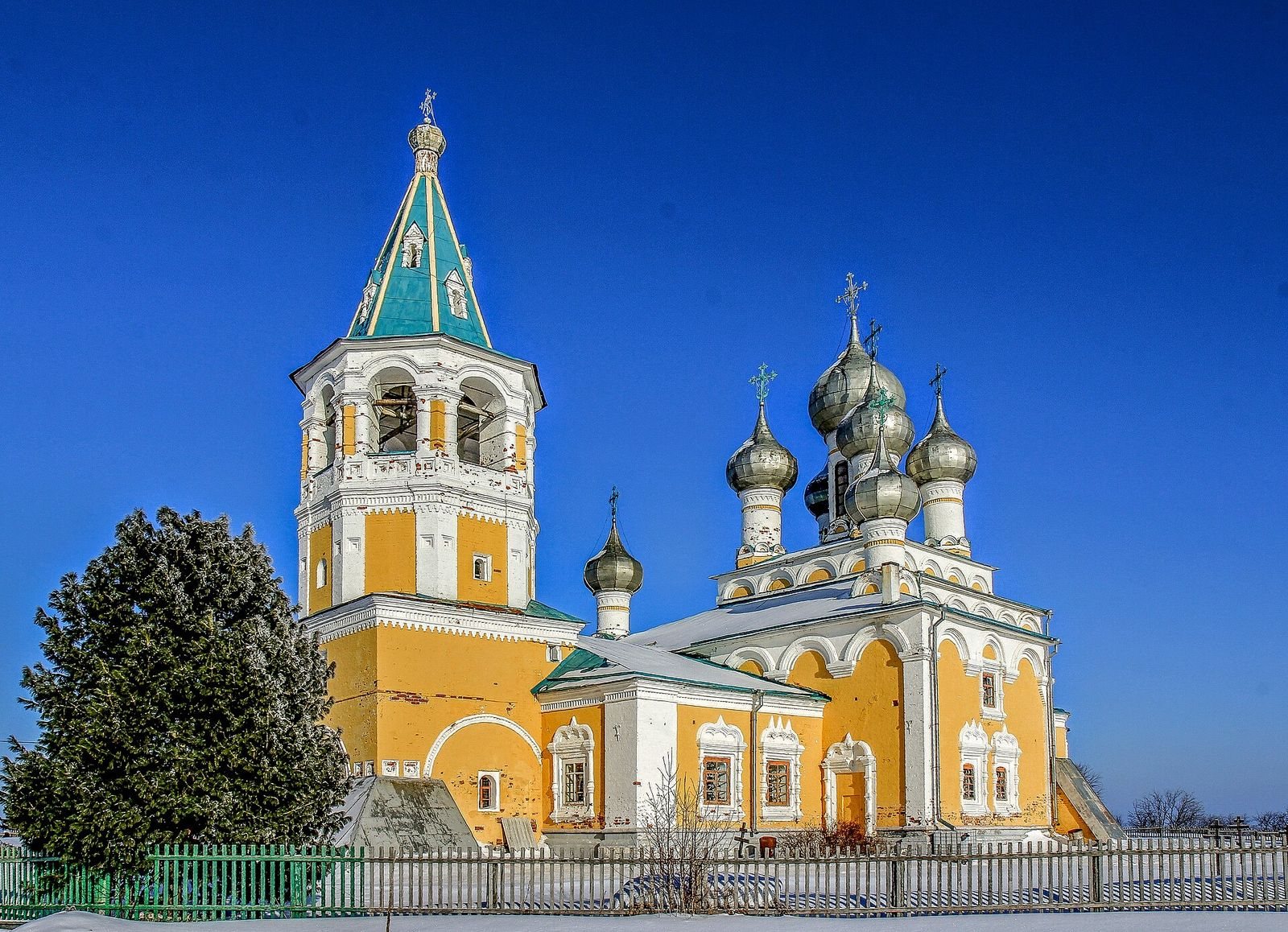
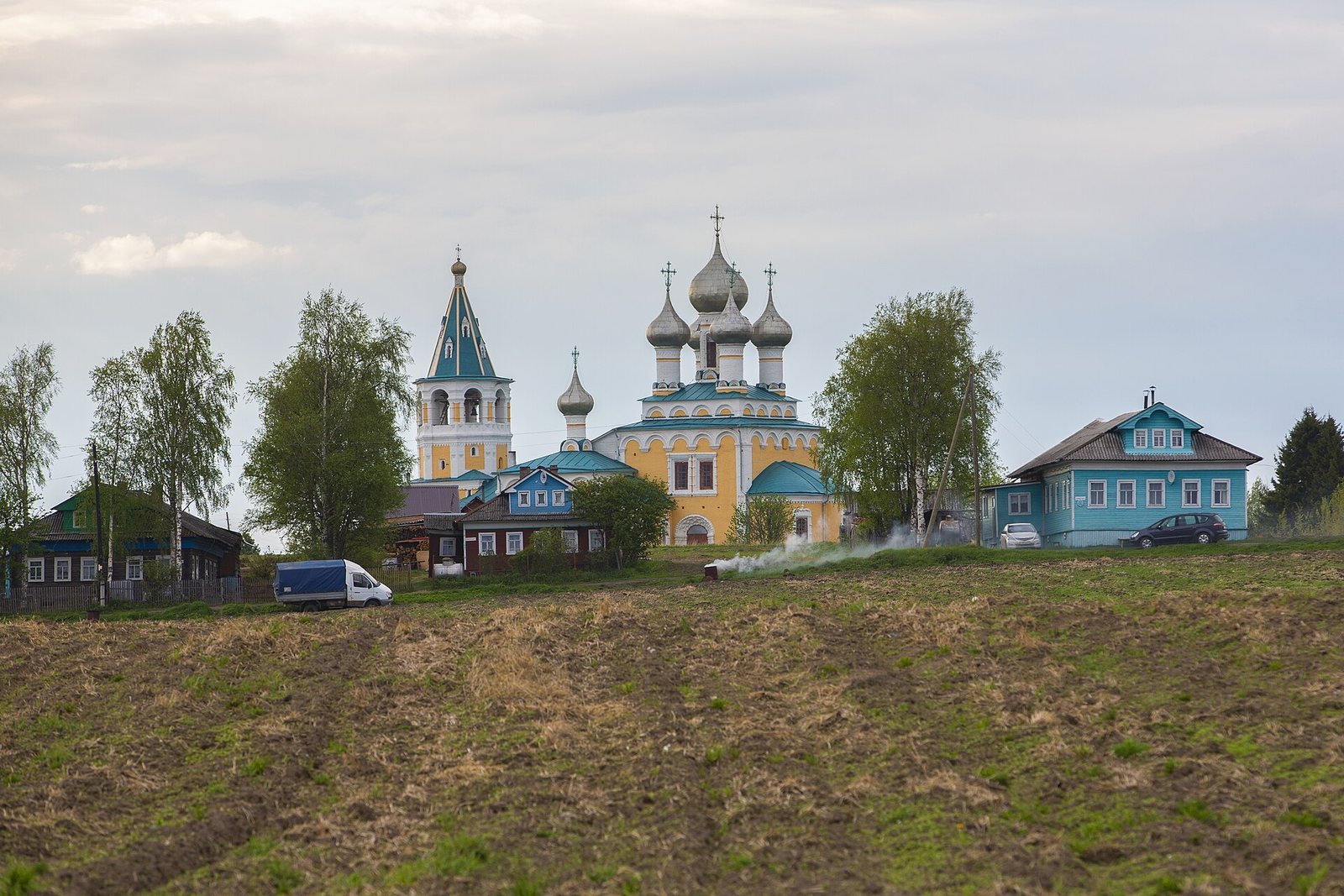
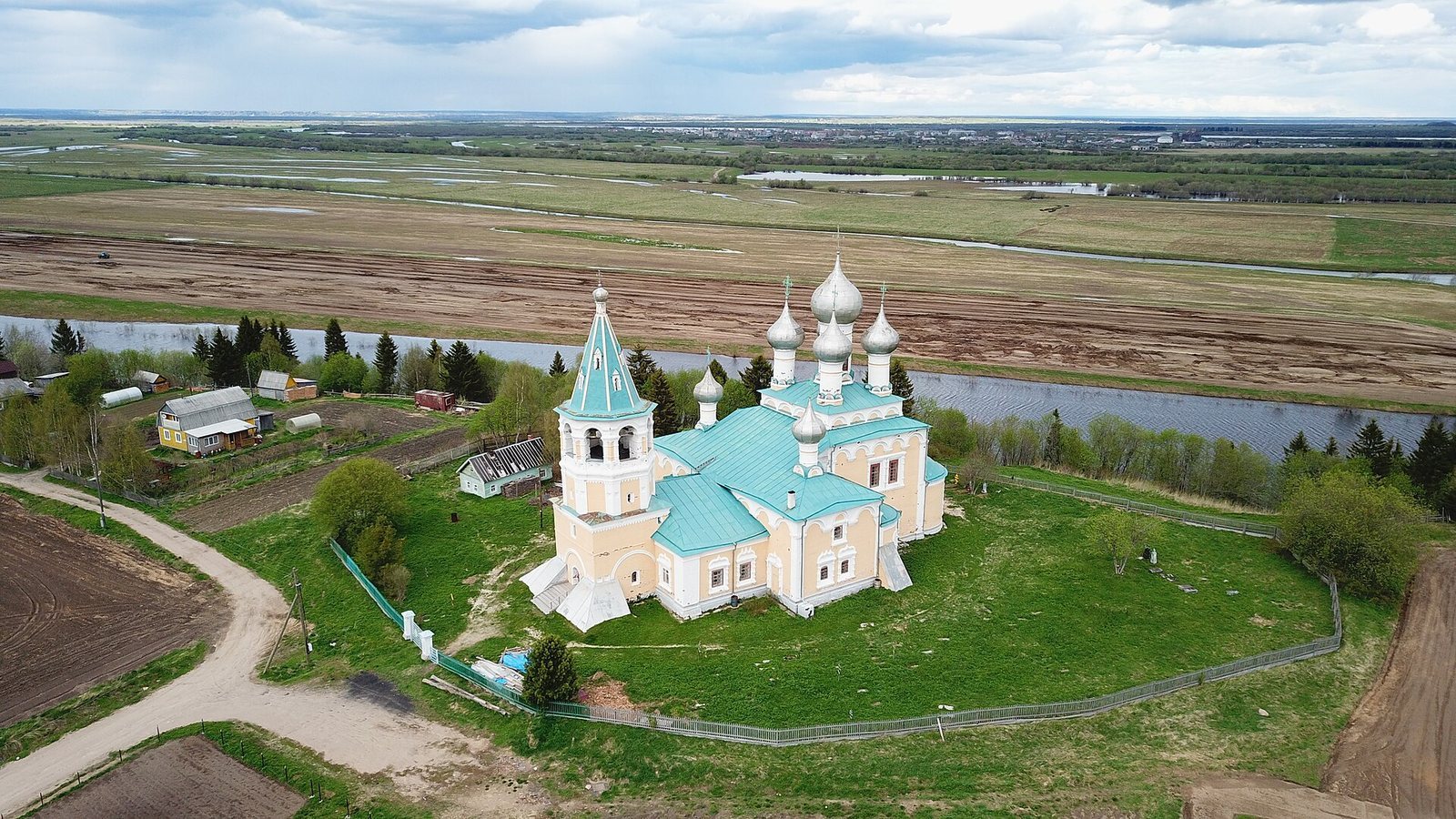
The church is a one-storey stone building with five domes, a stone bell tower, and three altars. It also includes a side chapel dedicated to St Paraskeva.
Condition recorded at handover
Main church
The 1948 inspection described the main structure as sound, while noting damage to its fittings and openings. The altar table and the tables used to prepare Eucharistic offerings had been destroyed. The iconostasis, a screen of icons separating the sanctuary from the main body of the church, had broken royal doors, the central doors leading to the sanctuary, and two lower-tier icons had been lost. All the windowpanes were broken. At the southern exit, the door’s central glass and outer wooden components had been destroyed.
St Paraskeva chapel
In the side chapel, the royal doors and two icons from the lower tier had been lost. Two of its windows had lost their sills.
Narthex and enclosure
The narthex, an entrance vestibule, had damaged reveals around its openings. The church enclosure had been destroyed.