Saint Roch Church in Bagolino: A Catholic Church Built after the 1478 Plague
Site at a Glance
- Popularity
- Low
- Country
- Italy
- Primary era
- Medieval
- Eras represented
- Medieval, Early Modern, Modern
- Civilizations
- Italian, Venetian
- Site type
- Religious
- Remains
- Church
On this page12 sections
History
Foundation and fifteenth-century frescoes
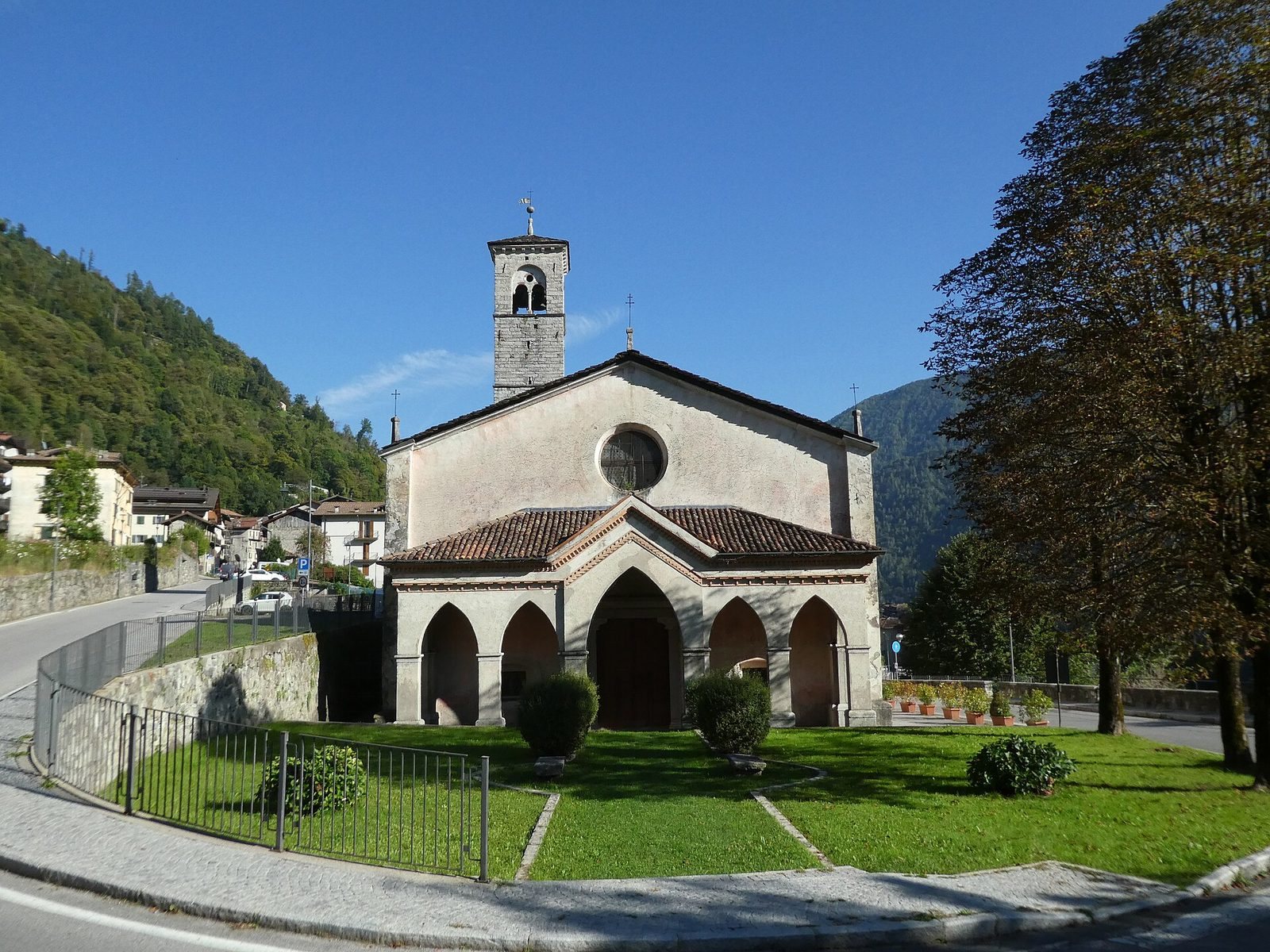
Saint Roch Church is a Catholic church at the entrance to Bagolino, Italy, dedicated to Roch of Montpellier, a medieval saint venerated as a protector against plague. The church was built shortly after the 1478 plague ended, as an expression of gratitude and a means of placing the community under the saint’s protection. The site may have hosted modest places of devotion from the Roman period onward.
In 1483, the Da Cemmo workshop, then a leading painting workshop in Valcamonica, was commissioned to decorate the chancel arch and presbytery. The workshop included Pasotto and his son Giovanni Pietro, who was emerging as its leading artist. Giovanni Pietro worked on the fresco cycle between 1483 and 1486, signing it Cemigena.
Expansion and changing decoration
By the mid-sixteenth century, the church seemed too small and plain for Bagolino’s prosperous community. The builder Cristoforo di Osten of Como was entrusted with raising the bell tower, work completed in 1565. In 1577, the enlargement of the nave was ordered and placed in the hands of Master Comino da Sabbio. After the work was finished, the bishop of Trento consecrated the church in 1585.
During the seventeenth century, large altars in the ornate Baroque style replaced the earlier decorative scheme, reflecting changing tastes. In the late nineteenth and early twentieth centuries, Neo-Gothic alterations changed the facade and the nave’s roof covering.
Rediscovery
The fresco cycle remained concealed for more than three centuries. It was uncovered and received its first restoration in 1956.
Remains
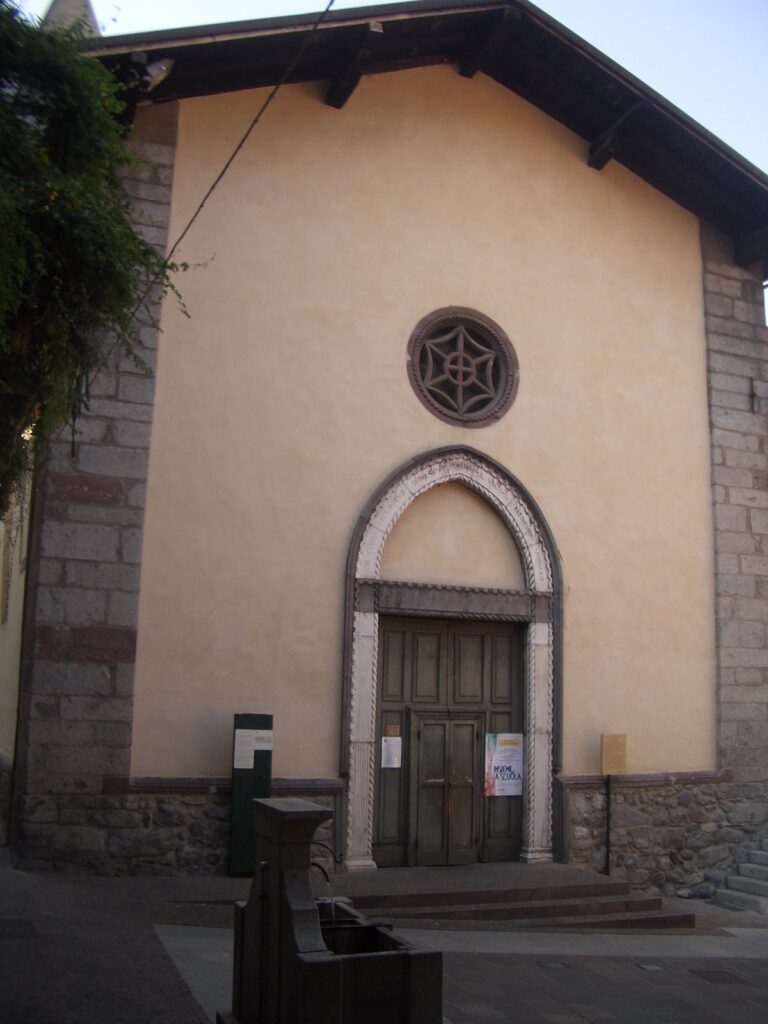
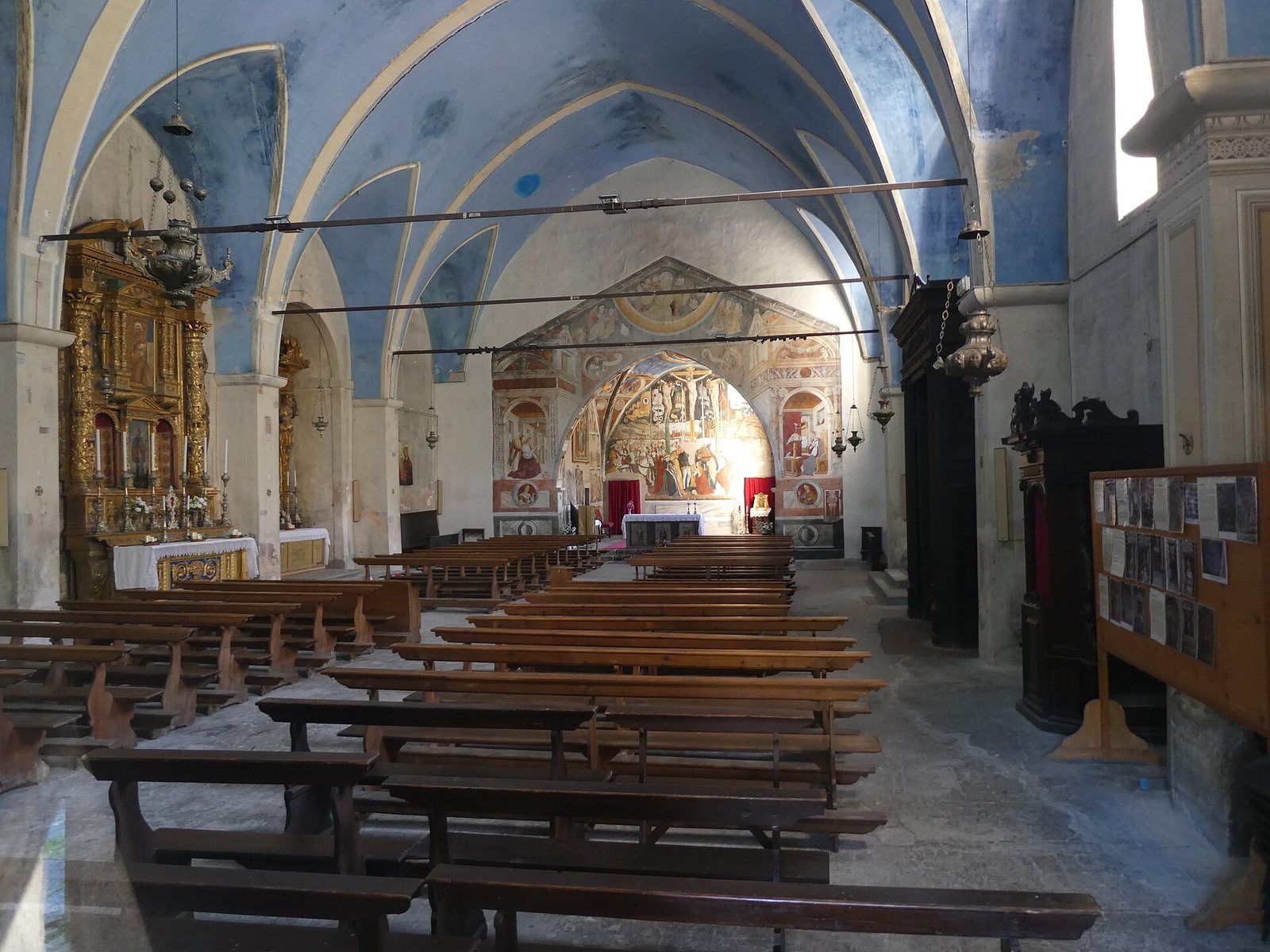
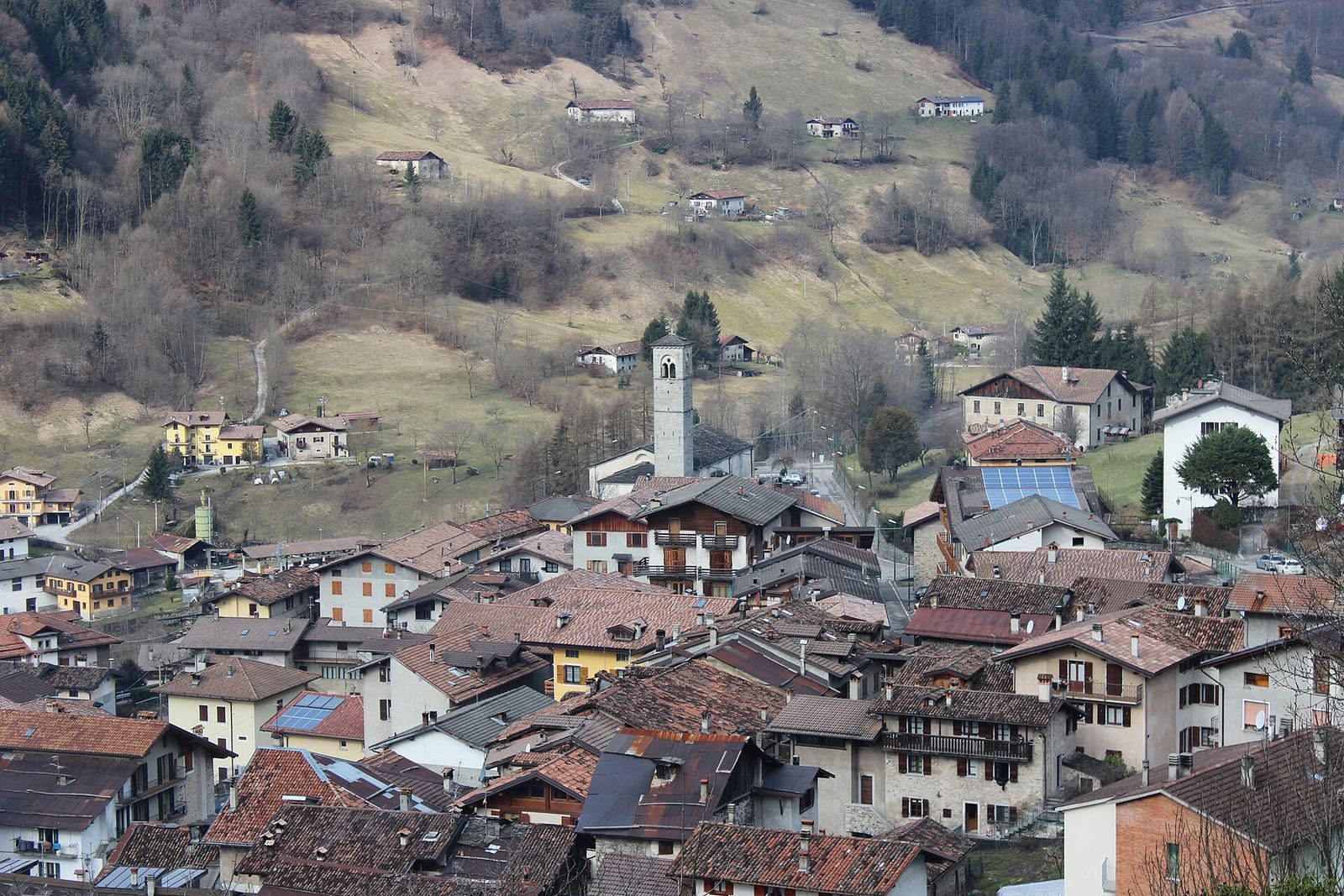
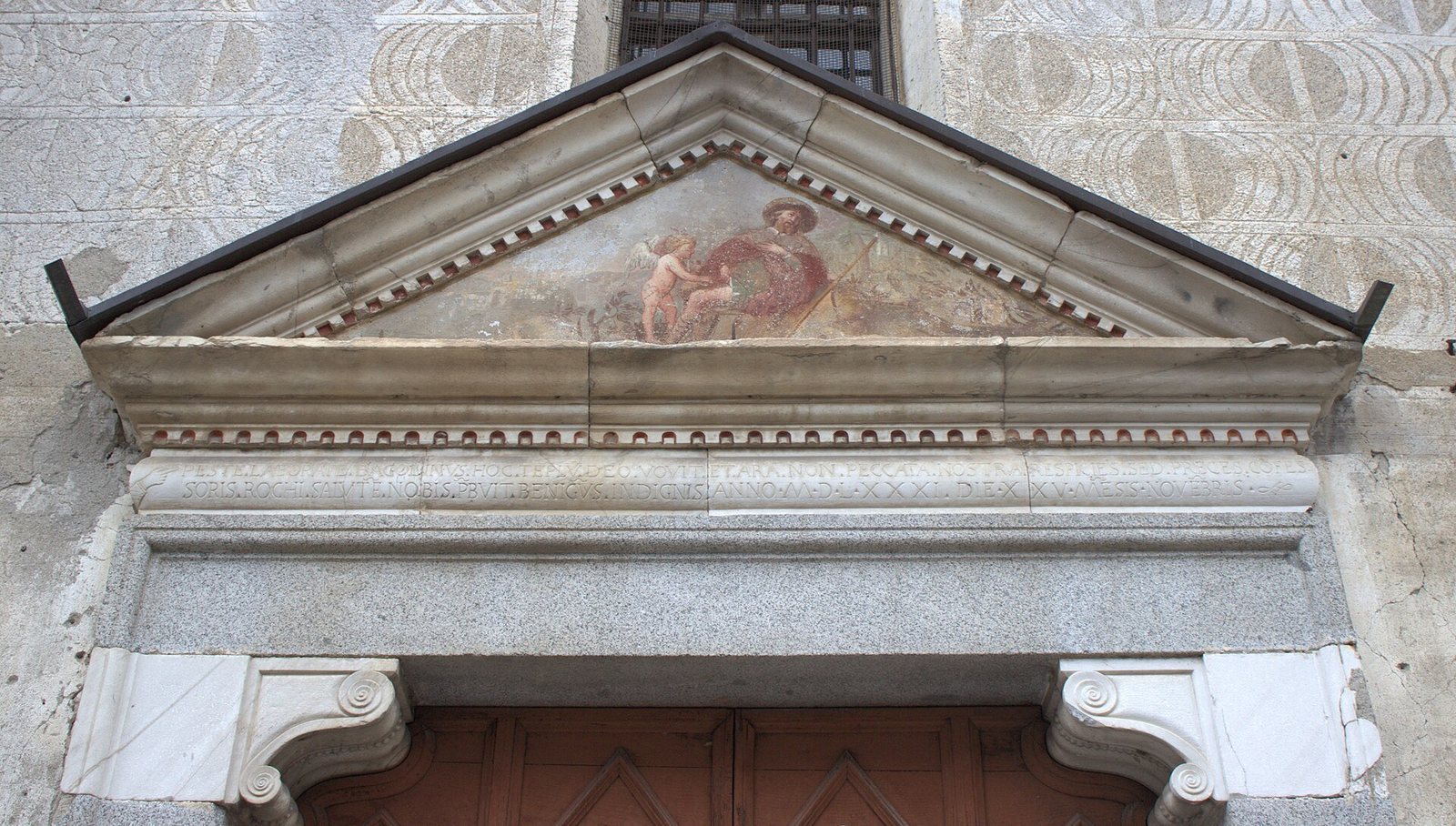
The church stands beside the road toward Crocedomini Pass, at the entrance to Bagolino. Its nave was widened and extended by two bays, or structural sections, and its bell tower was raised. A porch with pointed arches stands against the facade. Inside, a blue-painted false vault in Gothicizing forms replaced the earlier wooden covering of the gabled roof.
Presbytery fresco cycle
Chancel arch and vault
The frescoes cover the chancel arch, which divides the nave from the presbytery, the area around the main altar, and continue across the presbytery’s cross vault, formed by intersecting vaulted sections. The Annunciation spans the arch, with the angel on the left and the Virgin on the right. Between them, the Eternal Father appears within an almond-shaped halo. Twelve Sibyls, female prophetic figures understood in Christian tradition as foretelling Christ, line the underside of the arch. Each has a name and prophecy inscribed beside her. Their number echoes the twelve Minor Prophets, the shorter prophetic books of the Christian Old Testament, rather than the more usual ten. The Cumaean Sibyl wears Florentine-style dress, while the European Sibyl has a tall, conical women’s headdress.
Four large figures of the Evangelists occupy the curved surfaces of the vault. The curved transition surfaces between its supports show the four symbolic creatures associated with the Evangelists on one side and the Doctors of the Church, authorities in Christian teaching, on the other. Eight circular, monochrome paintings around the lower vault depict biblical episodes from Adam to Lamech, identified as Cain’s fifth descendant. The scenes emphasize continuity between the Old and New Testaments. John is depicted as the oldest Evangelist, with a long white beard.
Rear and side walls
The Crucifixion fills the presbytery’s rear wall. Its crowded scene of people and horses forms a dramatic climax to the cycle. The side walls show episodes from the lives of Saints Roch and Sebastian, both invoked for protection against plague. Their stories follow familiar episodes from the Golden Legend, a medieval collection of saints’ lives.
Within a damaged area on the left wall is a detached fresco taken from a farmhouse in the Bagolino area. It depicts the Madonna and Child between Saint Anthony Abbot, an early Christian monk, and Saint John the Evangelist, an apostle, and is attributed to the Da Cemmo school.
Style and attribution
The cycle combines solid, sculptural figures associated with Andrea Mantegna with a developed use of perspective reflecting the influence of Vincenzo Foppa. The announcing angel recalls Foppa’s figure in the Portinari Chapel, painted in 1468. The paintings also draw on International Gothic, a late-medieval European style, as well as Tuscan and northern European art. The Virgin’s blue drapery is damaged, while the room setting and carefully rendered objects reflect northern painting.
Nave altars and other paintings
Altars
Five large altars occupy niches along the nave. Their gilded wooden frameworks are probably the work of woodcarvers from the valleys around Brescia, while the paintings are by minor artists. The second altar on the right, dedicated to Saint Roch, combines sixteenth-century panel paintings with seventeenth-century wooden statues. The third and fourth altars on the right stand on either side of the chancel arch; they covered the figures of the Annunciation. The first altar on the right has an altarpiece by Baldassarre d’Anna, a pupil of Leonardo Corona, showing Saint Charles Borromeo between Saints Faustino and Giovita, early Christian martyrs venerated as patrons of Brescia.
Paintings formerly in the church
A painting of Saints Agatha and Apollonia, attributed to the school of Renaissance painter Floriano Ferramola, was formerly in the church and is now in the Episcopal Palace in Brescia.