Santa Lucia: The Catholic Mother Church of Mistretta
Site at a Glance
- Popularity
- Low
- Country
- Italy
- Primary era
- Medieval
- Eras represented
- Medieval, Early Modern, Modern
- Civilizations
- Habsburg, Italian, Kingdom of Sicily, Spanish
- Site type
- Religious
- Remains
- Church
On this page24 sections
History
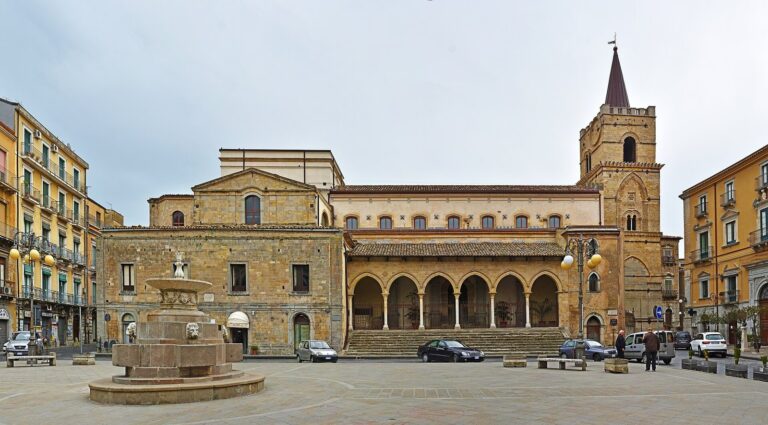
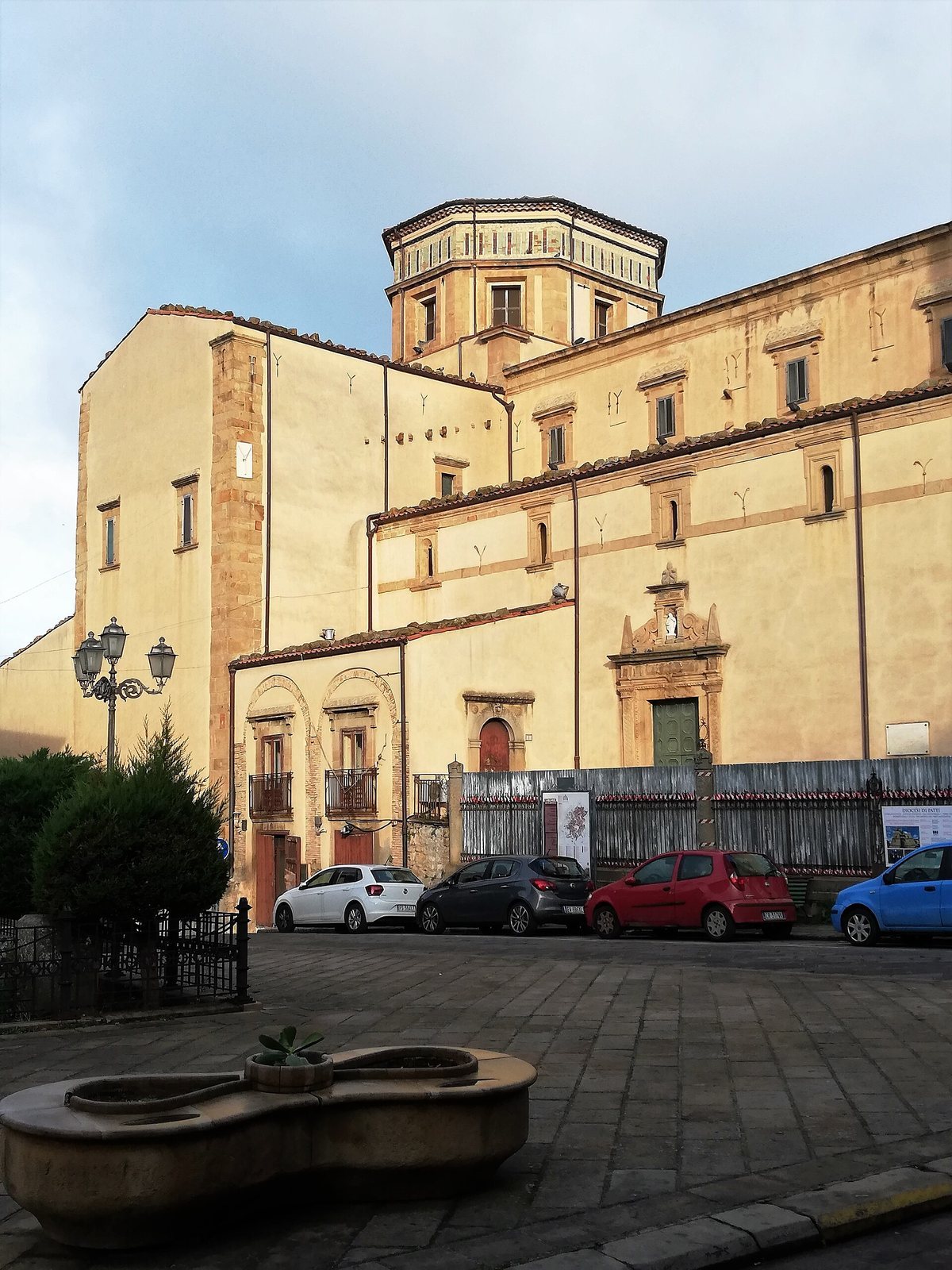
Santa Lucia is the Catholic mother church of Mistretta, Italy. First built in the 11th century, it has architectural traditions identified as Norman, Romanesque, Renaissance, Baroque, and Rococo. It has served as an important church in the town and belongs to the Diocese of Patti.
Medieval foundations and rebuilding
In 1170, Bishop Bosone de Gorram gave the church, along with its furnishings and property, to a canon of his cathedral. Santa Lucia may have replaced an earlier place of worship or a pagan building. In 1490, it was rebuilt in the form that shaped the later church. The work reversed the positions of the apse, the rounded end of a church, and the façade.
Renaissance and Baroque development
Renaissance additions followed in 1552, including a portal by Giorgio Brigno and an altarpiece by the Gagini brothers. In the 17th century, the church was enriched by local craftspeople and workshops in Palermo and nearby towns. Their work included stone and wood carving, marble and silver work, canvases, stucco, and frescoes.
The earthquake of 25 August 1613, known as the Naso earthquake, preceded an enlargement of the church in 1630. The 1693 earthquakes in Val di Noto and the 1783 earthquakes in southern Calabria caused limited damage to the building overall. The Confraternity of the Souls in Purgatory, a lay religious association, was founded during the 17th century and later moved to a nearby church of the same name.
Parish, sanctuary, and restoration
Further enlargement and decoration led to a new dedication in 1775, and Santa Lucia became a parish in 1790. The Madonna of Miracles, the Virgin Mary, is associated with protection from calamities, especially earthquakes. After the earthquake of 31 October 1967, known as the Capizzi and Mistretta earthquake, extensive restoration revealed decorative richness that had become obscured over time. In 2016, Santa Lucia was raised to the status of a sanctuary of the Madonna of Miracles.
Remains
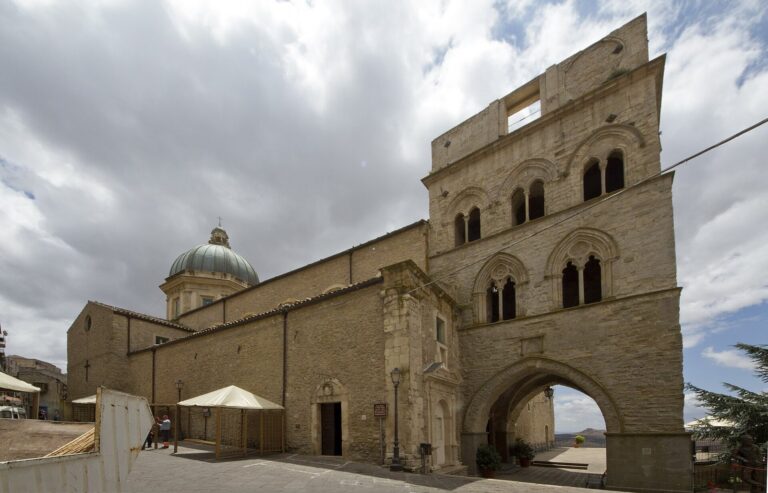
The church has a cross-shaped plan, with a central space and three aisles divided by arches resting on sturdy columns. Two massive towers frame the façade, although only one was completed. Its surviving interior combines architectural and decorative work from different periods.
Façade, entrances, and west-end spaces
Main façade and bell tower
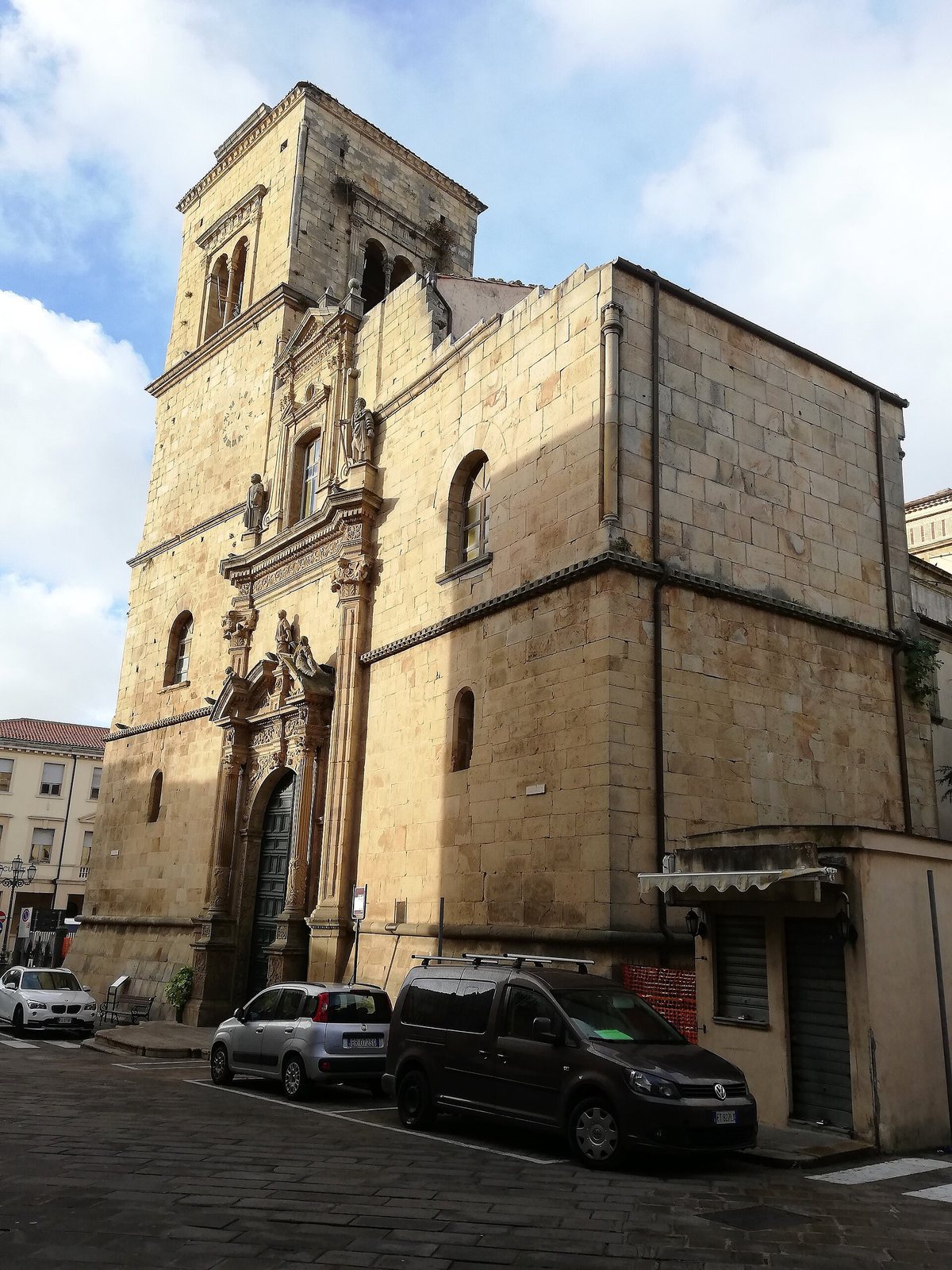
The Baroque-style main portal is framed by two columns supporting tiers of interrupted arch-shaped pediments. A statue of Saint Lucy, an early Christian martyr, stands between the columns. Above it, allegorical figures represent Hope and Charity. Two medallions show the biblical King David with a lyre, associated here with wisdom and justice, and Ferdinand II of Aragon, a late-medieval and early-modern king, holding a lily sceptre. The latter image is associated with the triumph of faith and purity in rule.
The completed tower served as the bell tower. Local craftspeople and workers from Palermo built it between 1521 and 1562; the façade’s second tower remained unfinished.
Northern entrance
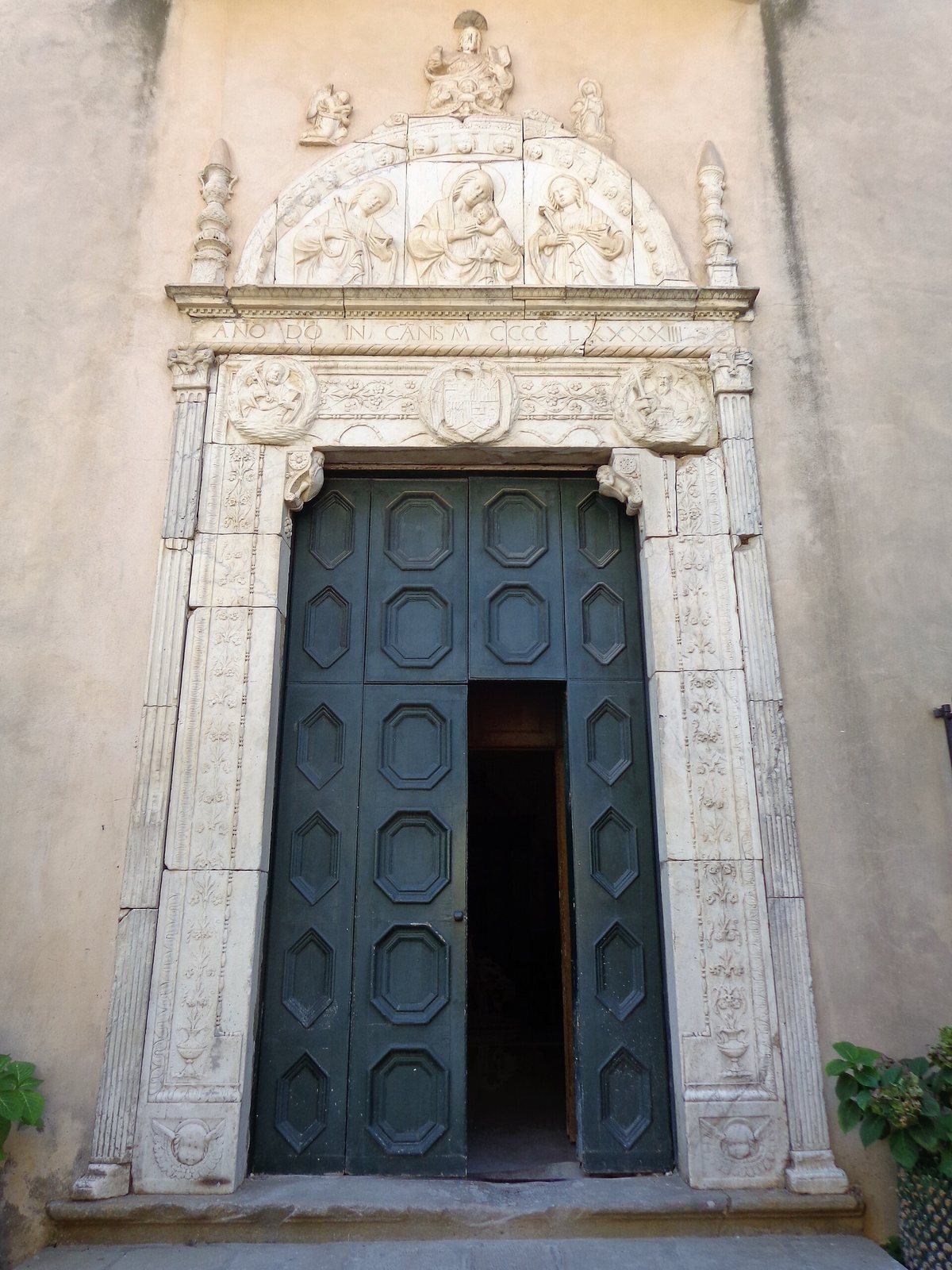
The northern entrance occupies the third bay of the right aisle. Its marble portal, made in 1493 and attributed to Giorgio da Milano, has fluted wall supports, floral-patterned door jambs, winged heads, and a broad lintel. Medallions of the apostles Peter and Paul flank a royal coat of arms bearing Mistretta’s symbols. Above them, carved pinnacles frame an arched panel of the Madonna and Child with Saints Lucy and Agatha, another early Christian martyr. A figure of God blessing crowns the composition, with small statues of the angel and Virgin Mary from the Annunciation on either side.
Also on this side is a Gothic portal transferred from the church of Sant’Antonio Abate. Its inscription reads, ‘There was a plague in 1575.’
Southern entrance
The southern entrance, in the third bay of the left aisle, was made by local craftspeople in 1626 and is topped by a marble statue of Saint Lucy. It is also called the Saint Gaetano entrance, after a motto carved on its lintel. Saint Gaetano is Cajetan of Thiene, an Italian Catholic priest and religious reformer.
Baptistery Chapel
The former apse area, before the church’s orientation was changed, corresponds to spaces at the interior wall opposite the main façade. The Baptistery Chapel there has 16th-century stone carving and painted wall decoration. Its marble baptismal font, attributed to Vincenzo Gagini, dates to 1575; Giovanni Biffarella made its wooden cover and statues in 1732. Before the reorientation, the chapel housed the statue of Saint Lucy.
Entrance porch and Chapel of Our Lady of Pompeii
Marble holy-water fonts in the entrance porch were made by Ambrogio Schillaci in 1667. The Chapel of Our Lady of Pompeii has stucco decoration and a marble altar. Its canvas painting, in a Neo-Gothic frame, dates to 1922.
Nave and side aisles
First and second bays of the right aisle
The first bay contains the Altar of the Souls in Purgatory, referring to the Catholic belief in purification after death. Giuseppe Tomasi of Tortorici painted its 1651 oil painting, also titled Redemption of the World. It shows the risen Jesus separating the righteous from sinners. Tomasi’s 1651 painting of Saint Gaetano stands at the Altar of Saint Gaetano in the second bay; its lower portion includes one of the earliest depictions of Mistretta.
Fourth and fifth bays of the right aisle
The fourth bay’s Ecce Homo altar takes its name from the words meaning ‘Behold the man,’ used for Christ presented before his crucifixion. It holds a 17th-century wooden statue of Christ. In the fifth bay, the Altar of the Crucifix of Providence is decorated with mixed-marble work and high reliefs of Mary and Mary Magdalene made by Domenico Battaglia before 1750. Vincenzo Genovese made its marble crucifix in 1866. It replaced an earlier crucifix that had stood on a high beam across the central aisle until 1598.
First and second bays of the left aisle
Antonio Manno’s 1771 oil painting of the young John the Baptist with Jesus is at the Altar of Saint Anne in the first bay. Anne is traditionally identified as Mary’s mother, and John the Baptist as the prophet who baptized Jesus. The second bay’s Altar of the Holy Helpers holds Benedetto Berna’s 1692 oil painting of Christ on the Cross with the Holy Helpers, a group of saints traditionally invoked for aid.
Fourth and fifth bays of the left aisle
The Altar of the Risen Christ in the fourth bay holds a marble statue made in 1554 for an original chapel by the Gagini brothers. The statue was once at the centre of an altarpiece now in the Chapel of Saint Lucy, and it has stood at its present position since 1875. The fifth bay’s Altar of the Deposition, also called the Five Wounds, has Antonio Manno’s 1771 oil painting Deposition, also known as Pietà.
Crosswise arms and smaller apses
Right-hand apse
The right-hand smaller apse contains a marble altarpiece with Saint Lucy between Saints Peter and Paul in side niches. Its upper part includes a relief of God the Father and medallions of the angel and Virgin Mary in the Annunciation. Bust-length apostles appear along the base, or predella. A 1554 payment contract names Antonino Gagini as the person entrusted with the commission and also refers to his brother Vincenzo. The ensemble was later taken apart and rearranged in different spaces. In one arrangement, the risen Christ replaced Saint Lucy and stood in a different position.
Right crosswise arm
The Chapel of Saint Mary Hodegetria, a title presenting Mary as a guide, has a mixed-marble altar made by Giuseppe Musca, Luigi Geraci, and Bartolomeo Travaglia using money left by the priest Filippo Mongiovì. It includes an 18th-century marble relief. A wooden statue of Saint Sebastian, an early Christian martyr, stands in the right-hand niche. Made by Noè Marullo in the mid-16th century, it came from the church of the same name.
Left-hand apse
The Chapel of the Blessed Sacrament contains a marble ciborium, a canopy over an altar, dated 1739, as well as a balustrade, mixed-marble decoration, and high reliefs by Domenico Battaglia. Its other features include silver and gilded-copper work by Bonaventura Caruso and 19th-century decorations on the vault. Annibale Gagini made a silver monstrance, a vessel for displaying the consecrated host, for the chapel; it is now kept in the sacristy.
Left crosswise arm
The Chapel of the Madonna of Miracles contains a marble statue of the Virgin Mary dated 1495 and attributed to Giorgio da Milano. It stands on a Sicilian Baroque altar decorated with inlaid coloured marble. The chapel also has an altar and monument to Baron Pietro Scaduto by Giuseppe Musca, decorated with marble inlay and high reliefs by Domenico Battaglia. The balustrade comes from the same workshop.
Choir and central altar
Choir
Paolo La Cristina made the choir gallery. The wooden choir has 71 stalls, completed in stages by several workshops and makers. The Li Volsi workshops worked on it before 1598, followed by Ramfardi in 1671, Allò from 1685 to 1710, Giovanni Biffarella and Antonino Azzolina of Mistretta from 1712 to 1726, and Ciro Bagnasco in 1803. Angelo Messina and Carmelo Barone made the central lectern in 1809. At the choir’s centre is a 16th-century slab bearing the figure of the priest Giacomo Scaduto.
Main altar and organ
The main altar was made by the Palermo marble worker Angelo Gabriele. It has relief elements and a medallion attributed to Ignazio Marabitti, while its balustrade is by Domenico Battaglia. The church also has a pipe organ made by Onofrio La Gala and Giuseppe Lugaro.