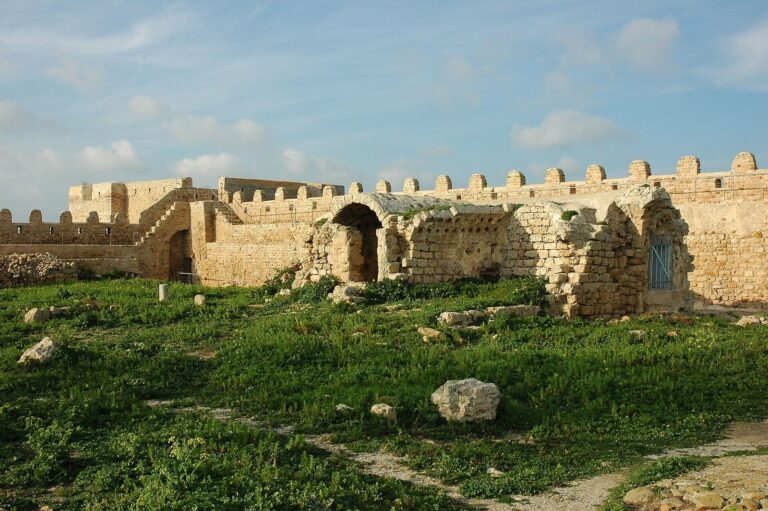
Castle of Pantelleria: A Fortress and Former Prison
Site at a Glance
- Popularity
- Medium
- Country
- Italy
- Primary era
- Medieval
- Eras represented
- Medieval, Early Modern, Modern
- Civilizations
- Italian, Kingdom of Sicily, Norman, Spanish
- Site type
- Military
- Remains
- Castle
On this page16 sections
History
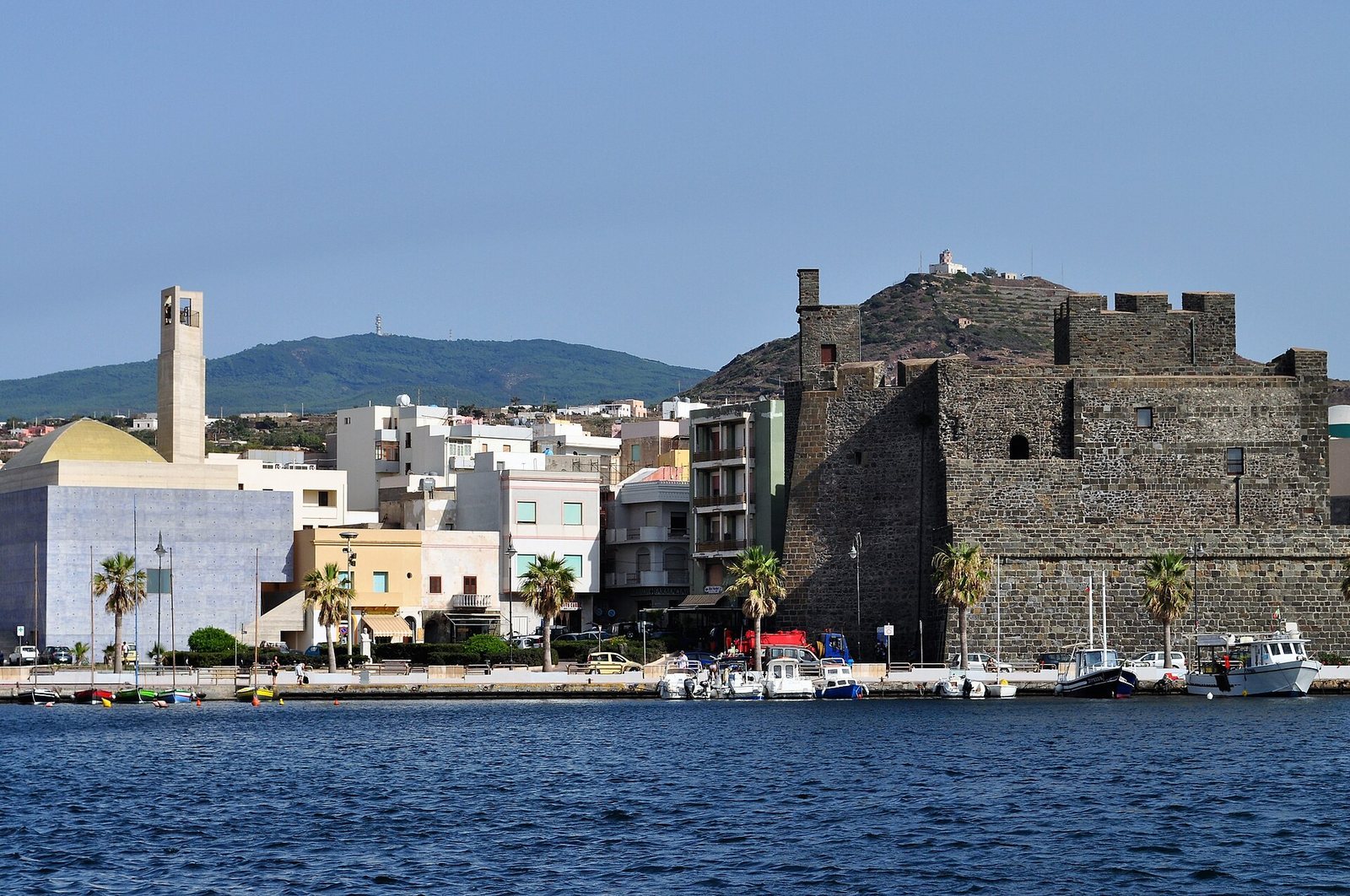
The Castle of Pantelleria is a fortress at the entrance to the island’s old port in Italy. It is among the island’s oldest architectural works, and its present appearance dates mainly to the Norman period, although earlier structures may have stood on the site.
Early fortifications and Norman rule
Byzantines probably completed an early fortification around 540, reusing materials from older buildings. In 647, African Christians fleeing Muslim persecution arrived from the Scerik Peninsula and built defenses on the island. A Pisan poem from 1087 recounts that Pisans destroyed a grand castle on Pantelleria during an expedition.
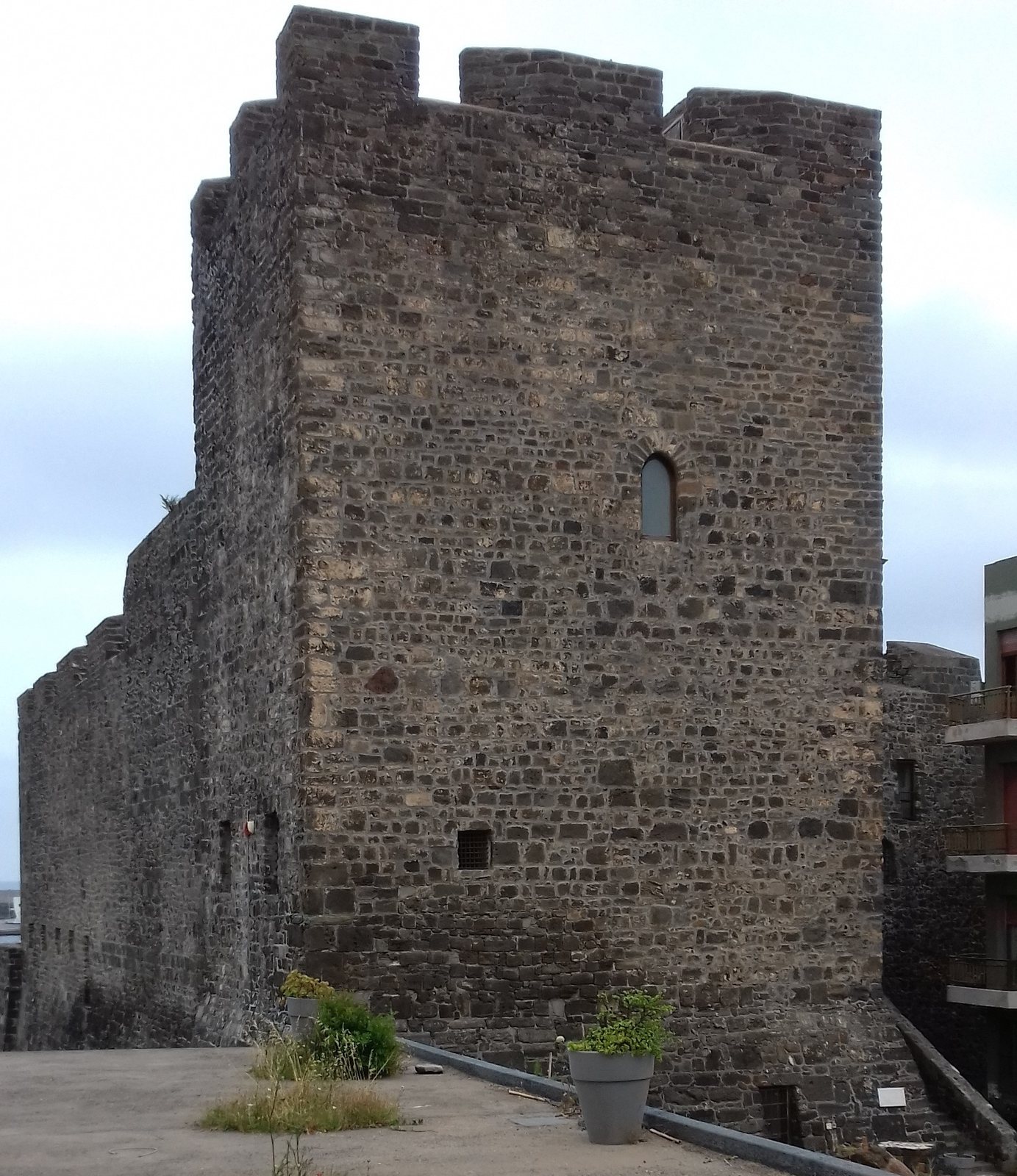
Norman forces landed in 1127, after about three centuries of Arab rule. They built a keep, the castle’s principal tower, and then constructed the castle nearby.
Medieval government and feudal rule
In 1221, Frederick II, Holy Roman emperor and king of Sicily, and the Hafsids, a Muslim dynasty of North Africa, agreed that an official of Islamic faith appointed by the imperial government would govern the island. From 1292, a military captain responsible for the garrisons used the castle as an operational base. Genoa received the island as a fief in 1361.
In 1395, during a Catalan attempt to conquer Sicily, Giovanni di Barnabo di San Lazzaro, a relative of the prominent Genoese Doria family, seized the island and became its feudal lord. After residents complained to the king about his rule, the king had him killed inside the castle. Francesco De Belvis became feudal lord in 1442. The following year, residents protested that he had made the castle a meeting place for thieves and criminals. After his death, officials from Trapani inspected the island, and a notary inventoried the castle’s arms, a mill worked by five donkeys, and a cistern. The castle apparently formed part of a walled citadel where Christian families lived.
The name Castle of Barbacane is often mistakenly applied to the castle. A barbican is an outwork associated with a defensive entrance or fortification. The confusion seems to have begun when a government official compiling a public-property record treated a reference to the castle and its barbican as the name of a separate Castle Barbacane.
Sixteenth-century defenses and Spanish control
Following raids by North African corsairs, Charles V ordered 37 towers built across Sicily in 1535. One, known as the main tower, was erected near the castle. In 1550, the Ottoman corsair and naval commander Dragut briefly captured the castle. Charles V then ordered further defenses, including rebuilding the seaward bastion and adding an outer wall around a circular tower.
The island came under Spanish control in 1583. The castle served as both fortress and prison, and its southwestern section was built for use as a prison. Monthly pay was set at 25 scudi for the governor, seven for corporals, and eight for soldiers. A scudo was a currency used in Italian states.
Bourbon rule and imprisonment
After the Bourbons took Naples and Sicily in 1734, Ferdinand IV of Bourbon ordered a small tower built above the existing circular tower. During Bourbon rule, the exiled writer Carlo Antonio Broggia described the second level of the Norman tower as an arms store, and the tower became dedicated to Saint Barbara, a Christian martyr venerated in Catholic and Orthodox traditions. Another exile, Don Pietro Gallucci, described an interior resembling the castle’s present arrangement.
In 1859, following the Sapri expedition, the prisons on Pantelleria and Favignana were evacuated. The castle’s prison section was used to confine brigands in 1863.
War, continued imprisonment, and restoration
During the Second World War, the prison was moved to Scauri in the south of the island, and the castle became the headquarters of the Maritime Artillery Militia. An air-raid shelter was built below the Saint Barbara tower. Bombing struck the castle and town throughout the war. In the postwar period, the seaward bastion and part of the tower within it were demolished to make way for Via Borgo Italia.
The castle again served as a prison from 1943 until the prison closed in 1975. It held 912 prisoners, most of them poor or without property. As a district-level prison serving a local administrative area, it held people for no longer than a year. Restoration began in 1991, first securing the badly deteriorated circular tower and removing elements considered unhelpful to understanding the architecture. Later work investigated the deterioration and consolidated the structure. Since 2010, the castle has housed a regional archaeological museum established by the Sicilian Region.
Remains
Layout and construction
The castle’s accessible interior is reached by a masonry staircase leading to an open entrance, from which rooms of different sizes open. Beneath it is an underground zone that was filled with waste material and sealed with a wall after the Second World War. Local lava stone is the principal building material, used in natural or worked form according to its purpose and period. Lime serves as both plaster and mortar. Most openings have a single shaped stone laid across two upright supports, while some use rounded arches. Long, arched ceilings built from cut stone are common and sometimes exposed; the circular tower has plain domed ceilings. Earlier floors included terracotta, concrete, and worked or unworked stone. Restoration replaced these varied surfaces with terracotta bricks and worked stone for a more uniform finish.
Towers and fortifications
Norman keep
A cross was cut into one corner of the Norman keep. Its second level later served as an arms store, and the tower was dedicated to Saint Barbara.
Main tower
The main tower was originally square in plan and arranged over four levels. Its intact first level contains one room, while the second contains three.
Circular tower and bastions
A defensive outer wall added during the sixteenth-century strengthening encases the circular tower. Restoration revealed small internal spaces and clarified the boundary between the Norman-period section and the sixteenth-century bastion. Radar surveys traced the foundations of the northwestern bastion beneath Via Borgo Italia. Work to clear the bastion also uncovered wartime ordnance and a bunker probably dating to 1940.
Clock tower
The small rectangular clock tower stands above the circular tower. It held two bells and a clock, and the arms on one bell identify it with Ferdinand IV. An effort to restore its original candy-pink color failed when the plaster deteriorated; the tower was later clad in cut stone to match the rest of the building.
Other structures and archaeological finds
Barbacane
The Barbacane was a separate structure north of the castle, on the site of today’s Piazza Almanza.
Roman statues
The castle’s archaeological museum houses the three Roman Heads of Pantelleria, found during excavations on the island. They depict Caesar, whose specific identity is not stated, the emperor Titus, and Antonia Minor, the daughter of Mark Antony and Octavia Minor.