Nabatnaya Tower: The Moscow Kremlin’s Alarm Tower
Site at a Glance
- Popularity
- High
- Country
- Russia
- Primary era
- Medieval
- Eras represented
- Medieval, Early Modern, Modern
- Civilizations
- Russian
- Site type
- Military
- Remains
- Tower
On this page15 sections
History
Nabatnaya Tower is a warning tower in the Moscow Kremlin, Russia, completed in 1495 as the last of the Kremlin’s towers to be built. It was designed to alert people to fires and other dangers. From its elevated position, it overlooked southern Moscow, though it could not prevent the great fire of 1547, when the Kremlin burned for six hours.
Warning bells and Moscow’s districts
The tower took its name in 1658, when the Spassky alarm bell was installed there. A nabat was an alarm made by rapid, continuous strikes on a large bell, distinct from ordinary church ringing. A long-held tradition linked Moscow’s first alarm bell to metal from Novgorod’s veche bell, which had summoned a town assembly. The tradition held that the bell came to Moscow after Novgorod was annexed in 1478, and that it had hung in a Kremlin alarm tower near Spassky Gate.
In 1668, Tsar Alexei Mikhailovich set out different alarm signals for fires in Moscow’s districts and defensive zones. For a fire in the Kremlin, all three alarms were to sound rapidly in both directions. In Kitai-gorod, the Spassky bell was to sound rapidly in one direction. For the White City, it was to ring in both directions, joined by slower ringing at Trinity Bridge in both directions. A fire in the Earth City called for the Tainitskaya Tower alarm to sound slowly.
After the Spassky bell broke, Peter I ordered its replacement in 1714. The new bell served as a fire alarm until 1771 and retained the name Spassky. The Kremlin’s three alarm bells were the Spassky at Nabatnaya Tower, the Troitsky, and the Tainitsky.
Unrest and removal of the bell
Between 1769 and 1771, the Governing Senate prohibited alarm ringing during popular unrest and ordered belfries to remain closed, seeking to prevent false or malicious signals. During the 1771 Plague Riot, an uprising in Moscow during a plague epidemic, insurgents nevertheless rang the Spassky bell to gather people. After the revolt was suppressed, Catherine II ordered its clapper removed. The bell remained without one for 30 years, and she directed that it stay in place, or be kept safely during repairs and rehung afterward.
The bell was taken from the tower in the early nineteenth century and moved to the Arsenal, then to the Armory in 1821. It did not return. A Soviet decree of 19 September 1923 allowed bells to be seized, with decisions assigned to the Soviet Main Administration for Science, contributing to its continued absence from the tower.
Investigation and restoration
Subsidence and a cracked foundation caused the tower to lean in the 1970s. Restoration from 1973 to 1981 stabilized it. A major Kremlin restoration campaign begun in 2017 also included Nabatnaya Tower and part of the wall between Spasskaya and Moskvoretskaya towers. The tower is designated a federal-level cultural heritage site in Russia.
Remains
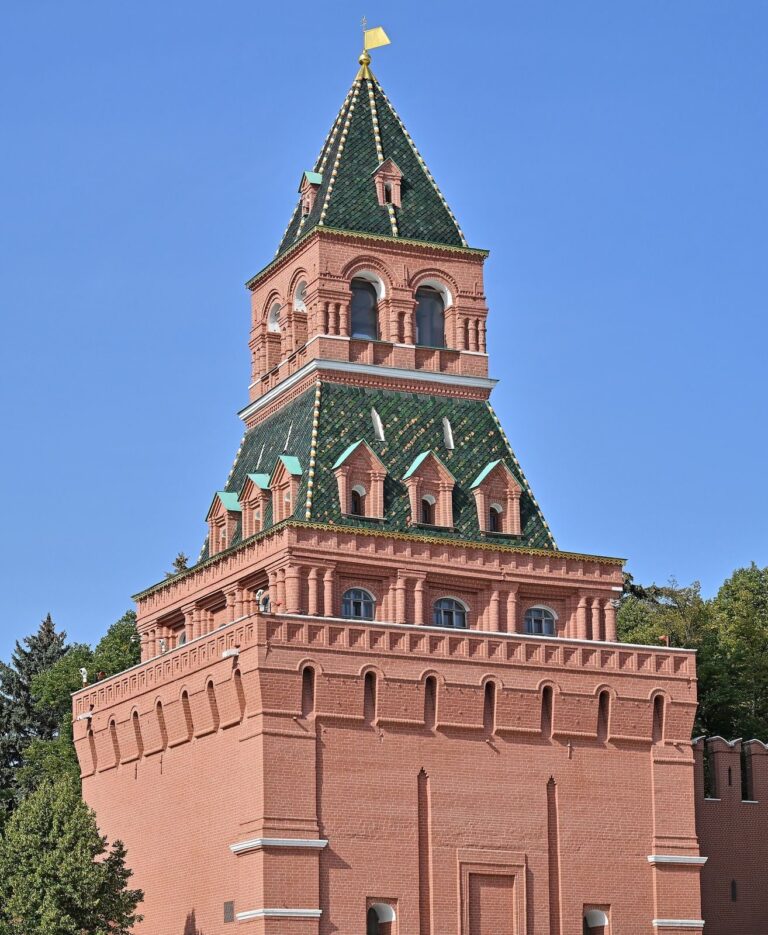
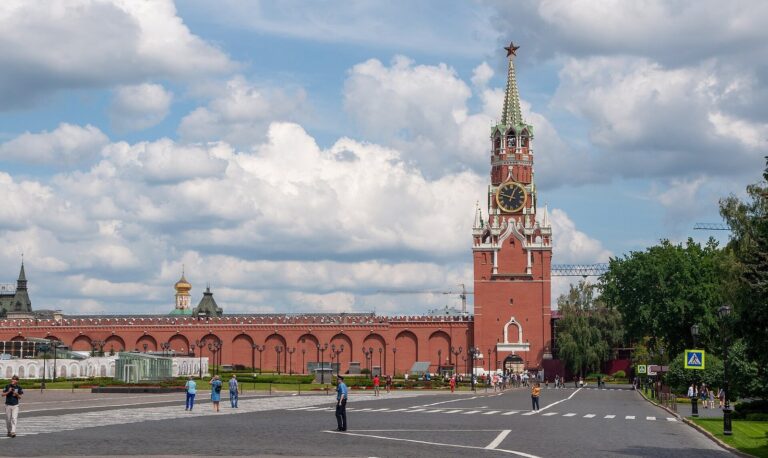
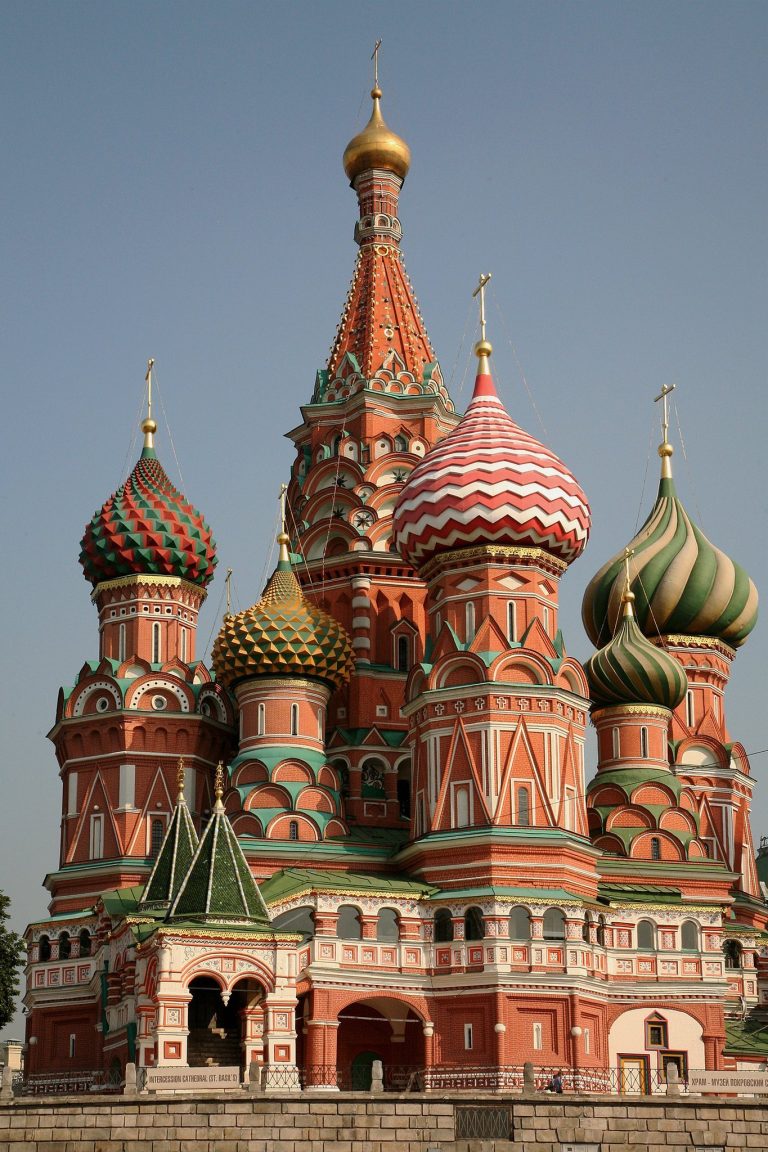
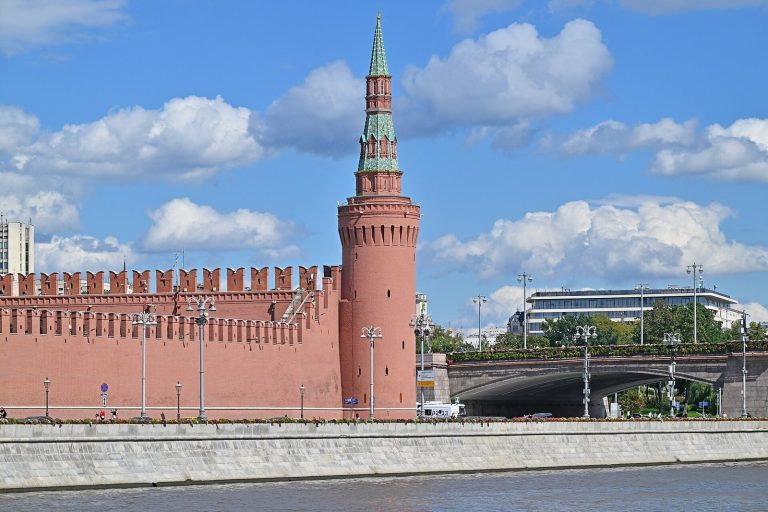
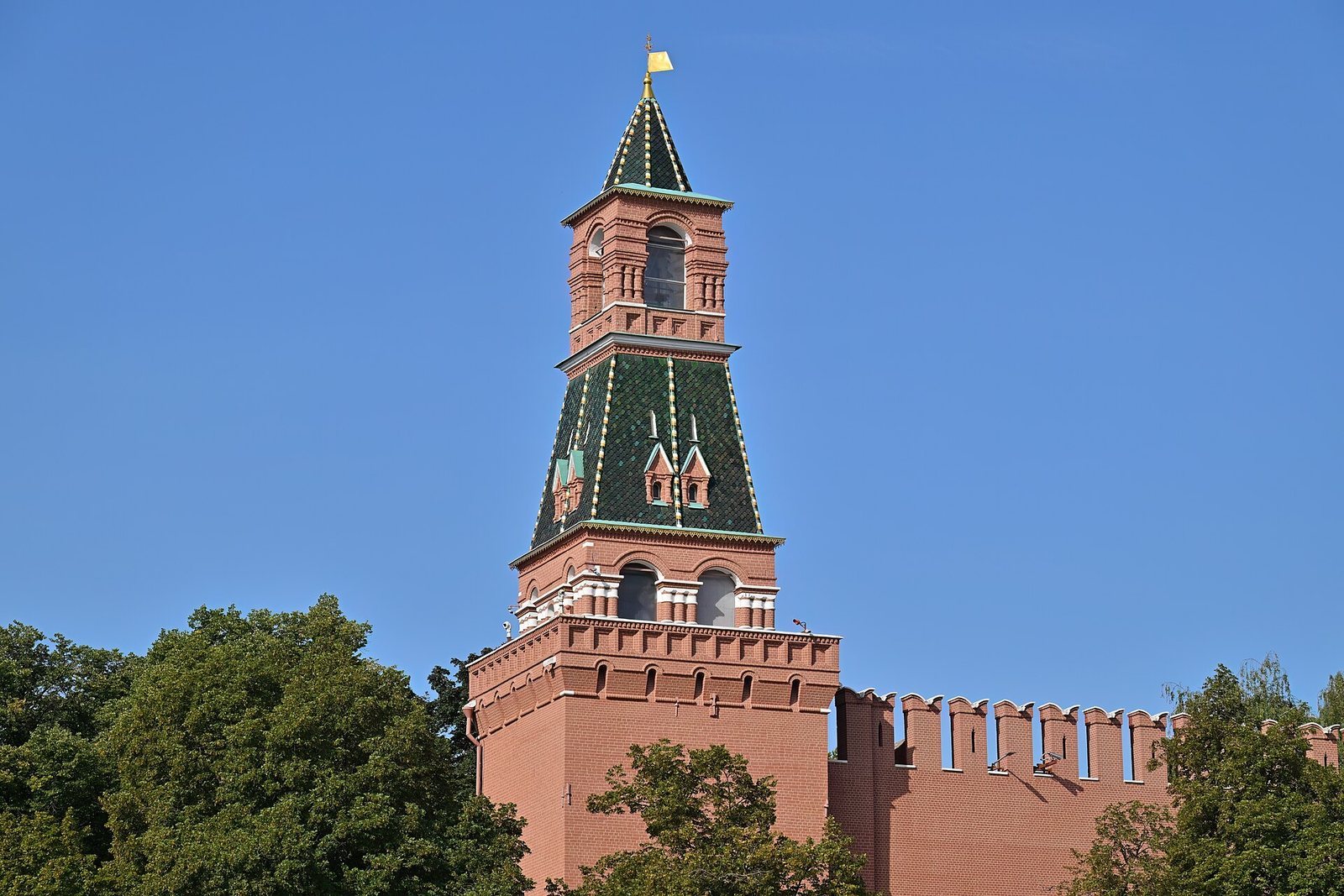
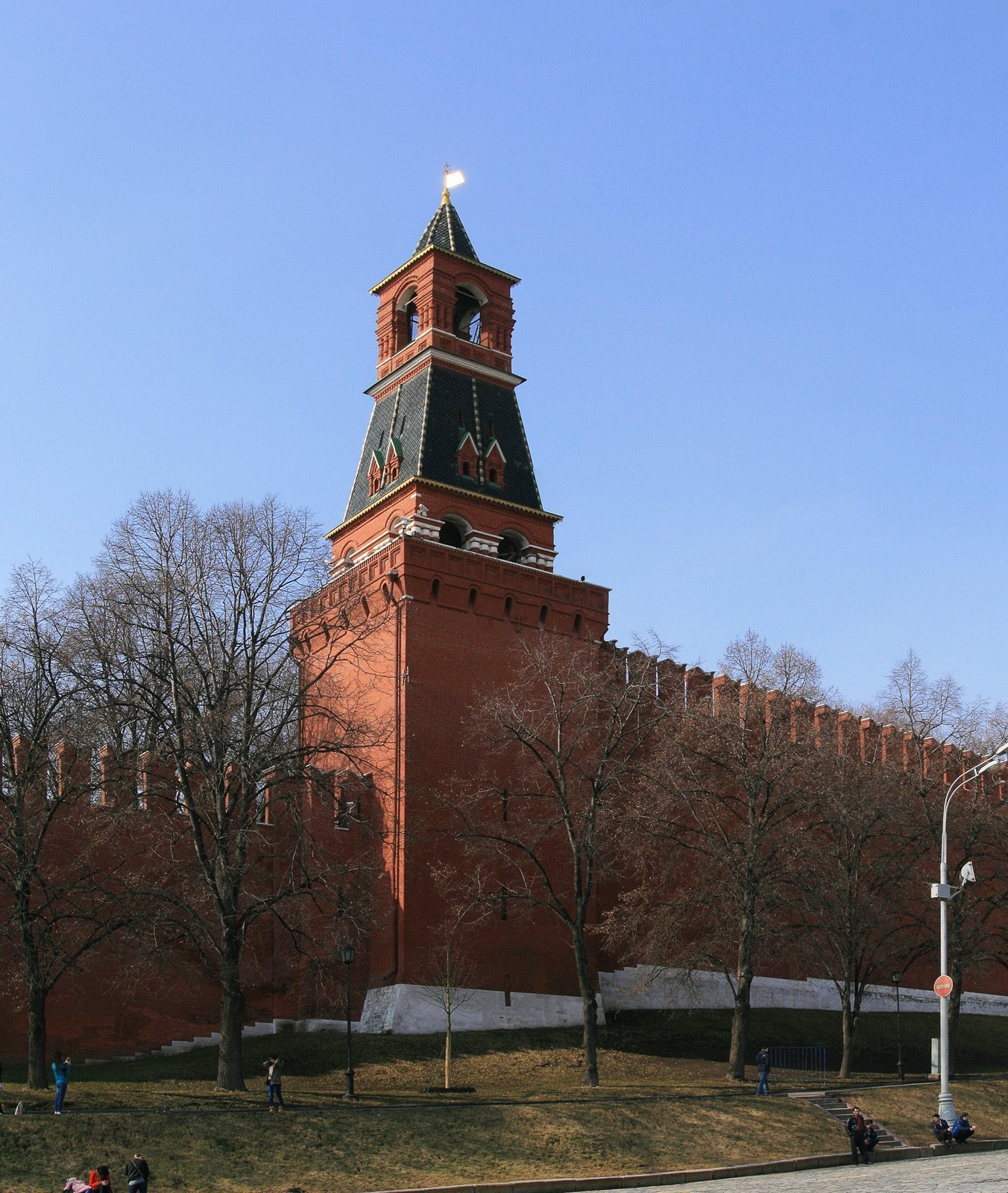
Nabatnaya Tower is an intermediate tower without a passage through it, set into the eastern Kremlin wall on the slope of Kremlin Hill opposite St. Basil’s Church. It stands 38 metres high, with a base perimeter of 44 metres and walls 2.5 metres thick. Its quadrangular main block has two internal levels and a tent-like crown.
Tower form and defenses
Lower block and interior
The lower level contains several rooms and sections with flat ceilings. Staircases run within the walls, and routes from the rooms connect to stairs that reach the Kremlin wall. The quadrangular block originally had a parapet with overhanging loopholes, narrow openings for weapons. A brick parapet with recessed decorative panels later replaced the loopholes; it remains visible on the exterior at the top of the lower block.
Upper tier and crown
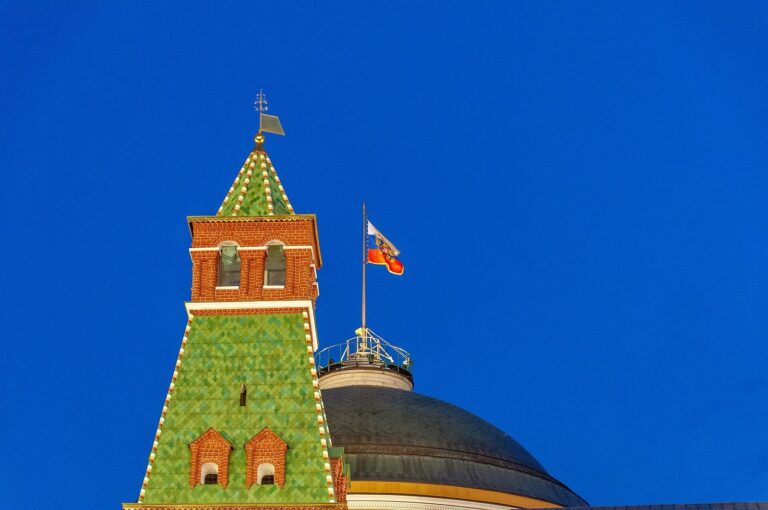
The upper tier and tent-like crown feature brick half-columns, white-stone capitals, and horizontal bands, in a design compared with the crown of Arsenal Tower. During the rebuilding of Kremlin walls and towers from 1676 to 1686, an arched upper block and a tent with a lookout turret were added.
The tower originally had a sloping wooden roof. An inspection in 1667 found it without roofing, with access in poor condition and propped with boards; cracks ran from the doors toward the upper crenellations. The tent was later covered with green glazed tiles, and materials for making and glazing tiles were purchased in 1702 and 1703.
Defensive features
Projecting defensive structures with openings for attacking below were installed on Kremlin towers, first on corner towers and later on the others. By the end of the seventeenth century, their openings had been blocked from the inside. The tower’s defenses also included the loopholes associated with its parapet.
Underground passages
Gallery toward Konstantino-Eleninskaya Tower
In 1894, archaeologist Prince Nikolai Shcherbatov entered a bricked-up gallery leading toward Konstantino-Eleninskaya Tower. After lifting the floor of Nabatnaya Tower, he uncovered a 62-metre corridor associated with the gallery. Behind masonry at its far end lay a hidden cache of cannonballs.
Passage for defenders
A separate passage nearby was dug in the seventeenth century as an exit for defenders during a siege. By the early twentieth century, only a section remained in the defensive wall connecting Konstantino-Eleninskaya and Nabatnaya towers. Its loopholes are now bricked up.
Alarm bell and preservation
Spassky alarm bell
The replacement Spassky bell was cast on 30 July 1714 by Ivan Motorin from the metal of the broken bell. Its inscription gives its weight as 150 poods, a traditional Russian unit of weight. The bell is now in the vestibule of the Kremlin Armory.
Restoration and condition
During the restoration from 1973 to 1981, workers bound the tower’s base with metal hoops and strengthened the ground. They repaired the white-stone decoration, replacing missing pieces with copies based on surviving examples. Loopholes and fortified positions for close defensive fire were also found near the tower. Its historical appearance remains well preserved, although it continues to lean slightly.