Pawnee Indian Museum State Historic Site: A Kitkehahki Village Site in Kansas
Site at a Glance
- Rating
- 4.7
- Popularity
- Medium
- Country
- United States
- Primary era
- Modern
- External website
- Open
- Eras represented
- Early Modern, Modern
- Civilizations
- Unclassified
- Site type
- Domestic
- Remains
- House
On this page6 sections
History
Kitkehahki Village and Pike’s Visit
Pawnee Indian Museum State Historic Site preserves the remains of a village occupied by the Kitkehahki, a band of the Pawnee people, near Republic, Kansas, in the United States. The village’s exact occupation dates are uncertain. The Kitkehahki occupied the Republican River valley intermittently from the 1770s to the 1820s, and this is one of four known village sites of the band in the valley.
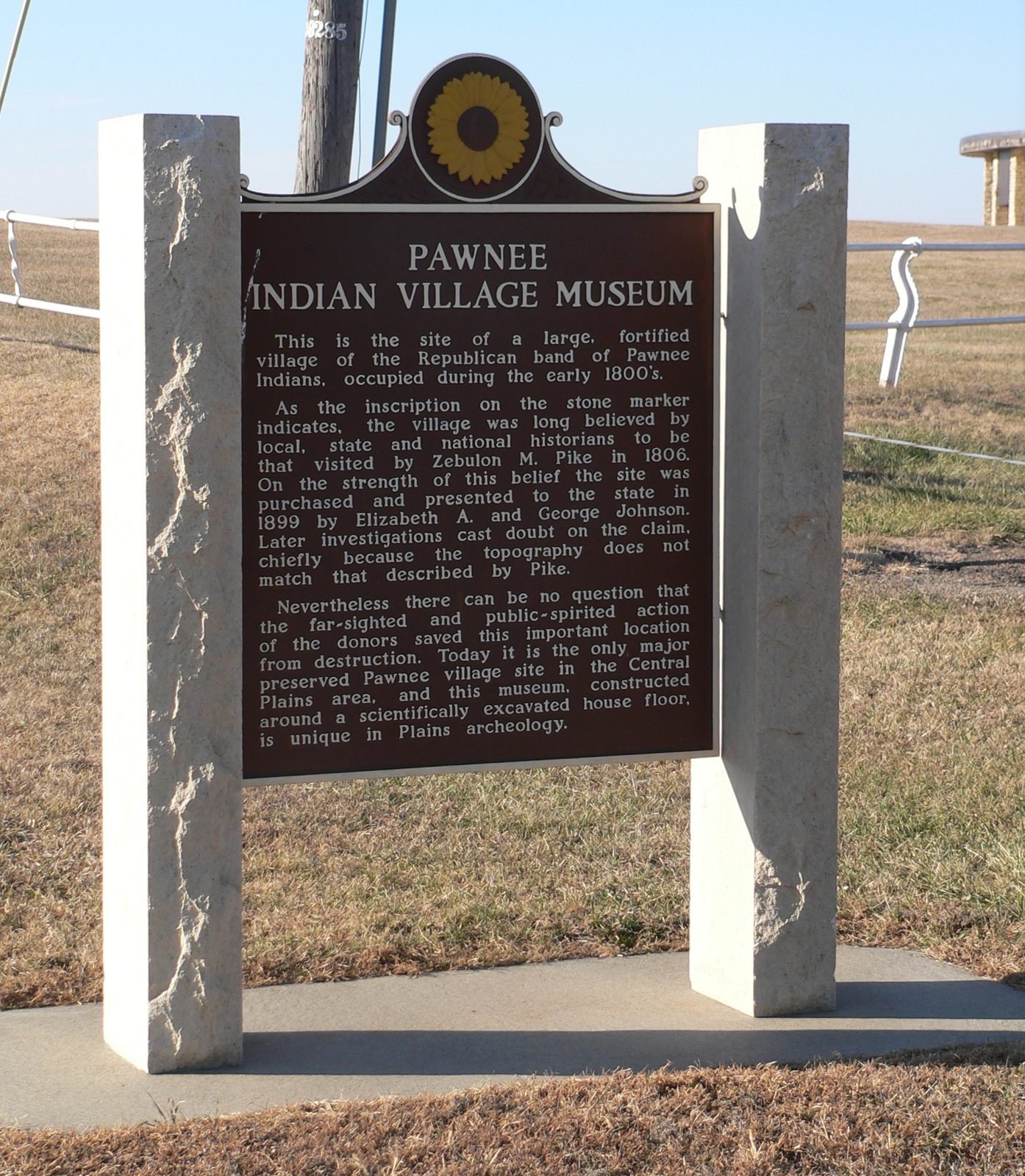
In 1806, U.S. Army officer and explorer Zebulon Pike reached a Pawnee village after a Spanish expedition had departed. He persuaded its inhabitants to replace the Spanish flag with a U.S. flag. For many years, this Kansas site was identified as the village Pike visited. Later research established that the meeting took place at a different Kitkehahki village in Webster County, Nebraska. The mistaken identification helped protect the Kansas site from plowing, while cultivation damaged the Nebraska village site.
Preservation and Archaeological Study
Republic County resident Elizabeth A. Johnson discovered the Kansas site in 1875. After studying Pike’s journals and investigating another Pawnee site in southern Nebraska, she concluded that she had found Pike’s village. She and her husband bought the land to protect it from plowing, then donated it to Kansas for historic preservation in 1901. That year, the state fenced the site and built a granite monument to commemorate the flag episode. At its dedication, speakers connected Pike’s symbolic success over Spain with the United States’ victory in the Spanish-American War, the 1898 conflict between the two countries. A four-day celebration marked the episode’s centennial in 1906.
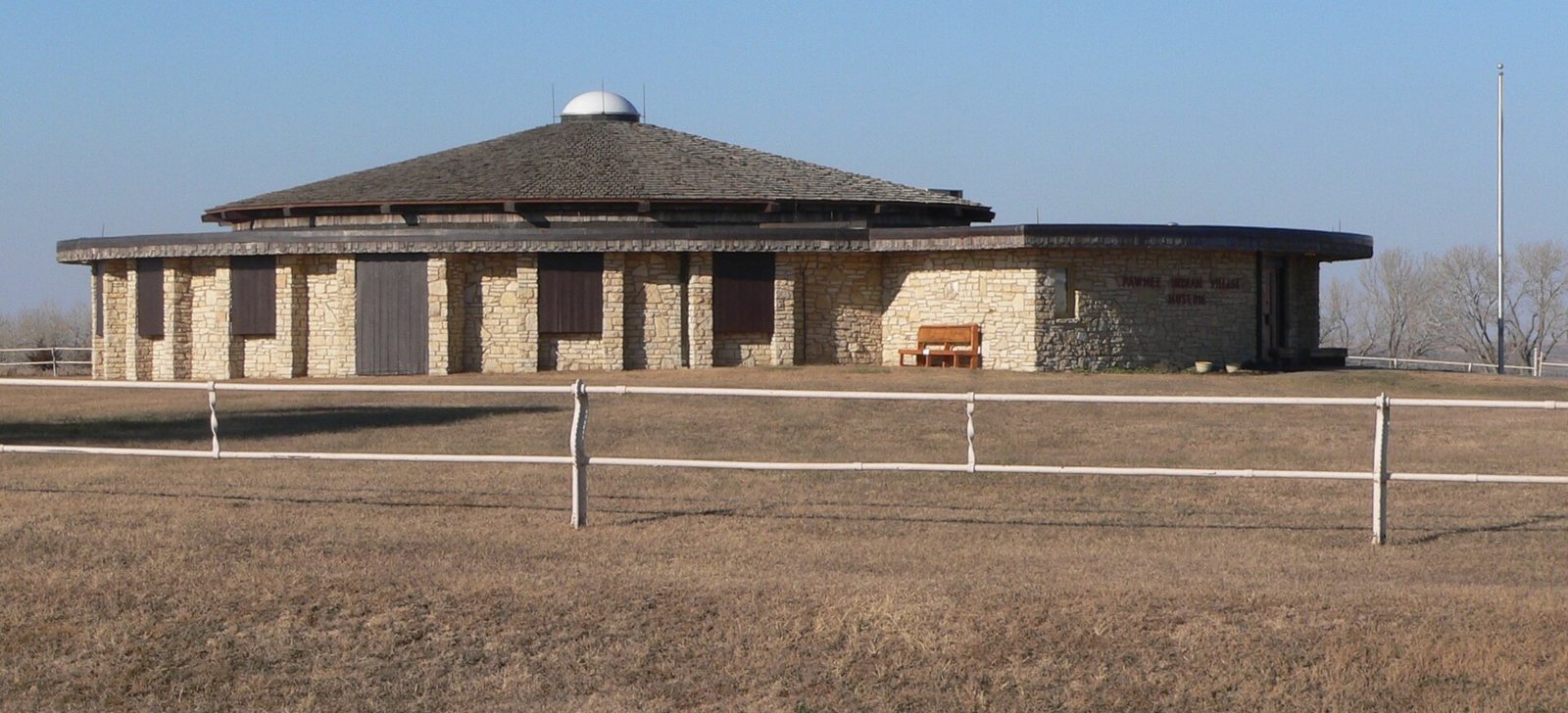
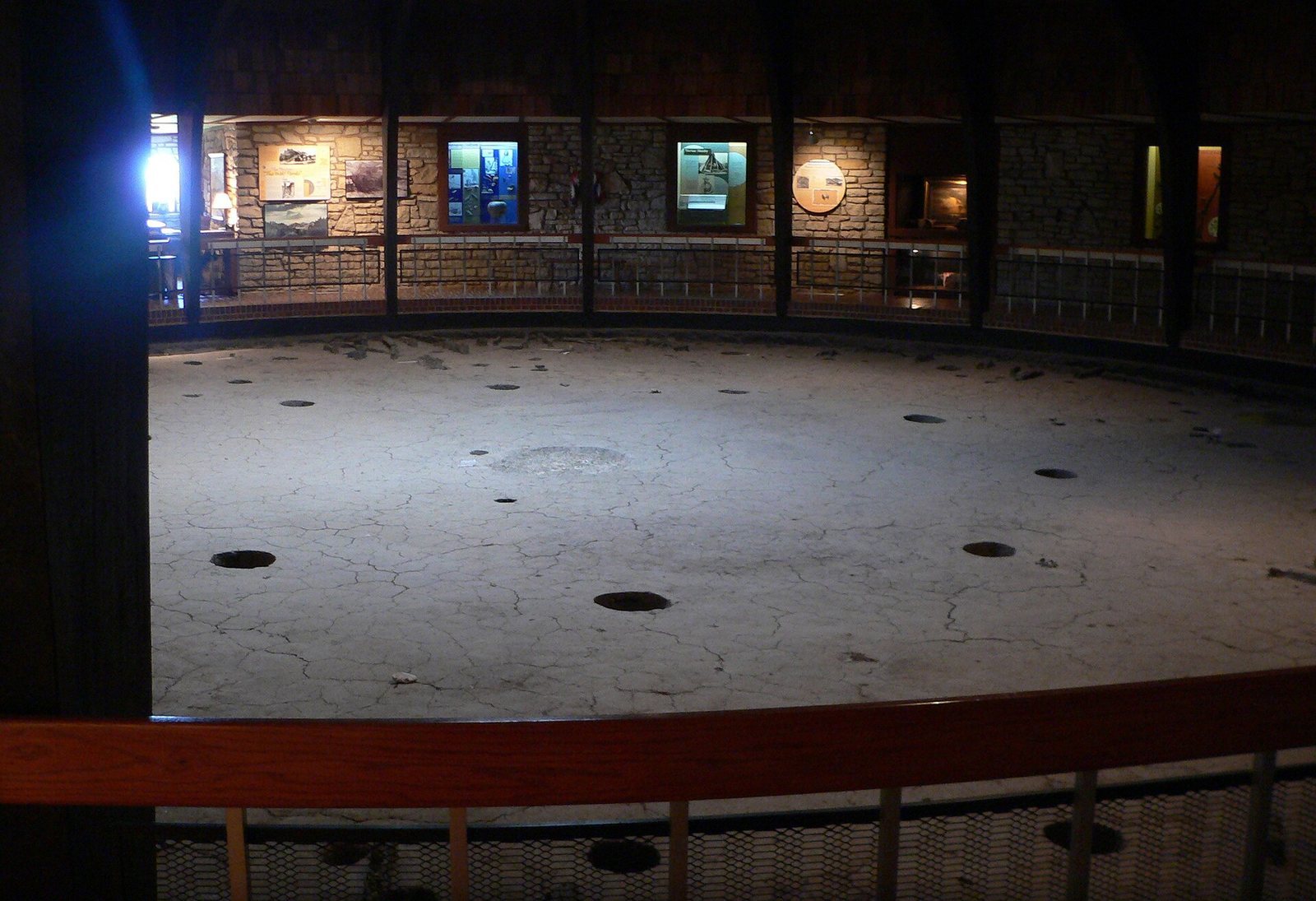
Archaeological investigations took place in 1933, 1949, and 1957, followed by more intensive work from 1965 to 1968. A museum was built around an earth lodge in 1967, before the lodge was excavated; the Kansas Historical Society operates the museum. The site was added to the National Register of Historic Places, the U.S. federal register of historic properties, in 1971 under the name Pawnee Indian Village Site. A tornado damaged the monument in 2004, and it was restored.
Remains
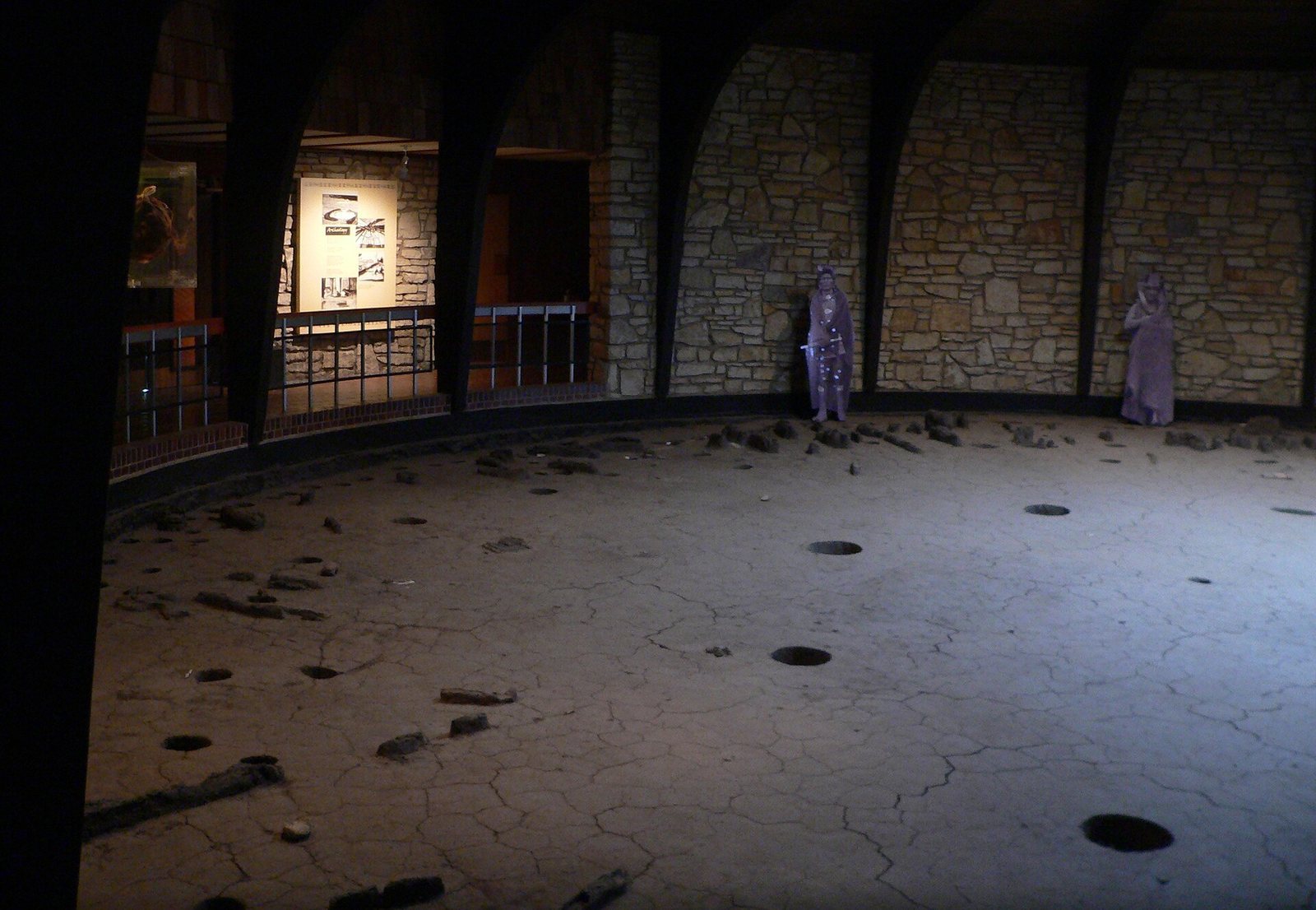
The 11.2-acre archaeological site preserves remains of the village, including earth lodges, as well as the later granite monument. The museum encloses one of the lodges.
Earth Lodge and Museum
An earth lodge is a dwelling made with a timber framework covered by earth. The museum was built around one lodge before it was excavated. The excavated lodge remains exposed within the museum, with many artifacts in place.
Granite Monument
The monument commemorating Pike’s 1806 flag episode was originally 26 feet high. Restored after the 2004 tornado, it is shorter and differs in appearance from its original form.