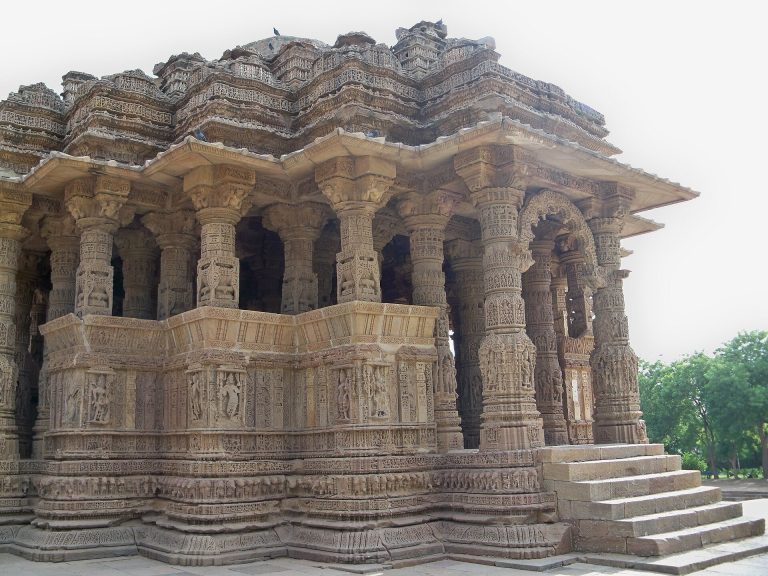
Rudra Mahalaya Temple: A Chaulukya Hindu Temple Complex in Gujarat
Site at a Glance
- Rating
- 4.5
- Popularity
- High
- Country
- India
- Primary era
- Medieval
- Eras represented
- Medieval
- Civilizations
- Unclassified
- Site type
- Religious
- Remains
- Temple
On this page7 sections
History
The Rudra Mahalaya Temple is a Hindu temple complex at Siddhpur, Gujarat, India, dedicated to Rudra, a name identified with Shiva. Built under the Chaulukya rulers, construction began in 943 and the complex was completed in 1140 in Māru-Gurjara architecture, a western Indian tradition associated with elaborate temple design. Its history reflects the Chaulukya dynasty’s long patronage of Siddhpur.
Mularaja and the temple’s beginnings
Siddhpur was an important Chaulukya town in the tenth century and was also called Srishthala, meaning “a pious place.” Mularaja, founder of the Chaulukya dynasty in Gujarat, began the temple project in 943. He reportedly commissioned a shrine there to atone for killings committed when he seized the throne as a young man, including the murder of his maternal uncle and other relatives. In later life, troubled by those acts, he undertook a pilgrimage, supported Brahmins, and granted Srishthala to a group of them. He retired in 996, transferring the kingdom to his son Chamundaraja.
An inscription dated 986–987 records Mularaja praying at Rudra Mahalaya. A temple may have occupied the site before his reign. In the twelfth century, an earlier structure was removed and a new complex was built on its foundations.
Jayasimha Siddharaja and traditions of completion
Jayasimha Siddharaja, a later Chaulukya ruler whose reign lasted from 1094 to 1144, completed the complex and consecrated it for Shiva worship in 1140. Two traditions associate him with the building. In one, two men from Malwa found a temple and the base of a Shiva linga, a symbolic form used in Shiva worship, and saw celestial beings there at night. Their account prompted the king to build or complete the temple.
The Persian chronicle Mirat-i-Ahmadi relates another story. Astrologers asked to select an auspicious time for construction also predicted the temple’s destruction. In this account, Jayasimha installed images of a “lord of horses” and other great kings, together with an inscription asking that the temple remain undestroyed even if the land were abandoned.
Dismantling and later reuse
In 1296, Delhi Sultan Alauddin Khalji sent an army under his commanders Ulugh Khan and Nusrat Khan to dismantle the complex. It was substantially demolished again during the early fifteenth-century siege of Siddhpur by Gujarat Sultan Ahmad Shah I. Some temple material was later reused in the city’s congregational mosque, the Jami Masjid. The Persian chronicle Mirat-i-Sikandiri attributes the later destruction to religious zeal and describes the breaking of images and paintings. That explanation calls for caution because panegyrical accounts could be partisan and may not agree with other evidence.
The Archaeological Survey of India recognizes the temple and the Jami Masjid separately as Monuments of National Importance.
Remains
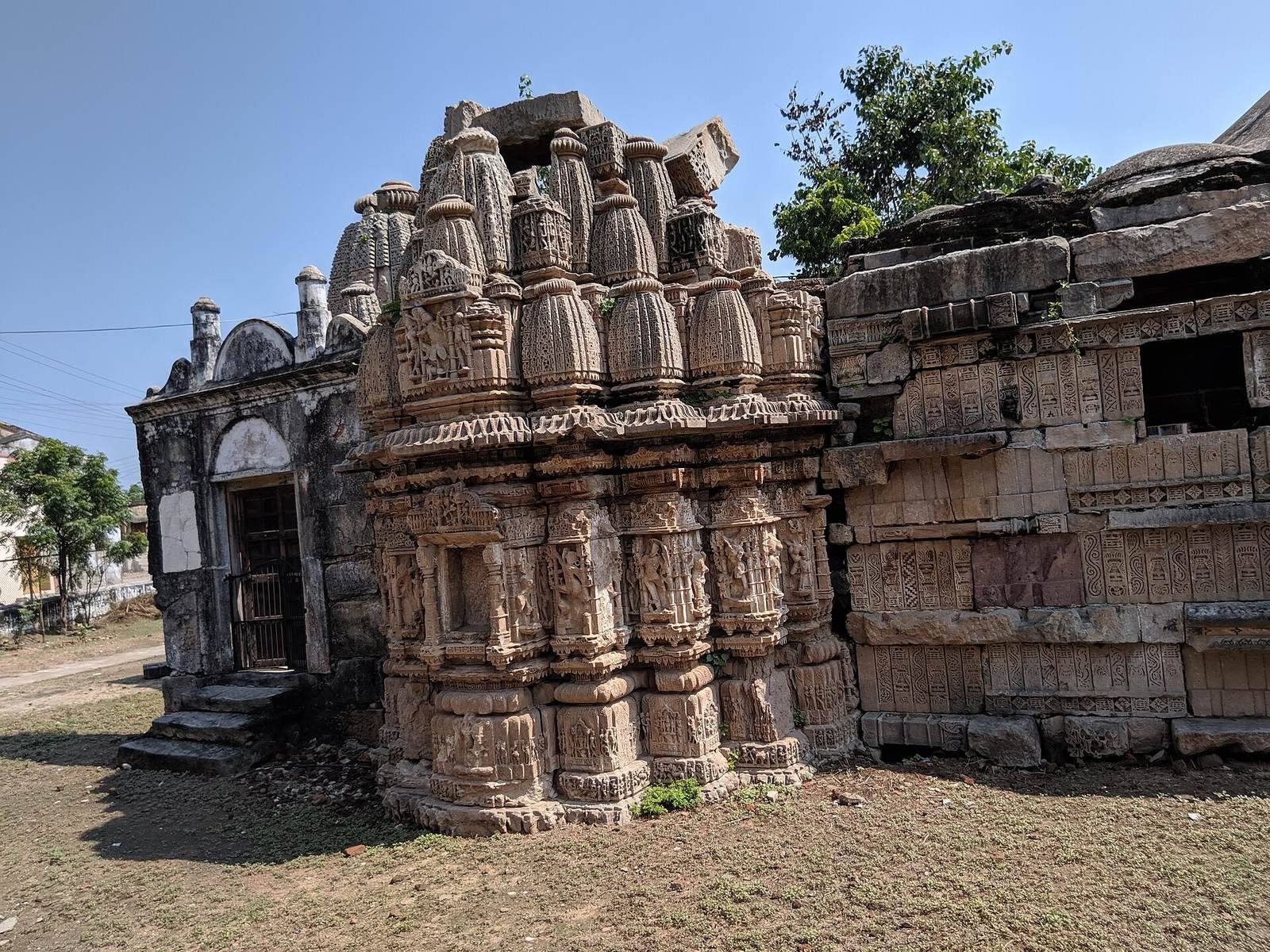
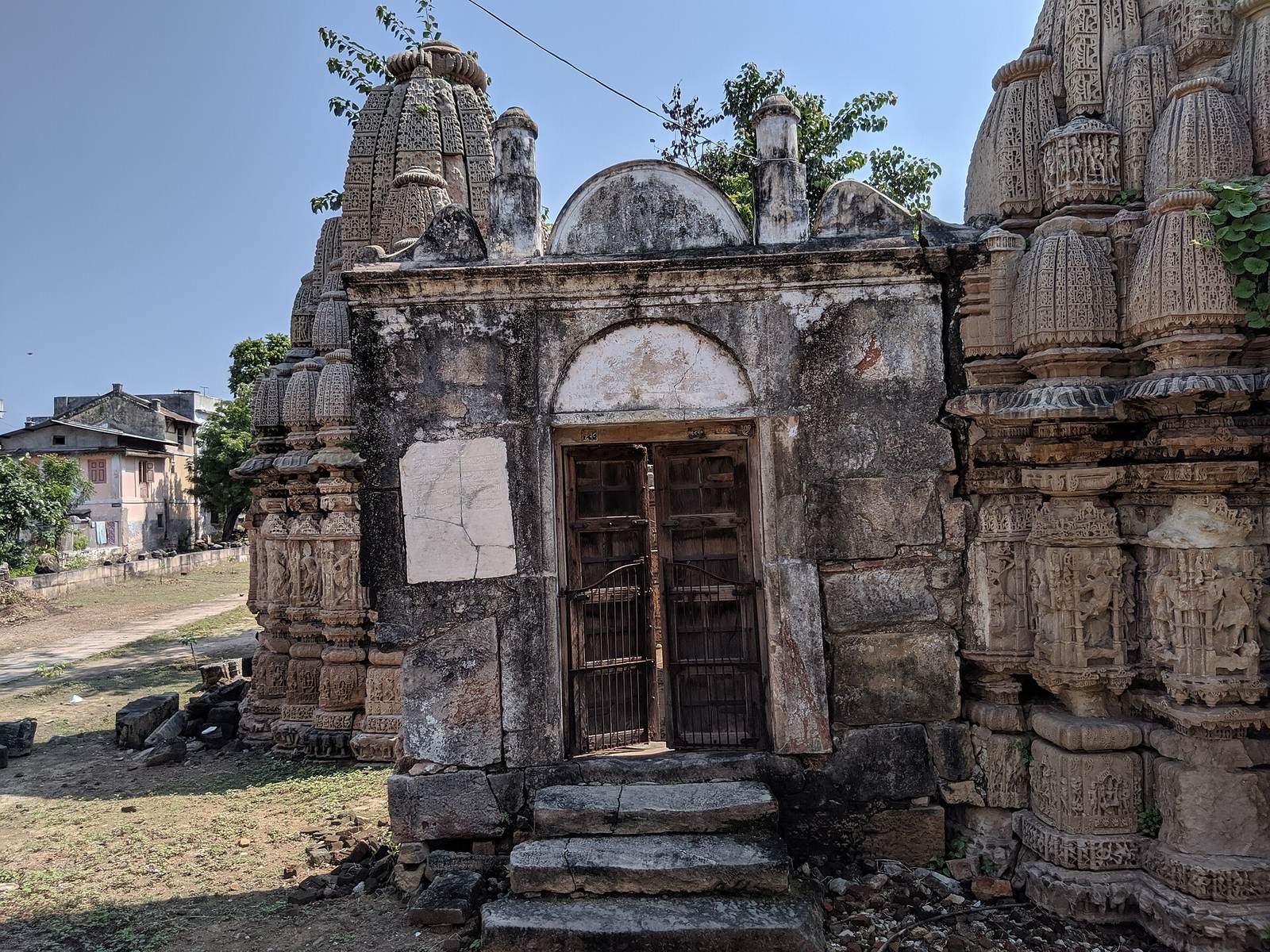
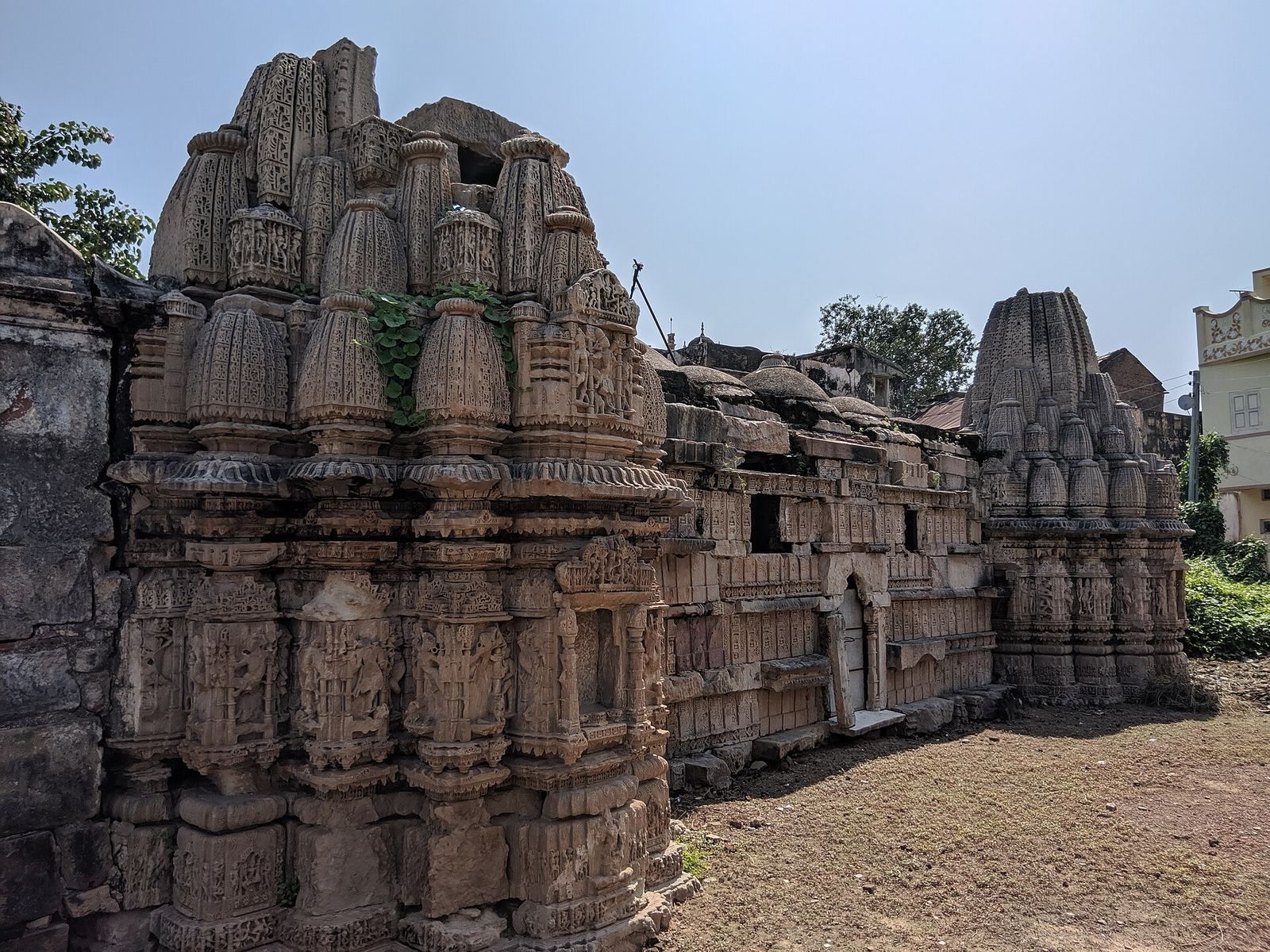
The sandstone complex had two storeys and a plan organized around a central structure. The layout included eleven subsidiary shrines dedicated to the eleven Rudras, forms associated with Rudra and Shiva.
Central structure and gateways
Four surviving pillars once supported the central structure. The remains also include two toranas, or gateway porches. The western portion of the complex is incorporated into the Jami Masjid.
Carved and pillared features
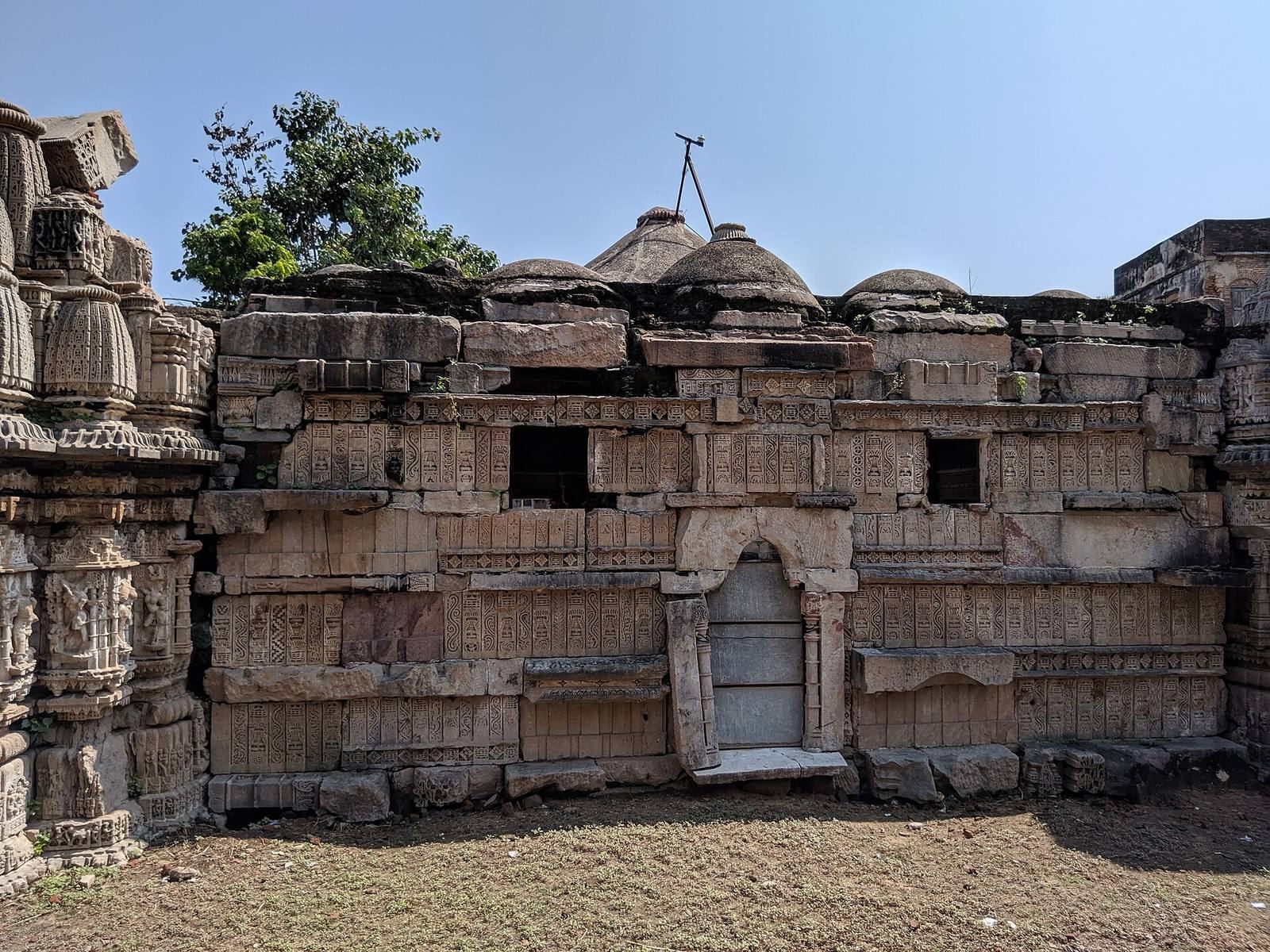
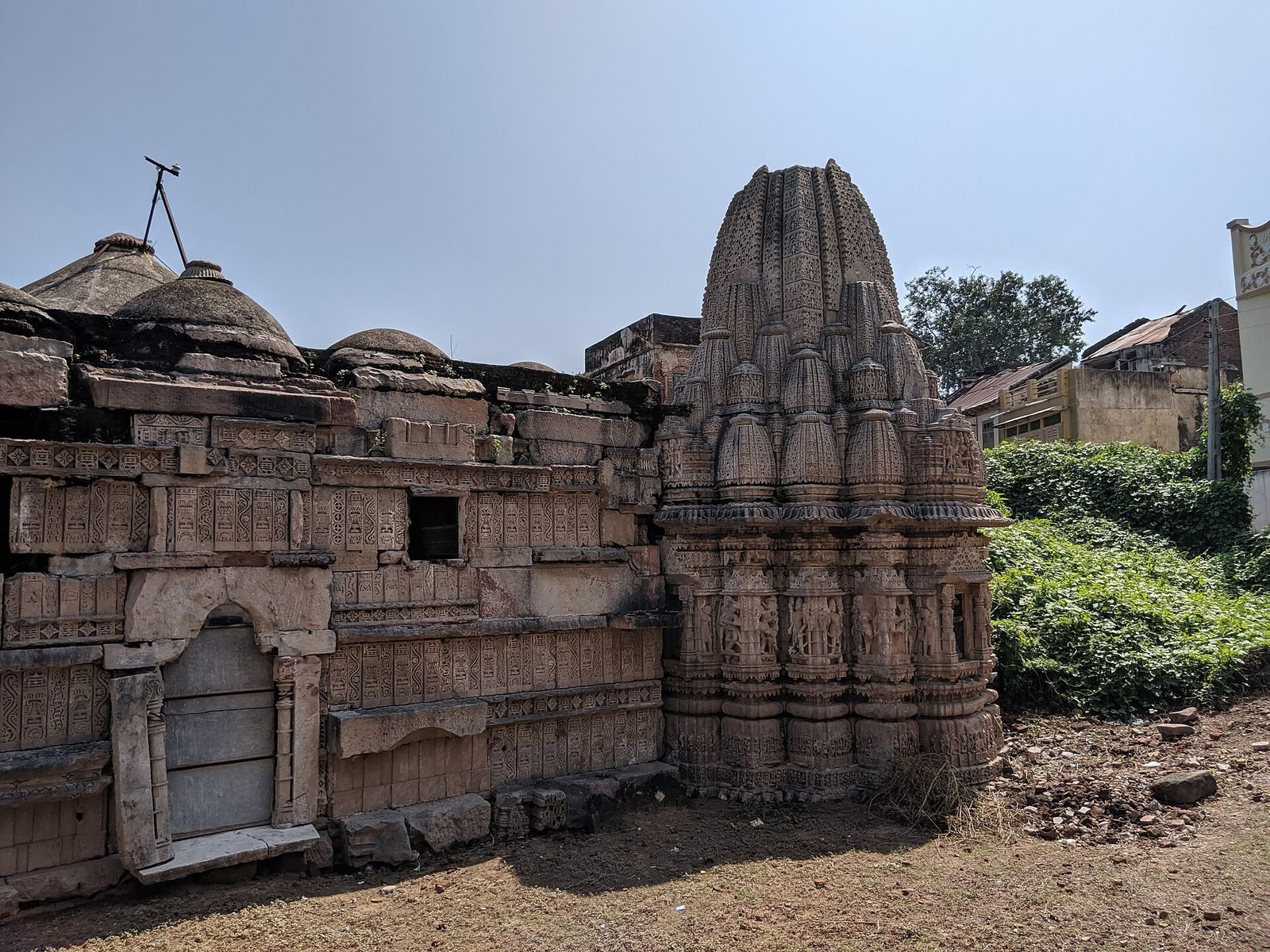
Other surviving features include a structure identified as the Kirti Torana, carved decoration from a doorway, temple sculpture, and a mandapa, or pillared hall. A photograph from 1874 shows the main portal in ruins.