Đồ Bàn (Vijaya): The Champa Capital and Citadel
Site at a Glance
- Rating
- 4.7
- Popularity
- Medium
- Country
- Vietnam
- Primary era
- Medieval
- Eras represented
- Medieval
- Civilizations
- Champa
- Site type
- Military
- Remains
- Citadel
On this page15 sections
History
Đồ Bàn, also known as Vijaya, was a Cham citadel and capital in Nhơn Hậu commune, Bình Định Province, Vietnam. Champa, a historical polity of the Cham people, had its capital here from about 999 until 1471.
The establishment of Vijaya
In 982, the army of Vietnamese ruler Lê Đại Hành destroyed Indrapura, Champa’s former capital. The Cham court moved south, while Lưu Kế Tông, a general under Lê Đại Hành, remained in the north and governed the Cham region between present-day Quảng Bình and Quảng Nam.
In 988, Cham leaders in the south enthroned Harivarman II, who made Vijaya his capital. After Lưu Kế Tông died and Vietnamese forces withdrew from the north, Harivarman regained control there and moved the capital back to Indrapura. Around 999, the next king, Sri Vijaya Yangkupu, transferred the capital permanently to Vijaya. A history of the Song dynasty connects the transfer with a Champa embassy to China in 1005.
A contested capital
Vijaya remained Champa’s capital until 1471, despite repeated attacks and changes of control. Chenla, an early Khmer polity, ruled the city in 1145–1149 and 1190–1192; Khmer forces also attacked it repeatedly. Yuan forces attacked in 1283. In 1313, Siam, then ruled by the Sukhothai dynasty, took part in a battle before withdrawing after the Trần dynasty intervened.
Attacks by Đại Việt, a historical Vietnamese state, occurred under several ruling dynasties. The Lý campaigns came in 1044, 1069 and 1074; those under the Trần in 1252, 1312 and 1377; the Hồ attack followed in 1403; and the Lê campaigns came in 1446 and 1471. A Ming-era account by Ma Doan, an interpreter accompanying the admiral Zheng He, describes Vijaya around 1413.
The fall of Vijaya
In 1471, the army of Lê Thánh Tông besieged Vijaya, ending its five centuries as Champa’s capital. The Đại Việt sử ký toàn thư states that more than 30,000 Cham, including King Tra Toan, were captured, and that 40,000 Cham soldiers died. Champa ceded its northern territories to Đại Việt and retreated south of the Cù Mông Pass. Đồ Bàn was abandoned.
Later citadels
In the late eighteenth century, Nguyễn Nhạc ordered an imperial citadel built over Vijaya’s old foundations to serve as a capital. Nguyễn Phúc Ánh captured it in 1799 and renamed it Bình Định Citadel. In 1816, under Gia Long, the citadel was demolished and the capital moved to Quy Nhơn.
Remains
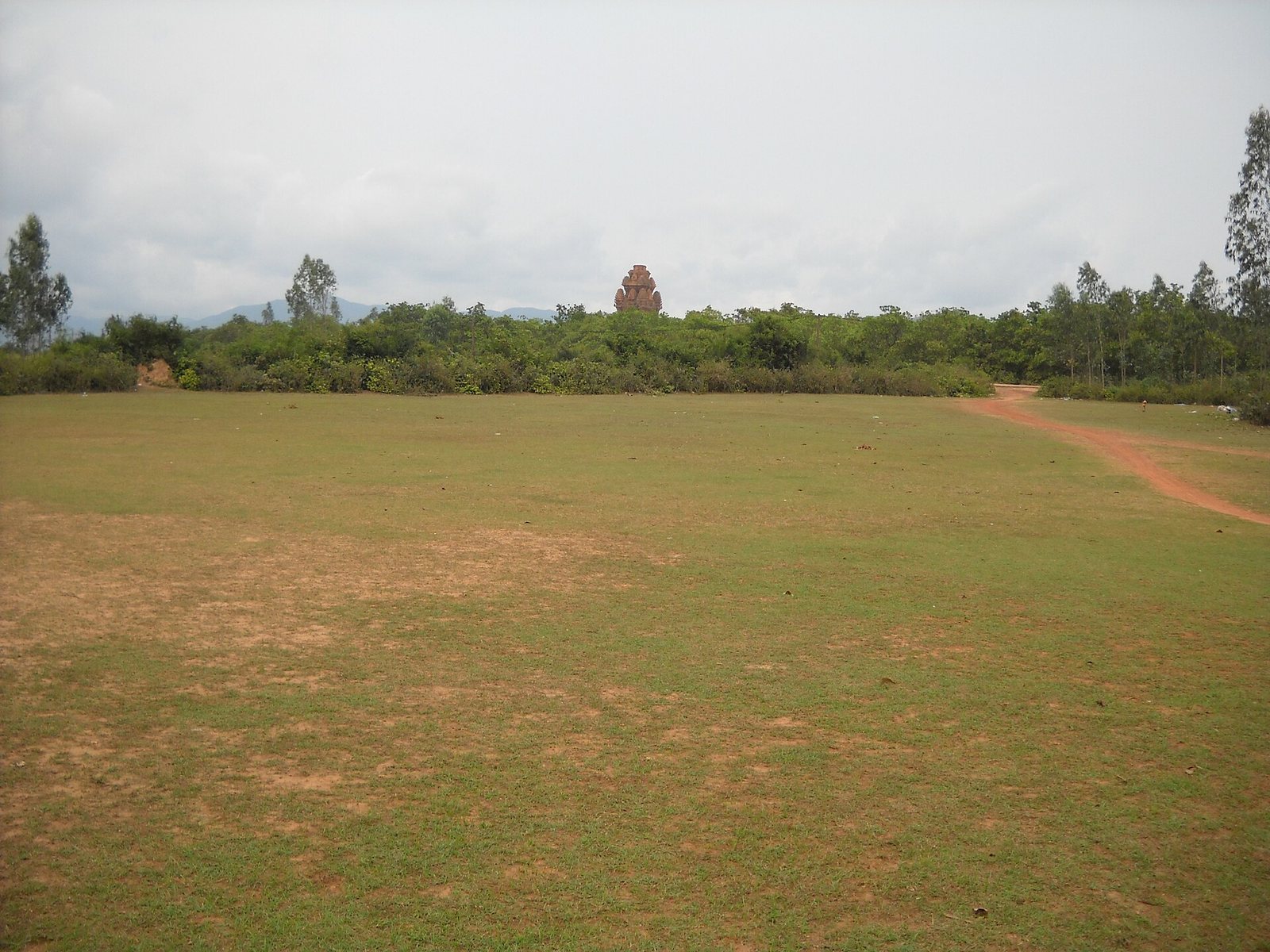
The citadel stands on higher ground than the surrounding fields. Its surviving defenses, interior lanes and well occupy the same enclosed site, while Cham towers and other remains are found within and around the wider Đồ Bàn area.
Citadel defenses and interior
Ramparts and moats
Surviving sections of the defenses include ramparts made of laterite, an iron-rich soil or rock used as a building material, and dry moats.
Lanes and features inside the citadel
Marble-paved lanes and a square well remain within the citadel. The interior also contains a stone elephant statue and Thap Thap Hill, which lies beside the rear gate.
Cham towers and sculpture
Canh Tien Tower
Canh Tien Tower rises nearly 20 metres. Its decoration includes a white-stone serpent, a stone elephant and numerous monster figures at the corners. The tower’s architecture is characteristic of the regional Bình Định style of Cham tower building. It is dated to the second half of the eleventh to the early twelfth century and associated with the reigns of Harivarman IV (1074–1081) and Harivarman V (1113–1139).
Stone lions and surviving towers
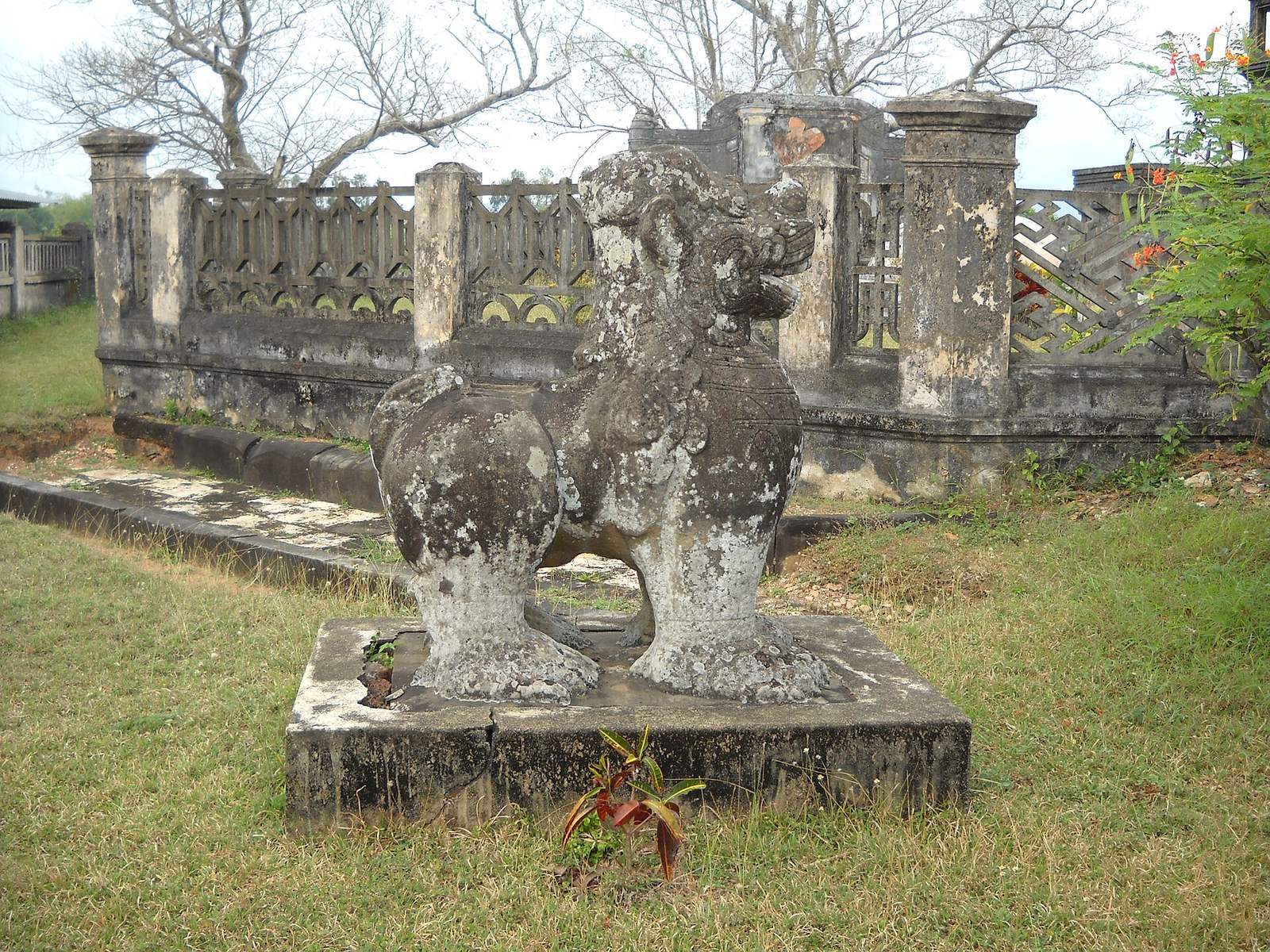
Cham kings built many structures at the capital during its centuries as Champa’s seat of government, and eight towers survive today. A pair of stone lions among the identified Cham remains is sculpted in the Bình Định style, with a date between the twelfth and fourteenth centuries.
Nearby religious and commemorative remains
Pagodas
Thap Thap Di Da Pagoda lies north of the citadel, built on the foundations of ten former Cham towers. Nhan Thap Pagoda is situated to the south.
Tombs, mausoleum and citadel gate
The wider area includes the tombs of Võ Tánh and Ngô Tùng Châu, as well as an old citadel gate. A mausoleum contains an old octagonal tower and a white-stone stele commemorating the achievements of Võ Tánh and Ngô Tùng Châu in 1800. Exposure to wind and weather has worn away the Chinese characters carved on the stele.