Gela Acropolis: The Hilltop Center of Ancient Gela
Site at a Glance
- Rating
- 4.1
- Popularity
- Medium
- Country
- Italy
- Primary era
- Classical
- External website
- Open
- Eras represented
- Stone Age, Bronze Age, Iron Age, Classical
- Civilizations
- Ancient Greek
- Site type
- Military
- Remains
- Citadel
On this page17 sections
History
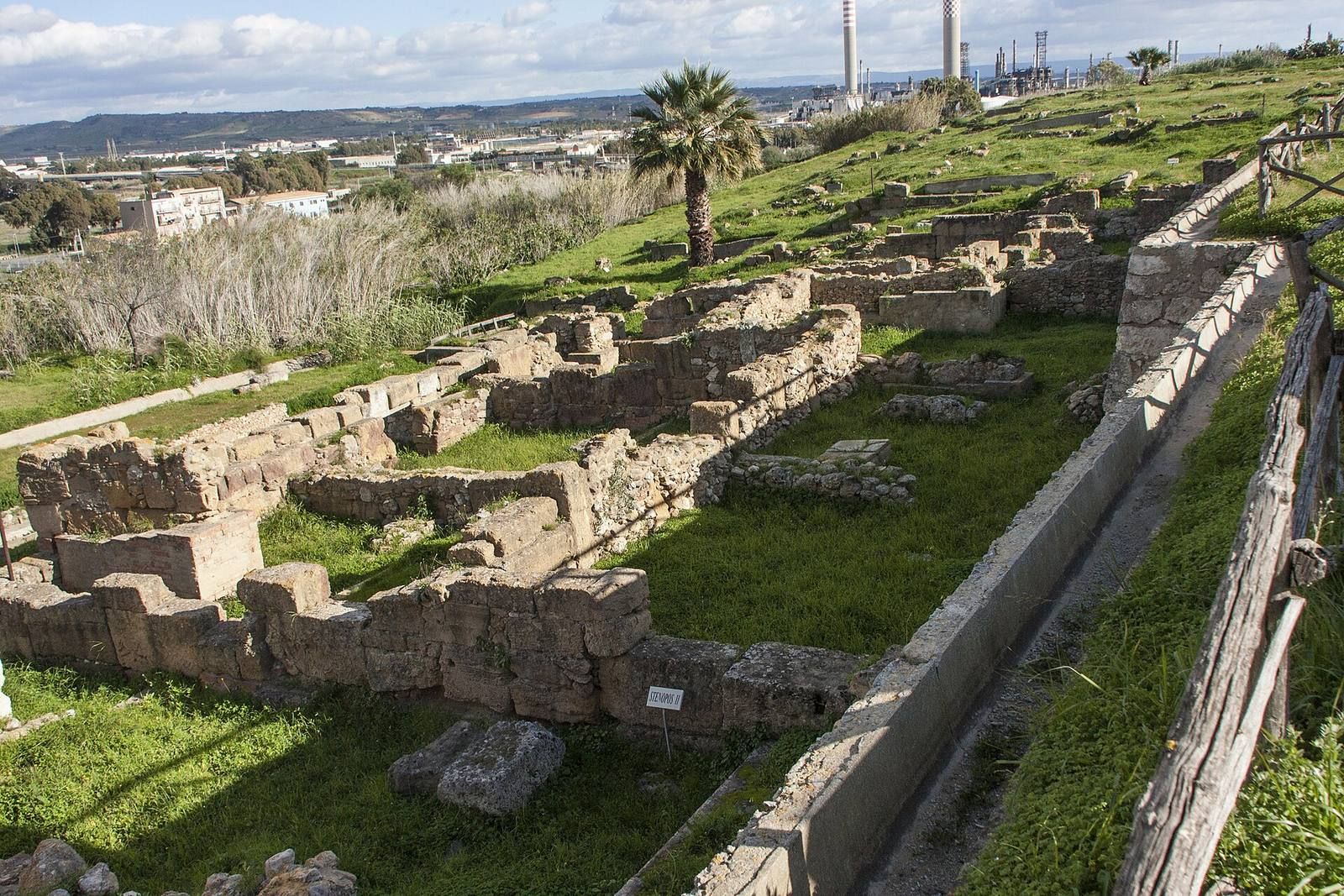
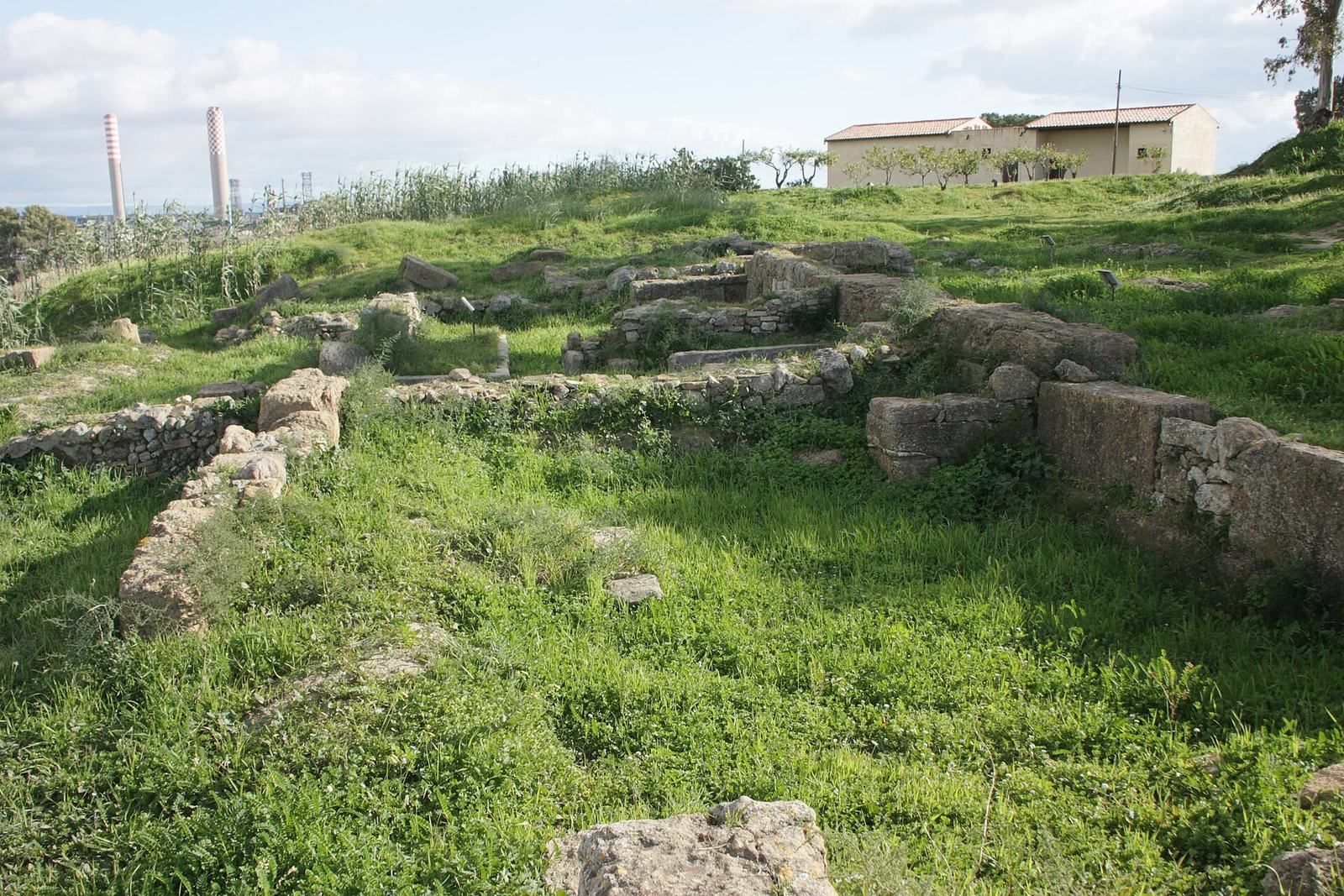
The Gela acropolis, also known as the Molino a Vento acropolis, is the elevated center of ancient Gela in Sicily, Italy. Occupied from the Copper Age, it later became the citadel of a Greek colony founded in 688 BCE. Gela belonged to the Siceliot world, the Greek communities of Sicily, and reached its greatest prosperity in the sixth and fifth centuries BCE.
Early settlement and foundation
Toward the end of the eighth century BCE, a small group from Rhodes occupied the hill. Fragments of early Greek pottery in the Proto-Corinthian Geometric style point to this presence. In 688 BCE, Rhodian-Cretan colonists led by Antiphemus and Entimus established a stable colony and built its first places of worship. Antiphemus served as the colony’s founding leader.
Urban development and sacred life
During the sixth century BCE, Gela reorganized the acropolis with an enclosure wall to the north and a regular street plan. New sanctuaries were built, and Temple B replaced an earlier shrine. Under Cleander, Hippocrates, and Gelon, Greek sole rulers who held power outside ordinary constitutional arrangements, the plan was further established and remained in use into the fourth century BCE.
In the fifth century BCE, Temple C was built to commemorate the Greek victory over the Carthaginians at Himera in 480 BCE and to celebrate the power of the Dinomenids, a ruling family in the Greek cities of Sicily. Sanctuaries beyond the city walls formed part of Gela’s religious life from at least the seventh century BCE. Their cults included Demeter, associated with agriculture and the harvest, Hera, associated with marriage and sovereignty, and deities linked to the earth and underworld. The Dinomenids established several sanctuaries for these latter deities, while Gela’s founder Antiphemus was honored with a dedicated shrine.
Destruction, revival, and abandonment
After the Carthaginian destruction of Gela in 405 BCE, new buildings were erected on the acropolis. Temple C suffered severe damage during the Battle of Gela and was later quarried for stone.
Gela revived in the second half of the fourth century BCE under Timoleon, a Greek military leader and statesman. The acropolis was then reorganized for less regular use, including craft activity. Agathocles, ruler of Syracuse, conquered the city in 311–310 BCE, after which the area was abandoned. Its final abandonment came in 282 BCE, when Phintias, ruler of Agrigento, destroyed Gela.
The archaeologist Paolo Orsi excavated cemeteries outside the city walls and uncovered Temple A beneath the foundations of Temple B.
Remains
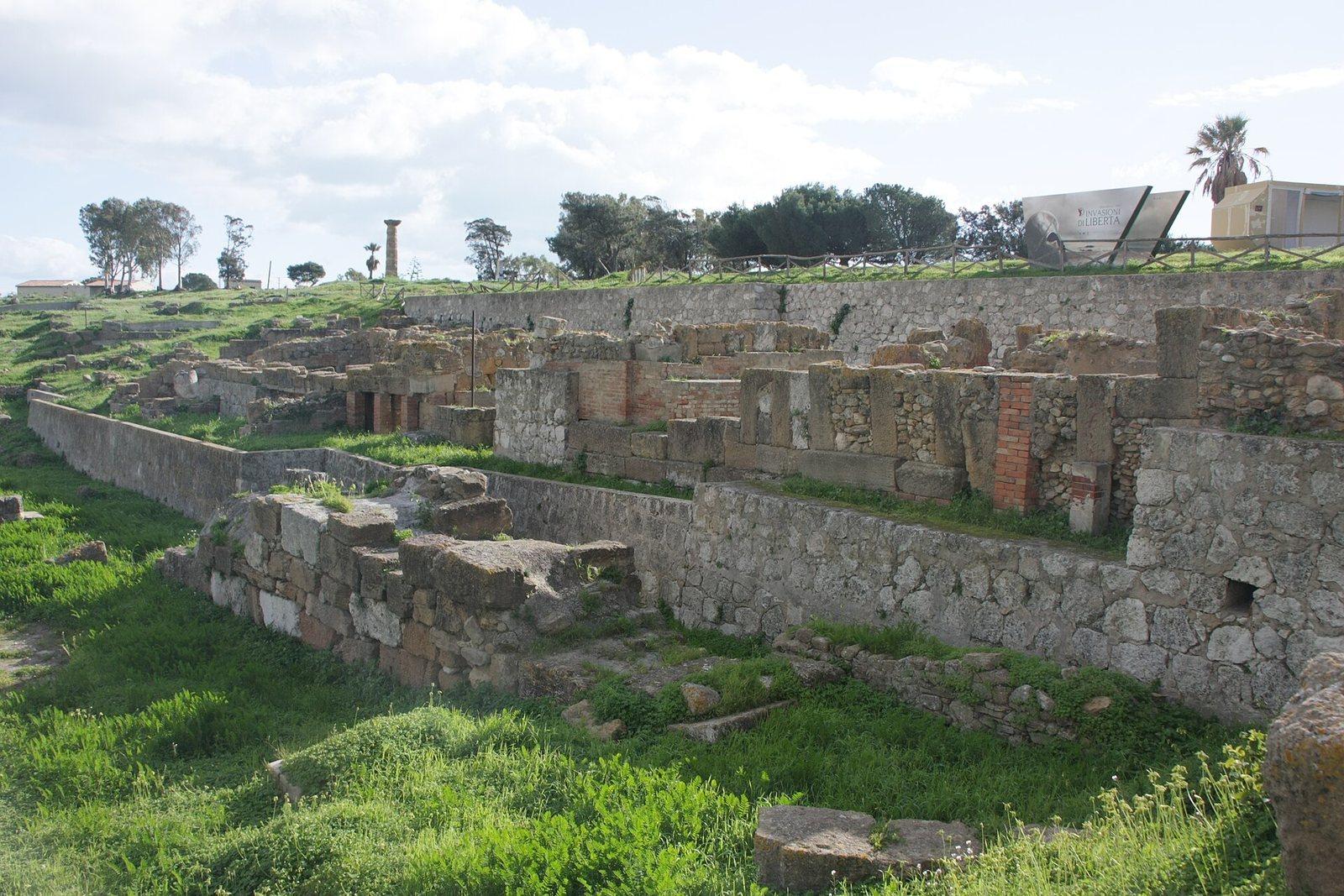
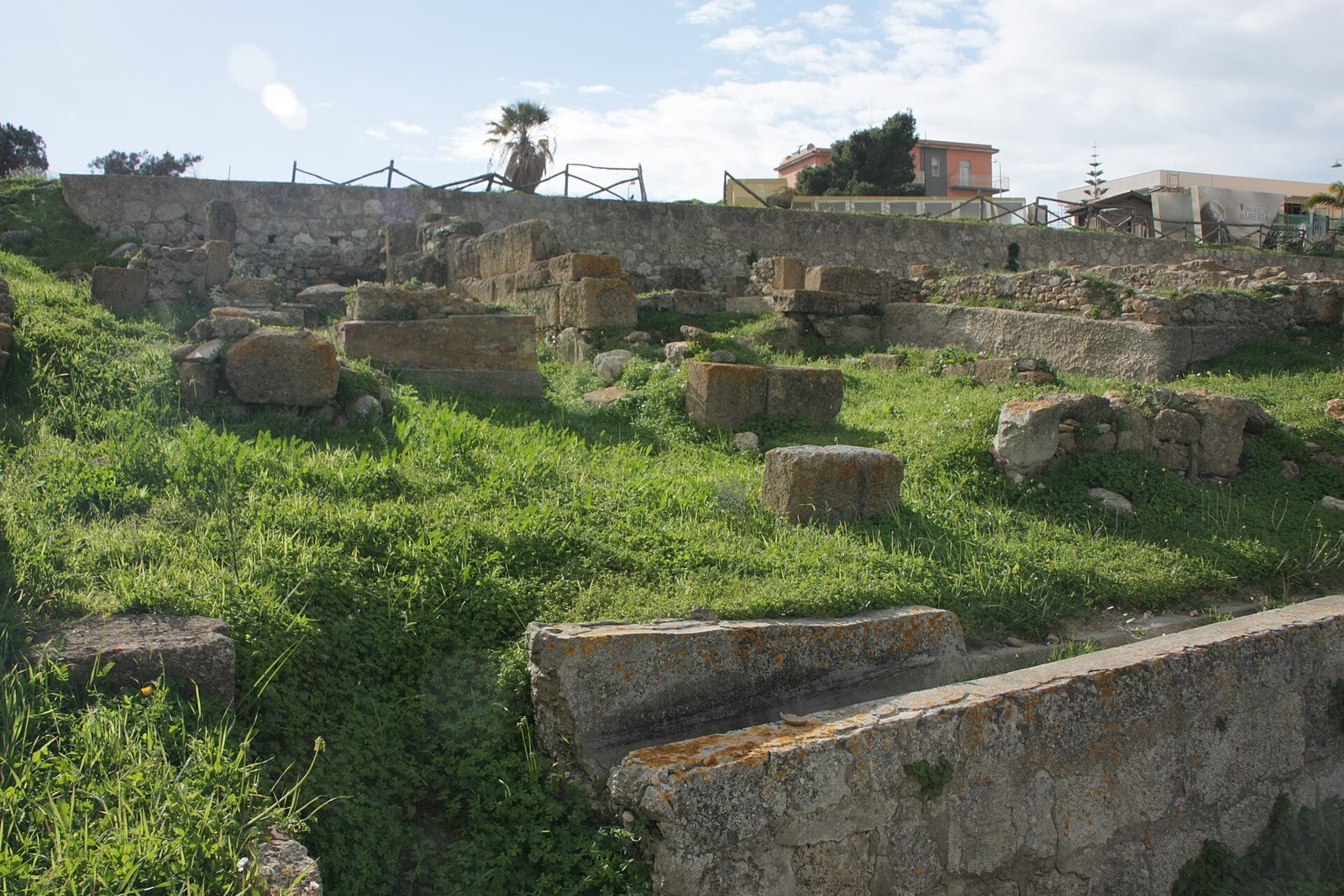
The acropolis occupies a hill about 45 m above sea level and covers approximately 93,711 m². Its remains include prehistoric settlement traces, a planned Greek street layout, successive temples, and buildings from later phases of use.
Settlement remains and street plan
Prehistoric occupation
The earliest evidence dates to the first half of the third millennium BCE, when a village of huts occupied the hill. Four shaft tombs, burials reached through vertical shafts, are attributed to this early phase. Their grave goods included ceramics decorated in the San Cono-Piano Notaro style, a prehistoric Sicilian pottery tradition. Circular huts from the Early Bronze Age were found on the hill’s northern side, along with clay spindle whorls, painted pottery associated with the prehistoric Castelluccio culture, and a vessel with seven clay horns used in ritual practices.
Greek street plan
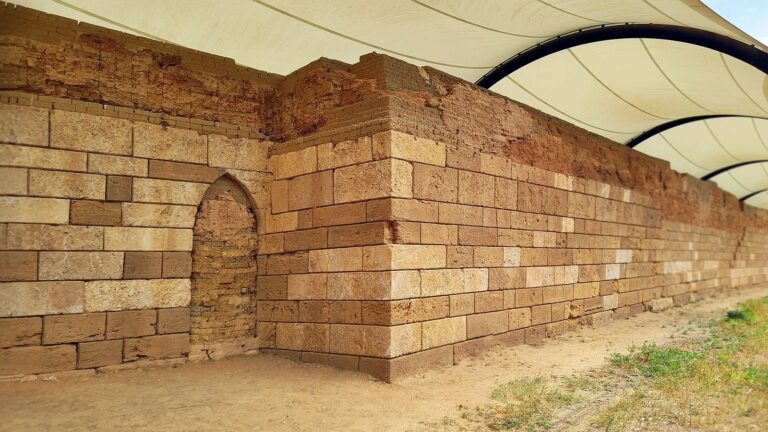
The sixth-century BCE plan included a main street running east to west, narrower streets, and blocks measuring 30.5 m, separated by streets 4 m wide. Buildings in the northern sector were constructed from sandstone blocks during the fifth century BCE. Later alterations removed some streets and extended the third narrow street over the base of Temple B.
Temples on the acropolis
Temple A
The earlier Temple A lay beneath the foundations of Temple B. Dedicated to Athena, the Greek goddess associated with wisdom and warfare, under the title Athena Lindia, linked to Lindos, it was built with walls of blocks and rubble. It had no colonnade surrounding its main structure.
Temple B
Built in the first half of the sixth century BCE on Temple A’s foundations, Temple B was dedicated to Athena. Its squared calcarenite blocks, a limestone composed chiefly of sand-sized carbonate grains, were laid with their long sides adjoining. One course of its foundation platform survives. Its reconstructed plan is that of a Doric temple, a Greek architectural style, with six columns across the front and a surrounding colonnade. Twelve columns ran along each side, and the building measured 35.22 by 17.75 m. Fired-clay decorations included paired braid patterns at both triangular roof ends, large multicolored Gorgon masks, and roof ornaments showing horsemen and lionlike figures. Geloan craftsmen used similar ornamentation on the treasury their city dedicated at Olympia. Temple B underwent several renovations before it was demolished to make way for Temple C.
Temple C
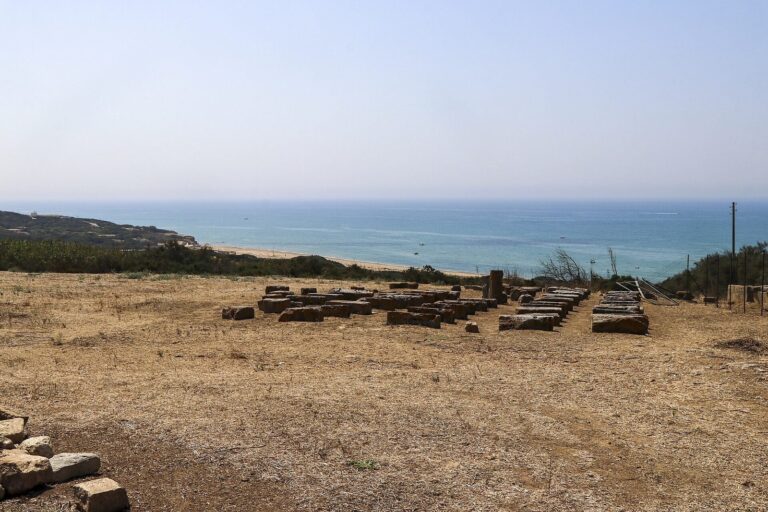
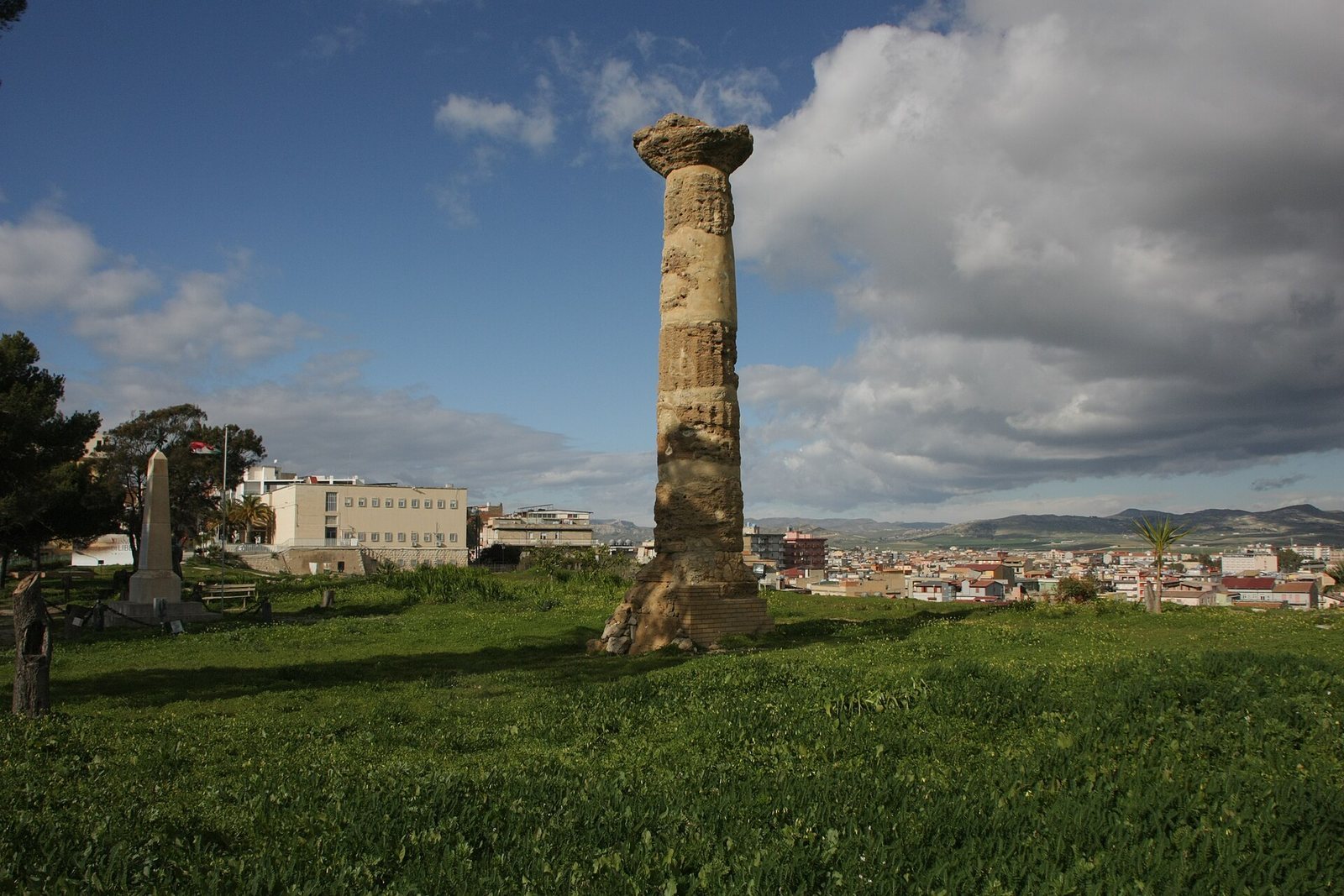
Temple C had six columns across its front and fourteen along each side, with overall dimensions of 51.30 by 21.70 m. Its stone came from the Gibil-Mut quarries on Mount Zai. Almost all its roof tiles and exterior architectural coverings were made of Cycladic marble, marble from the Cyclades islands, while columns of poorer material were plastered white. One column survives.
Later buildings
Rectangular Buildings XII and XIII were erected after the destruction of 405 BCE. Building XII was a temple dedicated to Demeter. Building XIV belonged to the later artisanal phase, when construction on the acropolis followed a less regular arrangement.
Sacred sites beyond the walls
Sanctuaries along what are now Via Eschilo and Via Apollo included smaller shrines, one complex of which remained in use until the fourth century BCE. Roof-edge ornaments, called antefixes, bore masks of Silenus, an elderly satyr-like figure associated with Dionysus. A sanctuary of Hera stood on a terrace south of the town hall, where scratched inscriptions preserve the goddess’s name. At Bitalemi, a Thesmophorion, a sanctuary of Demeter linked to the festival held in her honor, formed part of the sacred landscape. Other sanctuaries stood at Carrubbazza and near the former railway station.
Cemeteries and trade remains
Cemeteries
Gela’s cemeteries lay outside the city walls, east of the river and west of the acropolis. They contained several types of burial.
Bosco Littorio
South of the acropolis, near the mouth of the Gela River, remains of a trading post dating from the seventh to fifth centuries BCE were found at Bosco Littorio. A port may have stood there. A Greek ship recovered from nearby waters may have reached it carrying assorted storage jars and valuable goods.