Shiloh Indian Mounds Site: A Mississippian Village in Tennessee
Site at a Glance
- Rating
- 4.8
- Popularity
- Medium
- Country
- United States
- Primary era
- Medieval
- External website
- Open
- Eras represented
- Medieval
- Civilizations
- Unclassified
- Site type
- City
On this page9 sections
History
The Shiloh Indian Mounds Site is an archaeological village in Shiloh, Tennessee, United States, on the west bank of the Tennessee River. Its community was occupied from around 1000 CE by people of the Late Woodland period, an archaeological period in eastern North America, and later by people of the Early Mississippian culture, part of a tradition associated with settled farming and mound-building. Shiloh is associated with the South Appalachian regional variation of Mississippian culture and was abandoned around 1350 CE.
Occupation and regional connections
Shiloh was the largest site in its region and probably served as the center of a chiefdom, a political community organized under chiefly authority. The community’s influence extended along about 20 miles of the Tennessee River Valley. Six smaller villages, each with one or two mounds, and farmsteads on higher ground formed part of this territory. Swallow Bluff Island Mounds was one of the smaller villages. Neighboring communities also occupied areas along the Tennessee and Tombigbee Rivers in what is now Alabama, Mississippi, and western Tennessee.
A separate settlement enclosed by a defensive fence stood downstream on the river’s eastern bank, at the present-day location of Savannah, Tennessee. It had several mounds, but whether it was occupied at the same time as Shiloh is uncertain. Prestige goods from Cahokia, a major Mississippian center in Illinois near present-day Collinsville, have led archaeologists to suggest that Shiloh’s political ties were closer to Cahokia than to chiefdoms in Middle Tennessee.
Residents relied heavily on maize and also cultivated squash, sunflowers, goosefoot, marshelder, and maygrass. They gathered acorns and hickory nuts, hunted white-tailed deer, squirrels, rabbits, turkeys, and raccoons, and fished.
Archaeology and preservation
Cornelius Cadle, then chair of the Shiloh Park Commission, began the first archaeological excavations in 1899. In the winter of 1933–34, survey work associated with archaeologist Frank H. H. Roberts identified numerous house mounds and the village’s enclosing fence.
Shiloh’s inclusion in Shiloh National Military Park protected the site from modern farming practices, and the National Park Service administers it. The site was added to the National Register of Historic Places, the federal register of recognized historic properties, in 1979. In 1989 it became a National Historic Landmark, a designation recognizing places of exceptional historical importance.
Remains
The site covers about 81 acres (33 hectares) on a high natural terrace at the edge of the Shiloh Plateau. The village occupied a bluff above the Tennessee River, between ravines that descend toward the river to the north and south. Its layout combined a wooden defensive fence with earthen mounds and houses built from branch frameworks coated with clay.
Village layout
The ravines, riverbank scarp, and defensive fence enclosed an area of about 19 hectares, containing most of the houses and mounds. The western section of the fence extended for about 300 metres.
Buildings and mounds
Houses and house mounds
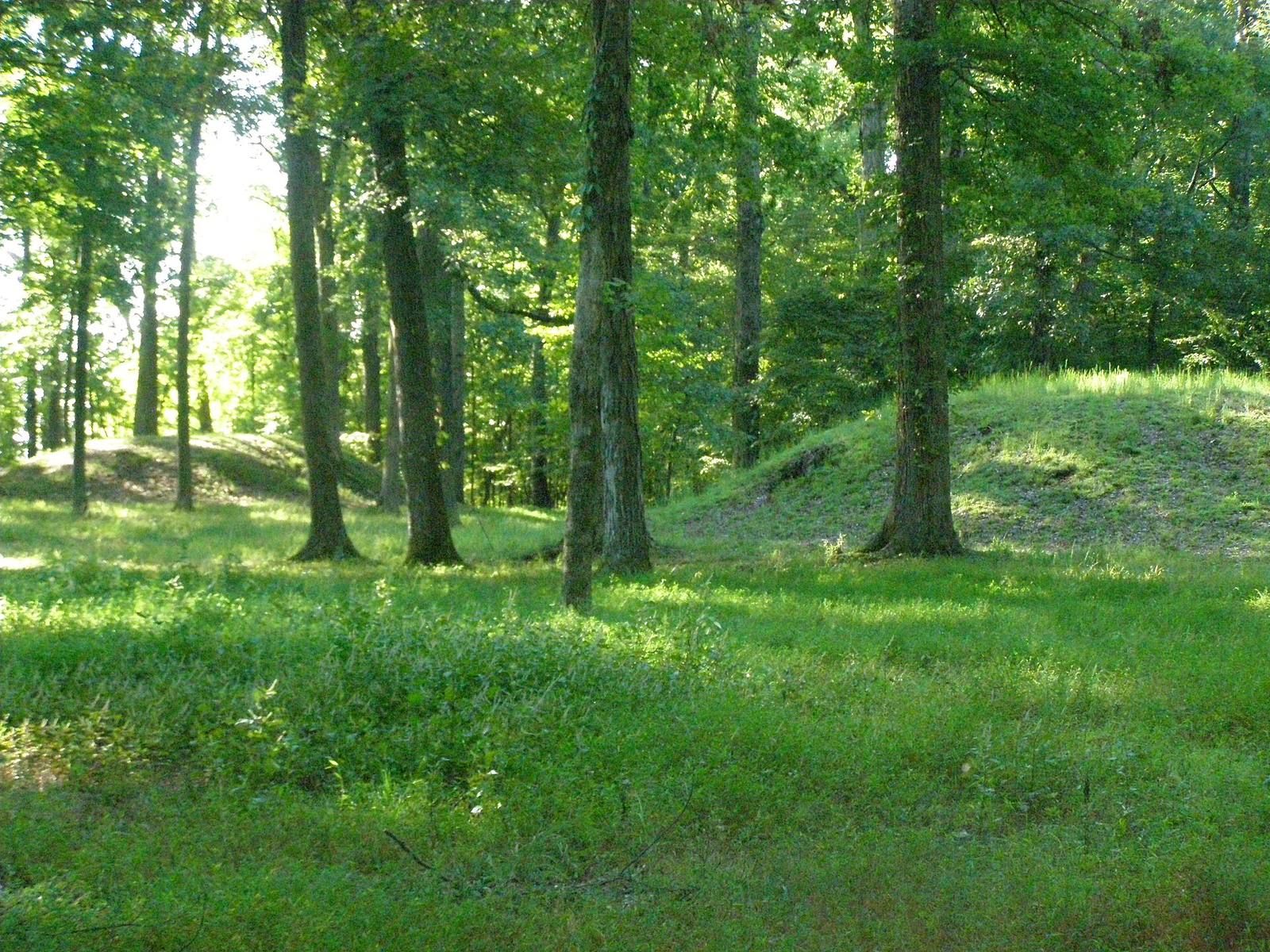
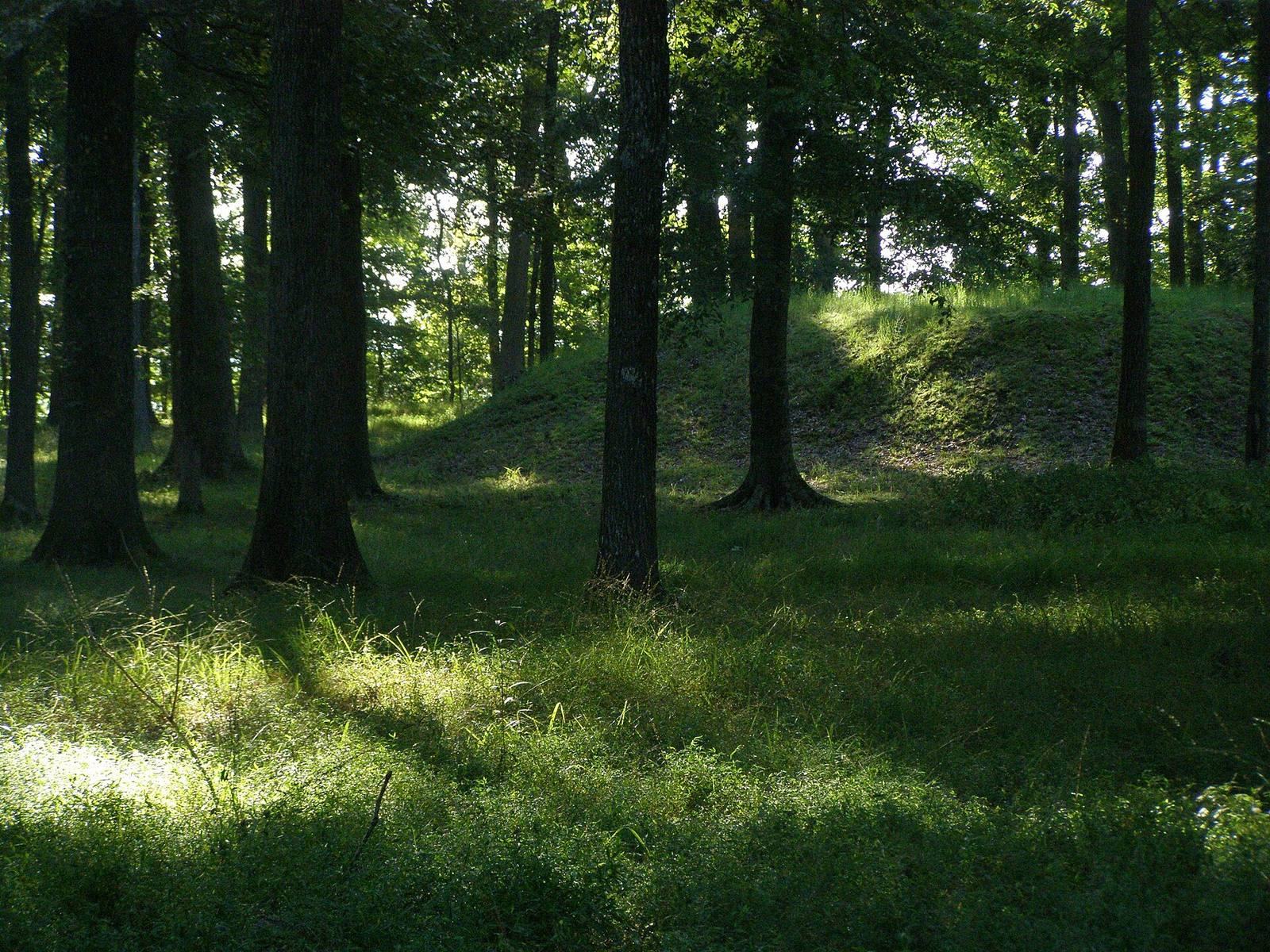
The village had more than 100 houses and more than three dozen individual house mounds. Surveyed house mounds measured about 10–20 feet (3–6 metres) across. Some preserved traces of houses, including upright posts interwoven with branches and covered in a thick clay coating. These remains appear as low rings or mounds.
Earthen mounds
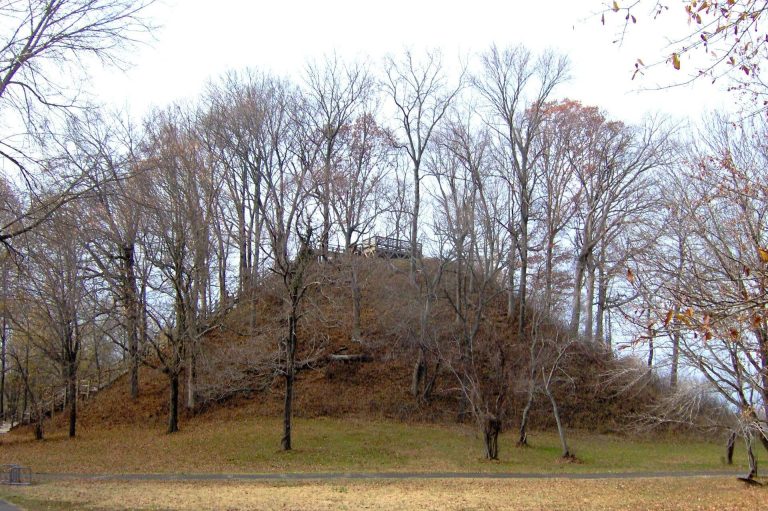
Eight mounds at the site include platform mounds, raised earthen structures with generally level tops, and a rounded, conical Woodland-period burial mound identified as Mound C. The southernmost mound served as a burial place for leaders and other important people; it has an oval plan and a rounded top. A mound called Temple Mound and two house platforms are also identified.
Carved pipe
A large pipe found in Mound C depicts a kneeling man carved from hard Missouri flint clay. An effigy pipe is a pipe shaped as a person or other figure. The carving’s style resembles statuettes from Cahokia, and the pipe is displayed at the Tennessee River Museum in Savannah, Tennessee.