Yongtai Fortress: A Ming Defensive Town in Gansu, China
Site at a Glance
- Popularity
- Medium
- Country
- China
- Primary era
- Early Modern
- Eras represented
- Early Modern
- Civilizations
- Ming
- Site type
- Military
- Remains
- Fortified Town
On this page4 sections
History
Ming construction and defense
Yongtai Fortress is a fortified town in Sitan Township, Jingtai County, Gansu, China. Construction began in 1606 and was completed in June 1608, during the Wanli reign (1572–1620) of the Ming dynasty, which ruled China from 1368 to 1644. Ming minister of war Li Wen, a senior official responsible for military administration, supervised the work.
The fortress formed part of the Great Wall’s Yellow River defensive line and was built to resist attacks by northern minority groups. Its garrison capacity was planned for 2,000 infantrymen and 500 cavalry.
Decline and protection
Desertification contributed to the decline of the village within the fortress. Its population fell from about 1,500 in the 1950s to around 100, and the village is now largely abandoned. In 2006, Yongtai Fortress received designation as a Major Historical and Cultural Site Protected at the National Level.
Remains
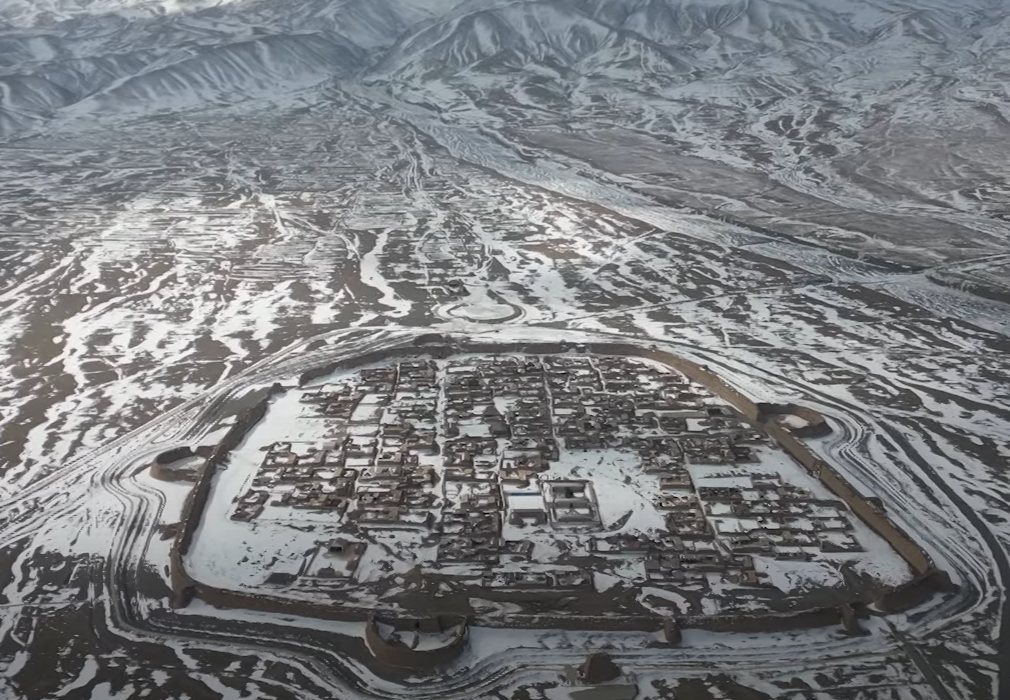
The fortress encloses an area measuring about 520 metres east to west and 500 metres north to south, with a perimeter of 1,710 metres. Its defensive walls are built from rammed earth mixed with sand and incorporate towers. The walls stand 8–12 metres high, measure 6 metres across at the base, and narrow to 5 metres at the top. Yongtai is among China’s best-preserved walled cities.
The four gates shape the town’s turtle-like outline, which gave rise to its alternate name, Turtle City. The south gate forms the head, the east and west gates the flippers, and the north gate the tail.