Glenfinnan Monument: A Memorial to the Jacobite Highlanders
Site at a Glance
- Popularity
- High
- Country
- United Kingdom
- Primary era
- Modern
- Eras represented
- Modern
- Civilizations
- British
- Site type
- Civic
- Remains
- Monument
On this page9 sections
History
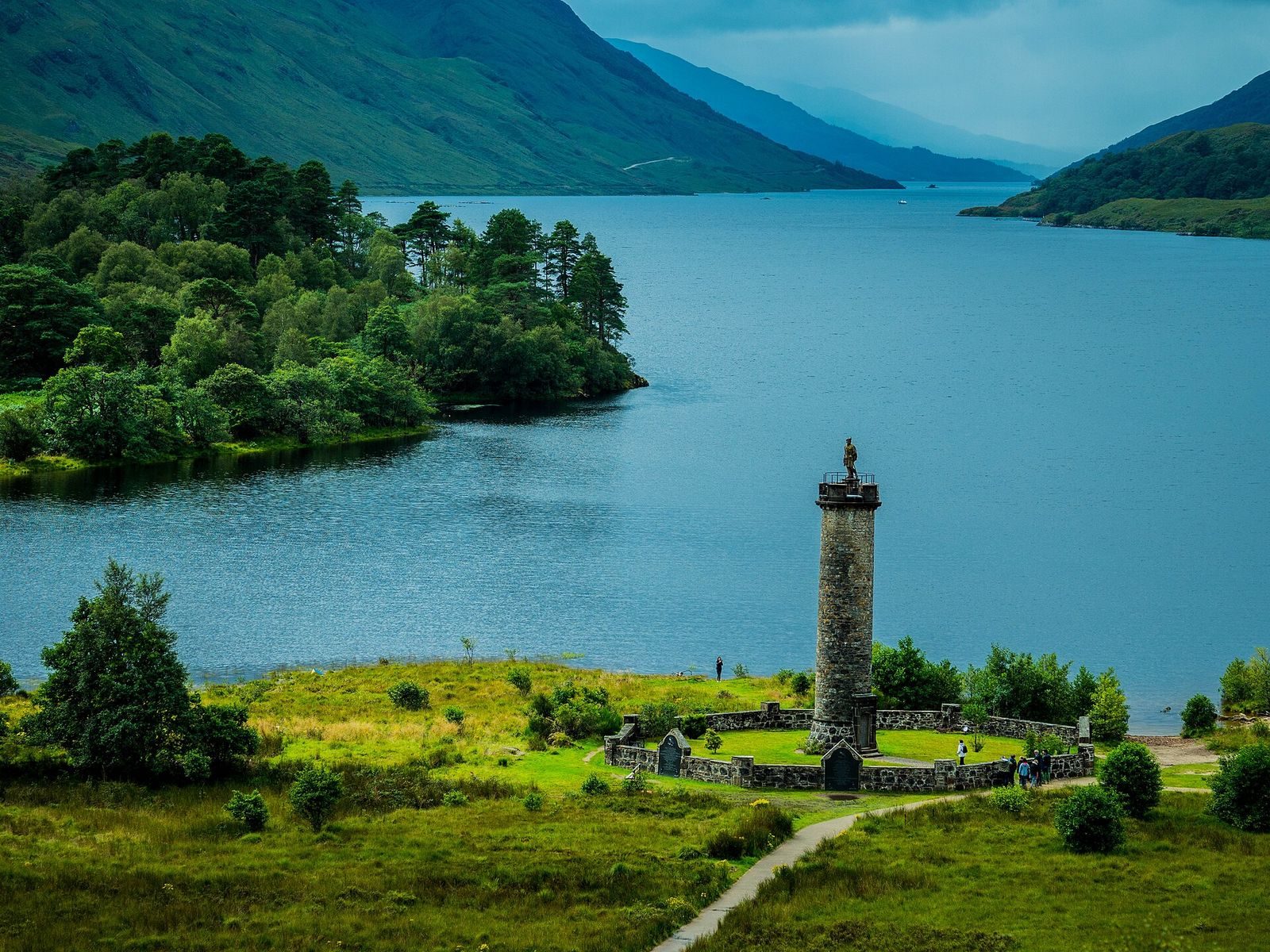
Glenfinnan Monument is a memorial tower at the northwestern end of Loch Shiel in the United Kingdom, built in 1813–1814 in the Gothic Revival style to commemorate Highlanders who fought for the Jacobites, including local Catholic fighters. It also honors its commissioner, Alexander Macdonald of Glenaladale, who died before the monument was finished.
The 1745 rising
Jacobitism was a movement to restore the Stuart dynasty to the British throne. It emerged after James II, the Catholic Stuart king, was deposed during the Glorious Revolution of 1688–1689. His son, James Francis Edward Stuart, failed to regain the throne through risings in 1715 and 1719. In 1745, he appointed his son Charles Edward Stuart regent to continue the cause.
Charles raised an army of about 2,500 supporters in Scotland, many of them Highlanders. The Jacobites captured Edinburgh and advanced into England, taking Carlisle and Manchester. When hoped-for support from English Catholics and French reinforcements failed to arrive, Charles turned back from Derby. Government troops pursued the army into Scotland and defeated it at Culloden in 1746. About 1,300 rebels were killed, leaders were executed, and Charles escaped to France. The defeat ended the rising and contributed to the decline of Jacobitism and Scottish Catholic distinctiveness.
Building a memorial
About seventy years after Culloden, Jacobitism no longer threatened the House of Hanover, the dynasty that had succeeded the Stuarts on the British throne. Alexander Macdonald of Glenaladale, a member of Clan Macdonald of Clanranald, commissioned the monument. His father, also named Alexander, had hosted Charles Edward Stuart for a night in 1745. The monument’s construction was partly funded by wealth from Jamaican plantations owned by Macdonald’s father, where enslaved people were forced to work.
The monument opened in 1814. A road between Fort William and Arisaig, built by Thomas Telford and opened in 1812, made its location possible; the road is now the A830. Since 1938, the National Trust for Scotland, a charitable organization that cares for historic places in Scotland, has looked after the monument. In 2021, a portrait of Stuart in the visitor centre was replaced by a display about the monument’s connections to slavery and slave ownership among Highland elites. Jacobite supporters gather at the tower each year on 19 August to commemorate the rising.
Remains
Setting and layout
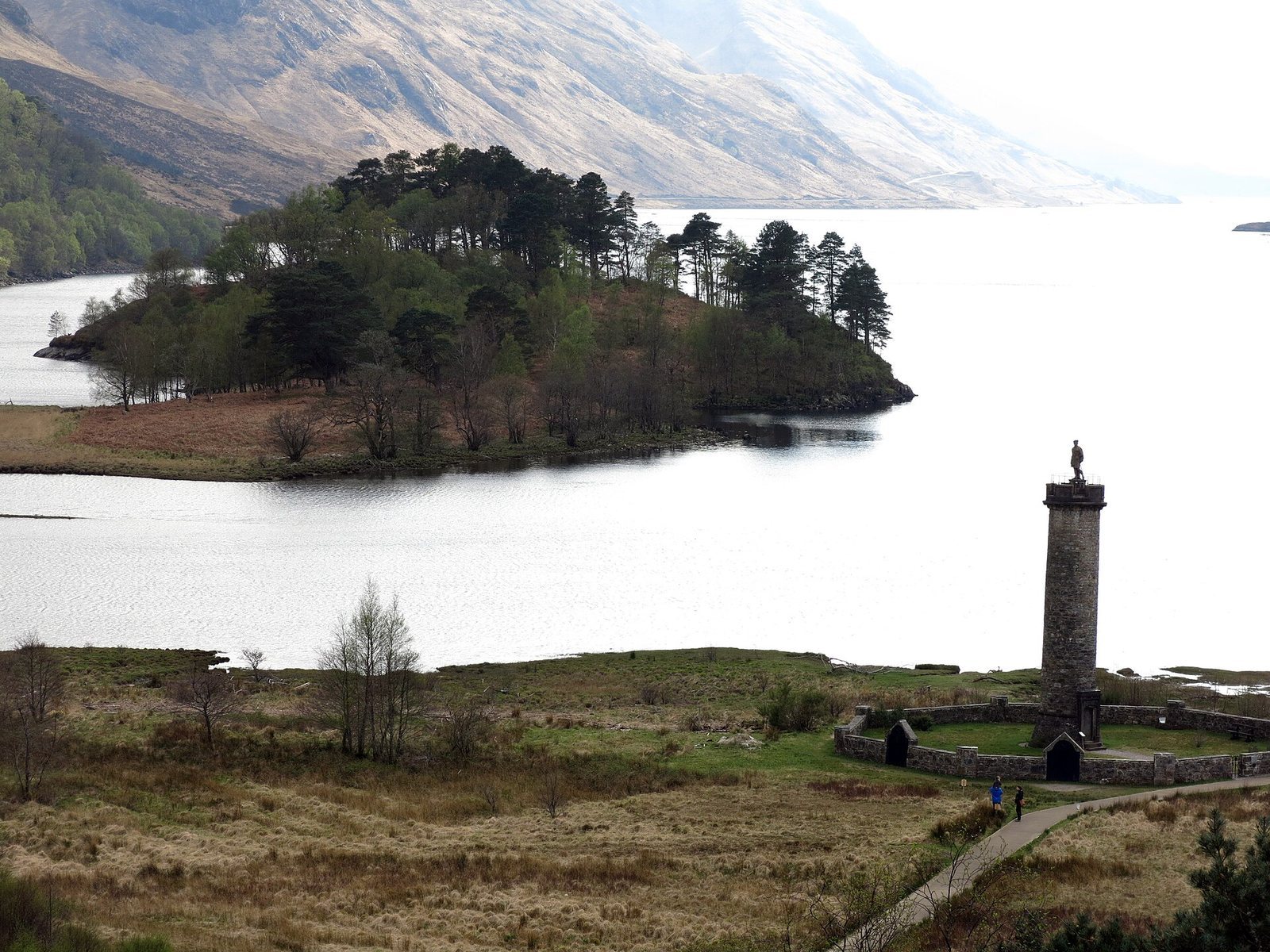
At the northwestern end of Loch Shiel, the monument is arranged around a central tower in a courtyard enclosed by a low stone wall. Glenfinnan Bridge passes to the north, and the Glenfinnan Viaduct is visible from the monument.
Architectural features
Central tower
Designed by Scottish architect James Gillespie Graham, the tower is about 18 metres high and built from local stone in rubble masonry. A staircase runs inside it, and an entrance door opens into the tower.
Highlander statue
A statue of an unidentified Highlander was placed on top of the tower in 1835. Scottish sculptor John Greenshields designed the figure, which was described as Charles Edward Stuart when it was commissioned.
Commemorative markers
A commemorative plaque is fixed to the perimeter fence, and a commemorative sign is also present at the site.