Ain Manawir: An Ancient Oasis Settlement in Egypt
Site at a Glance
- Popularity
- Very Low
- Country
- Egypt
- Primary era
- Classical
- Eras represented
- Classical
- Civilizations
- Achaemenid, Roman
- Site type
- City
On this page8 sections
History
Ain Manawir is an ancient settlement in Egypt’s Kharga Oasis, a few kilometres northwest of Dush and about 80 kilometres south of Kharga. Its Persian-period irrigation system and extensive written archive offer detailed evidence of life in the oasis; it is the best-documented village of ancient Egypt.
Early occupation and later settlement
The earliest traces of occupation date to the Final Paleolithic, the later part of the Paleolithic era. People may have continued to live at the site into the Old Kingdom, a phase of ancient Egyptian history, after which a long period of abandonment followed. Settlement resumed before or during the Late Period, another phase of ancient Egyptian history. Objects from the Ptolemaic period, the era of the dynasty founded by Ptolemy I after Alexander the Great’s conquest of Egypt, indicate later activity, although its nature is unclear. Roman-period occupation is better understood. Ain Manawir was abandoned in the third century CE.
Persian rule and written records
Substantial remains attest to occupation under the Achaemenids, the Persian dynasty that ruled Egypt during parts of the first millennium BCE. Documents indicate that irrigation installations were established under Achaemenid rule and remained in use from the fifth century BCE until the third century CE. Whether Persian occupants introduced qanat irrigation to the region or it developed there independently is uncertain.
Excavators recovered 461 ostraca, pieces of pottery or stone used as writing surfaces. More than 300 are demotic, written in a script used for everyday writing in ancient Egypt, and date to approximately 445-390 BCE. Their subjects include temple-service contracts, schedules for using irrigation water, bird-hunting concessions, grain loans, receipts, letters, lists, and accounts.
Some texts mention the stater, an ancient Greek coin, in what is the earliest known reference to it in Egypt, about 80 years before Alexander the Great conquered the country. It is unclear whether staters circulated at this isolated settlement or served as a unit for converting values. Transactions in staters probably did take place, mainly between 412 and 400 BCE. Another ostracon may refer to Inaros, an Egyptian rebel leader associated with resistance to Persian rule. If the identification is correct, the text may point to weak Persian authority in the Kharga Oasis.
Excavations
Excavations began in 1994 under Michel Wuttmann, an Egyptologist and archaeologist, and the French Institute of Oriental Archaeology. The work brought the ancient settlement and its temple and written records to light.
Remains
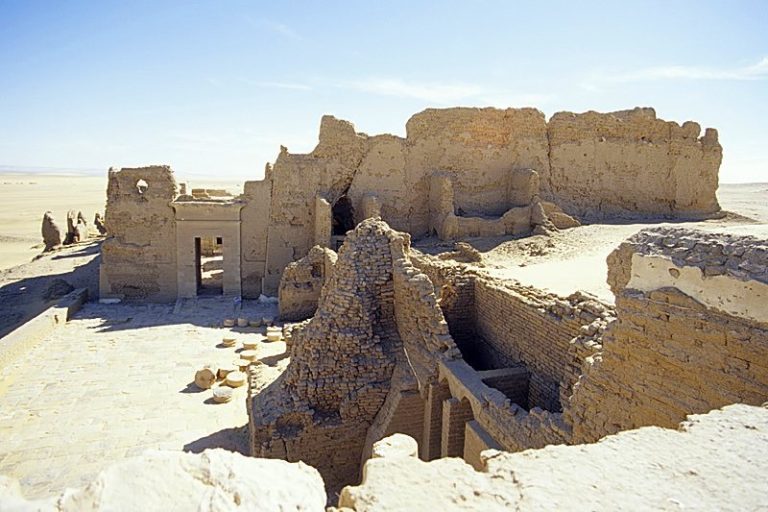
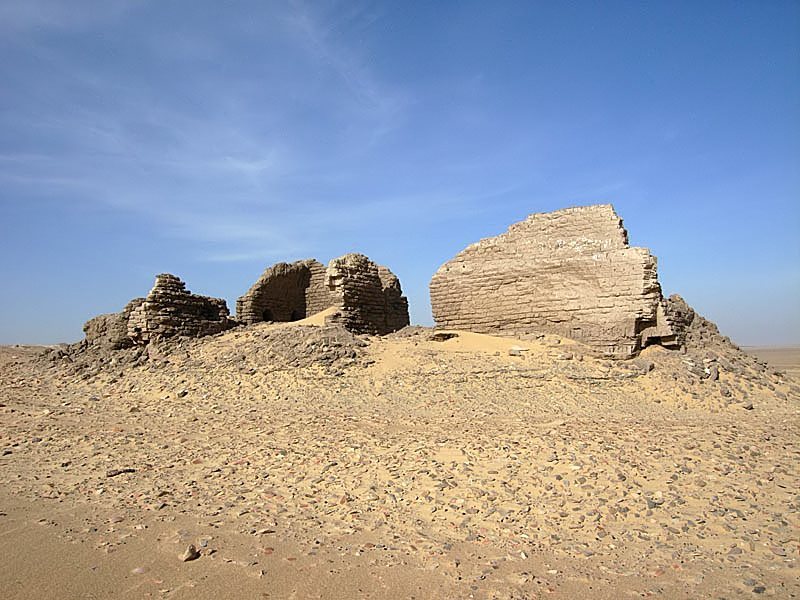
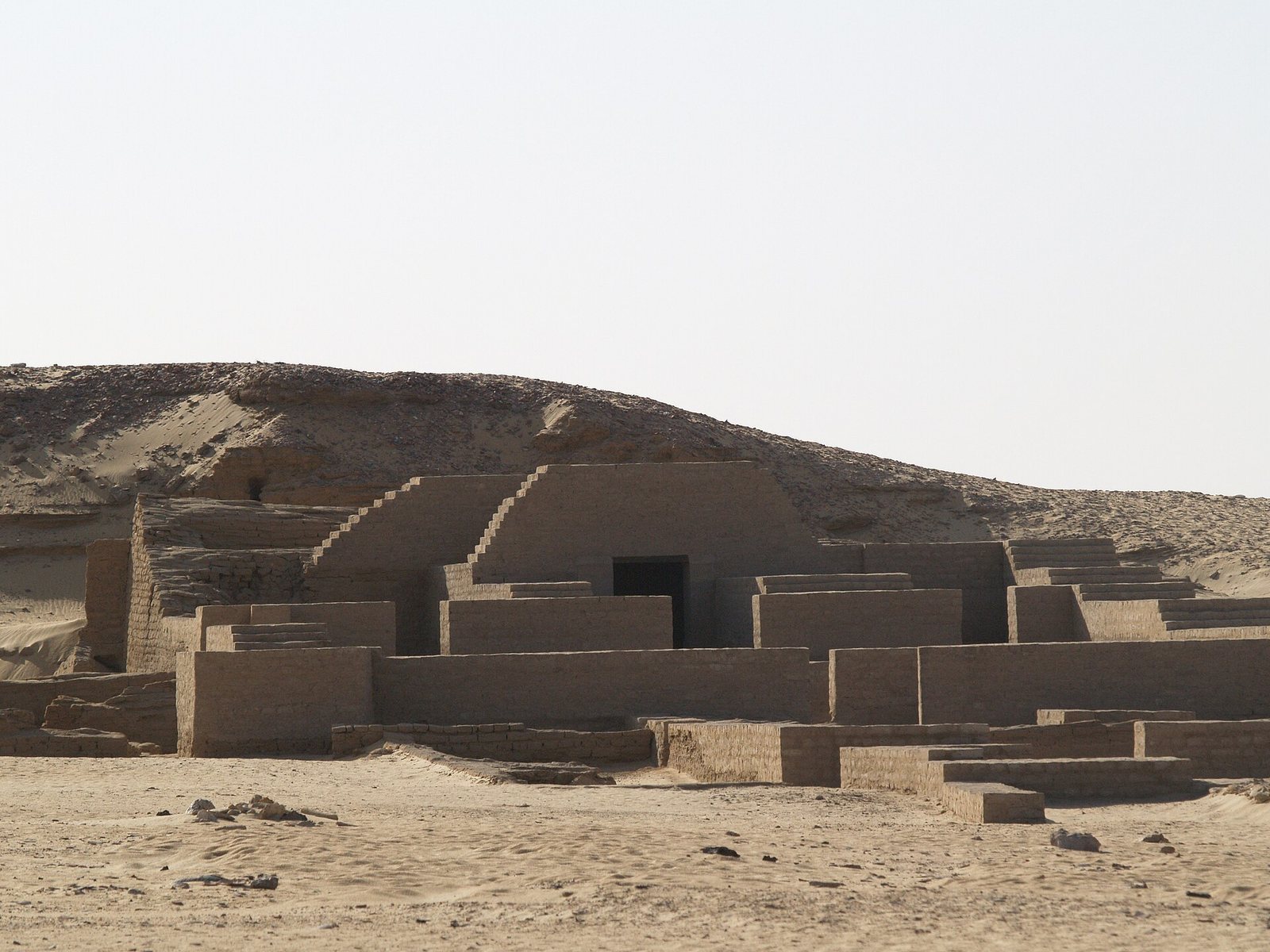
The site covers about 650 hectares on a hill roughly 60 metres above the plain. Its remains include irrigation works, a mudbrick temple, and houses. Artesian springs nearby supplied water for cultivation.
Irrigation works
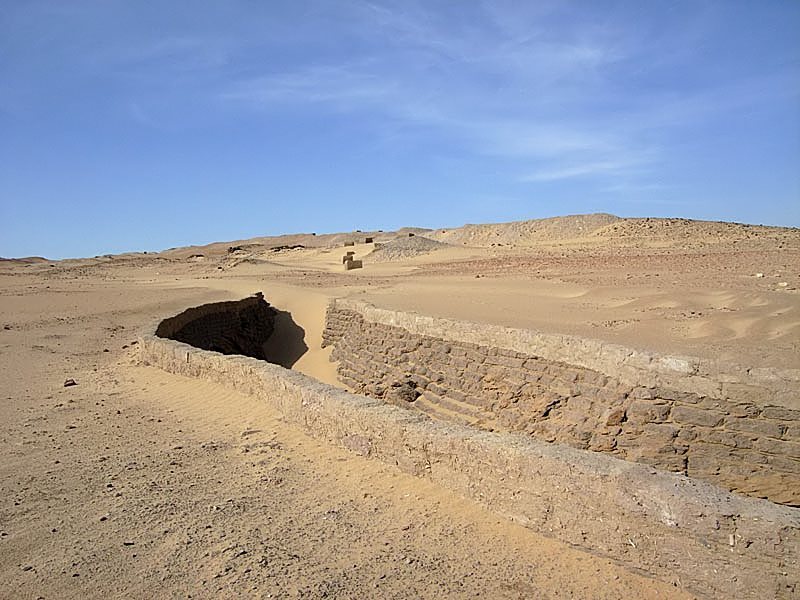
About 20 installations served the settlement. These included qanats, underground channels that convey groundwater through gently sloping tunnels, which drew water from the aquifer. Water was gathered in a basin and distributed to cultivated plots through dams and channels.
Temple and statuettes
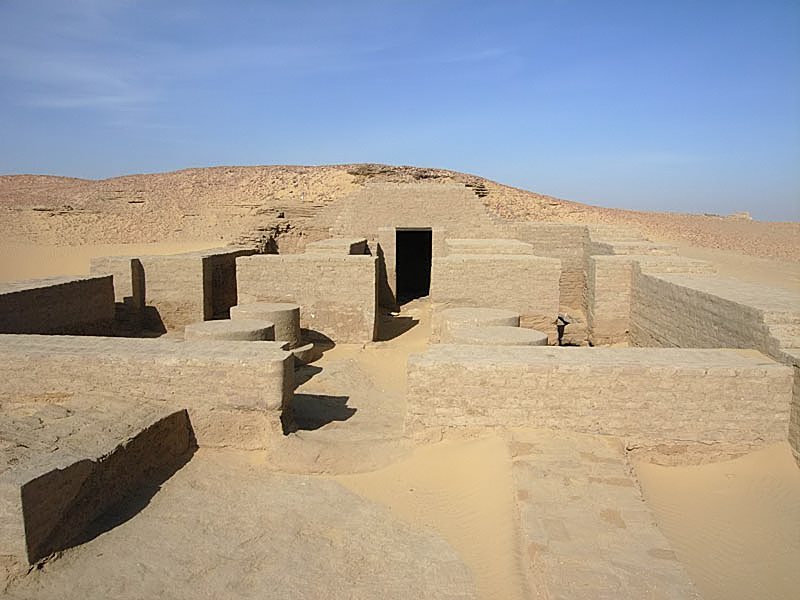
The mudbrick temple, dedicated to Osiris-Iu, measured about 35 metres long by 18 metres wide. Osiris was an ancient Egyptian god associated with the dead and the afterlife. Nearly 360 bronze statuettes depicting Osiris were found in the temple, with many placed in a chapel within the building.
Houses and archive
Houses from the Persian period survive at the site. Roman-period houses are better represented and were larger than their Persian-period counterparts. A house adjoining the temple’s south wall contained the archive of demotic texts.