Eda Sconce: A Swedish Border Fortification
Site at a Glance
- Popularity
- Medium
- Country
- Sweden
- Primary era
- Modern
- Eras represented
- Early Modern, Modern
- Civilizations
- Swedish
- Site type
- Military
- Remains
- Fort
On this page14 sections
History
Eda Sconce, a small detached fortification, was built by Swedish forces at Charlottenberg, Sweden, in summer 1657 during Krabbe’s War, a conflict between Sweden and Denmark-Norway. Under the command of Gustaf Oxenstierna, it served as a fortified field camp, guarding the pass between Lakes Hugn and Bysjön and helping to deter incursions from Norway.
Foundation and early fighting
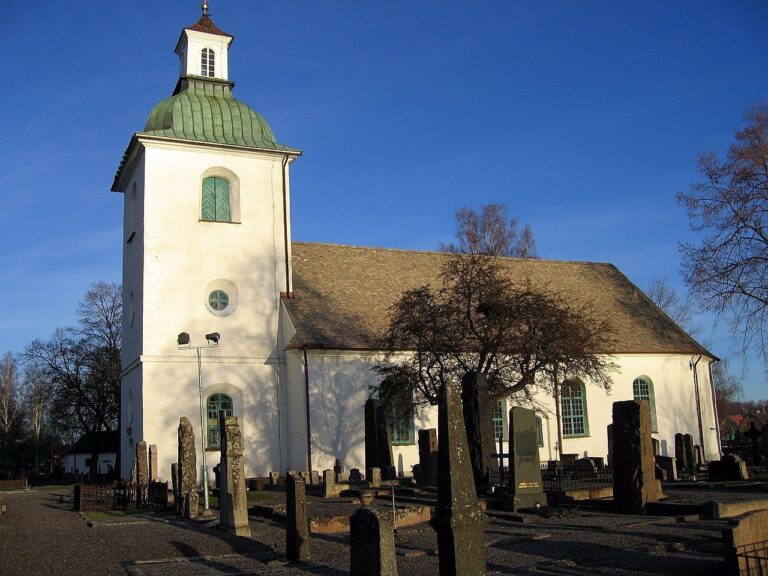
The new position replaced Morast Sconce and Emterud Sconce, which had proved too close to the Norwegian border during Hannibal’s War (1644–1645), another conflict between Sweden and Denmark-Norway. From heights south of Eda Church, Swedish artillery could target an enemy approaching from Vinger, now Kongsvinger. In winter, guns at Eda could cover the route across the frozen surface of Bysjön. Swedish troops had lacked artillery support during the 1644 battle on the lake ice.
In February 1658, Norwegian soldiers captured one of the fortifications, probably the work beside the lake. They withdrew after a short occupation, having set fire to a military storehouse.
Expansion and renewed conflict
After years of neglect, Swedish military engineer and senior commander Erik Dahlbergh visited in January 1676, as Gyldenløve’s War (1675–1679), a conflict between Sweden and Denmark-Norway, was beginning. He chose to expand the main sconce and abandon the lakeside work and Fruskansen. Norwegian troops besieged the fortification in 1679, but its garrison of 331 men repelled the attack.
The Great Northern War
In 1717, as Sweden prepared for King Charles XII’s campaign in Norway, 650 soldiers and farmers worked to strengthen the sconce. The Great Northern War, a major conflict in northern Europe from 1700 to 1721, brought further military use. Eda was put into a state of defense and served as a rallying point. Troops and supplies gathered there in 1718 before moving into Norway. Norwegian forces under Major General Budde threatened the fortification in July 1719 but did not attack.
Later military use
During the 1788 war against Russia and Denmark-Norway, Swedish troops assembled at Eda after the sconce had been fortified. The force included three companies of the Närke-Värmland Regiment, artillery, 50 dragoons of the Life Regiment of Horse, and a larger contingent from the Westgöta-Dals Regiment. King Gustav III visited on 26 September 1788. A parade and combat demonstration took place in a field beside the fortification.
Gunnar Persson, a farmer from Eda, wrote down music performed during the royal visit. Music books discovered later indicate that the six to eight drummers who took part on at least that occasion played instruments including clarinet, oboe, bassoon, and trumpet.
When Denmark-Norway declared war in 1808, Eda was strengthened once more. Fighting with Norway did not occur, but disease killed many of the soldiers, who were buried in the surrounding area. The fortification then held 700 soldiers and 28 cannon.
Loss of military role and reconstruction
After Sweden and Norway formed a union in 1814, Eda Sconce no longer had military value. Its buildings were sold at auction in 1815, while its cannon and stake defenses were removed and the earthworks began to be dug away. The Crown gave the land away in 1842.
A decision to recreate the sconce as a cultural-historical memorial was made in 1939, and work on its earthworks began. Preparations for wartime interrupted the project; work resumed after the Second World War, and the recreated fortification was inaugurated in 1949. Its earthworks were restored again in the 1990s. Eda Sconce is also included in Eda Municipality’s coat of arms.
Remains
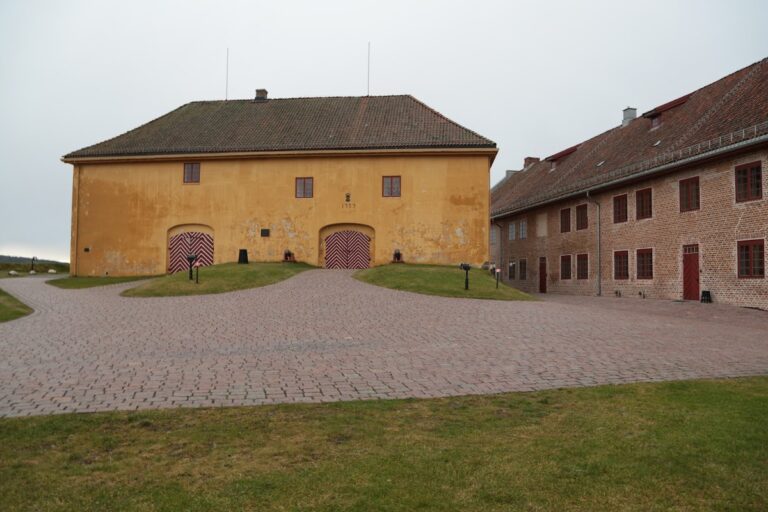
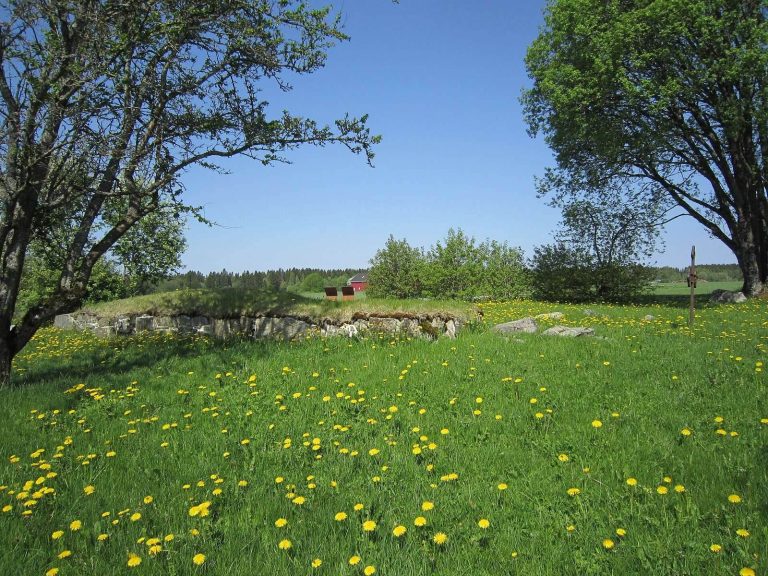
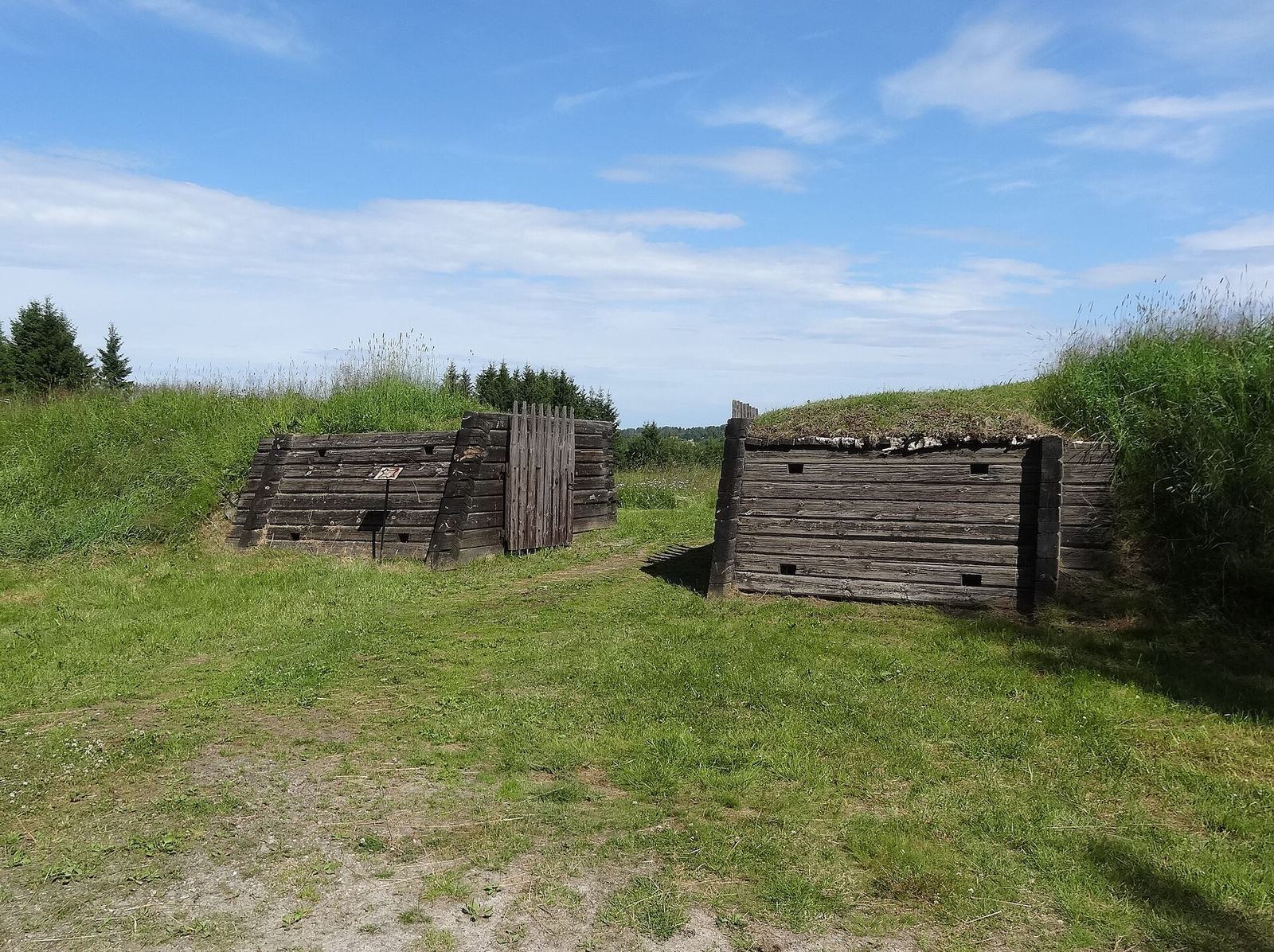
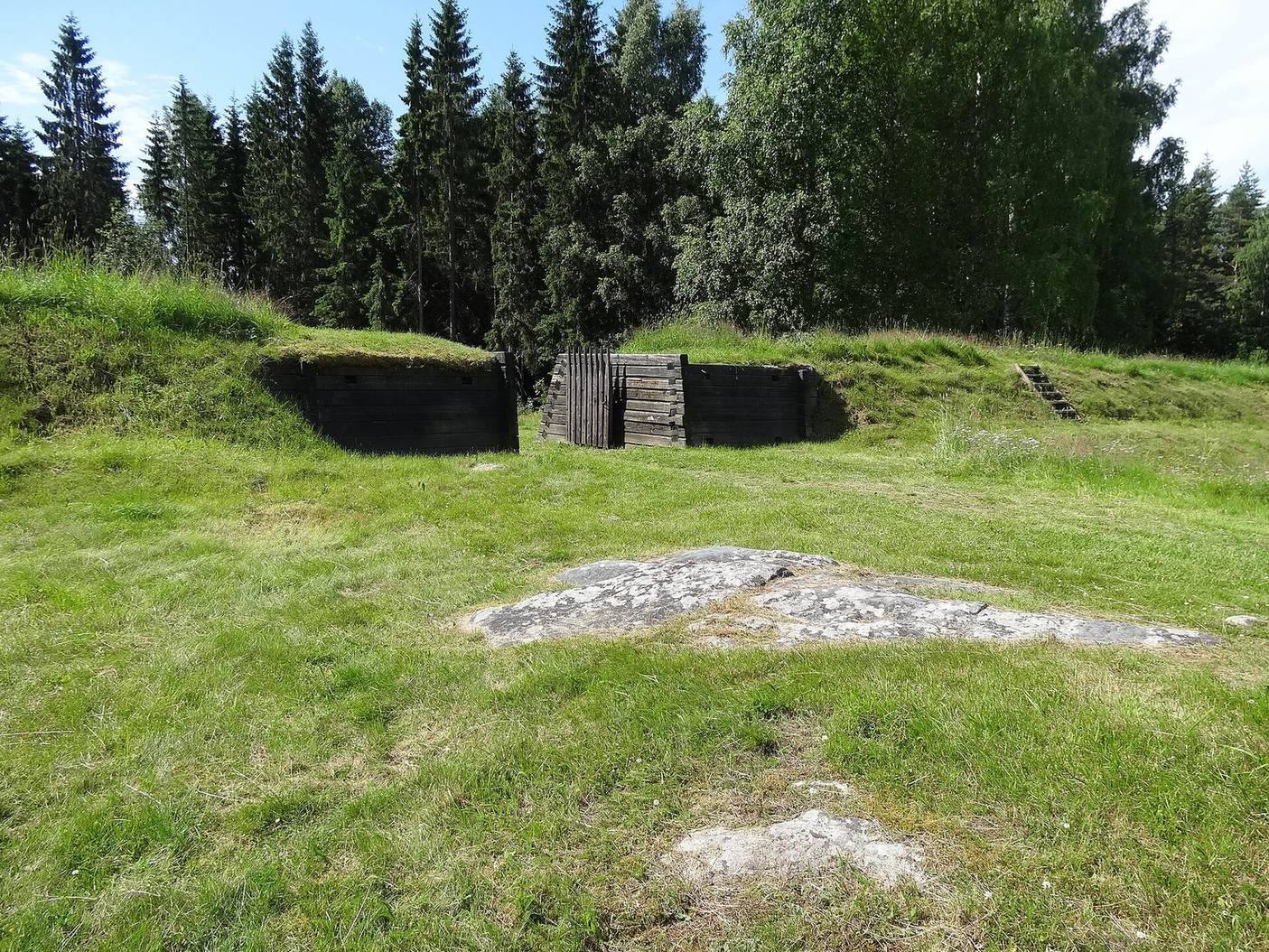
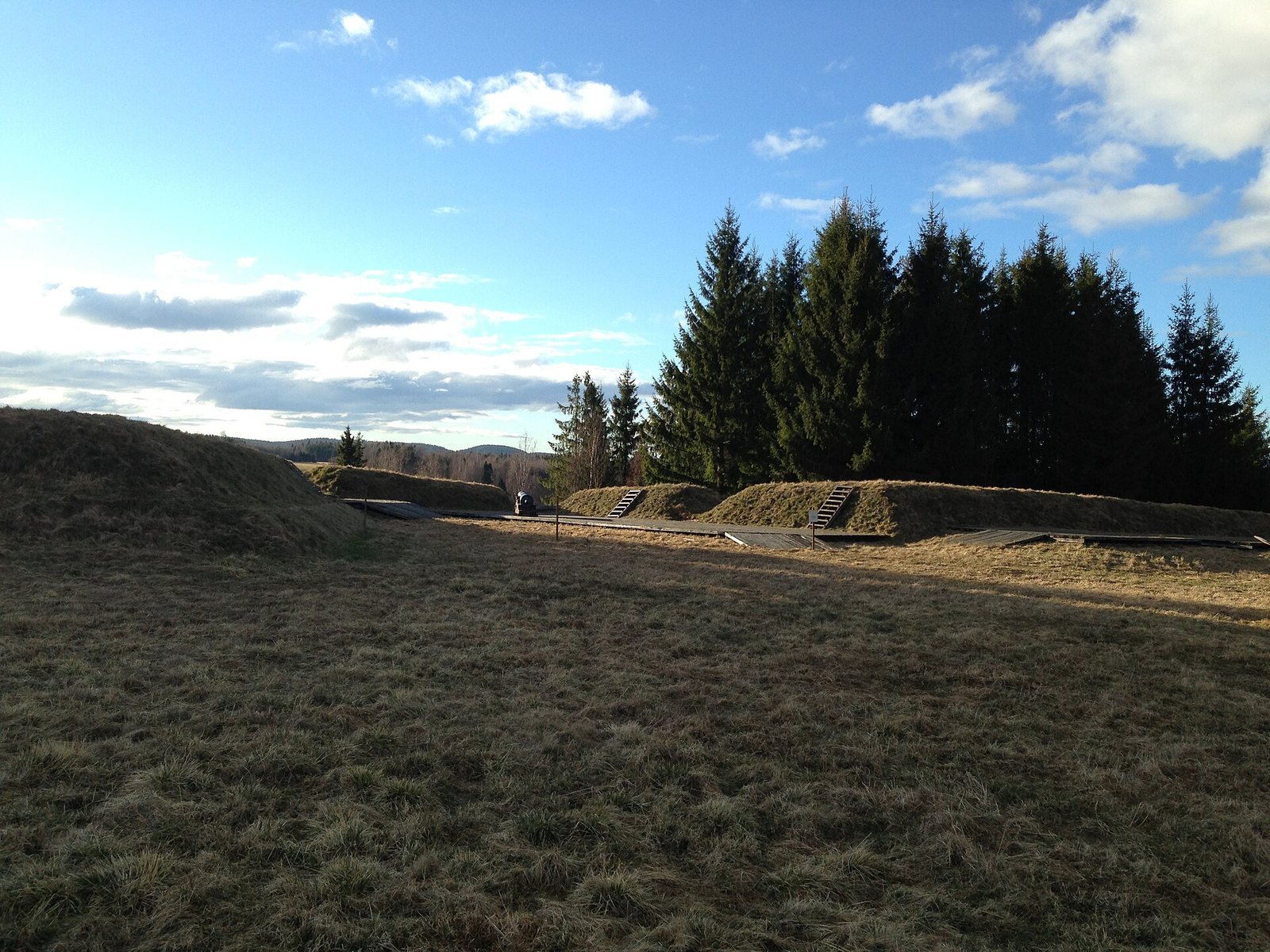
The reconstructed main earthworks follow the fortification’s 1808 appearance. Historically, the defensive system also included a lakeside work and smaller sconces on nearby heights. Earth banks, projecting defensive positions, stake fences, and buildings formed parts of the fort’s successive layouts.
Central and early works
Main sconce
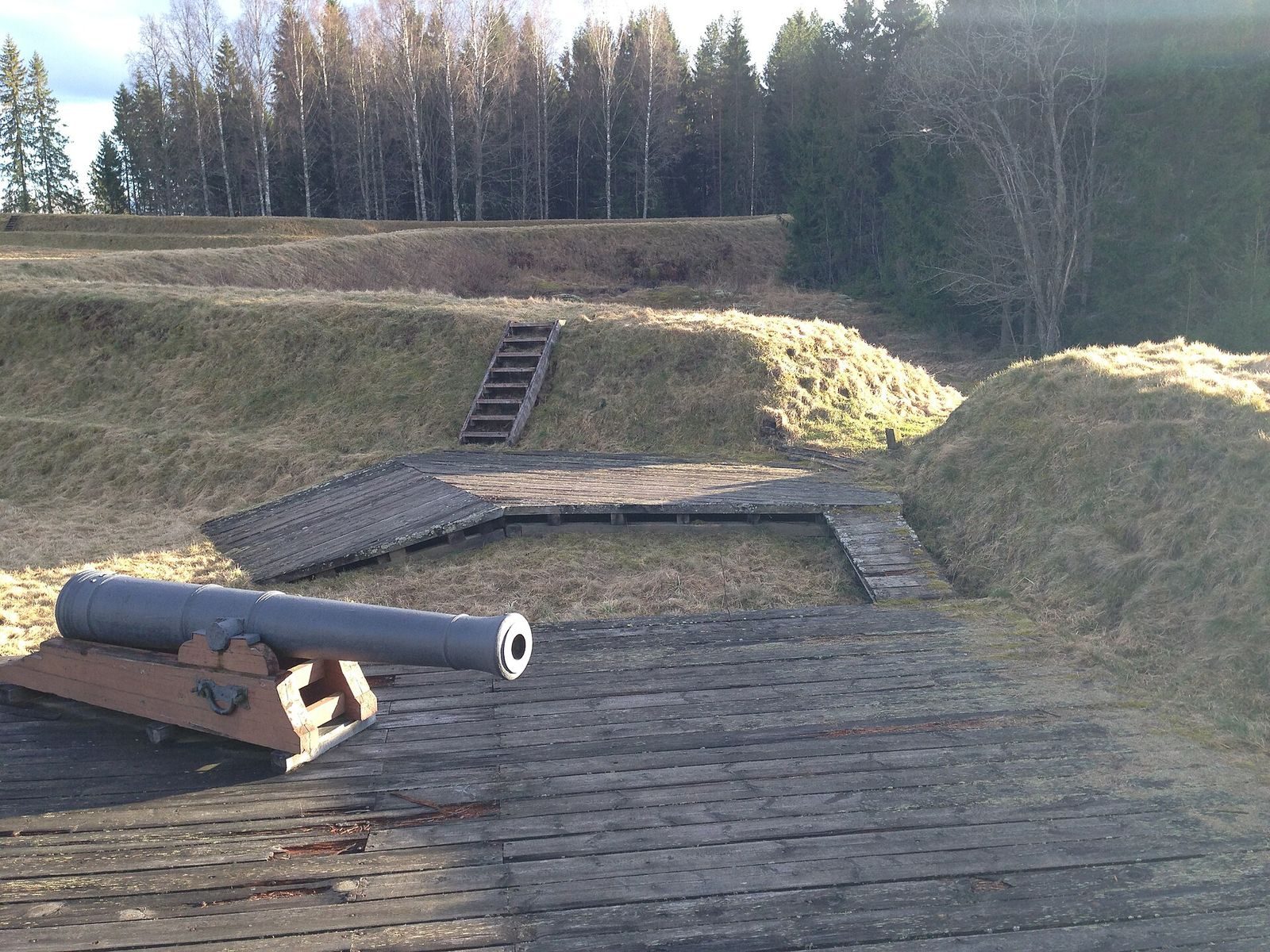
The main sconce was expanded in 1676 with six bastions (projecting sections for defensive fire along the walls) and earth ramparts (defensive banks) measuring 600 metres long, 2.5 metres high, and 3 metres wide. It had 11 artillery pieces and stake fences. Construction also began on a blockhouse (a small, strongly built defensive structure) inside the fortification.
By January 1718, the ramparts and bastions were complete, and 59 gun positions had been prepared. Frozen ground had delayed construction of the stake fence. Buildings within the fort included a large magazine (a storehouse for military supplies), a barracks slightly over 30 metres long, and a commandant’s residence. In the 1808 works, earth and timber strengthened the ramparts, which were then covered with layers of turf. Stake fences and spiked barriers were set up as obstacles, and additional buildings were erected.
The recreated earthworks follow the 1808 form, and three of the fort’s original cannon have been returned. A recreated well is also part of the grounds.
Lakeside sconce and Fruskansen
By early November 1657, a drawbridge had been built at the lakeside sconce below Bysjön. The second work stood on the site of the present main fortification, while Fruskansen occupied a hill about 500 metres away. All three early works had earth ramparts about 2.4 metres high, reinforced with timber, stake fences, and fascines (bundles of brushwood used in fortification work).
Outlying sconces
Wijnblad
Wijnblad stood 300 metres west of the main sconce. It had barracks for officers and troops, accommodation for about 40 soldiers, and three cannon.
Leijonstedt
Leijonstedt stood on a hill between Wijnblad and Kråkelundshöjden. Its somewhat larger barracks could house about 50 soldiers, and the work had three cannon.
Adlersparre
Adlersparre, also known as Sconces 3–4, stood closest to Bysjön on Kråkelundshöjden. Its buildings included a powder house and barracks for officers and troops, with room for about 90 soldiers. Two small bastions accommodated five cannon.