Castro de Vila Nova de São Pedro: A Chalcolithic Fortified Settlement in Portugal
Site at a Glance
- Popularity
- Medium
- Country
- Portugal
- Primary era
- Stone Age
- Eras represented
- Stone Age
- Civilizations
- Unclassified
- Site type
- Military
- Remains
- Fortified Town
On this page10 sections
History
Castro de Vila Nova de São Pedro is a Chalcolithic fortified settlement in the Azambuja area of Portugal. The Chalcolithic, or Copper Age, was a prehistoric period when people used copper alongside older stone technologies. The settlement flourished from about 2600 to 1300 BCE, within a region where fortifications date to about 2700 BCE.
Chalcolithic settlement and exchange
The earliest phase, Vila Nova I, belongs to the period before about 2200 BCE and had close cultural ties with Los Millares, a major culture of southeastern Iberia. The settlement was contemporary with Zambujal, another prehistoric fortified settlement in Portugal, and, during parts of its occupation, with Los Millares and El Argar, another major southeastern Iberian culture.
Vila Nova II is associated with the Beaker tradition, a widespread Copper Age culture linked to bell-shaped pottery. Beaker groups arrived in the region around 2200 BCE, while the settlement served as a continental center of the tradition between about 2100 and 1900 BCE. Its economy combined farming and grazing with exchange. Connections included Los Millares, amber from Scandinavia, and ivory and ostrich eggshell from North Africa. Exchange between groups grew more frequent during the Beaker period and reached the Treilles area of the French Languedoc.
Transformation and decline
During Vila Nova III, many earlier structures were dismantled or destroyed, and some areas were put to new uses. Another destruction in Vila Nova IV came before a new defensive system was built. From about 1800 BCE, the settlement’s cultural influence declined as Bronze Age technology spread through southern Iberia and El Argar replaced Los Millares as a major influence. The local Copper Age tradition continued before merging around 1300 BCE with a broader culture associated with pottery polished on its outer surface and the Atlantic Bronze Age, a network of Bronze Age connections around Europe’s Atlantic regions.
Excavation and protection
Archaeologist Raposo identified the site in 1936, and excavations began the following year under the Association of Portuguese Archaeologists. Afonso do Paço led excavation campaigns in 1941–1948, 1949–1954, 1959, and 1960–1967. In 1961, the General Directorate for Buildings and National Monuments investigated the site with the National Monument Services. Further investigations were authorized in 1985 by archaeologist Vitor Manuel dos Santos Gonçalves.
A scale plan was made in 1955. A trench across the southwest side in 1959, which included a projecting bastion, revealed layers that remain important to the chronology of the Portuguese Chalcolithic. Excavations in the 1980s exposed masonry, particularly in the northern area between the second and third wall lines; a new plan of the inner defenses followed in 1988. The site has held Portuguese National Monument status since 1971.
Remains
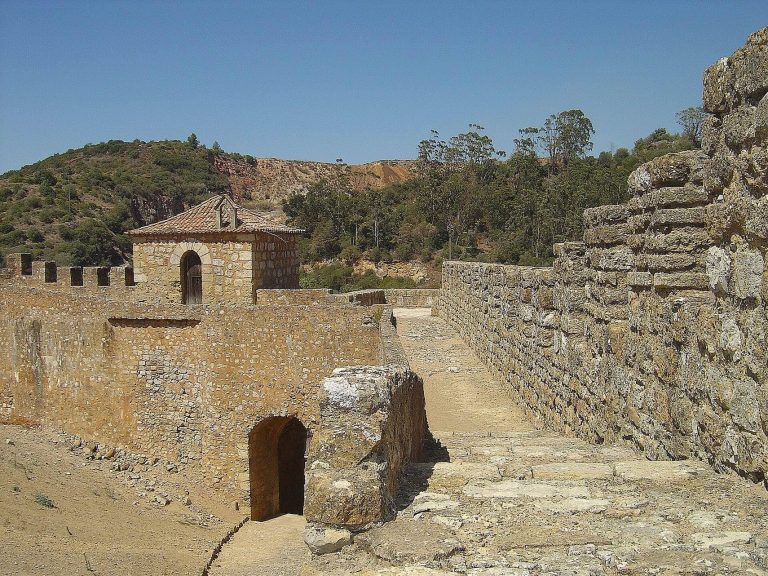
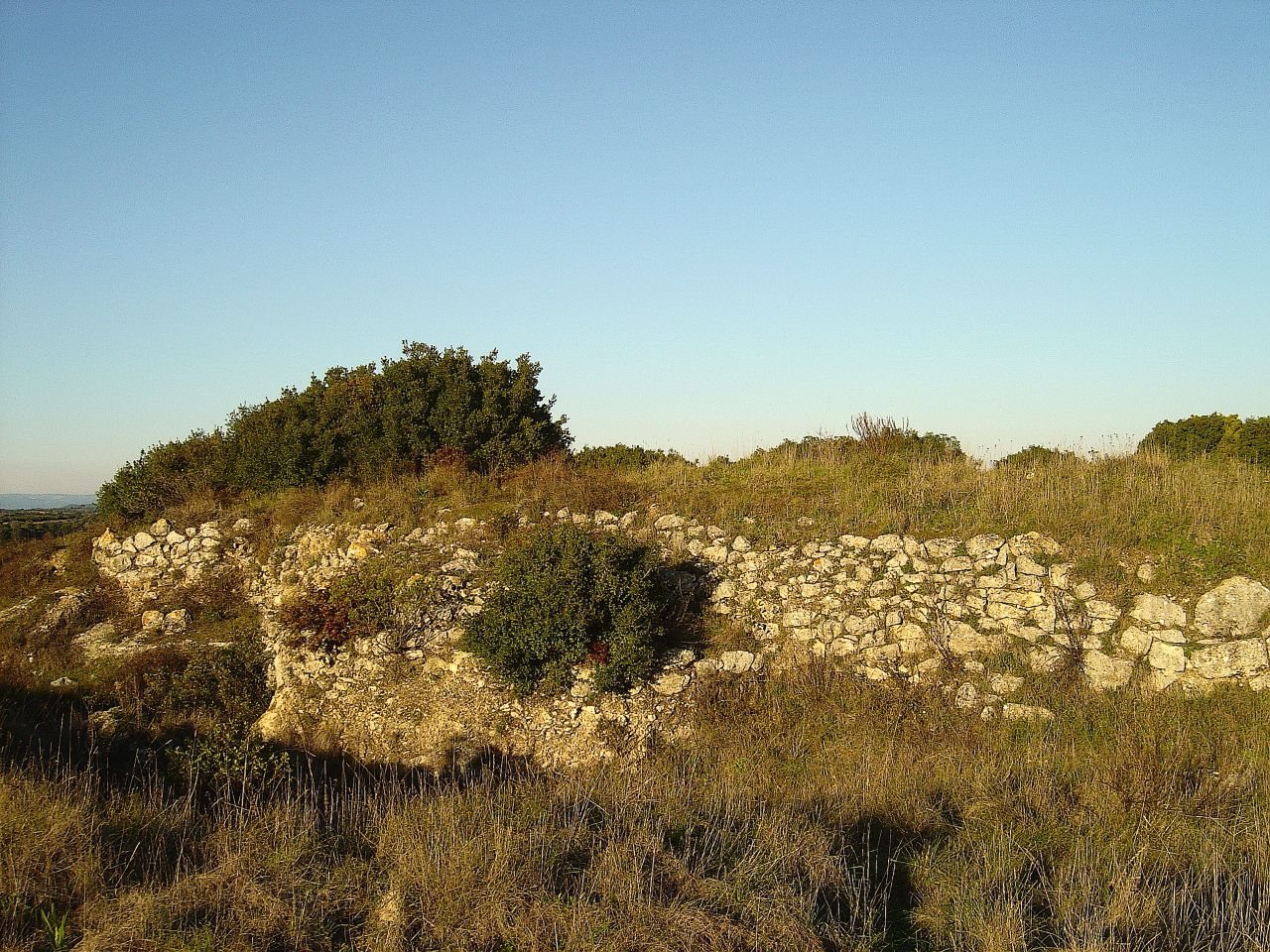
The site’s layout centers on a fortified inner enclosure surrounded by wall lines, with domestic, working, and ritual areas beyond it. The defenses were built of rock covered with clay, and limestone was also used in structures and features within the settlement.
Hilltop defenses
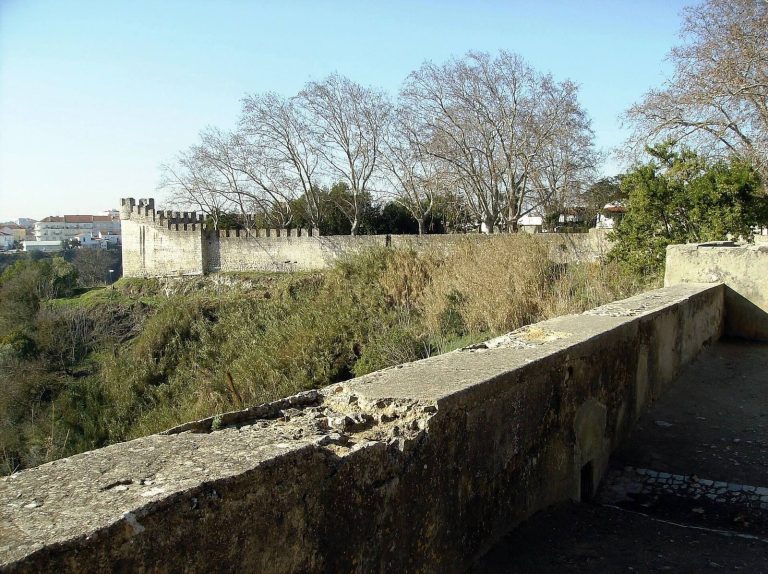
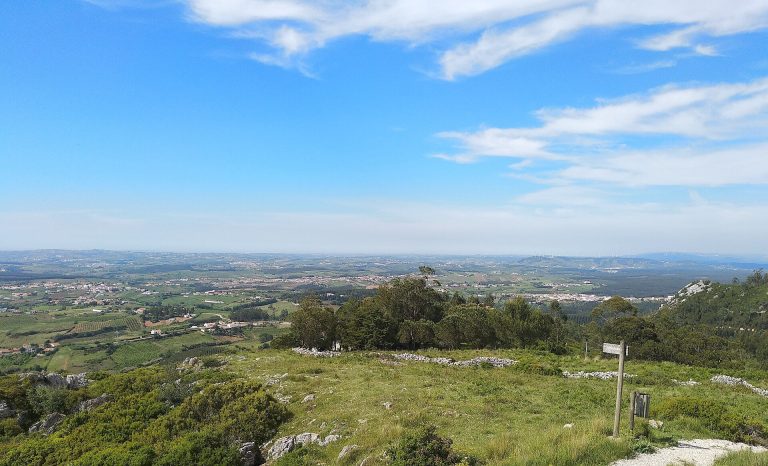
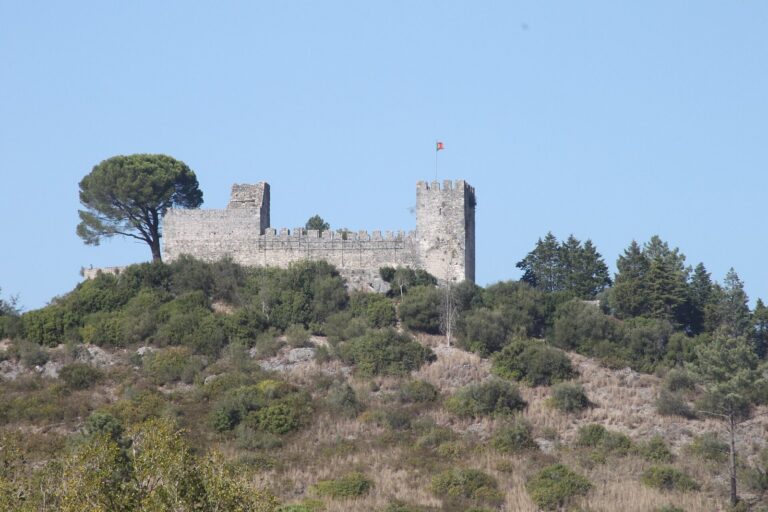
The settlement occupies a plateau about 100 metres above sea level, overlooking the valley of the Ribeira de Almoster. Streams cross the surrounding landscape to the north, east, and west, while the Almoster watercourse also served as a communication route. The central citadel had thick walls with projecting bastions, or sections that extend outward from a fortification. Another wall ring lay outside it, and the terrain toward the settlement suggests at least one further line may have existed. The principal entrance was set slightly southwest of the center. The hill spur is known as Cabeço do Castelo or Alto do Castelo, names referring to a castle and suggesting a medieval castle association.
Domestic and metalworking areas
Foundations of round houses and hearths were uncovered between the inner defenses and the second wall line, especially in the southern area. South of the settlement, between the first and second lines, excavators also found the remains of a copper-casting area.
Central production area
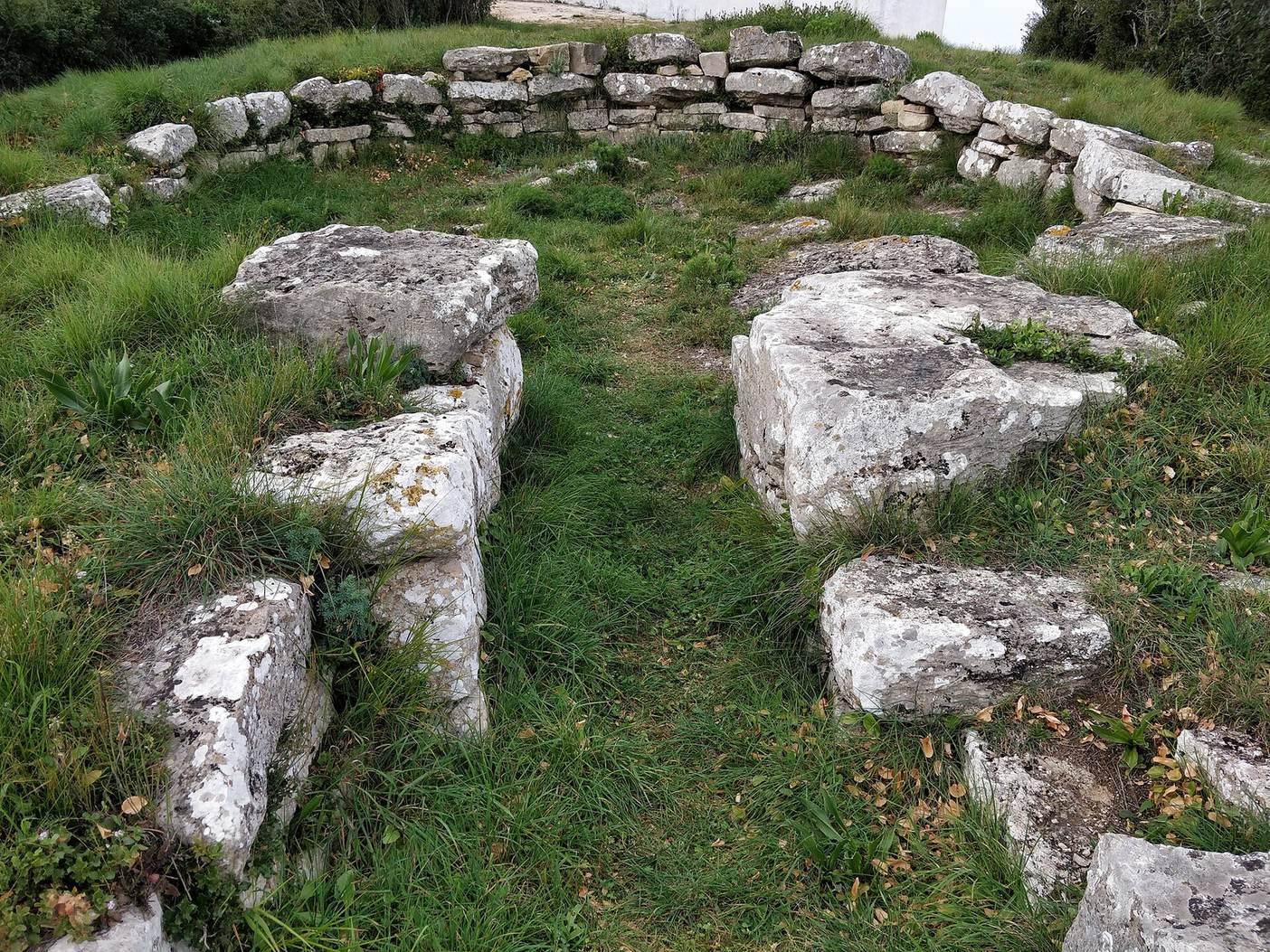
Against the north side of a wall in the settlement’s center is a semicircular structure that may once have had a dome. Afonso do Paço identified it as a pottery kiln, although that interpretation is uncertain. Nearby are a limestone area and a deep pit thought to have served as a cistern; other pits may have been used for storage. These features have been linked to ceramic production: pottery from Vila Nova II was found in the area, and water from the cistern supplied it. In Vila Nova III, the spaces were adapted for copperworking, spinning and weaving, and dairy production.
Ritual deposit
Outside the citadel on its northwest side, a roughly trapezoidal pit held a layered deposit of animal remains and vessels. Animals were placed in the pit and burned, with a small vessel beside them; clay and stones covered the remains, and a large vessel was set on top. About 38 centimetres high and 58 centimetres across, the large vessel was surrounded by a low stone wall. Clay filled the rest of the pit, and another stone layer was covered by about a metre of clay. A further cattle deposit lay within this layer on the east side.
About 60 centimetres of earth above the deposit contained hut floors and numerous finds. The large vessel survived intact and is now in the archaeological museum at the Carmo Convent in Lisbon.
Finds
Thousands of arrowheads were found within the fortified settlement. Other objects associated with its material traditions include decorated red pottery, stylized cups, crescent-shaped clay pieces, slate rods, and plate-shaped idols. Some archaeoastronomers have interpreted the idols as precise calendars. Palmela arrowheads, a type of prehistoric arrowhead, and bell-shaped beakers also belong to the wider cultural tradition.