Yaropolch Zalessky: A Medieval Rus Town and Archaeological Site
Site at a Glance
- Popularity
- Medium
- Country
- Russia
- Primary era
- Medieval
- Eras represented
- Medieval
- Civilizations
- Kievan Rus
- Site type
- City
On this page9 sections
History
The Yaropolch Zalessky archaeological site preserves a medieval town in Russia, near modern Vyazniki. Prince Yaropolk Vladimirovich, brother of Yuri Dolgoruky and a member of the Rurikid dynasty, founded the town between 1135 and 1138. Its name derives from a possessive form of Yaropolk’s name, meaning “belonging to Yaropolk.” Modern researchers added Zalessky to distinguish it from another Yaropolch in the Principality of Kyiv and associate it with Zalesye, the region between the Oka and Volga rivers.
Foundation and medieval town
Yaropolch became the center of a territorial district administered by a prince’s official. The official’s estate was wealthier than the homes of ordinary townspeople. The settlement also developed as a center of trade and skilled production, including pottery, bone carving, ironworking, and jewelry-making.
Mongol-Tatar invaders captured the town, burned its buildings, and killed its inhabitants. A few people may have returned and settled beyond the ramparts, but Yaropolch itself ceased to exist.
New Yaropolch and the militia
A settlement called New Yaropolch first appears in a 1389 treaty between Grand Prince Vasily Dmitrievich and his uncle, Prince Vladimir Andreyevich. The name also referred to the surrounding district. Although a traditional list continued to include Yaropolch among Russian towns, fourteenth- and fifteenth-century charters instead mention district officials, indicating that it had become a district center. The district contained both taxable and monastic lands and was held for a time by the princes of Borovsk, who served Moscow’s grand princes.
New Yaropolch stood on Mininskaya Hill, named for the billeting there of troops led by Kuzma Minin and Dmitry Pozharsky. The settlement also lay on the state postal-relay road between Moscow and Nizhny Novgorod, where couriers could change horses at relay stations. Its history was shaped by the Polish-Swedish intervention in Russia and a domestic struggle over the throne. In 1608, while the claimant False Dmitry II held a rival court at Tushino, the inhabitants declared allegiance to Tsar Vasily Shuisky in Moscow. They later answered Minin’s appeal to support a people’s militia.
In October 1611, Pozharsky and his detachment traveled through Yaropolch from Suzdal toward Nizhny Novgorod. Some local people joined the forces and later served in the militia. After Moscow was liberated in October 1612, the Zemsky Sobor, an assembly of representatives of Russia’s estates and political authorities, elected Mikhail Fyodorovich Romanov as tsar in early 1613. One of his first acts was to transfer Yaropolch to Prince Fyodor Mstislavsky.
Fortification, fire, and archaeological study
In 1657, Tsar Alexei Mikhailovich ordered a fortification built at Vyaznikovskaya Sloboda on Mininskaya Hill. Later royal decrees described the settlement as being within Yaropolch. Vyaznikovskaya Sloboda grew beside the older settlement’s walls, developing through trade and crafts on the Klyazma River route. By the mid-eighteenth century it had outgrown Yaropolch and eventually became the town of Vyazniki.
A major fire on June 1, 1703, destroyed Yaropolch’s wooden town. Its wooden walls were not rebuilt, although the settlement remained an administrative center and houses were rebuilt on some of their former plots. These efforts did not halt Vyaznikovskaya Sloboda’s growth. Excavations in the 1950s and 1960s by an expedition of the USSR Academy of Sciences, working with the Vladimir-Suzdal Museum-Reserve and the Vyazniki local history museum, established the town’s foundation date alongside evidence from chronicles. Yaropolch is among the best-studied ancient Rus settlements in the Vladimir region and is designated a cultural heritage site of federal significance in Russia.
Remains
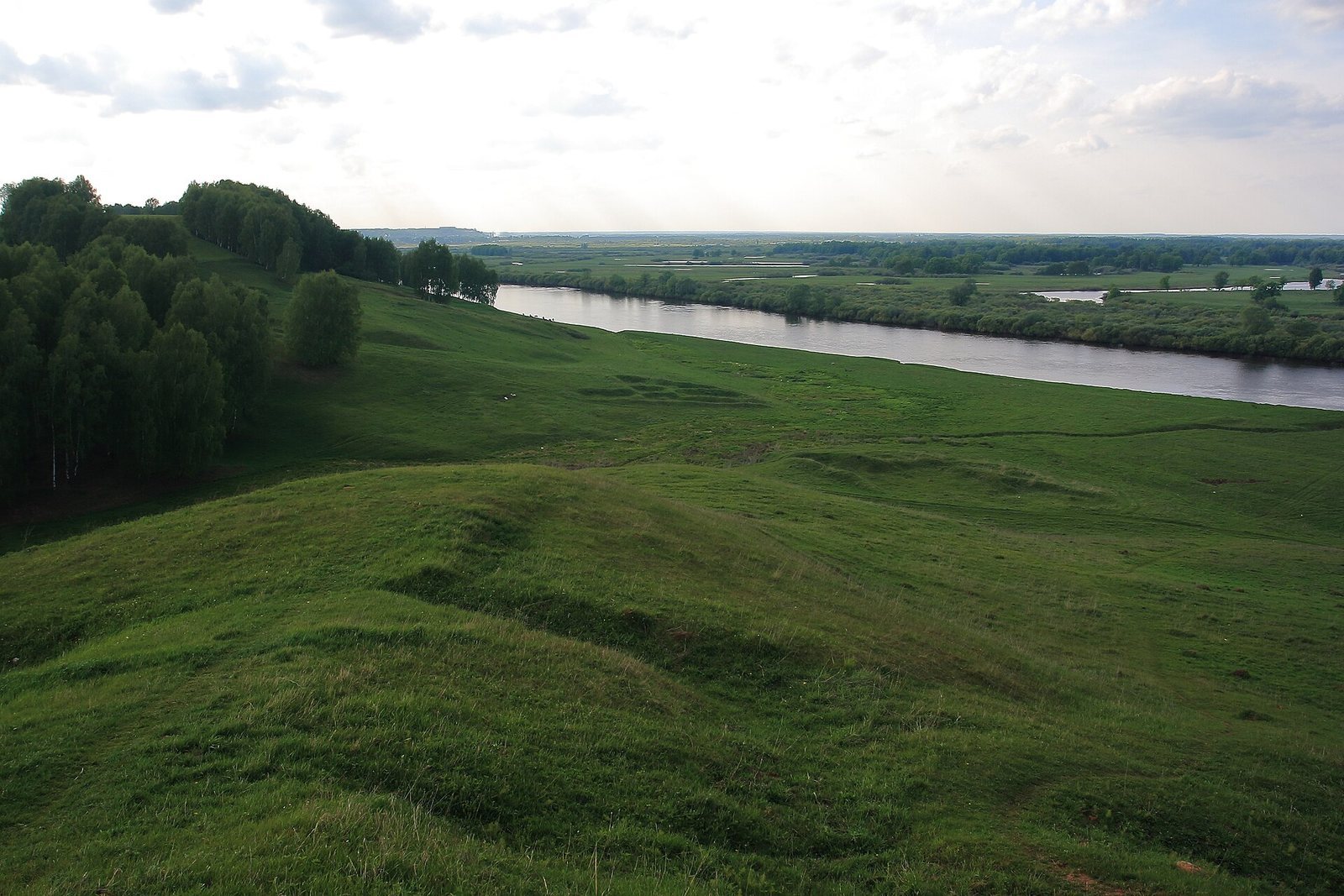
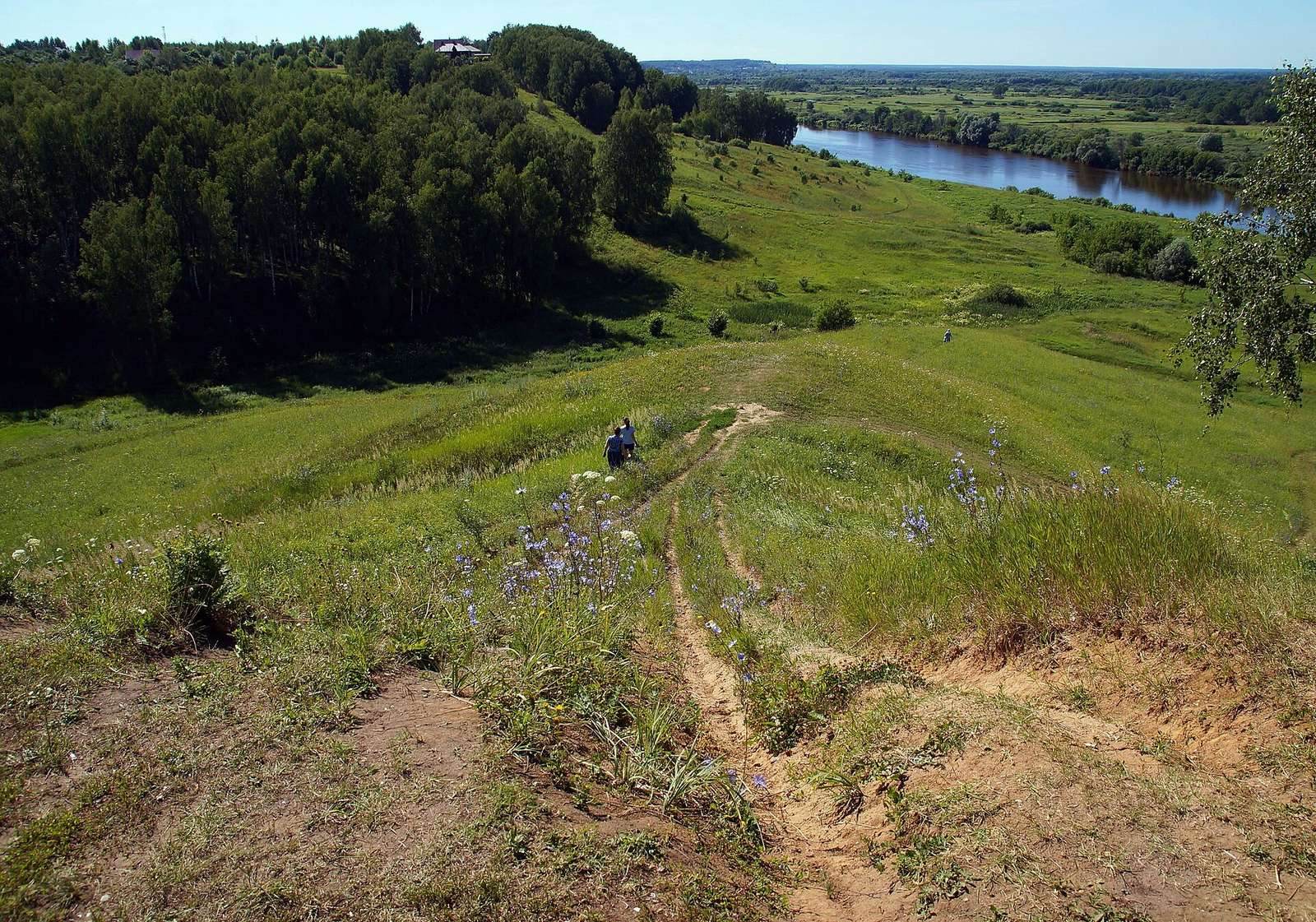
The site lies on the right bank of the Klyazma River, about 5 km east of modern Vyazniki and 1 km northwest of Pirovy-Gorodishchi. The town’s citadel, its fortified inner area, occupied the eastern, broadest, and highest part of a promontory rising as much as 50 m above the river. Its roughly semicircular platform measures about 230 by 125 m and covers approximately 2.8 hectares.
Medieval citadel
Platform and defenses
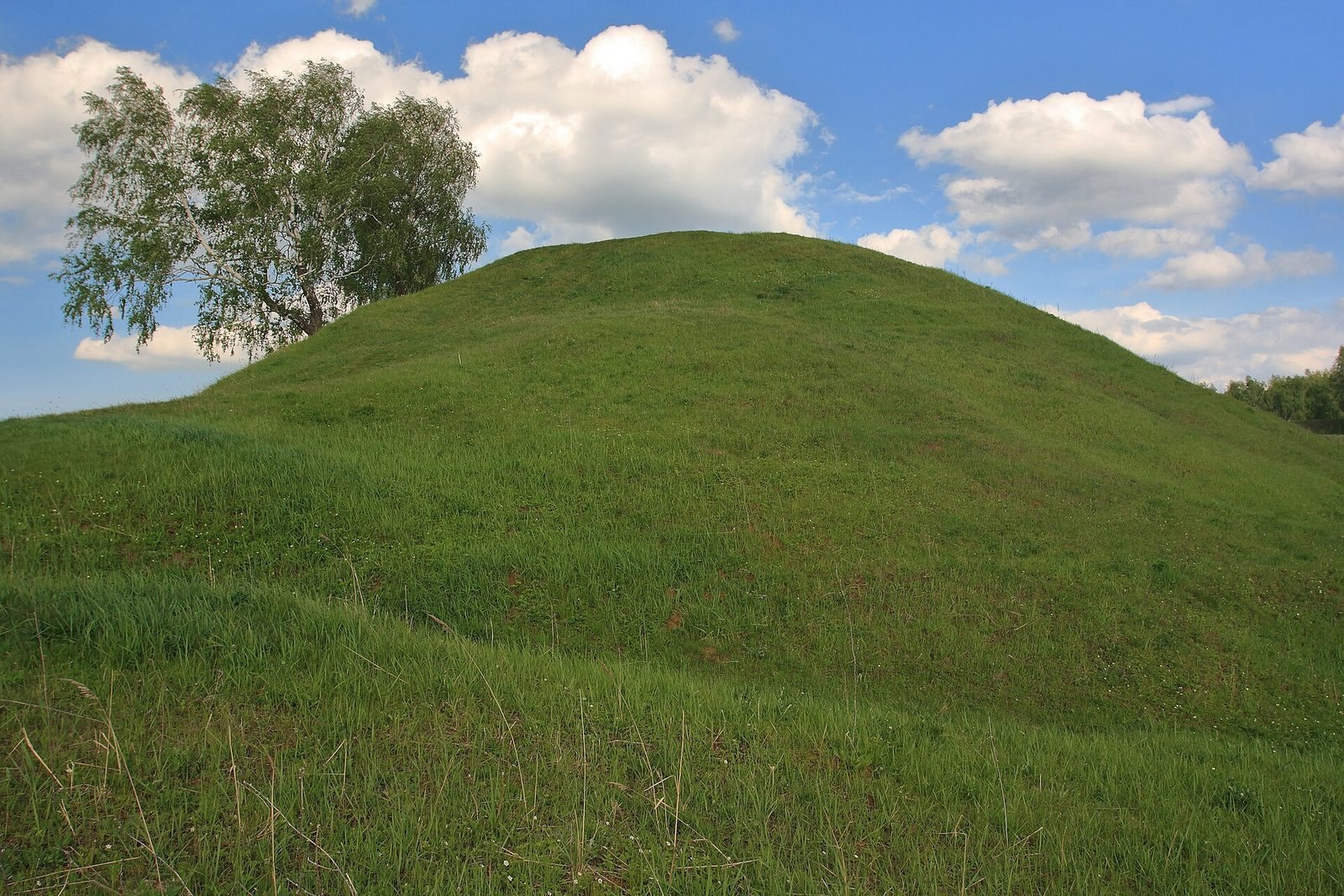
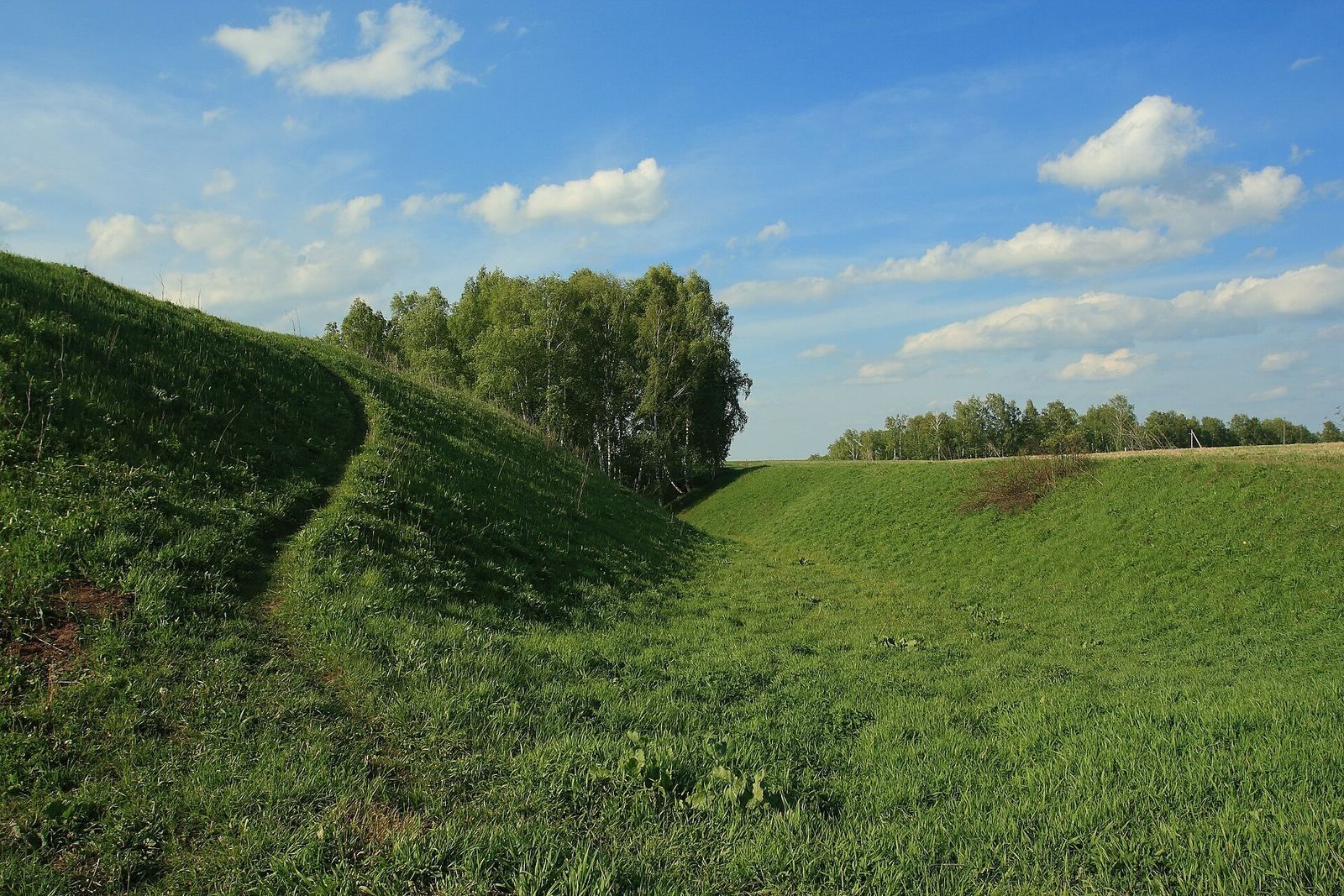
Remains of a semicircular rampart extend along the platform’s northern, eastern, and southern sides. On the eastern, landward side, the rampart reaches about 5 m in height and up to 15 m across at its base; its total length is about 300 m. A deep, heavily eroded ditch lies outside the landward defenses, while faint traces of a ditch remain on the western side. A 16 m gap in the landward line is interpreted as the former entrance gate. Wooden walls, together with the ramparts, defended the medieval citadel.
Siege cemetery and finds
Excavations uncovered a cemetery of people killed during a siege, evidence that the inhabitants resisted the attack strongly. Weapons and horse equipment were among the important finds from the site.
Seventeenth-century fortification
The fortification built at Mininskaya Hill in 1657 had an earthen rampart, stone towers at its corners, and oak walls running along the earthwork. The arrangement combined an earthen defensive line with towers and timber walls.