Kostolec: A Prehistoric Hillfort and Great Moravian Residence in Slovakia
Site at a Glance
- Popularity
- Medium
- Country
- Slovakia
- Primary era
- Medieval
- Eras represented
- Bronze Age, Medieval
- Civilizations
- Great Moravia
- Site type
- Military
- Remains
- Fort
On this page9 sections
History
Kostolec is an archaeological site on a steep, rocky spur above Ducové in Slovakia, where a fortified residence was established during the ninth-century Great Moravian period. Great Moravia was a Slavic polity in Central Europe that flourished mainly in the ninth century and continued into the early tenth. The site lay near important ancient routes, including the Považská branch of the Amber Road, a network associated with amber that connected northern and southern Europe. This location contributed to Kostolec’s strategic value.
Prehistoric and Roman settlement
People occupied the spur in the Old Stone Age, around 22,000 BC, and again in the Later Stone Age, around 2,000 BC. Around 1100 BC, during the Late Bronze Age, a hillfort associated with the Velatic-Baierdorf culture, an archaeological culture of Central Europe, occupied the site. Settlement also took place during the Roman period, in the second and third centuries AD.
Great Moravian residence
Great Moravian nobility established a fortified residence at Kostolec. It served as a center of power and administration connected to agricultural and craft settlements in the surrounding area. Kostolec was among the most significant known sites of Great Moravian culture in Slovakia.
Burial and later use
After the residence ceased to exist, the site became a burial ground serving several nearby early medieval settlements from the second half of the tenth century through the fourteenth century. In the fifteenth century, farm buildings were established there, and the plateau’s strategic position also led to its occasional military use.
Archaeology and protection
The Archaeological Institute of the Slovak Academy of Sciences in Nitra carried out systematic research at Kostolec in 1968–72 and 1975, establishing an overview of its settlement history. The site is a protected archaeological site and a National Cultural Monument of Slovakia, registered on 10 July 1973.
Remains
The site lies at 240 m above sea level on a steep, rocky spur of the Považský Inovec range above Ducové. Its surviving layout reflects successive settlements and defenses, from an enclosed Bronze Age hillfort to the Great Moravian residence and the present archaeological enclosure.
Late Bronze Age hillfort
A substantial rampart and ditch enclosed the Late Bronze Age hillfort. Settlement and production areas occupied the space within its defenses.
Great Moravian residence
Ramparts and a deep ditch enclosed the residence. Inside were residential and farm buildings, as well as a church controlled by a secular landholder. A small burial ground at the church served members of the ruling class.
Present archaeological enclosure
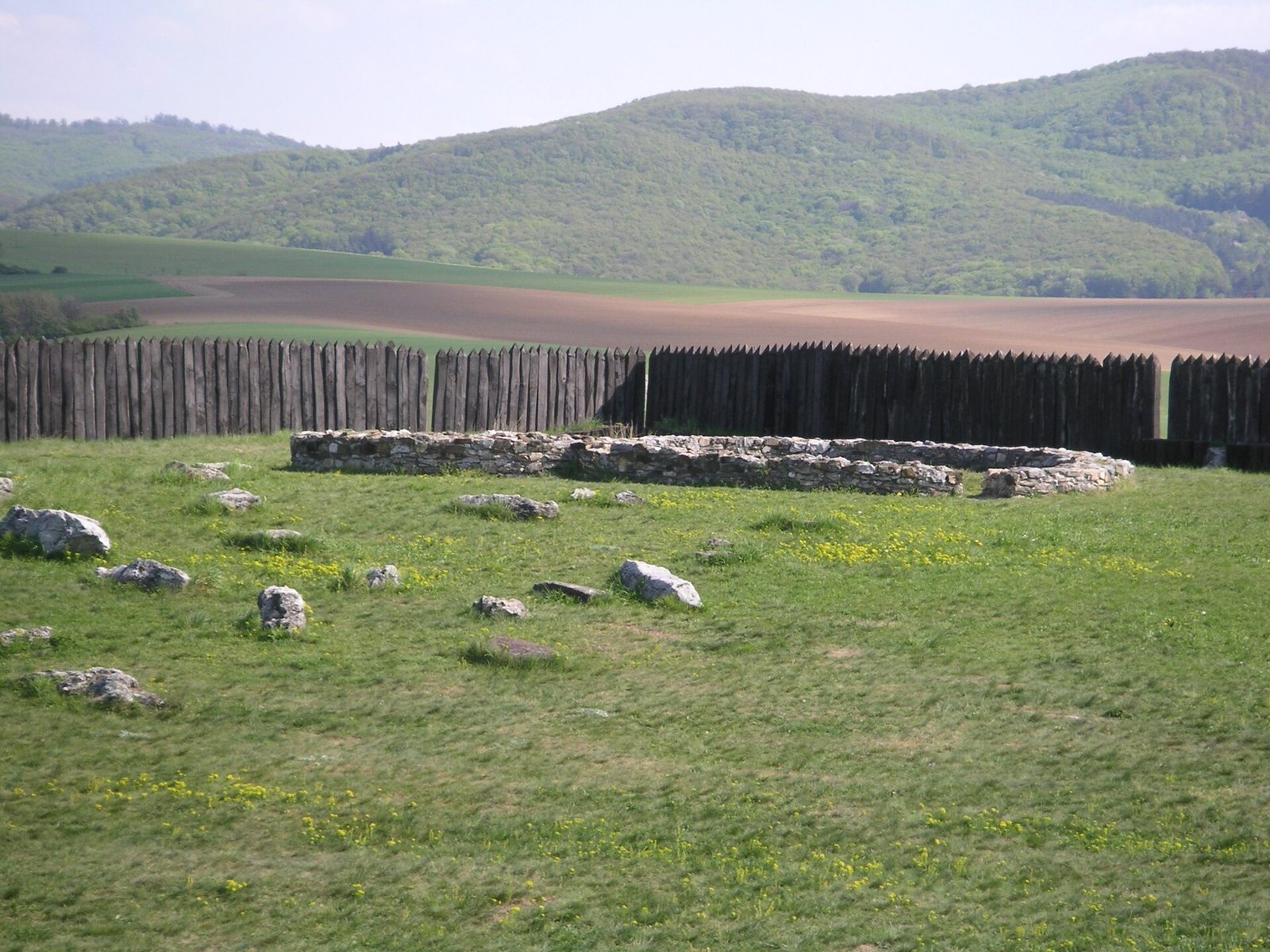
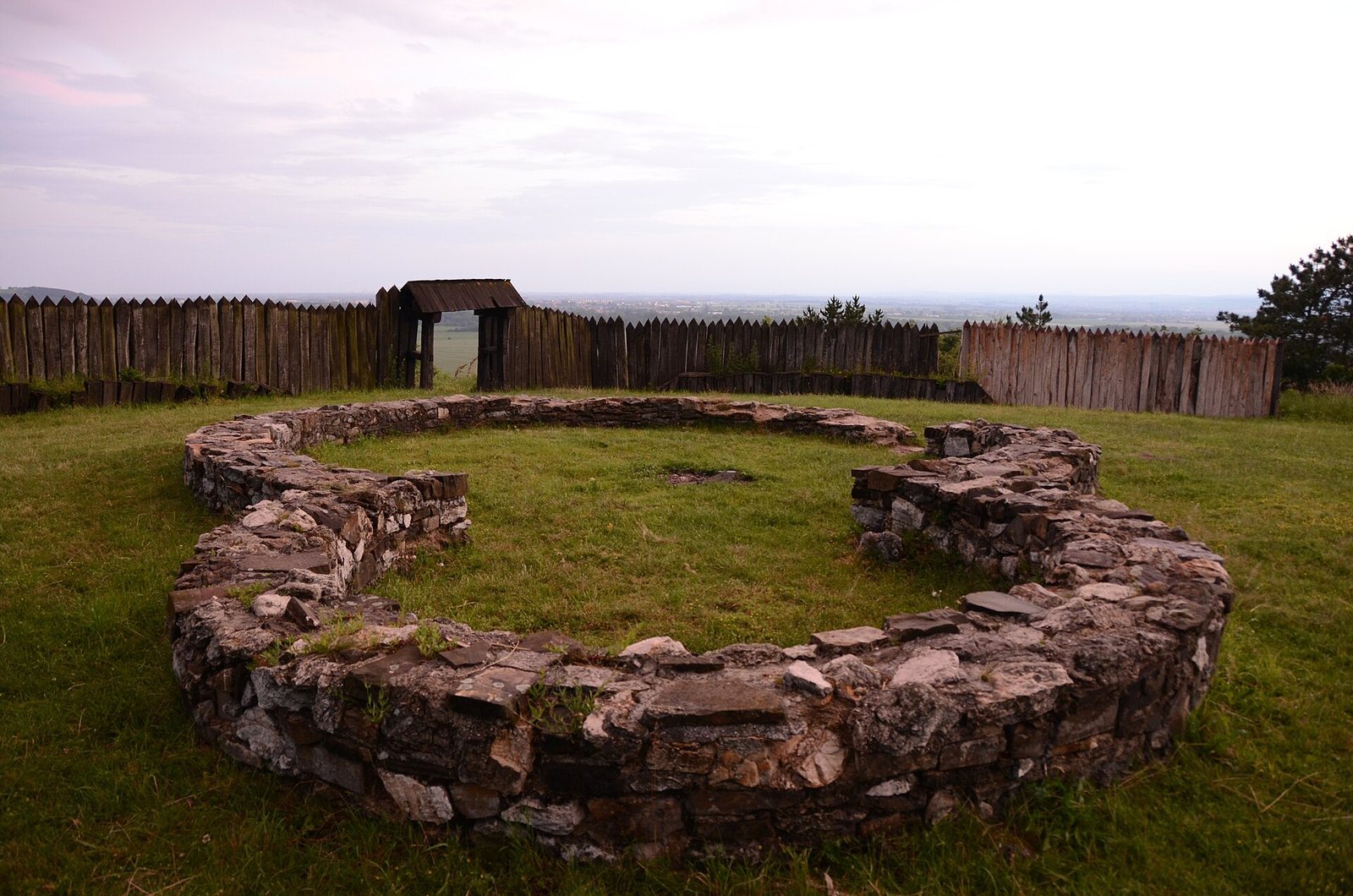
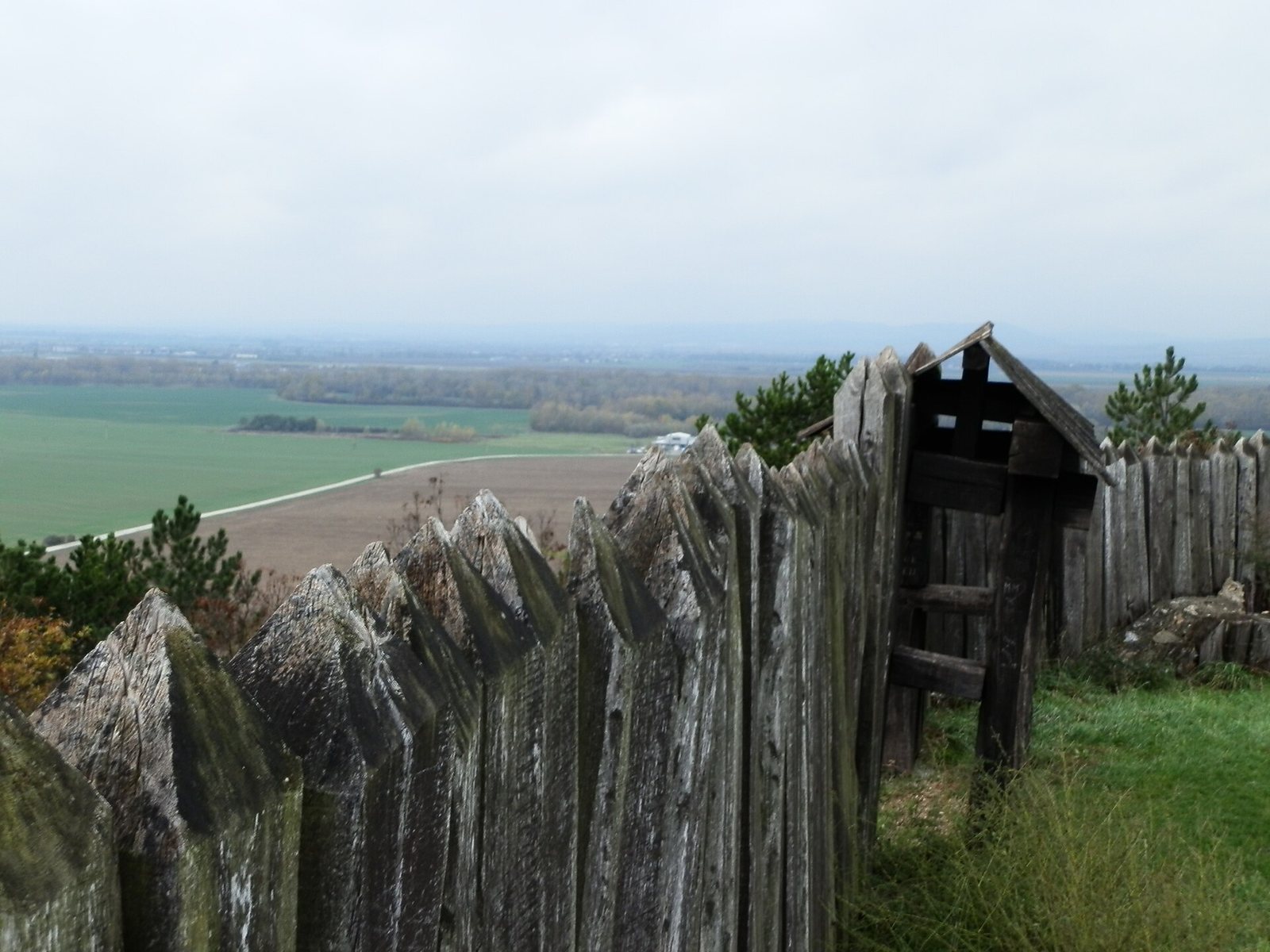
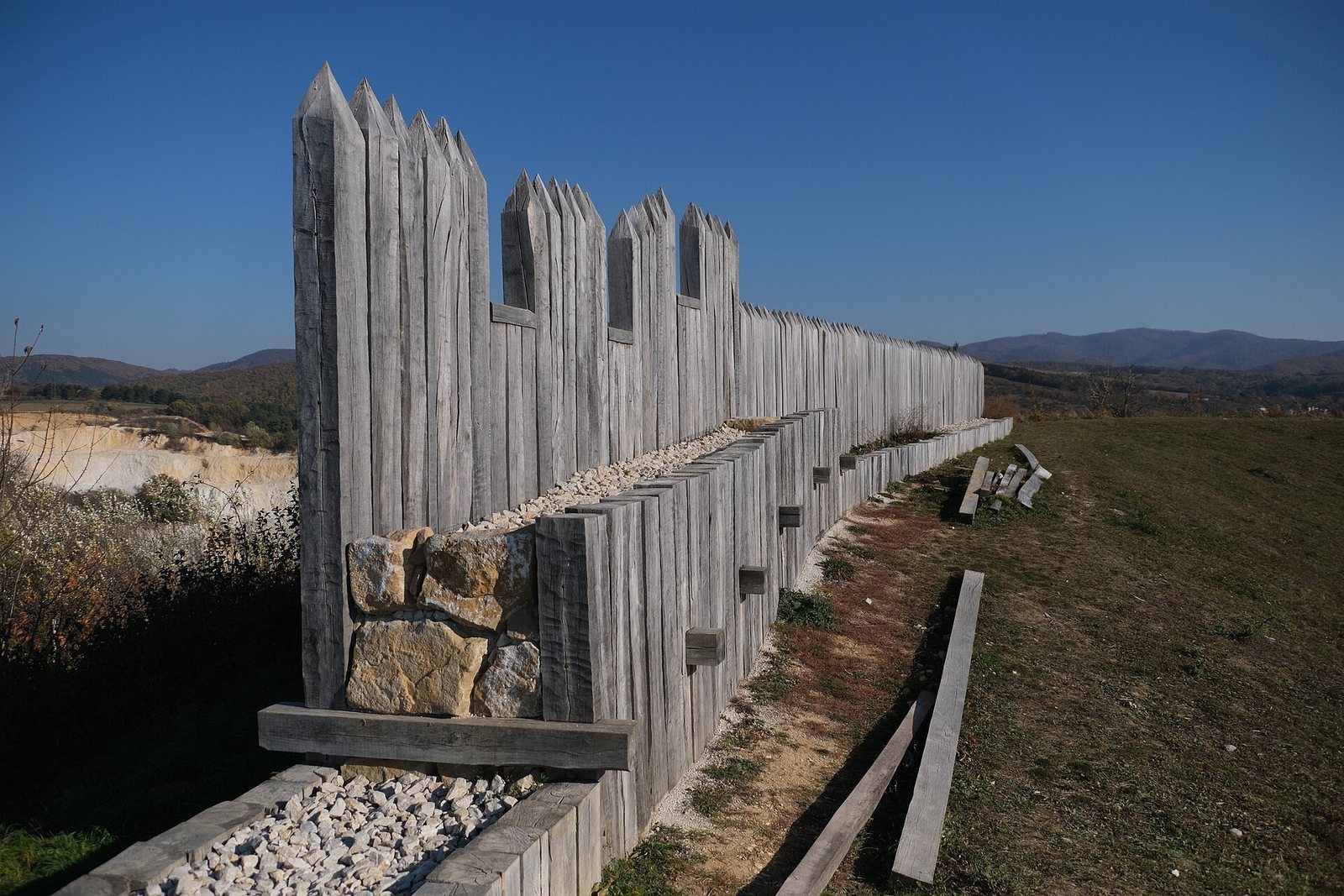
The enclosure includes a partly reconstructed wooden-stake fortification, with a gate facing the village of Hubina and further timber barriers within. Foundations mark residential and several farm buildings. A masonry footprint marks a rotunda (a circular-plan building) in a pre-Romanesque style (early medieval architecture preceding the Romanesque). The enclosure also contains a burial ground and a model of a watchtower.