Selsø Castle: A Danish Manor House
Site at a Glance
- Popularity
- Medium
- Country
- Denmark
- Primary era
- Early Modern
- Eras represented
- Early Modern
- Civilizations
- Denmark–Norway
- Site type
- Domestic
- Remains
- Manor House
On this page9 sections
History
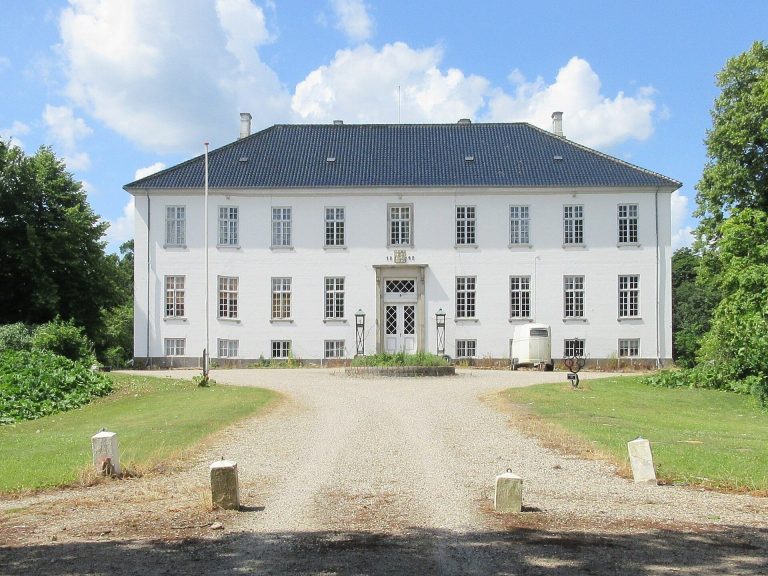
Selsø Castle is a manor near Skibby, Denmark, whose main brick building was completed in 1576 during the Renaissance, a European period whose design often drew on classical forms. Its history reflects changes in church and crown authority, noble inheritance, and estate management.
Medieval estate and the Reformation
Selsø is first mentioned in 1288, when Bishop Ingvar of Roskilde granted it to Jens Grand for his lifetime. Grand died in 1300, after which the estate returned to the Bishopric of Roskilde, the Catholic church authority for the diocese around Roskilde.
During the Reformation, a 16th-century movement that established Protestant churches and reshaped religious institutions, the Crown took possession of Selsø along with other Catholic Church property. In 1556, King Christian III granted the estate to Andreas von Barby. The following year, Andreas received permission to make it an entailed estate, with inheritance rules restricting its sale or division, for his nephew Hans. Hans had little interest in his Danish inheritance and sold Selsø after Andreas died in 1559.
The Ulfeldt family and later owners
Corfitz Knudsen Ulfeldt acquired Selsø in 1559. He became seriously ill while returning from a royal diplomatic mission to Stockholm in 1562 and died the following year. As he had no wife, the estate passed to his brother Jacob Ulfeldt, who completed the new main building in 1576. Its construction used half a million bricks taken from the abandoned St. Clare’s Priory in Roskilde. The design is attributed to a Dutch architect, probably Hans Hendrik van Paesschen.
Jacob’s son Mogens Ulfeldt inherited Selsø and became Admiral of the Realm, a senior Danish naval officer, in 1610. With the king’s permission, Mogens confined his wife, Anne Munk, at the manor after an action she had taken. She was not fully released until 1624. Mogens died in 1616, and their four children, Corfitz, Jacob, Christian, and Anne, inherited the estate.
In 1624, King Christian IV urged the three Ulfeldt brothers to travel abroad. They sold Selsø to cover their expenses, and Ernst Normand owned it until 1643. His widow, Ingeborg Arenfeldt, held the estate from 1643 to 1658. Joachim Frederik Pentz acquired it in 1663 and transferred it to Erik Krag in 1669 in exchange for Åstrup in Jutland. After Krag lost most of his fortune through speculation, his widow, Vibeke Rosenkrantz, held Selsø from 1679 to 1682.
Berte Skeel acquired the estate in 1682 and managed it until her death in 1729. She also obtained the right of patronage over Skuldelev Church, which gave her influence over the appointment of its clergy. Selsø then passed to Christian Ludvig von Plessen, her niece’s husband.
Plessen ownership, decline, and restoration
From 1728 to 1734, von Plessen had the Renaissance manor adapted in the Baroque style, a European approach associated with more elaborate, dramatic design. In 1728 he also bought nearby Lindholm and used his will to combine the estates in an entailed trust, a legal arrangement intended to keep property undivided and prevent its sale. When he died in 1752, Selsø and Lindholm passed to his grandson, Christian Ludvig Scheel von Plessen.
Later holders included Mogens Scheel von Plessen from 1801 to 1819, Magnus Joachim Scheel-Plessen from 1819 to 1856, Carl Theodor August Scheel-Plessen from 1856 to 1892, Carl Gabriel Joachim Vilhelm Scheel-Plessen from 1892 to 1932, Magnus Carl August Wilhelm Otto Scheel-Plessen from 1932 to 1948, Victor Friedrich Carl Scheel-Plessen from 1948 to 1964, and Marina Scheel-Plessen from 1964 to 1995.
Agathe von Qualen, the widow of Christian Ludvig Scheel von Plessen, was the manor’s last occupant. After she died in 1829, her uninterested heirs sold the furniture at auction and left the house unattended. Over the following 144 years, it deteriorated and was plundered, while the reception hall was used to store corn.
The main building, gatehouse, and east wing of the neighboring home farm were listed in Denmark’s register of protected buildings and places in 1918. Writers Grethe and Bernhard Linder began restoring the manor in 1972. Work continued for 25 years, and their efforts received recognition that included a Europa Nostra award. Since 1995, the Plessenske Selsø Foundation, an independent body that administers its own assets, has held the main building and its immediate surroundings and operates the manor as a museum. The wider Selsø-Lindholm estate is owned by M. E. U. von Malsen-Ponikau and J.-H. Malsen-Plessen. It covers 974 hectares, of which Selsø accounts for 296 hectares.
Remains
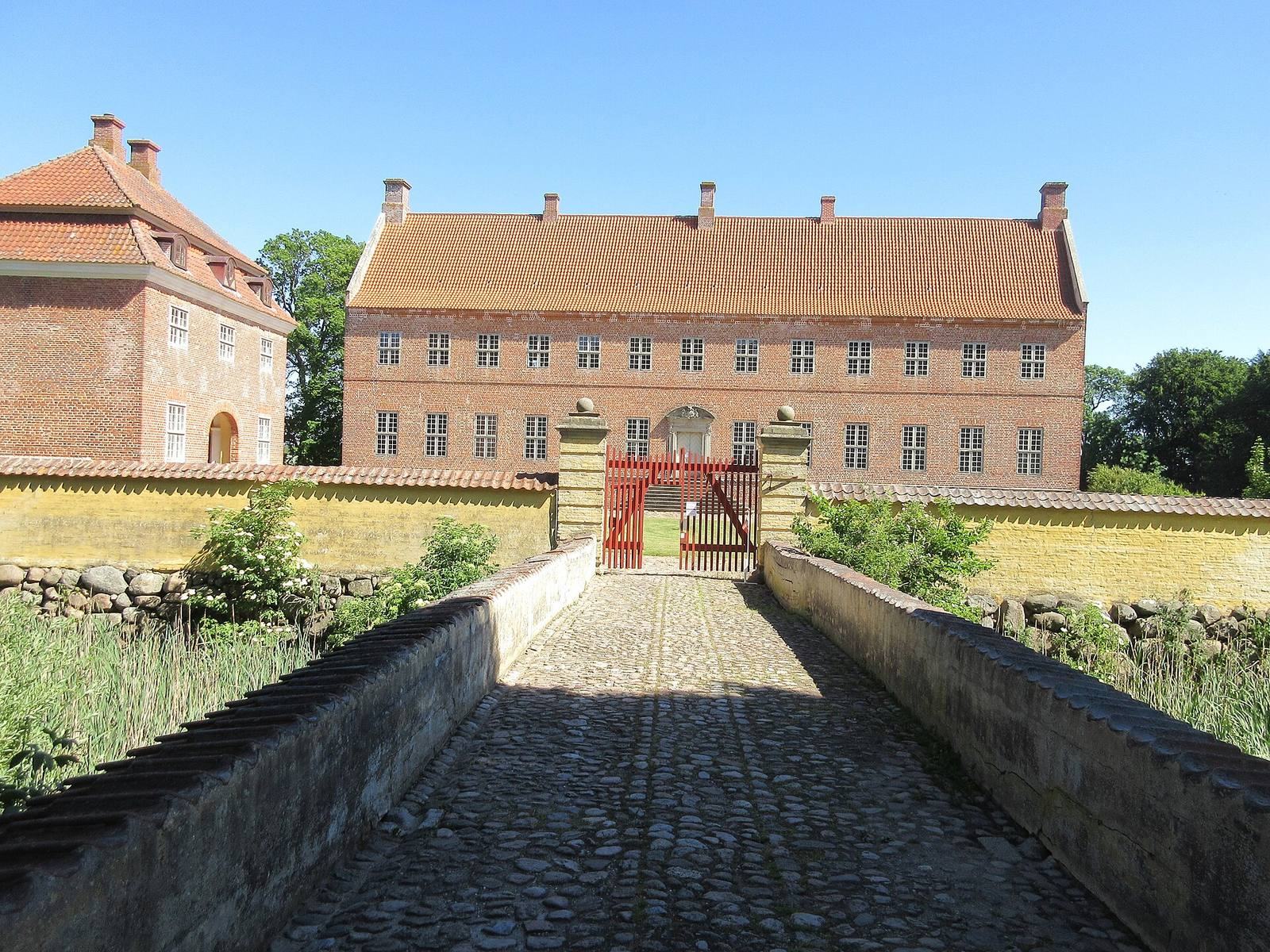
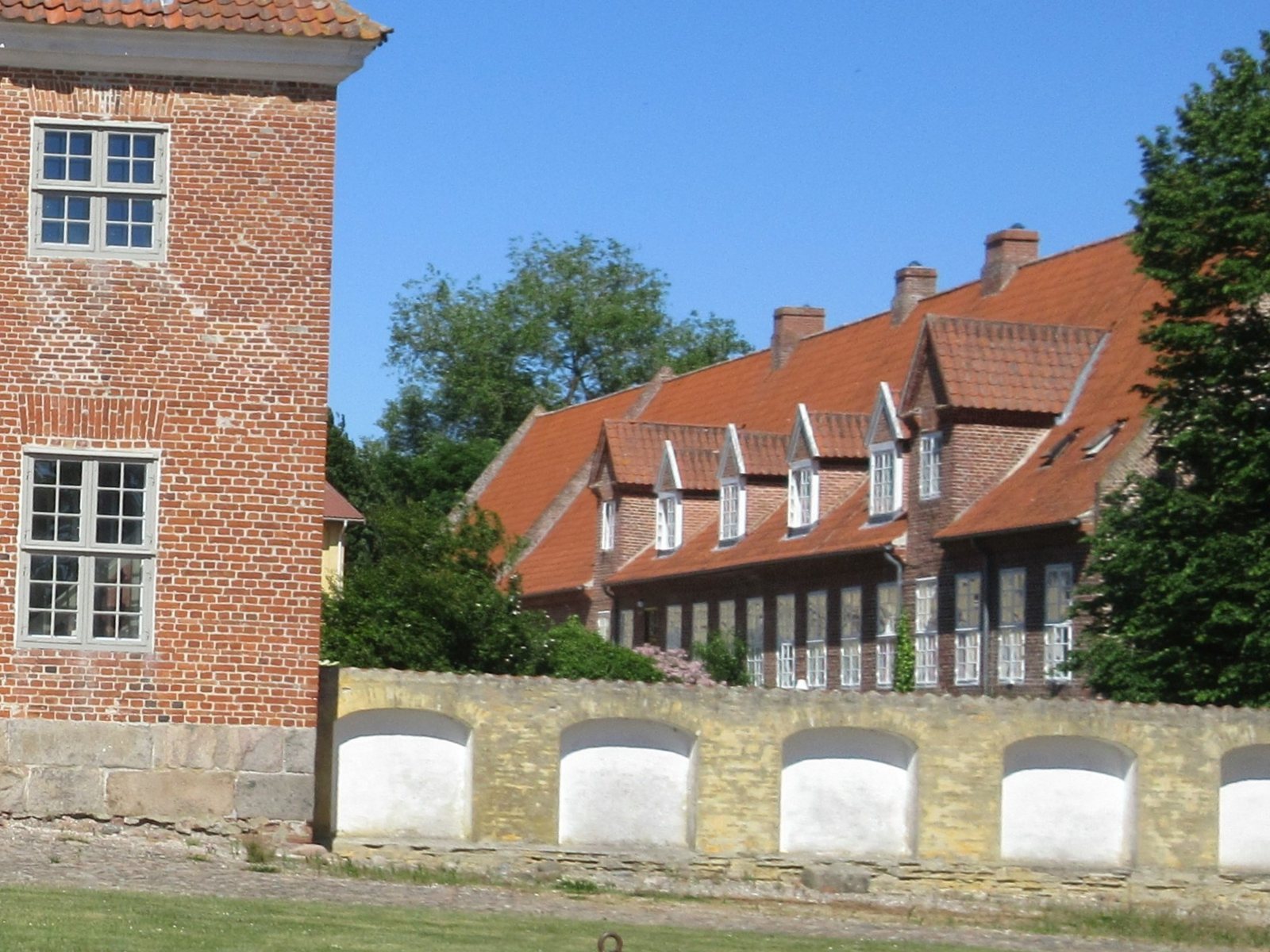
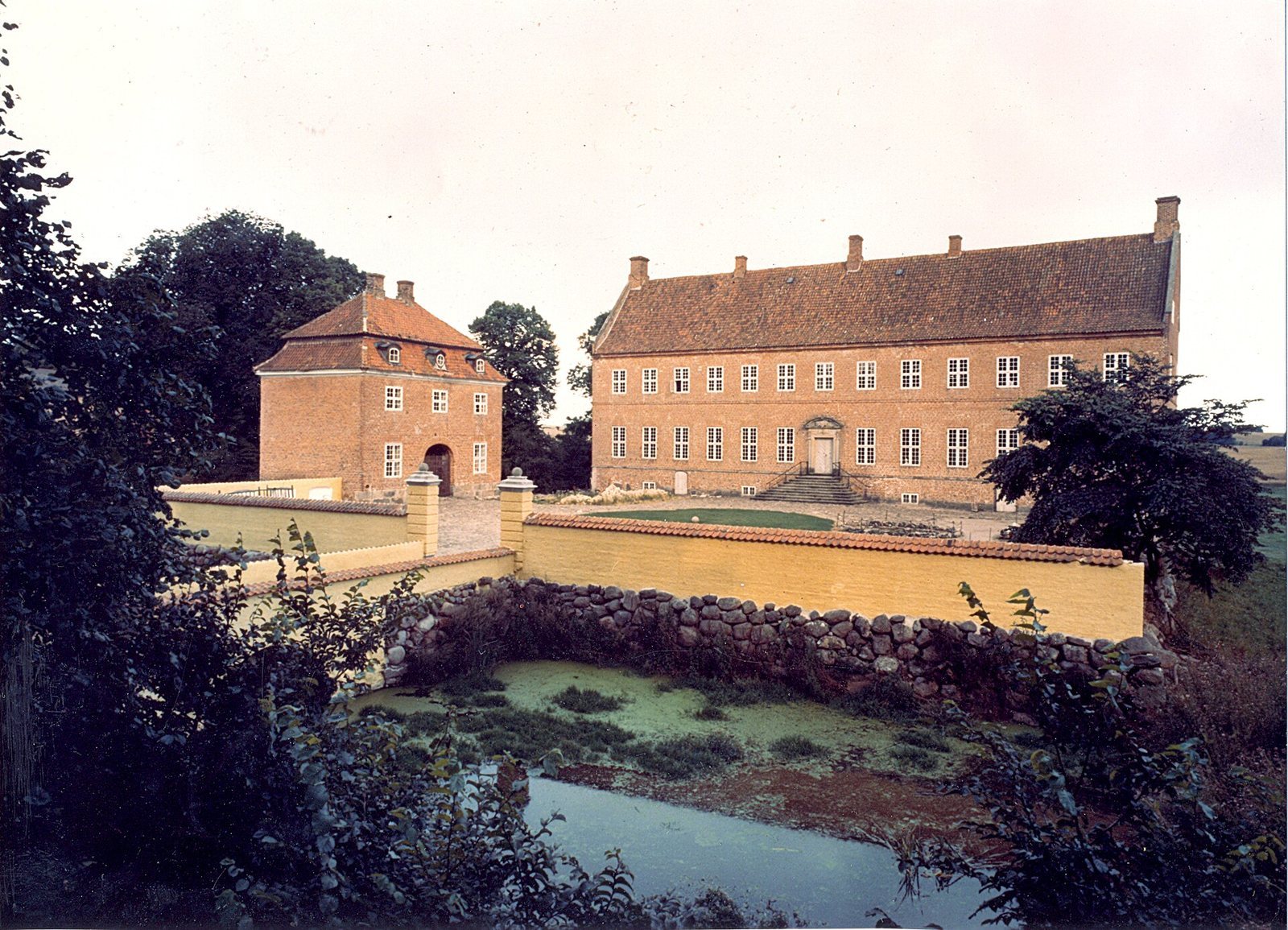
The manor complex includes a simple two-storey house of red brick with a red-tiled roof, a gatehouse, and the east wing of an adjacent home farm. The site’s earlier defensive building is thought to have stood near Selsø Church, overlooking a lake that was then part of Roskilde Fjord.
Buildings and earlier site
Earlier defensive site
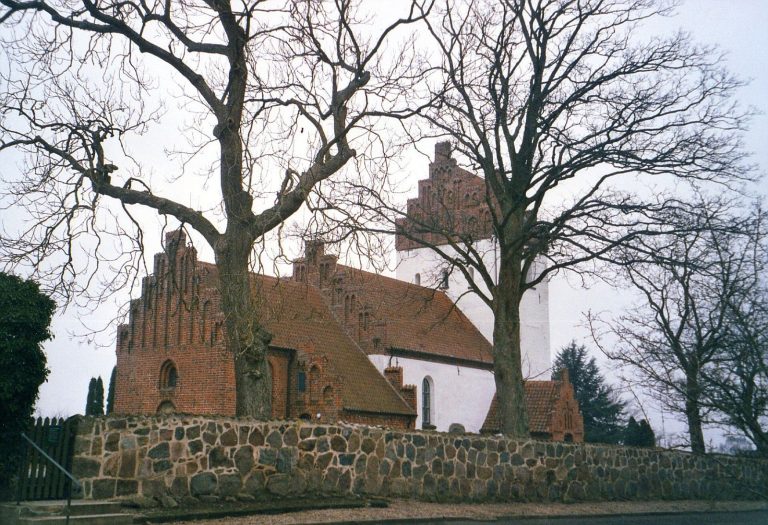
The first Selsø was probably a defensive building near the church. Its position overlooked a lake that at the time formed part of Roskilde Fjord.
Main building
The manor house is a straightforward, two-storey red-brick structure with a red-tiled roof. Inside, its knight’s hall, a large room used for formal gatherings, is decorated with paintings by Hendrick Krock.
Gatehouse and home farm
The gatehouse dates to 1734. The east wing of the neighboring home farm is also part of the site.