Bodin Church: A Medieval Parish Church in Bodø, Norway
Site at a Glance
- Popularity
- Medium
- Country
- Norway
- Primary era
- Medieval
- Eras represented
- Medieval, Early Modern
- Civilizations
- Denmark–Norway, Norwegian
- Site type
- Religious
- Remains
- Church
On this page8 sections
History
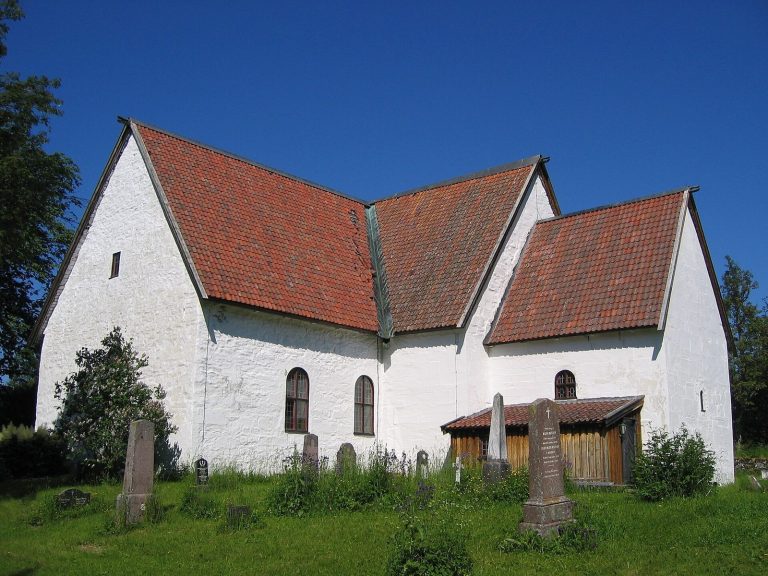
Bodin Church, in Bodø, Norway, is a parish church probably built around 1240. Its earliest surviving written record dates to 1321. In 1814, it served as a polling station during one of Norway’s first national elections. Each parish elected electors, who later met by county to choose representatives to the Constituent Assembly at Eidsvoll Manor, where Norway’s constitution was drafted.
Expansion and rebuilding
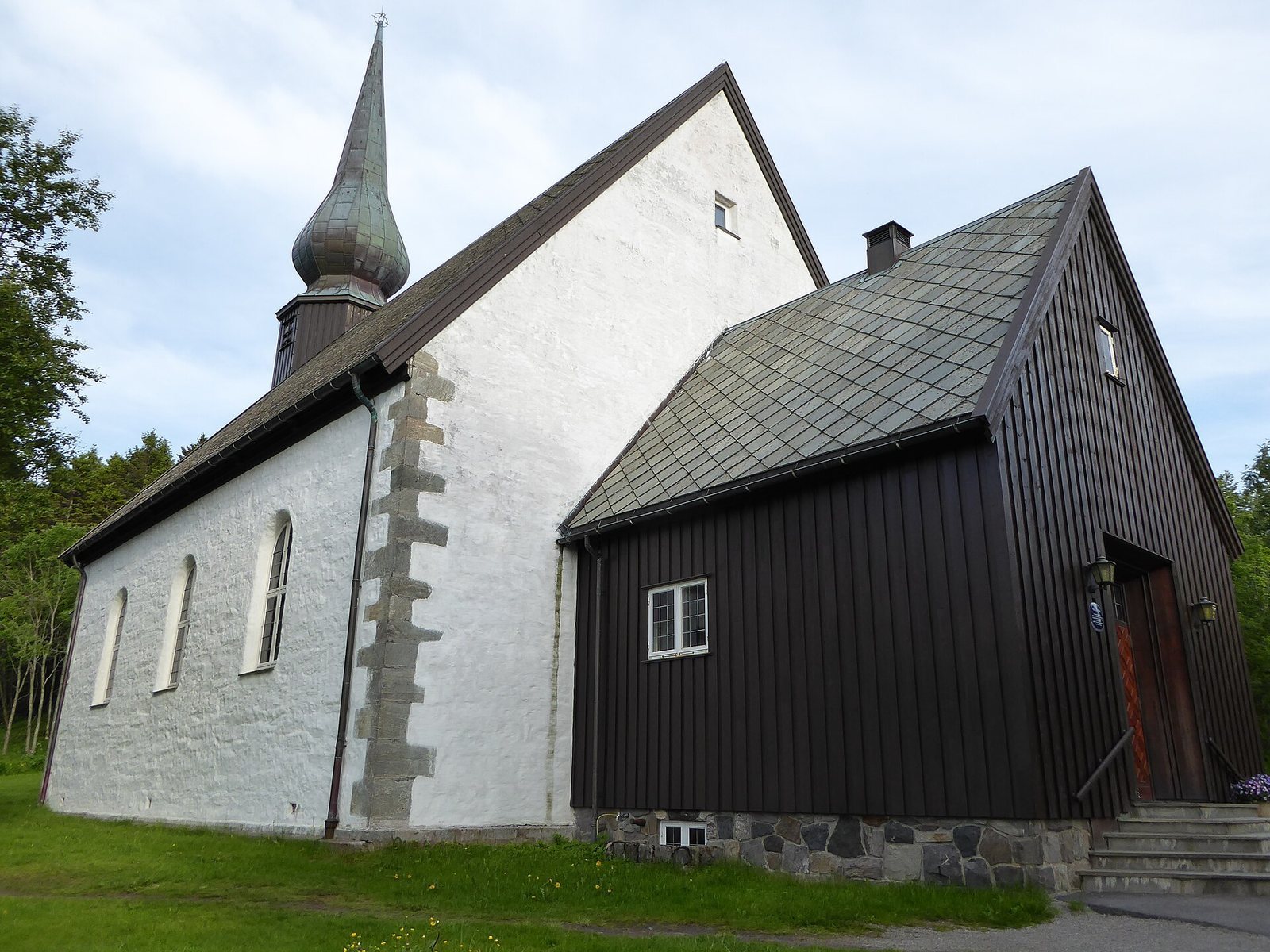
A crosswise extension was added to the south side of the church’s main body in 1785 to provide more space.
In 1894, the medieval part of the church was demolished and rebuilt in the same style.
Religious role and protection
Bodin Church was formerly Catholic and is now an active Evangelical Lutheran parish church. Lutheranism is a Protestant tradition that emerged from the sixteenth-century Reformation. The church belongs to Bodin parish, within Bodø deanery and the Diocese of Sør-Hålogaland. It has automatic protection as a Norwegian cultural heritage site.
Remains
Building and interior
Layout
The white stone church has a lengthwise plan, with a rectangular main body and a narrower, nearly square altar area beneath a lower roof. A crosswise wing projects from the south side of the main body. The church stands in southeastern Bodø and has seating for about 300.
Altar and historic furnishings
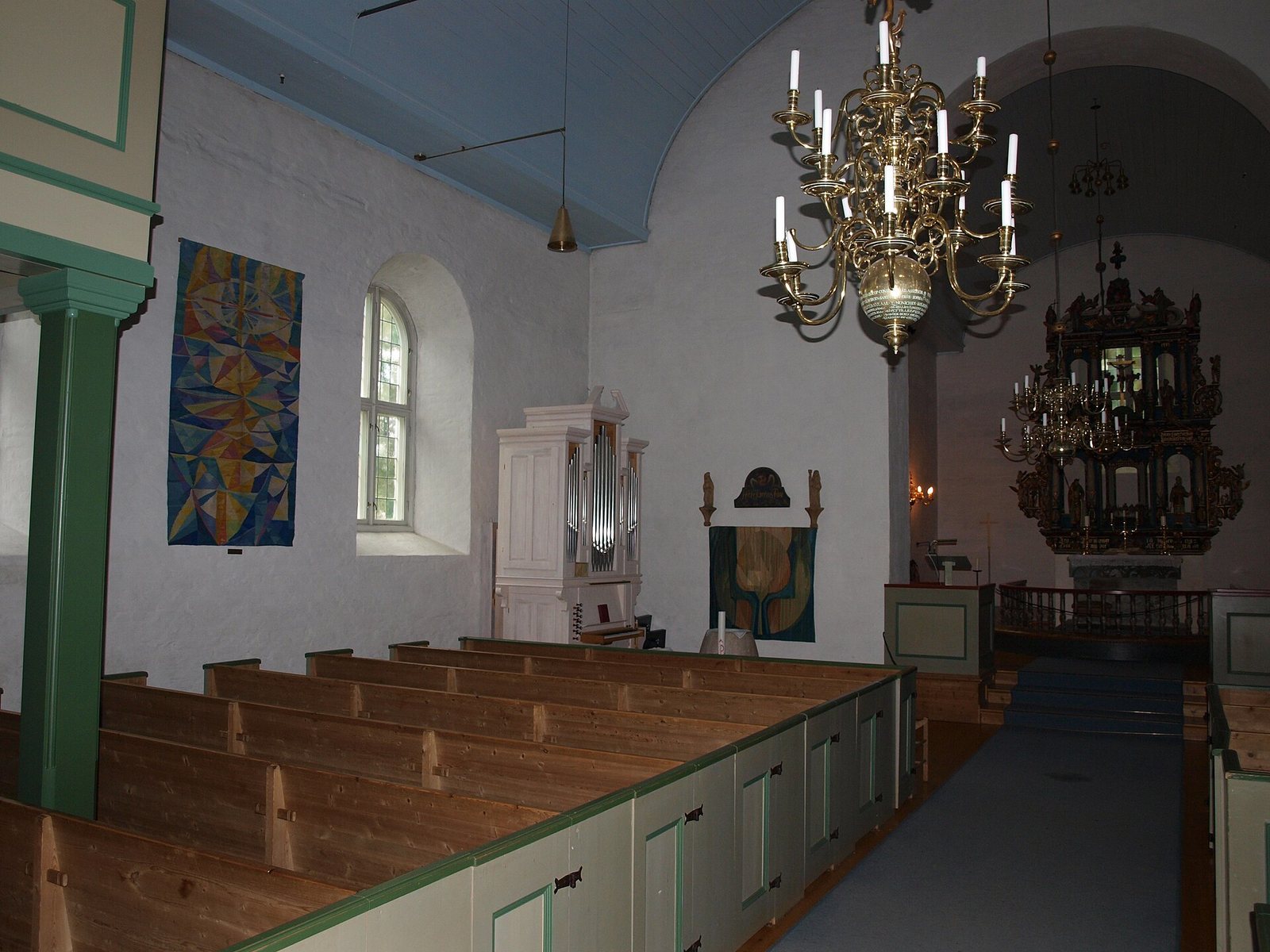
The interior is furnished largely with fittings from the seventeenth and eighteenth centuries. Its stone altar dates to the fourteenth century, while wooden sculptures were made from the late fifteenth to the early sixteenth century. The altarpiece is from 1670, and the chandeliers date to the 1760s.
Pulpit and organ
The seventeenth-century pulpit carries paintings made in 1753 by German-born painter Gottfried Ezekiel, commissioned by parish priest Nicolaus Christian Friis. In 2003, the church received a replica of an eighteenth-century organ in the Baroque style, an elaborate European artistic style that developed from the late sixteenth century.