Hembury: A Neolithic Enclosure and Iron Age Hillfort in Devon
Site at a Glance
- Country
- United Kingdom
- Primary era
- Iron Age
- Eras represented
- Stone Age, Iron Age, Classical
- Civilizations
- Roman
- Site type
- Military
- Remains
- Fort
On this page11 sections
History
Neolithic and Iron Age occupation
Hembury is a prehistoric enclosure and hillfort near Payhembury in Devon, England. A hillfort is an enclosed site on elevated ground that could serve defensive purposes. Its early phase was a Neolithic, or New Stone Age, causewayed enclosure, a prehistoric boundary formed by interrupted ditches. Occupation began in the late fifth and early fourth millennia BC. Later, an Iron Age hillfort was built on the same site. The promontory was probably chosen for its outlook over the surrounding countryside and its defensive potential.
Roman occupation
Hembury’s occupation sequence continued into the period of the Roman invasion. Excavations directed by Malcolm Todd from 1980 to 1983 produced evidence suggesting Roman military occupation and a fort within the earlier Iron Age site.
Archaeology and protection
Dorothy Liddell excavated Hembury from 1930 to 1935. Geophysical surveys followed in April 2015 and March 2016. Hembury Fort became a scheduled monument on 9 October 1981, giving the archaeological site statutory protection under UK law. The Devon Archaeological Society bought the hillfort in 2022.
Remains
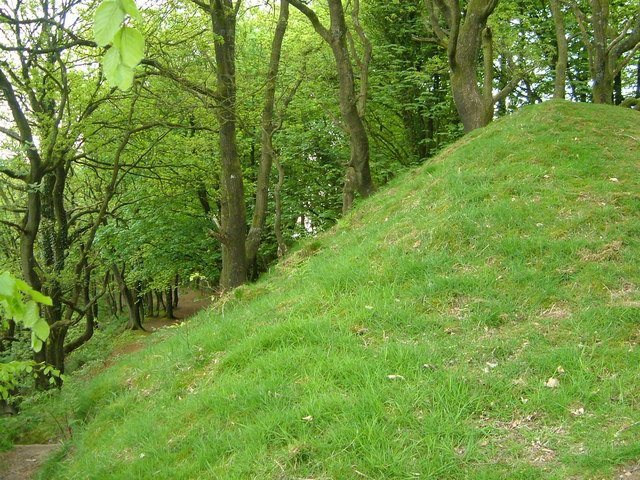
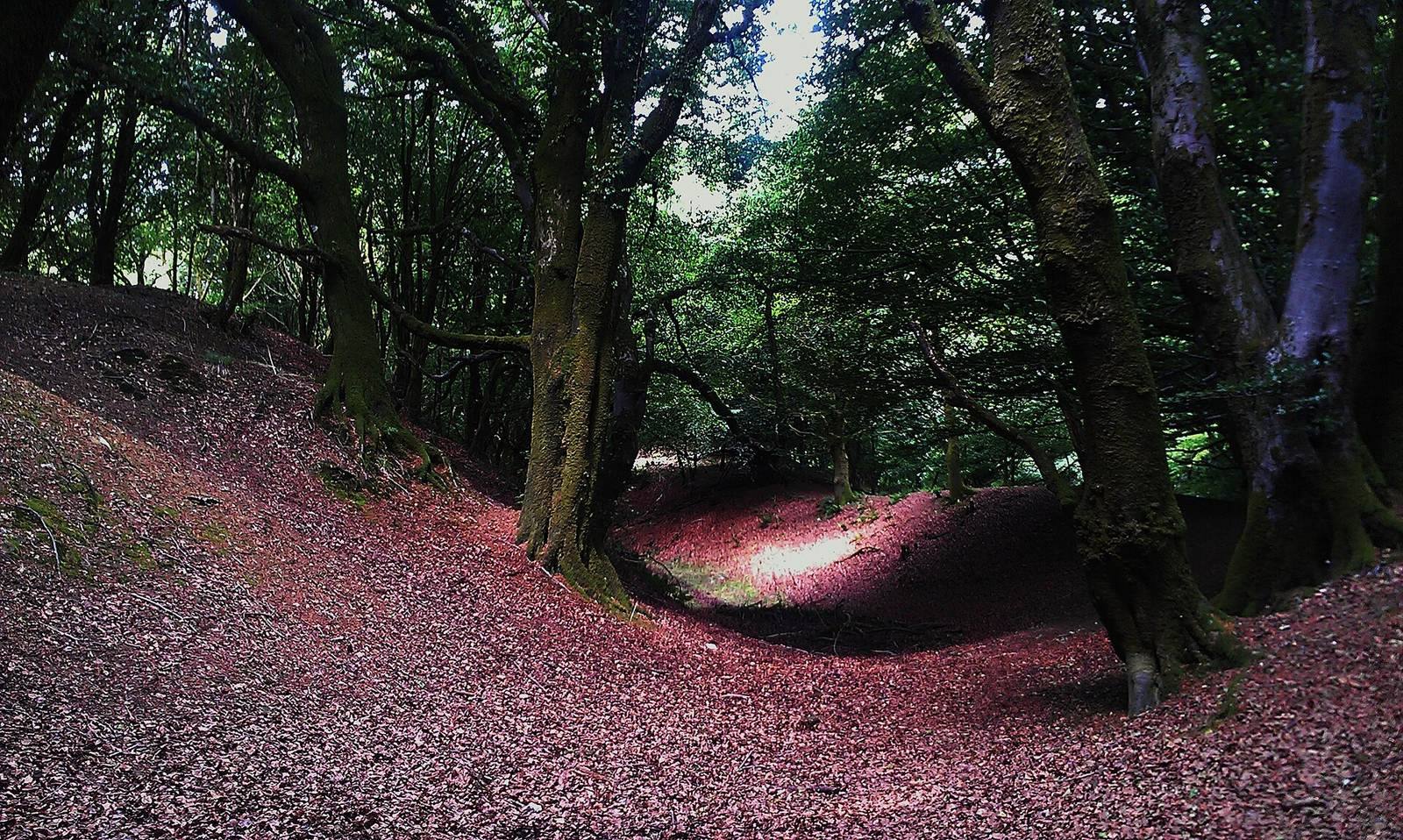
The site occupies a south-facing projection at the end of a ridge 240 metres high in the Blackdown Hills. It lies north of, and overlooks, the River Otter valley. Its earthworks belong to the Neolithic enclosure and the later Iron Age hillfort, with ramparts identified within the hillfort.
Earthworks
Neolithic enclosure
Liddell identified a timber-framed entrance to the enclosure and an oval arrangement of postholes near its centre. She interpreted the postholes as the remains of a building that burned before the enclosure earthworks were made.
Iron Age hillfort
The later hillfort occupies the same site as the Neolithic enclosure. Its ramparts form part of the surviving earthworks.
Archaeological finds
Evidence of occupation
Finds from Neolithic occupation include pottery, flint tools, axes, stone tools for grinding grain, and charred grain.
Hembury ware
A large collection of pottery found during Liddell’s excavations gave Hembury ware its name. It is among the earliest Neolithic pottery types in southern Britain and dates to the late fifth and early fourth millennia BC. The pottery generally takes the form of round-bottomed bowls with projecting handles. Much was made around The Lizard in Cornwall from clay containing material derived from gabbro, an igneous rock, and traded throughout the British Isles. Several pieces of Hembury ware made from gabbro pottery are displayed at the Royal Albert Memorial Museum in Exeter.