Jakar Dzong: A Bhutanese Religious and Defensive Complex
Site at a Glance
- Country
- Bhutan
- Primary era
- Early Modern
- Eras represented
- Early Modern, Modern
- Civilizations
- Unclassified
- Site type
- Military
- Remains
- Fort
On this page7 sections
History
Foundation and early growth
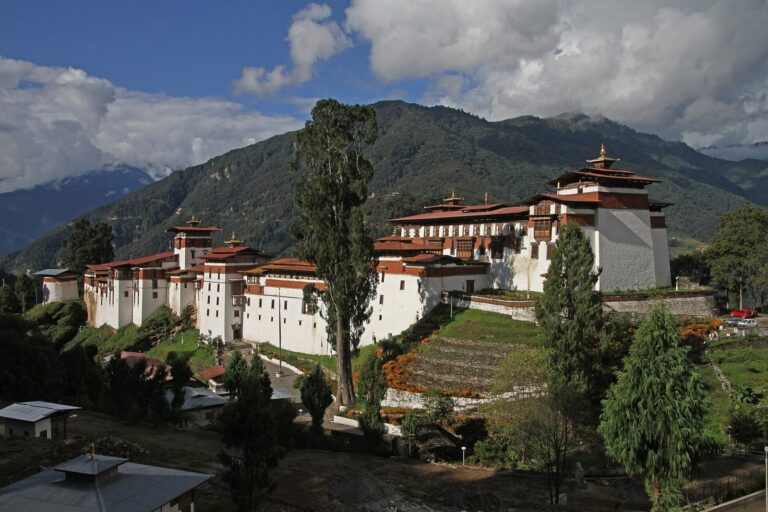
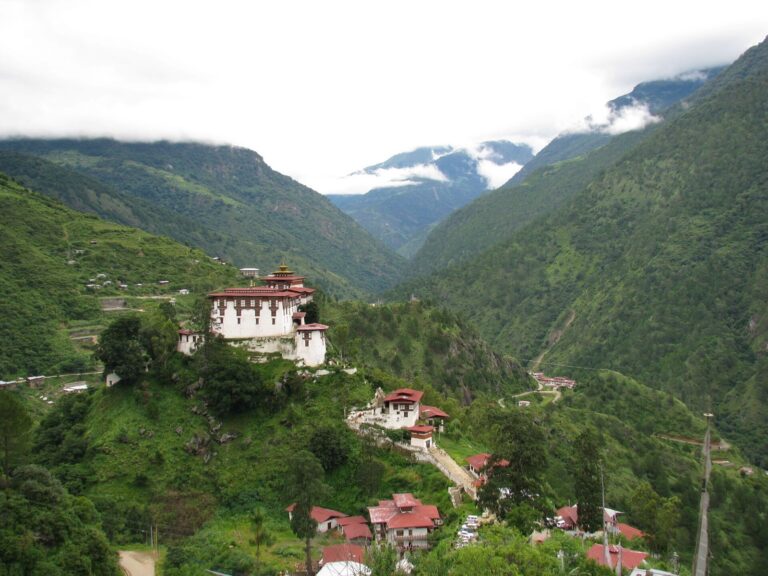
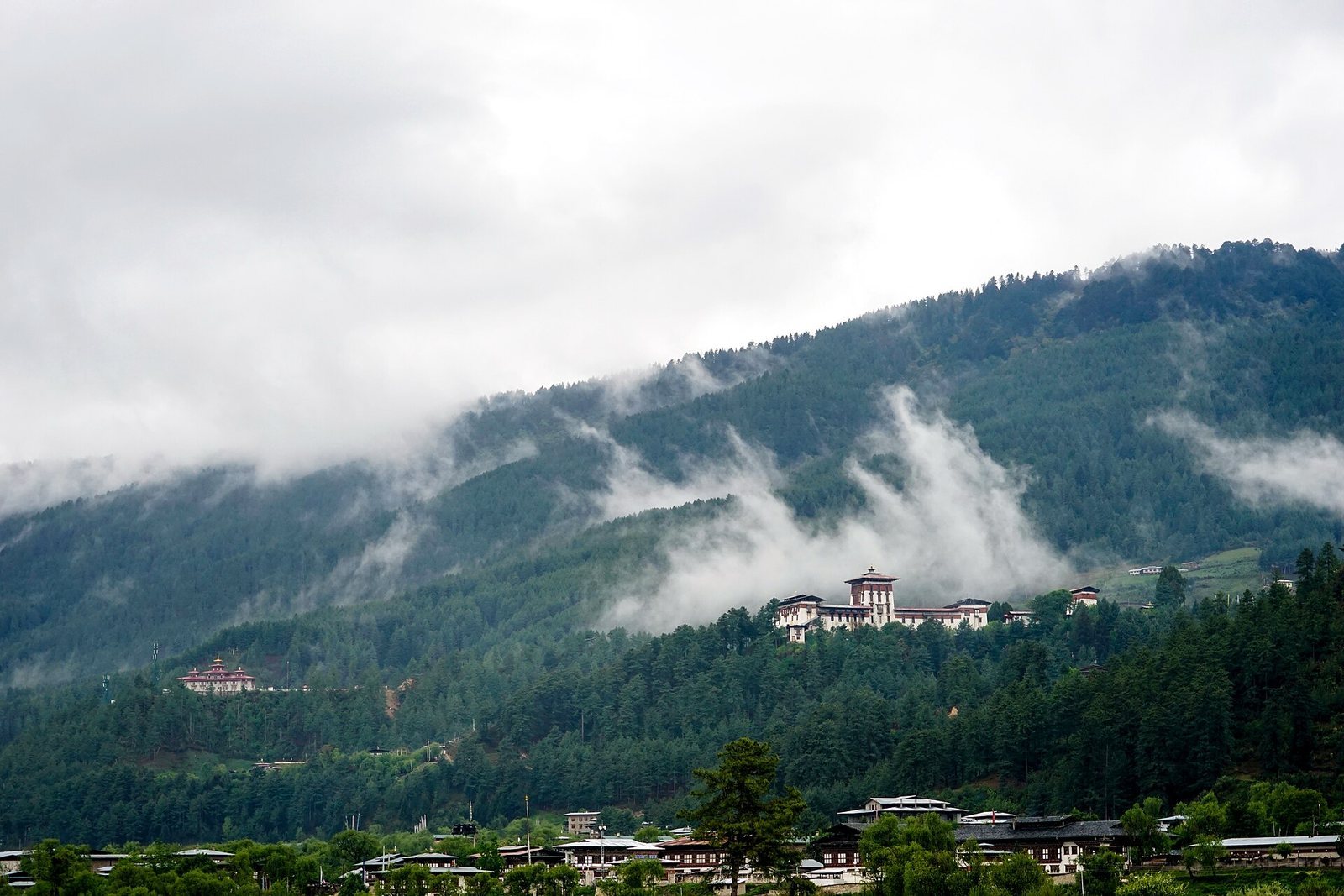
Jakar Dzong is a fortified religious and administrative complex above Jakar town in Bhutan’s Chamkhar valley. In 1549, the lama Ngagi Wangchuk (1517–1554), a Ralung aristocrat who came to Bhutan to teach Drukpa Kagyu, a Tibetan Buddhist lineage with a strong historical presence in the country, built a small fortress-shaped temple there. He established a monastic center and made it his seat. The dzong later became an important religious center in Bumthang and a defensive stronghold for Bhutan’s eastern districts.
Tradition connects Jakar’s name with bjakhab, meaning “white bird,” and tells that a bird settled at a place chosen for a monastery. A local version says lamas and astrologers selected the present site after deciding that an earlier small fortress east of Bumthang was poorly placed. After the religious leader Jab Tenpai Njima (1567–1613) arrived, the original temple was enlarged. A second major renovation, carried out under Minjur Tenpa, Bhutan’s third temporal ruler, was completed in 1646. The complex also became a seat of Bhutanese rulership after Zhabdrung Ngawang Namgyal, a Buddhist leader who consolidated Bhutan in the seventeenth century, had established his power.
Seventeenth-century conflicts
During the seventeenth century, Phuntsho Namgyal, ruler of Tsang in Tibet, twice sent forces against Zhabdrung Ngawang Namgyal. The campaigns damaged Jakar Dzong, and the Trongsa Penlop, a regional governor, later arranged repairs. After Zhabdrung’s death, a ruler of Chokhor sought to unite the four valleys of Bumthang. The Trongsa Penlop’s forces stopped him, and he fled to Tibet.
In 1679, the ruler returned with a Tibetan army, which camped on a hill below the dzong. Bhutan did not yet have an organized standing force, so the defenders also sought help from protective deities. Local tradition says a shot fired from the fortress killed two senior Tibetan commanders and led the army to withdraw. The story is associated with the name Jakar Tobgyal, meaning “victorious dzong.” During another Tibetan invasion in Minjur Tenpa’s time, Bhutanese forces again prevailed. The fortress was then called Jakar Yugyal Dzong, or “victorious fortress of the white bird.” Its formal name, Yuelay Namgyal Dzong, commemorates victory over Phuntsho Namgyal’s troops.
Restoration and continuing roles
Tenzin Rabgay, Bhutan’s fourth Druk Desi, restored and consecrated the dzong in 1683. He appointed Longwa as its first dzongpon, the official in charge of a dzong. Local tradition identifies Longwa as the reincarnation of King Sindhu Gyab and links his birth to a prophecy by Guru Rinpoche, a revered Buddhist master.
The 1897 earthquake heavily damaged the complex. Bhutan’s first king, Ugyen Wangchuck, and his sister Ashi Dechen Choden restored it by the end of the century. Fighting between Trongsa Penlop Dungkar Gyaltshen and Jakar Penlop Pema Tenzin also caused damage in the late nineteenth century; the first and second hereditary kings carried out restoration work. The dzong houses district administration, and Drukpa monks returned in 1998. Its religious affiliation is Drukpa Kagyu.
Remains
Enclosure and water defenses
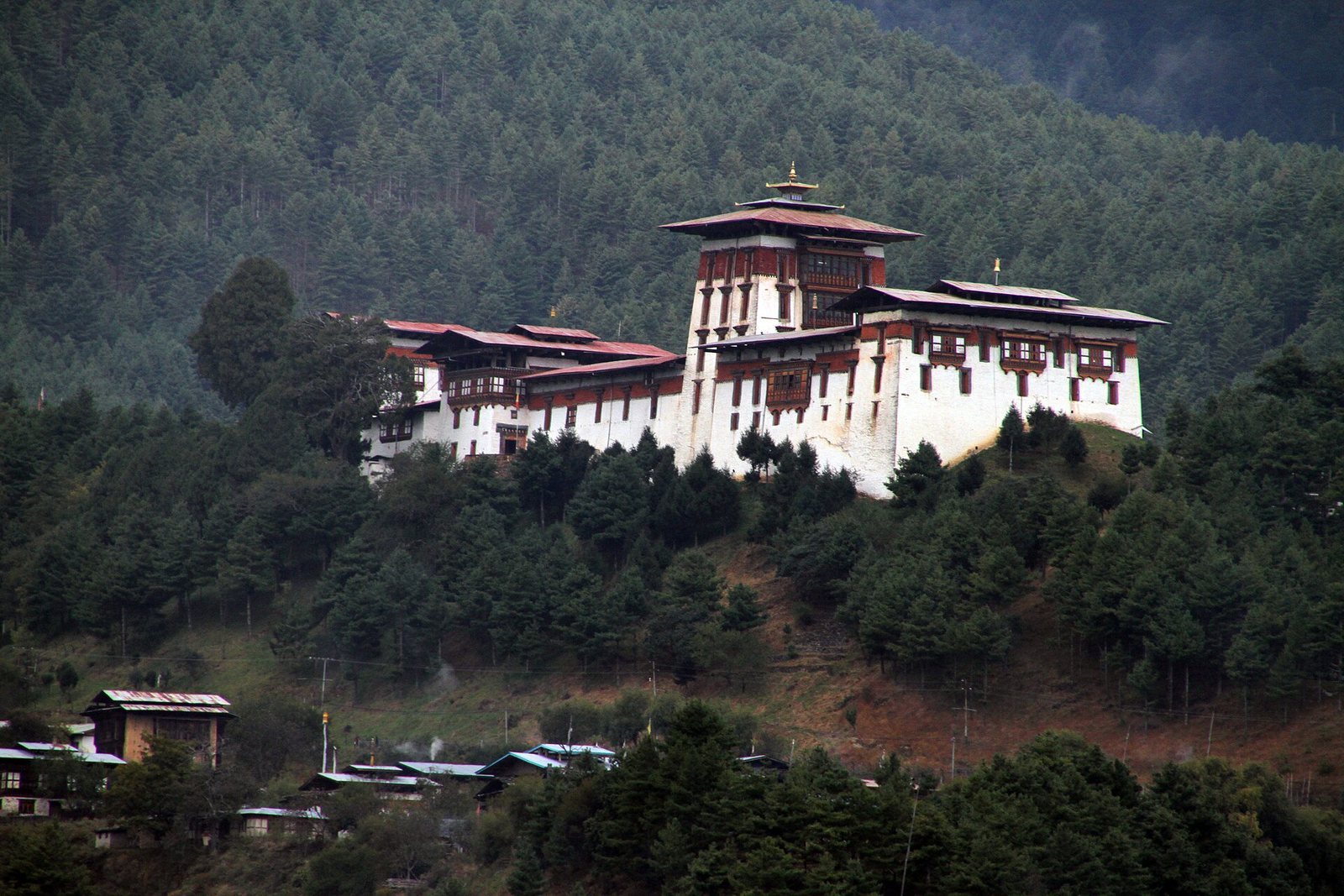
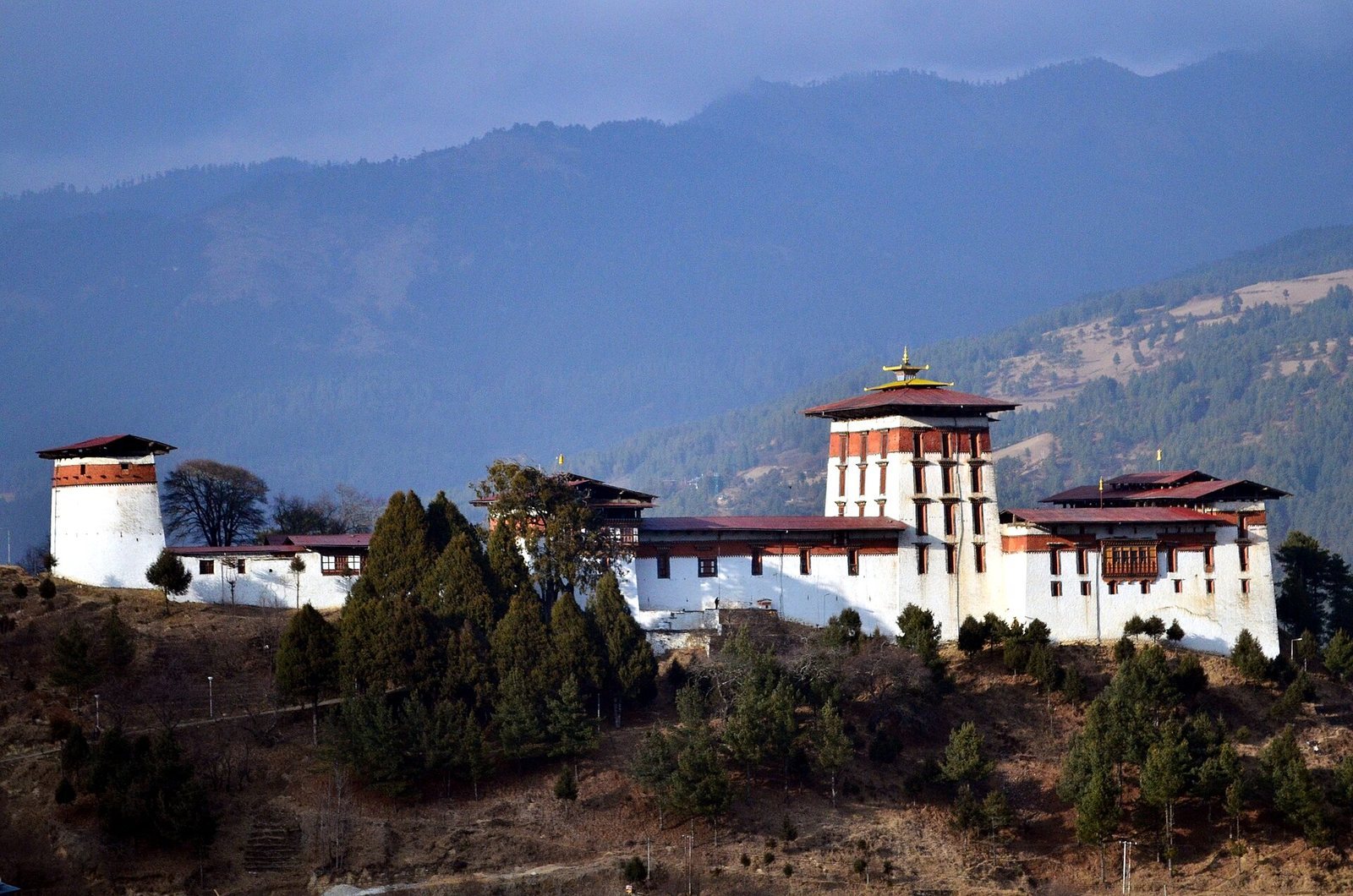
Set on a ridge above Jakar town, the complex has a circumference exceeding 1,500 metres, placing it among Bhutan’s largest dzongs. A route around the outer wall allowed residents to reach water during a siege. The surviving water-retaining defensive wall remains intact, and the route probably took its present form during repairs after the 1897 earthquake. On the western side stands the water tower called Chhu Dzong, added during Tenzin Rabgay’s restoration.
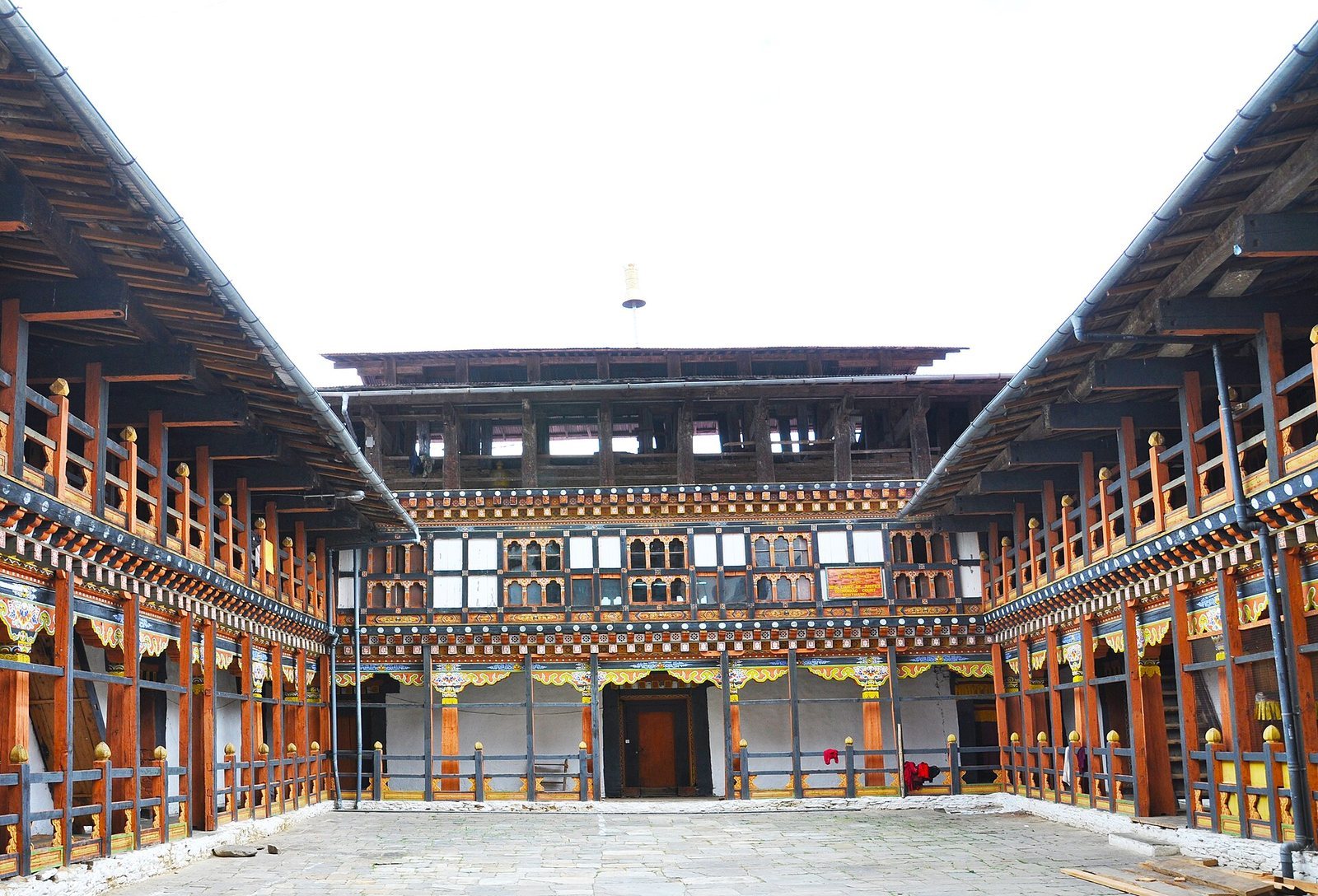
Central tower and religious spaces
The central tower, or utse, rises about 50 metres. Its upper floor contains a chapel dedicated to protective deities. On the ground floor, beside the Lama Lhakhang temple, the principal statue depicts Dolma, the female bodhisattva Tara. Chenrezig, associated with compassion, stands to her left, and Mitukpa, one of the five wisdom Buddhas, is on her right.