Cerro Fortress: A Spanish Colonial Defense of Montevideo
Site at a Glance
- Country
- Uruguay
- Primary era
- Modern
- Eras represented
- Modern
- Civilizations
- Spanish
- Site type
- Military
- Remains
- Fort
On this page7 sections
History
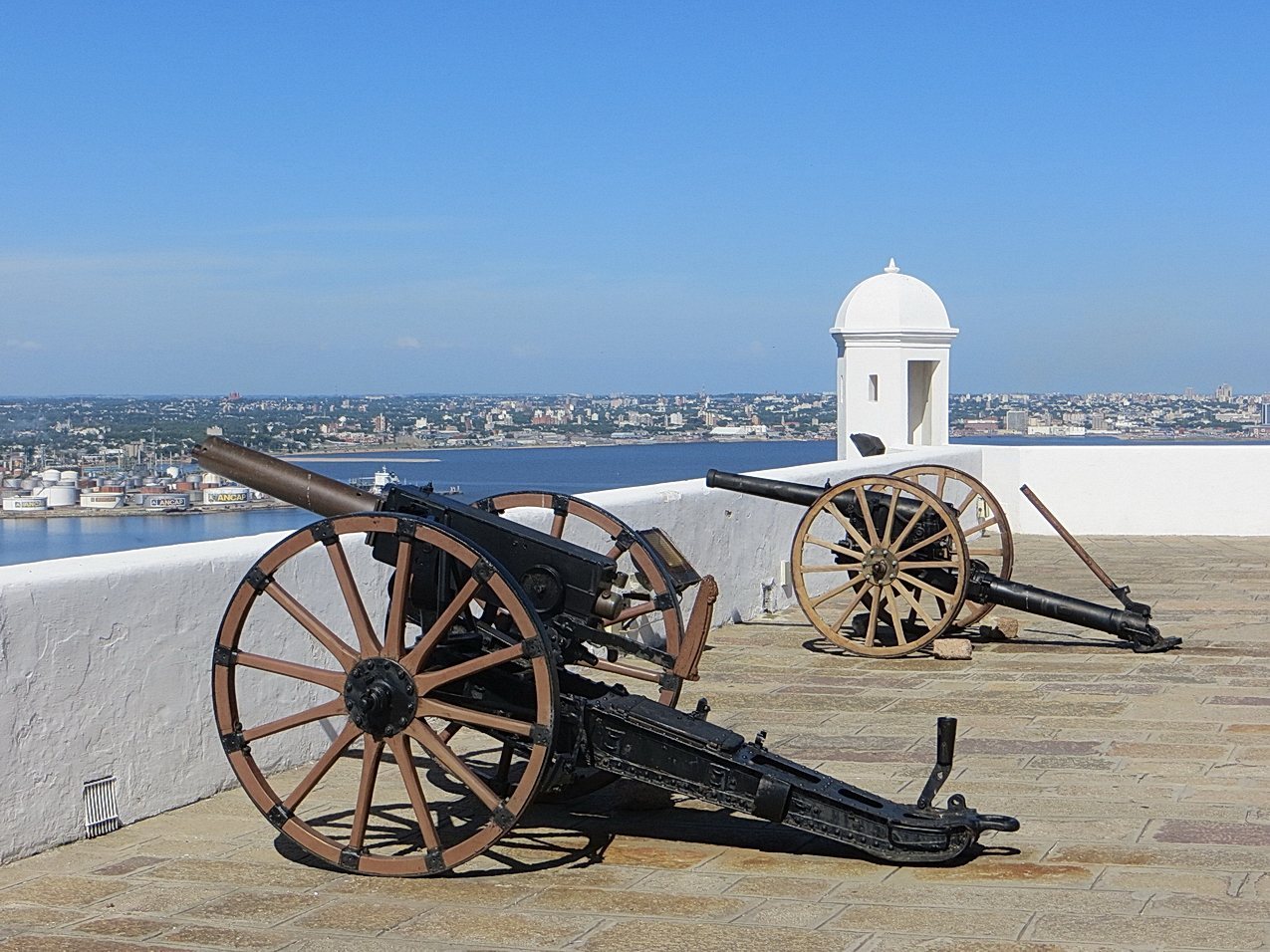
Cerro Fortress is a Spanish colonial fortification atop Cerro de Montevideo, across the bay from Montevideo, Uruguay. Construction began in 1809, and the works were declared complete in December 1811. It was the last fort built in Uruguay under Spanish rule and was intended to defend the city and protect its lighthouse.
Colonial rivalry and Montevideo’s foundation
The Portuguese settlement of Colonia del Sacramento in 1680 sharpened the contest with Spain for control of the Río de la Plata’s left bank. The 1494 Treaty of Tordesillas had divided Spanish and Portuguese claims to territories outside Europe. In 1723, Portuguese troops led by Manuel de Freitas da Fonseca tried to establish a port in Montevideo Bay. A Buenos Aires expedition organized by the Spanish commander Bruno Mauricio de Zabala drove them out the following year and destroyed the settlement.
Spanish settlement followed, beginning with six families from Buenos Aires and later including families brought from the Canary Islands. Montevideo was founded on 24 December 1726 as San Felipe y Santiago de Montevideo. It became the principal port of the Viceroyalty of the Río de la Plata, a Spanish colonial territory in South America.
Between 1723 and 1727, military engineer Domingo Petrarca developed proposals to fortify the bay. One plan called for a five-sided gun position on the Cerro’s southern slope, paired with another at the peninsula’s northwestern end, to defend the city and bay, particularly against Portuguese incursions. In 1744, Antonio José de Mendoza Caamaño y Sotomayor, then viceroy of Peru, urged the construction of a fort on the summit. British and Portuguese ambitions, together with Montevideo’s growing importance as a Spanish American port, strengthened the case for the project.
Construction after the British occupation
A coastal lookout may have been established on the Cerro in 1781, and a lighthouse replaced it in 1802. British forces led by General Samuel Auchmuty and Admiral Charles Stirling occupied Montevideo on 3 February 1807. The city was retaken on 9 September, after British commander John Whitelocke surrendered to forces from the Banda Oriental, the historical name for the region broadly corresponding to present-day Uruguay, and Buenos Aires. In the aftermath, Governor Francisco Javier de Elío ordered a fortress to strengthen the city’s defenses and protect the lighthouse.
Military engineer José del Pozo supervised construction from 1809, assisted by overseer Miguel Estéves and works superintendent Vicente de Ocio. Trials of the fort’s guns took place on 25 February 1811 under ranch foreman Marcelino Villagrán. The works were officially declared complete in December that year.
Conflict and changes of use
The fortress was altered during the Portuguese-Brazilian occupation of the Banda Oriental, the regional War against Oribe and Rosas involving political factions in Uruguay and Argentina, the 1863 Liberating Crusade, and the later period when military leaders dominated Uruguayan politics. On 9 February 1826, Manuel Oribe defeated Brazilian imperial forces in a battle fought at the fortress’s foot. During the War against Oribe and Rosas, 300 Brazilian soldiers from the 6th Battalion of Light Infantry garrisoned the fort under the 1851 alliance between Brazil, Uruguay, and the Argentine province of Entre Ríos.
In 1870, during renovation, the fortress was captured in the Revolution of the Lances, an episode in Uruguay’s nineteenth-century civil conflicts. It was renamed Fortaleza General Artigas in 1882, honoring José Gervasio Artigas, a leader of the struggle for Uruguayan independence and a national hero. The fort survived the Río de la Plata earthquake of 1888.
Lighthouse and museum
The earlier lighthouse was partly taken out of service in 1832 and destroyed in 1843 during the Uruguayan Civil War. A replacement opened at the same site on 16 July 1852. Work on the modern light began in 1906, and it entered service on 18 April 1907.
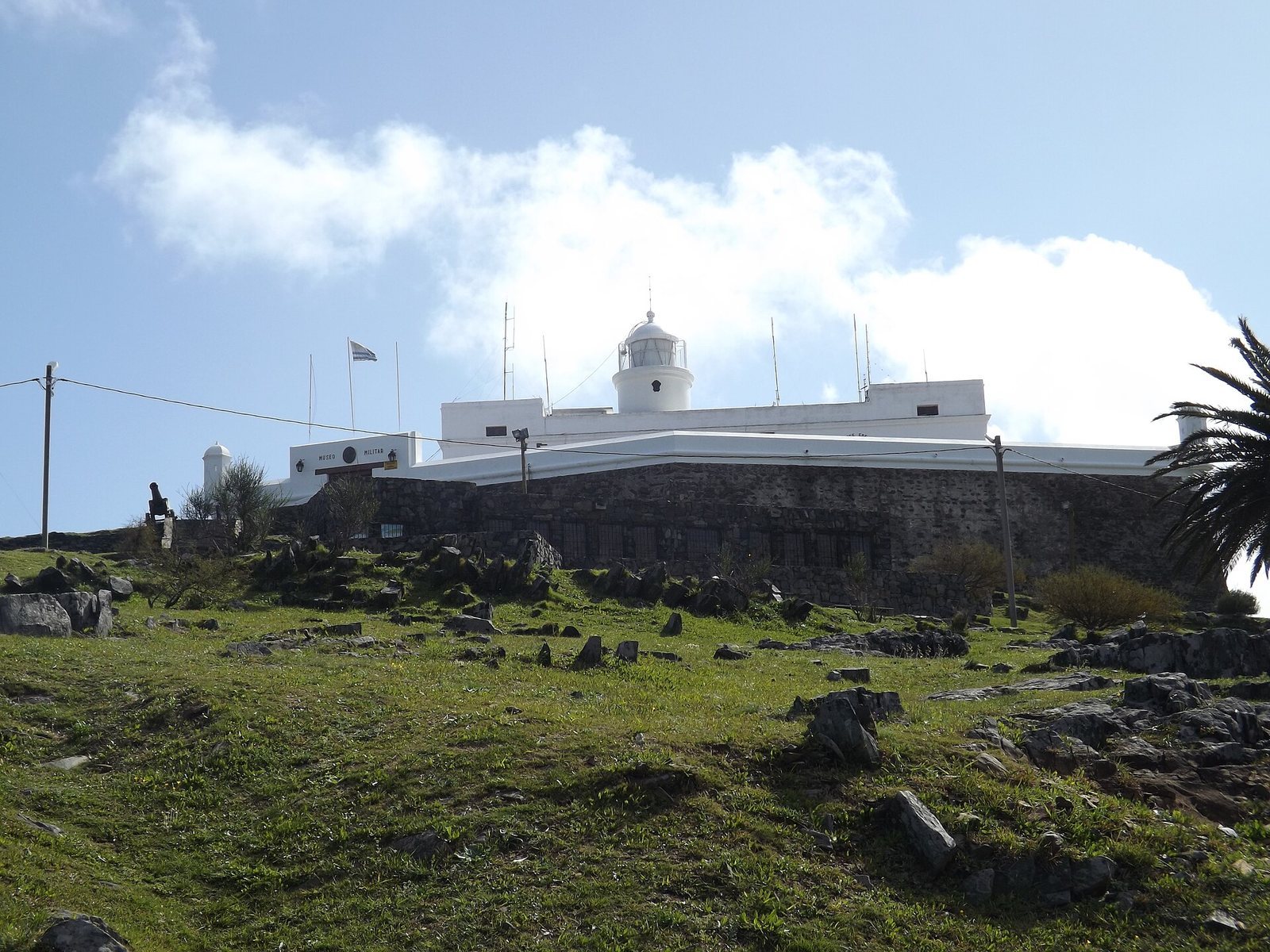
The fort housed a military museum by 1916. Restoration began around 1930 on the initiative of historian Horacio Arredondo, and the fortress became a National Historic Monument in 1931. Restoration works were formally inaugurated in 1939, when the site ceased to serve as a military fort and the General Artigas Military Museum formally opened. The fortress also became a national and Montevideo departmental symbol, appearing on both coats of arms.
Remains
The fortress occupies the summit of Cerro de Montevideo, about 134 metres above sea level and across the bay from the city. It lies near Parque Vaz Ferreira in the Casabó area, west of Villa del Cerro. An earlier, small fort dedicated to St Michael was built on the summit as part of the area’s defenses.
Lighthouse
A lighthouse stands at the fortress summit. Its white-painted, cylindrical brick tower is 8 metres high and has a balcony and lantern. The light’s focal height, its elevation above sea level, is 148 metres; its range is 19 nautical miles, and it flashes white three times every 10 seconds.