Cairo Castle: A Medieval Stronghold in Taiz, Yemen
Site at a Glance
- Country
- Yemen
- Primary era
- Medieval
- Eras represented
- Medieval
- Civilizations
- Unclassified
- Site type
- Military
- Remains
- Castle
On this page11 sections
History
Sulayhid foundation
Cairo Castle, also known as Al-Qahira Castle, is a medieval stronghold in Taiz, Yemen, commissioned in the first half of the 12th century by Sulayhid ruler Abdullah ibn Muhammad al-Sulayhi. The Sulayhids were a ruling dynasty in medieval Yemen. Abdullah’s brother Ali expanded the castle and established Taiz within its walls; as the city later spread beyond them, the castle remained its original nucleus.
Tradition holds that the area was first called Old Taiz and later took the name Al-Qahira. The name is associated with an Arabic word meaning “victorious,” “powerful,” or “conquering,” an association linked to the castle’s elevated position and its image of strength.
Later dynasties and political use
In the 13th century, the castle served as the residence of King al-Muzaffar Yusuf I, a ruler of Yemen’s Rasulid dynasty. It later came under the control of the Tahirid state, another Yemeni ruling dynasty, in the 16th century.
During the 1940s, the rulers known as the imams used the castle to hold political hostages. In Yemen, an imam could combine religious authority with political rule. Children of tribal leaders from tribes in rebellion were imprisoned there to discourage further uprisings.
Restoration and conflict
A major restoration took place from 2002 to 2012. Yemen’s civil war reached the castle in 2014. After Houthi forces, belonging to a Yemeni political and armed movement, took control in 2015, Saudi-led coalition aircraft struck the site on May 10 and May 21.
The Abu al-Abbas Brigades, an armed group linked to al-Qaeda, later controlled the castle and used it as a military barracks. On August 26, 2018, the internationally recognized Yemeni government retook it after defeating the brigades. The castle had been closed for four years and used as barracks.
Remains
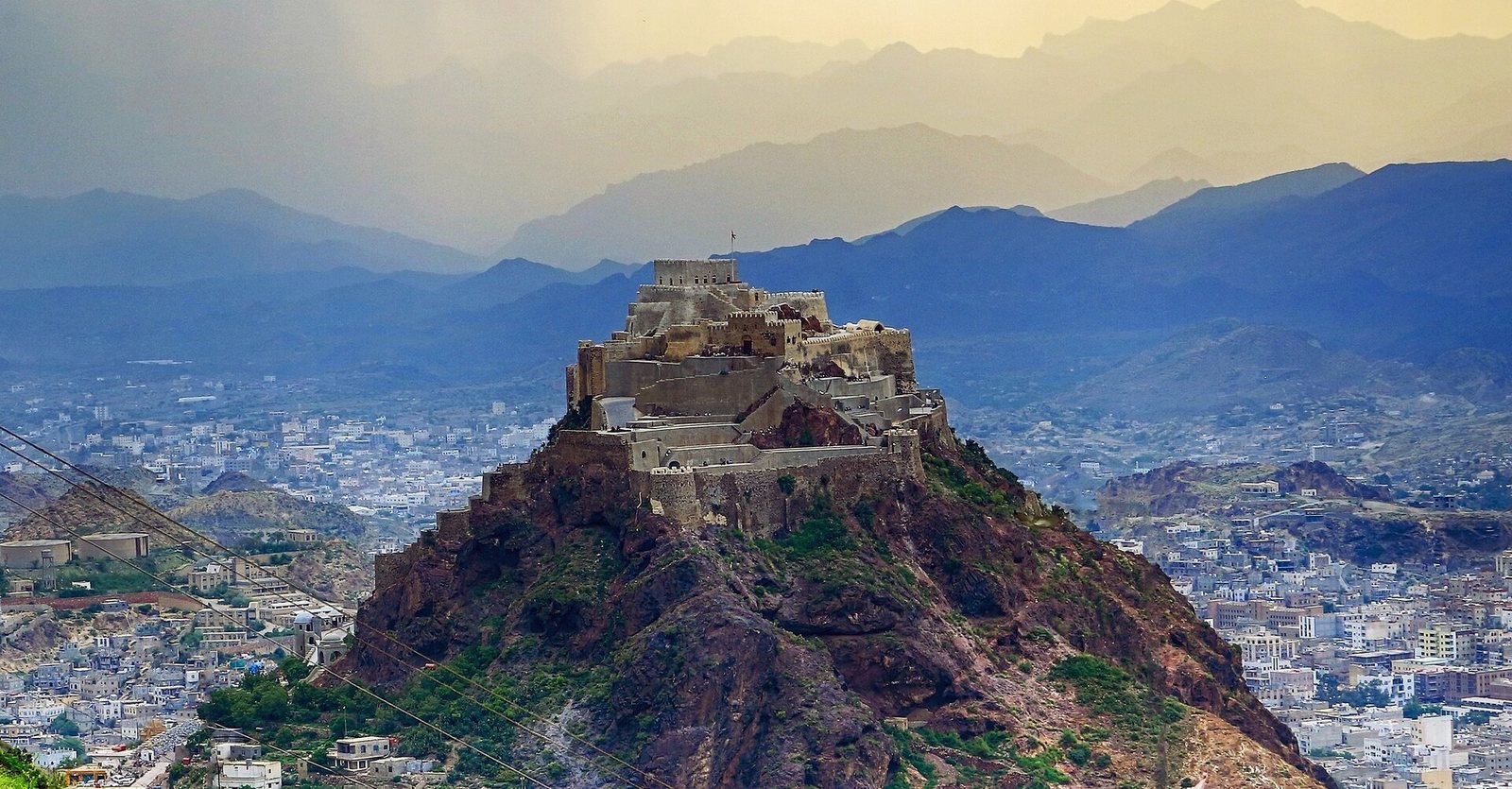
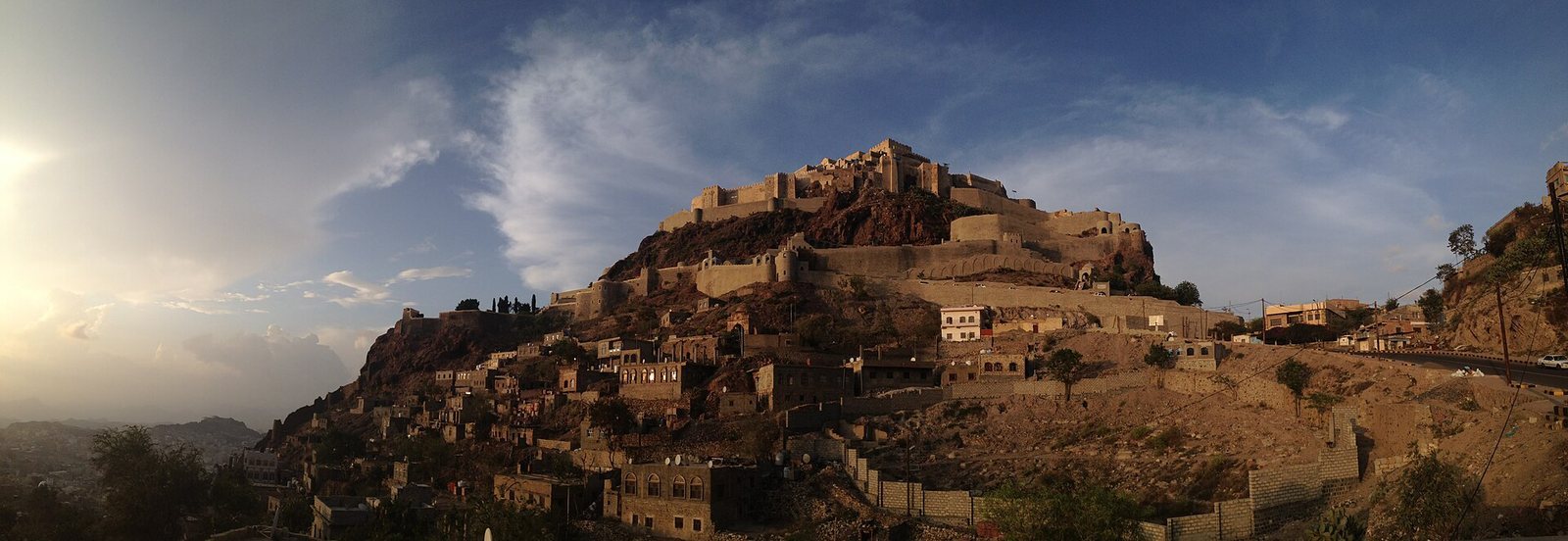
Set among rocky highlands on the northern slope of Mount Sabr, the castle stands about 1,500 metres above sea level, overlooking Taiz. Its layout has two main areas, Al-Adina and the Maghreb area, with palaces, gardens, defensive towers, storage buildings, reservoirs, walls, and an entrance complex.
Al-Adina
Al-Adina contains terraced ornamental gardens on the mountainside. Pools and basins were cut into the rock or built against the mountain face, while mansions stood among towers and parks. The area’s four palaces are Dar al-Adab, Dar al-Shajarah, Dar al-‘Adil, and Dar al-‘Amara. The last was reserved for the sultan and also received distinguished visitors; tunnels and concealed passages linked it with the other palaces.
Maghreb area
The Maghreb area contains several palaces, guard towers, grain-storage buildings, and water reservoirs, forming the castle’s second principal section.
Walls, gates, and entrance complex
Castle and city walls
The castle’s wall, attributed to the Sulayhid period, was built with complex engineering. It is about 120 metres high and four metres thick, and was intended to enclose the old city’s neighborhoods. Rooms for servants and guards were incorporated into it, and some remain. The castle wall joins Taiz’s old city wall, which had four main gates: Bab al-Kabir, Bab Musa, Bab al-Madjar, and Bab al-Nasr. A watchtower above one of the gates guarded the city.
Al-Moayad entrance complex
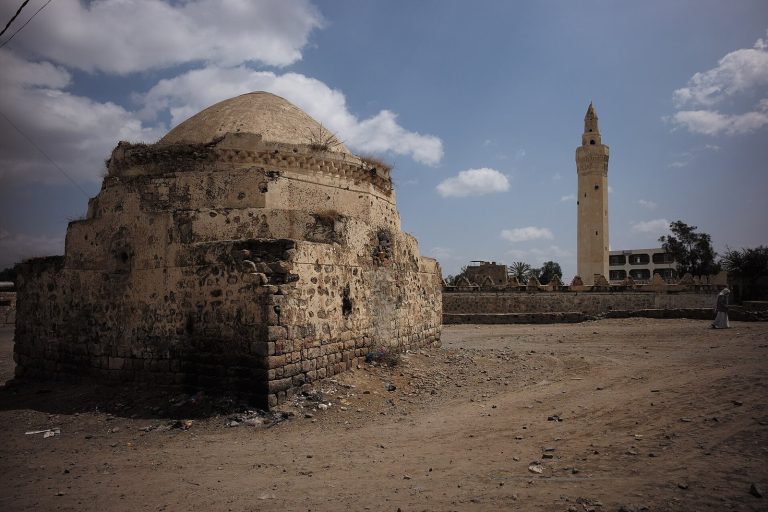
The main entrance lay on the southern side of the Al-Moayad area. Its complex included an Islamic school built in 1281 by Sultan al-Muayyad, a Rasulid ruler of Yemen, as well as a small dome, a pond, and the remains of his park. The school has a small courtyard, and the park survives. The main southern gate was destroyed in 2014.
Damage and condition
The castle museum was also destroyed in 2014. The second coalition airstrike in 2015 damaged about 30 percent of the castle, although the full extent of the damage remained unclear. Water seepage caused cracks in the wall and other buildings.