Mikaelikyrkan: A 17th-Century Church in Arvika, Sweden
Site at a Glance
- Country
- Sweden
- Primary era
- Early Modern
- Eras represented
- Early Modern, Modern
- Civilizations
- Swedish
- Site type
- Religious
- Remains
- Church
On this page11 sections
History
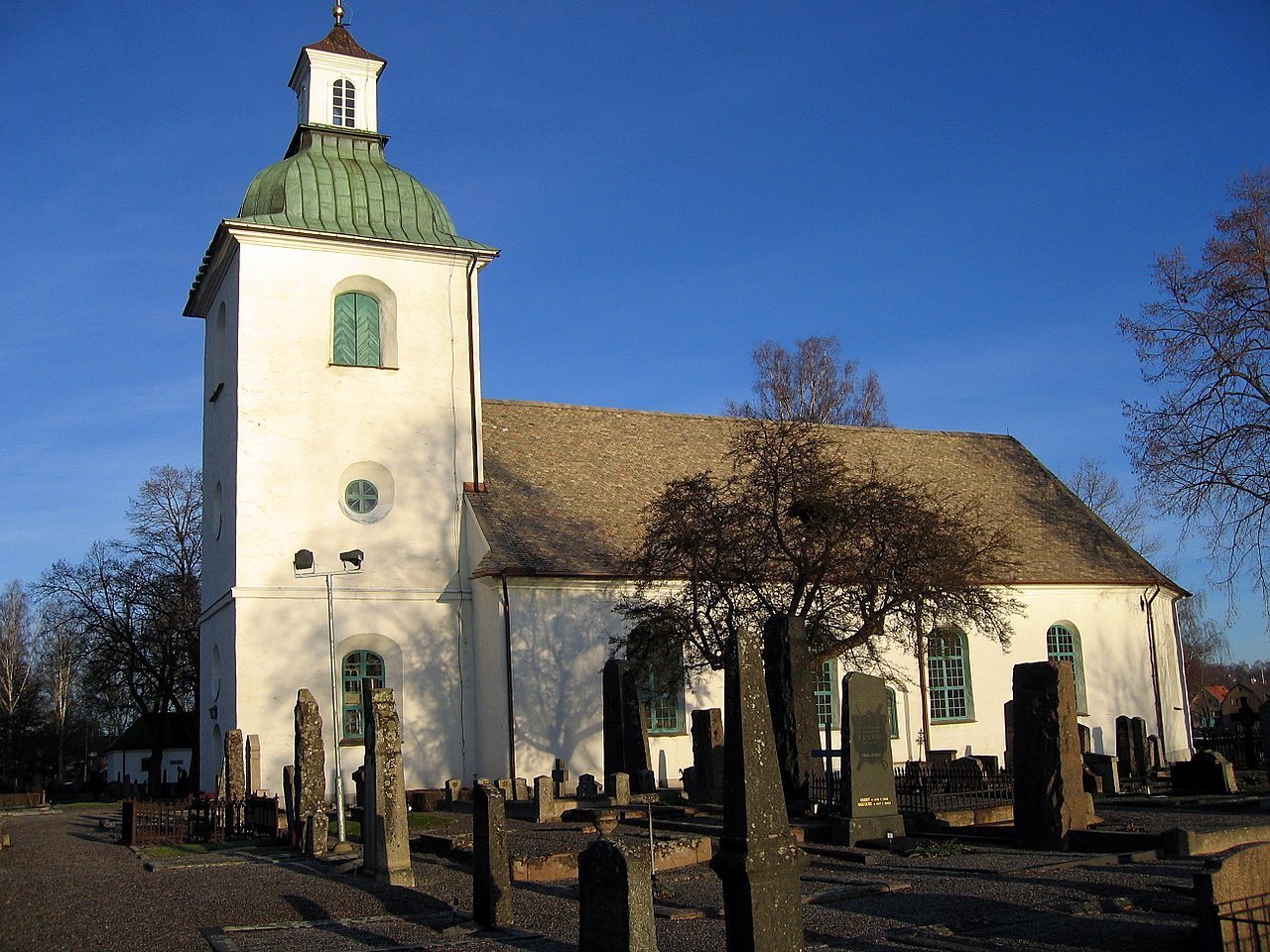
Mikaelikyrkan is a Church of Sweden church in Arvika, Sweden. Work on its stone building began in 1647, and its present form reflects a rebuilding in the Gustavian period. The church belongs to Arvika-Ny Parish, a local church unit within the Diocese of Karlstad, a regional district of the Church of Sweden.
Medieval predecessor and 17th-century church
A wooden church dedicated to St Michael, the archangel venerated in Christian tradition, stood here before the stone building. Oral tradition places the wooden church first on land belonging to Dottevik farm, before it was moved to the present site. The stone church was consecrated in the 17th century. Although construction began in 1647, the building was still unfinished in the 1680s; its oldest parts date to the middle of that century.
Gustavian rebuilding
A major rebuilding in the 1780s established the church’s present plan, with designs partly based on the work of Swedish architect Carl Fredrik Adelcrantz. The exterior has changed little since then. The building is characteristic of the Gustavian period, the cultural and artistic era associated with the reign of King Gustav III.
19th- and 20th-century changes
In February 1865, the artist Kumlin was given freedom to revise the saints’ figures on the pulpit and altarpiece. A major restoration took place in 1947, in connection with the church’s 300th anniversary. It removed later white-and-gold paint from both works, revealing their earlier painted decoration.
Remains
Layout and building fabric
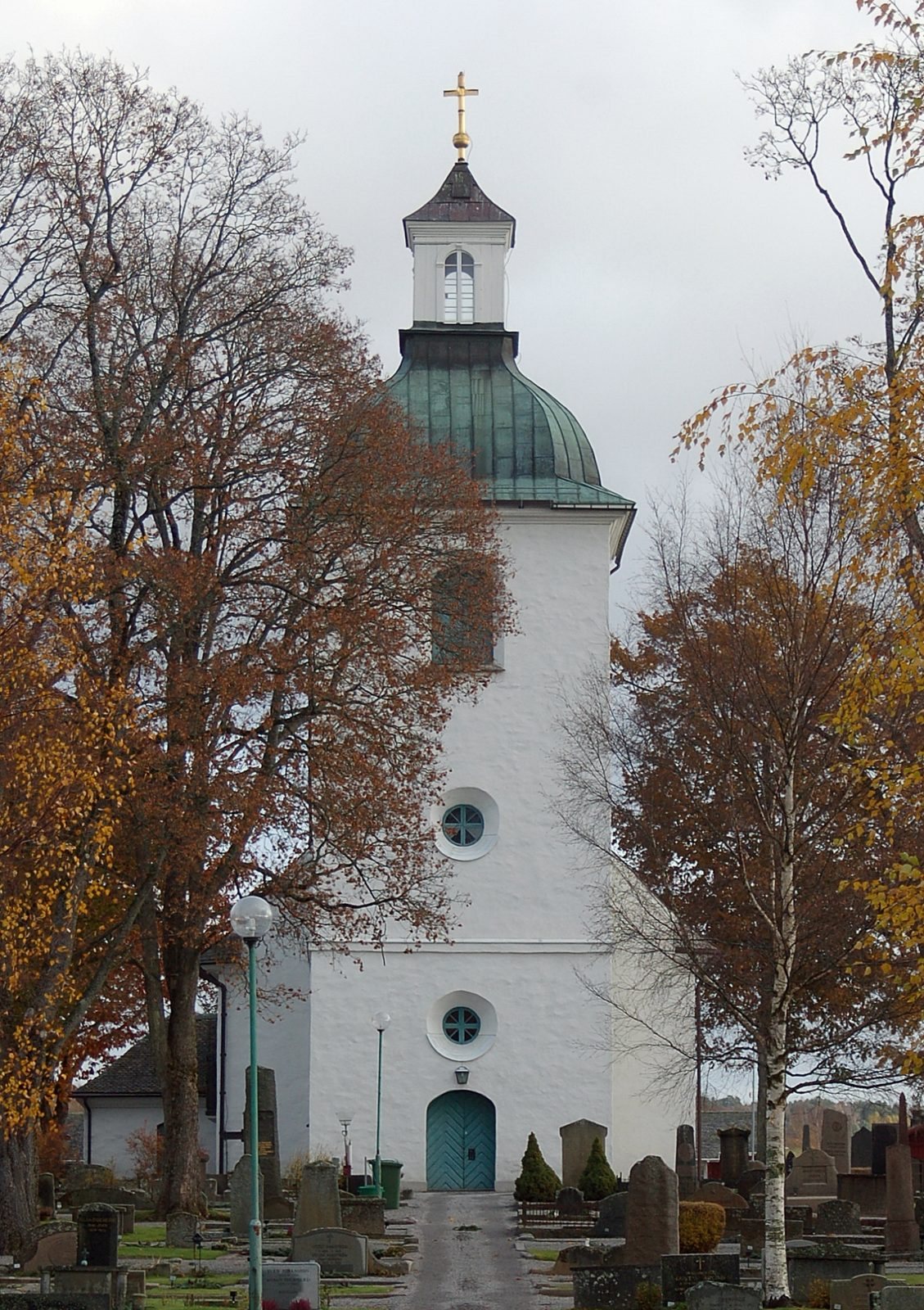
Set beside Kyrkviken, an inlet of Glafsfjorden, the church has a rectangular nave, or main worship space, and a chancel, the area around the altar, ending in three sides. A sacristy, a room used by clergy and for church vessels, is attached on the north, while a tower stands at the west end. Entrances are located at the west and midway along the north side; the former south doorway now serves as a baptismal niche. The walls are plastered white inside and out, and the windows have shallow curved tops. Inside, a boarded vaulted ceiling rises above a prominent horizontal molding along the upper walls.
Interior furnishings and organs
Altarpiece and pulpit
The sculptor Isak Schullström made the pulpit in 1739 and the altarpiece in 1765. Both carry painted figures and decoration. The present pew fittings were installed in 1947.
Organs and gallery inscription
A smaller organ built in 1840 by Erik Adolf Setterquist at Hallsberg incorporates parts from another instrument. The gallery holds a pipe organ built in 1938 by Olof Hammarberg of Göteborg. Air pressure operates its mechanisms, and its controls provide preset and adjustable combinations as well as a crescendo that gradually brings additional sound registers into use. The choir organ, built by the Grönlund workshop in 1977, has keys that operate its mechanisms mechanically. An inscription above the gallery front reads Ecce Ancilla Domini, meaning “Behold, the handmaid of the Lord.”
Baptismal font and sculpture
Bror Sahlström and Ola Eriksson made the baptismal font in 1904. On the church’s north side stands Humility, a statue by Christian Eriksson, who is buried directly in front of it.
Churchyard and ancillary buildings
The cemetery includes a chapel built in 1923 and is enclosed by a stone wall built without mortar. The church also has a parish granary and a parish cottage.