Falun Mine: Sweden’s Historic Copper Mine
Site at a Glance
- Country
- Sweden
- Primary era
- Early Modern
- Eras represented
- Early Modern
- Civilizations
- Swedish
- Site type
- Economic
- Remains
- Mine
On this page11 sections
History
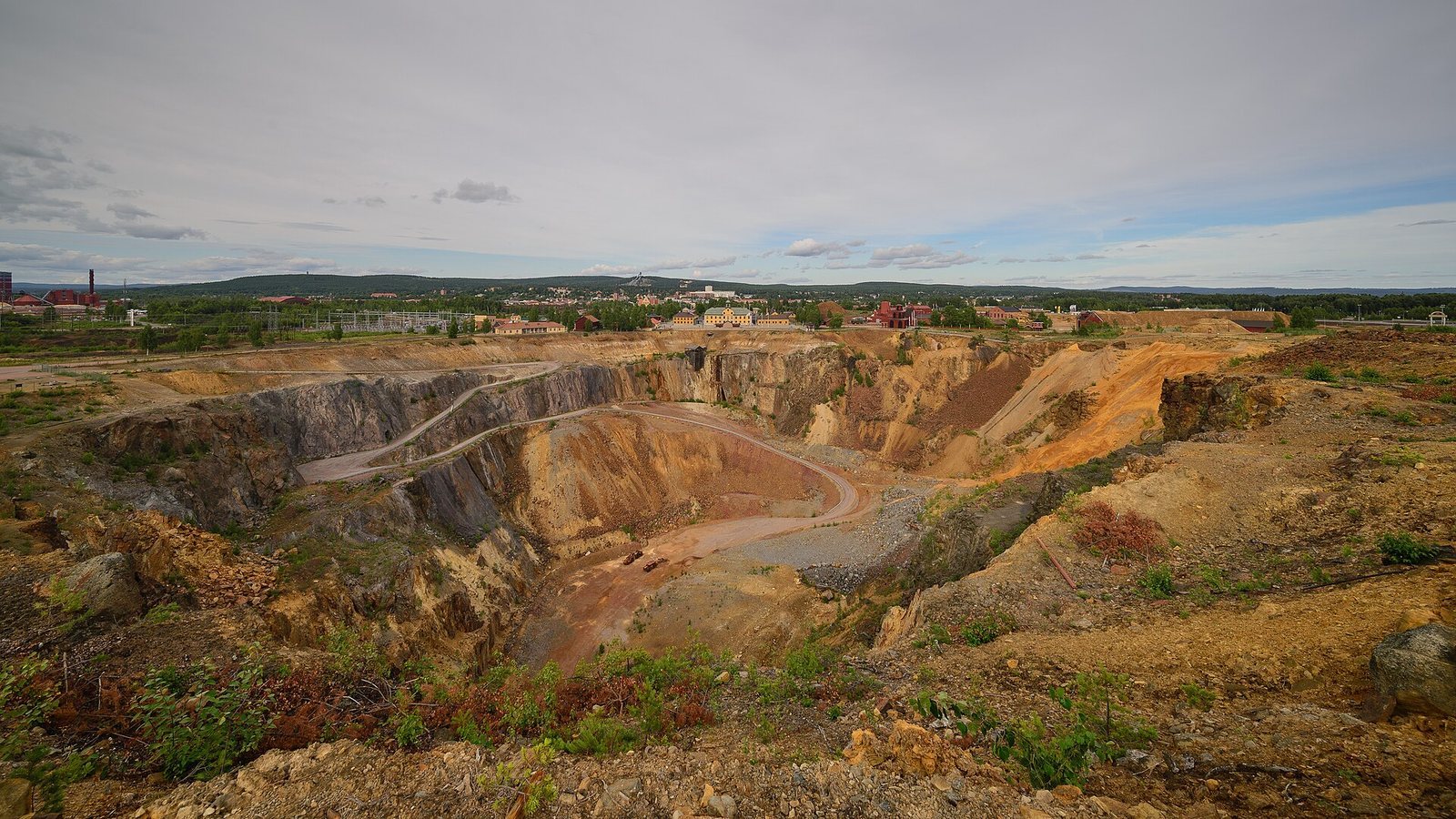
Falun Mine, also known as the Great Copper Mountain, is a historic copper mine in Falun, Sweden. Mining is estimated to have begun around AD 1000, though its exact starting date is uncertain. Objects from the 10th century contain copper from the mine, which was operating by 1080. Early work was small in scale: local farmers gathered and smelted ore for household use.
Early work and medieval organization
By the mid-13th century the mine was operating officially, and its management had become more professional by the late 1200s. Around the reign of Magnus Ladulås, king of Sweden from 1275 to 1290, nobles and merchants from Lübeck took over from the farmers. The merchants traded copper across Europe and helped develop the mine’s organization, working methods and technology.
A document from 1288 records the Bishop of Västerås acquiring a 12.5 percent interest in the mine in exchange for an estate. By the mid-14th century, Falun had become a vital resource for the Swedish state and a major source of revenue. King Magnus Eriksson visited the area and established a charter to protect the Crown’s financial interest in mining.
A further charter, issued in 1347, organized the free miners as shareholders in proportion to their ownership of copper smelters. This arrangement anticipated the joint-stock company, a business funded through shares held by investors. Stora Enso, now a forest-products company, is regarded as the mining company’s modern successor and is often described as the oldest joint-stock company still operating, although mining is no longer part of its business.
The 17th-century peak and the 1687 collapse
Falun reached its greatest output in the 17th century, when Sweden was a major European power and the mine helped pay for the kingdom’s wars. In 1650 it produced more than 3,000 tonnes of copper. Sweden held a near-monopoly on copper production, and Falun supplied as much as two-thirds of Europe’s needs. It was the world’s largest copper producer during the century; Japan had comparable output, but little Japanese copper reached European markets.
Output then fell, dropping below 2,000 tonnes by 1665 and reaching about 1,000 tonnes a year during 1710–1720. In 1690, King Charles XI sent the metallurgist Erik Odhelius to examine Europe’s metal markets. Odhelius reported abundant Swedish copper even as Falun’s own production was declining.
Intensive mining had left the rock crossed by many shafts, and cave-ins were familiar hazards. On Midsummer’s Eve in 1687, a wall between the main pits failed and a large section of the mine collapsed. The event occurred on one of the two annual days when miners did not work, the other being Christmas, averting the deaths or entrapment of potentially hundreds of workers.
Mining was hot and arduous. Workers could advance about a metre in a month. The most skilled and best-paid miners tended fires and broke the rock, while newcomers often hauled ore in hand barrows in relays. In the 18th century, the naturalist Carl Linnaeus described the miners’ surroundings as dark and difficult, with soot, smoke, fumes, heat, dust and corrosive drips.
Diversification, scientific discoveries and closure
Copper production declined during the 18th century, and the company expanded into iron and timber. Industrial manufacture of Falu red paint also began. Iron and forest products became more important during the 19th century. A gold discovery in 1881 prompted a short-lived rush, which ultimately produced about five tonnes of gold.
Falun’s ores also contributed to discoveries in chemistry. In 1802 Anders Ekeberg identified tantalum in samples from Falun and England. In 1815 Jöns Jakob Berzelius mistakenly thought he had found a new element in Falun ore; the material was yttrium phosphate. When Berzelius discovered thorium in 1829, he reused the name. In 1817 Berzelius and Johan Gottlieb Gahn isolated selenium from mine pyrite that had been used in making sulfuric acid.
A study near the end of the mine’s working life advised against continuing because no new profitable veins had been found. The final shot was fired on 8 December 1992, ending commercial mining. The Stora Kopparberget Foundation owns the mine and operates its museum. In 2001, the Mining Area of the Great Copper Mountain in Falun was inscribed as a UNESCO World Heritage Site.
Remains
The mine is in Bergslagen, a historic mining district in central Sweden. Its physical setting includes a layered deposit of sulfides and oxides formed during the Paleoproterozoic, an early geological era. The remains and associated heritage area bring together the mine, parts of Falun’s townscape and industrial and domestic traces of settlement across the wider region.
The ore body and workings
Geology and ore
Chalcopyrite, a copper-bearing sulfide, was the deposit’s principal copper mineral. The ore occurred in two forms. The “hard” ore was rich in copper and gold, with scattered or vein-forming chalcopyrite, pyrite (iron sulfide) and sphalerite (zinc sulfide), alongside pyrrhotite (an iron sulfide), magnetite (an iron oxide), gold and bismuth minerals. The “compact” ore consisted mainly of massive pyrite mixed with chalcopyrite, sphalerite and galena (lead sulfide). The surrounding rocks include fine-grained quartz-feldspar rock, mica-rich rock, quartzite, marble, skarn (a calcium-silicate rock formed by chemical alteration), quartz porphyry and amphibolite. They were altered under conditions known as amphibolite facies, which describe how certain metamorphic rocks form.
Extraction and processing
By 1687, numerous shafts crossed the rock, and a dividing wall separated the main pits. For centuries, the principal extraction method was fire-setting: miners lit large fires to heat the rock, then broke it with wedges and sledgehammers after cooling made it brittle. The ore was roasted in open hearths to reduce its sulfur, then smelted. Repeated roasting and smelting produced crude copper, which was refined elsewhere. This process changed little over seven centuries, until the end of the 19th century. Fire-setting and drainage methods were probably adopted from German mines, including those in the Harz Mountains.
Across more than 700 years, the mine yielded an estimated 30 million tonnes of ore, including 10 million tonnes during its final century of operation. Estimated production also included 3.5 million tonnes of sulfur, 500,000 tonnes of zinc, 400,000 tonnes of copper, 160 tonnes of lead, 380 tonnes of silver and five tonnes of gold.
Falun’s heritage area and museum
Townscape and settlements
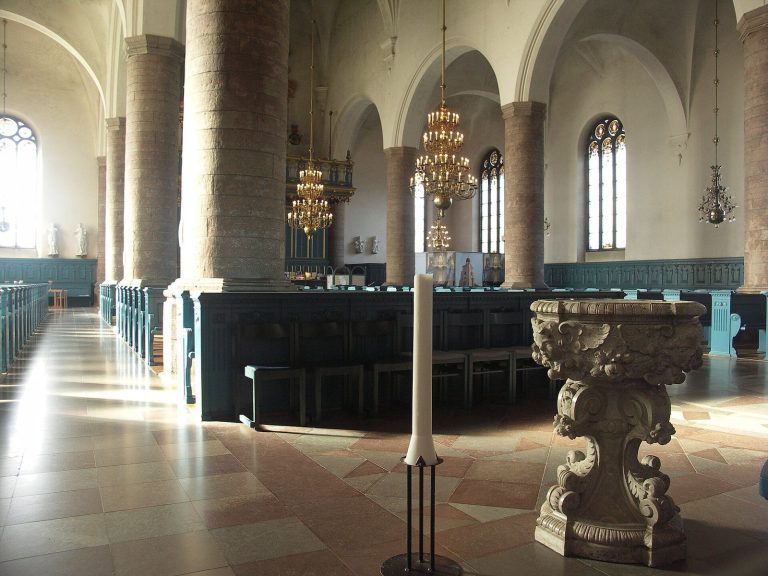
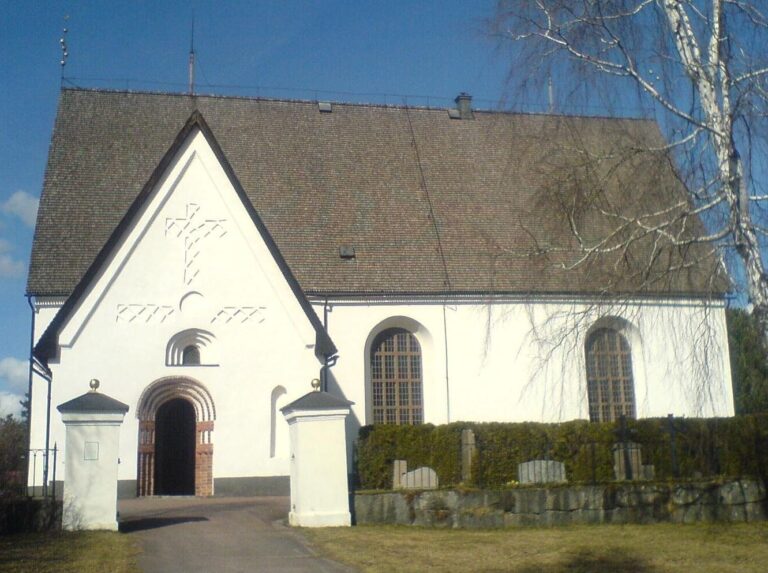
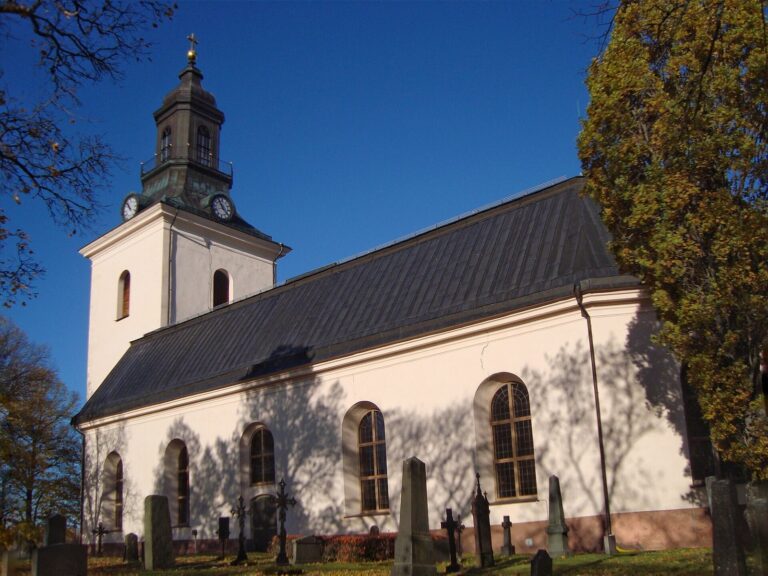
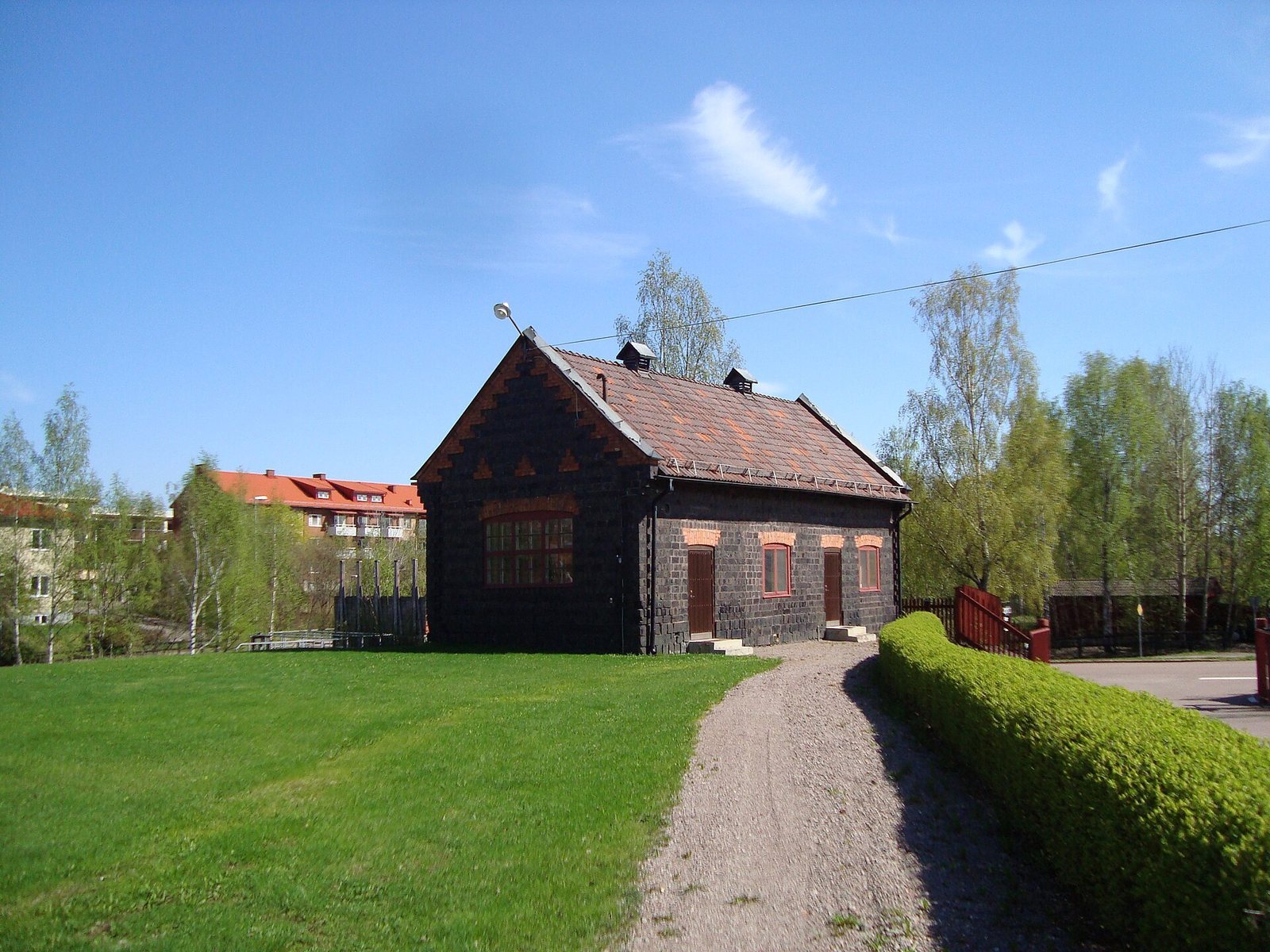
The World Heritage area covers 42.82 hectares, with a buffer zone of 3,499.96 hectares. Its components include the planned 17th-century townscape, miners’ cottages and residential districts, as well as Gamla Herrgården, Östanfors and Elsborg. It also encompasses Stora Kopparberg Church, Kristine Church and Linnaeus’s wedding cottage, associated with the botanist Carl Linnaeus. The wider landscape includes Bergsmansbygden, a district where independent mining proprietors settled and built estates that often reflected their wealth, together with industrial and domestic remains from dispersed settlements.
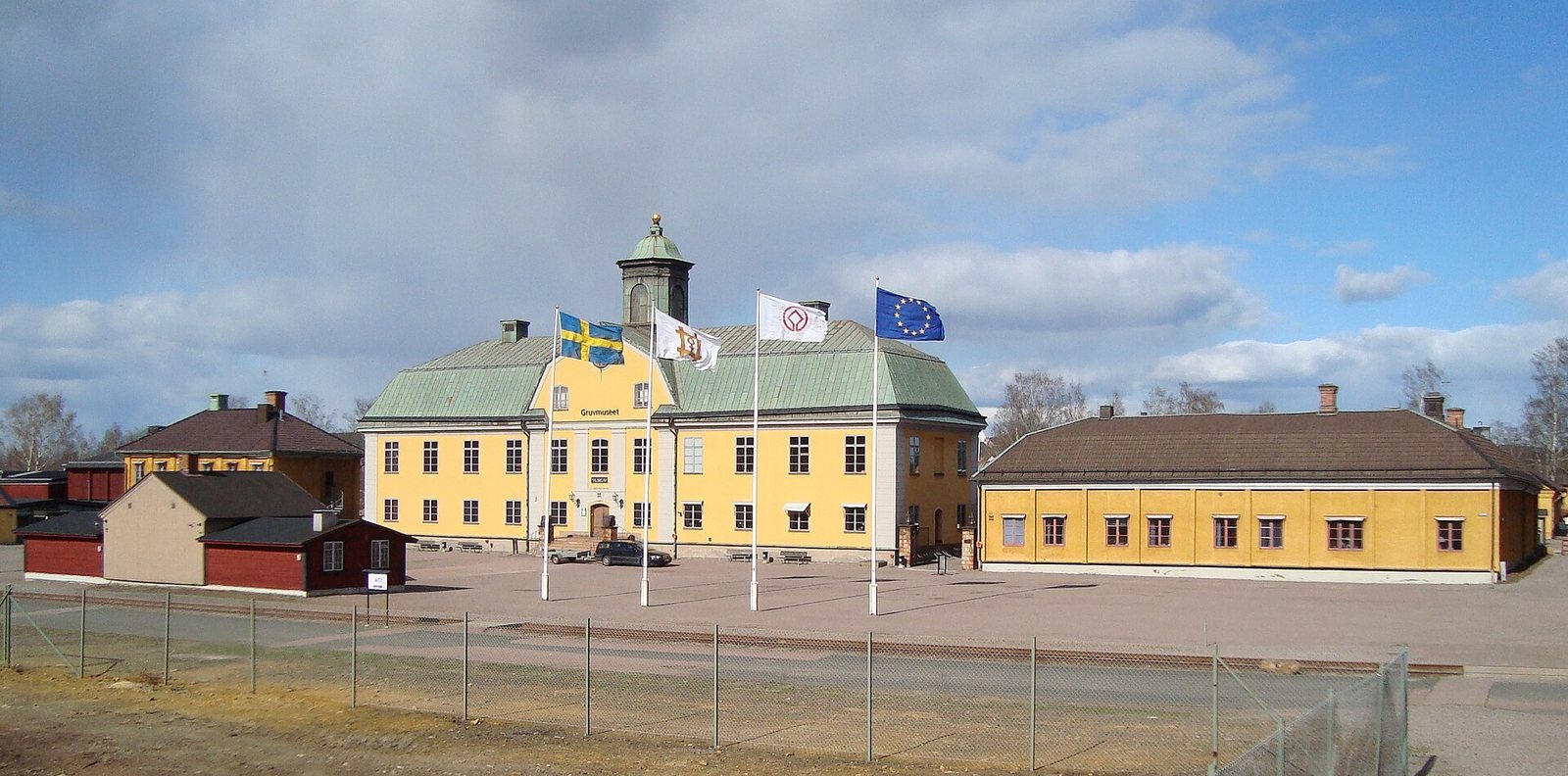
Stora Gruvstugan and the mining museum
Stora Gruvstugan, the mine’s former administrative building, was built in the 1770s. After it became a mining museum, it was demolished in 1966 to make room for the expanding mine; a replica is the building that remains. The museum presents the mine’s history through displays on mineral production, models of machinery, tools and material relating to miners. Its collections include mechanical inventions by the Swedish engineer Christoffer Polhem and portraits of people associated with the mine, dating from the 17th century onward.