Srirangapatna Fort: A Stronghold of the Kingdom of Mysore
Site at a Glance
- Country
- India
- Primary era
- Medieval
- Eras represented
- Medieval, Early Modern
- Civilizations
- Hoysala, Vijayanagara
- Site type
- Military
- Remains
- Fort
On this page15 sections
History
Srirangapatna Fort is a fortification in India, believed to have been built in 1454 by Timmanna Nayaka, a ruler of the Vijayanagara Empire, a major South Indian power. The fort later became the seat of the Kingdom of Mysore when the Wodeyar rulers moved their capital there.
Vijayanagara and Wodeyar rule
The fort remained under Vijayanagara control until 1495, when the Wodeyars defeated its rulers. It later passed among the Nawab of Arcot, the Peshwas, leading officials of the Maratha Confederacy, and the Marathas. The Wodeyars made Srirangapatna their capital and established the fort as the seat of their rule.
Chikka Devaraja Wodeyar’s reign, from 1673 to 1704, brought changes to the fort and its surroundings. The three rulers who followed made no further changes. During Krishnaraja Wodeyar’s reign, from 1734 to 1766, Mysore grew into a strong military power under the control of Hyder Ali, a military commander who came to lead the kingdom.
Hyder Ali and Tipu Sultan
In 1757, invading Marathas forced Hyder Ali to cede the fort for 32 lakh rupees, or 3.2 million rupees. He later regained it. In 1782, his son and successor, Tipu Sultan, took control and added fortifications. Hyder Ali and Tipu further strengthened the fort during the late eighteenth century, with help from French architects.
Tipu sought to defend the fort against British forces linked to the East India Company, an English trading company that had become a major colonial power in India. British forces repeatedly invaded his territories. Tipu allied with the French and sent a letter appealing to Napoleon, a French military and political leader, for assistance.
Capture and aftermath
After several unsuccessful attempts, East India Company forces attacked on 4 May 1799 under Colonel Arthur Wellesley, later the Duke of Wellington. The force included 2,494 British soldiers and 1,882 Indian troops. They waited in trenches until midday, when the fort’s guards were resting, then advanced across the river. Colonel Beatson recorded an account of the assault in his manuscripts.
Tipu Sultan was killed in the battle, and the British captured the fort. English officials then concluded a treaty with the Wodeyar queen, with Richard Colley Wellesley, the 1st Marquess Wellesley of Norragh, in charge. Wellesley served as Governor-General of India from 1798 to 1805. The battle is regarded as a turning point in the East India Company’s colonial strategy. Several fort components are now maintained as protected monuments by the Archaeological Survey of India’s Bangalore Circle.
Remains
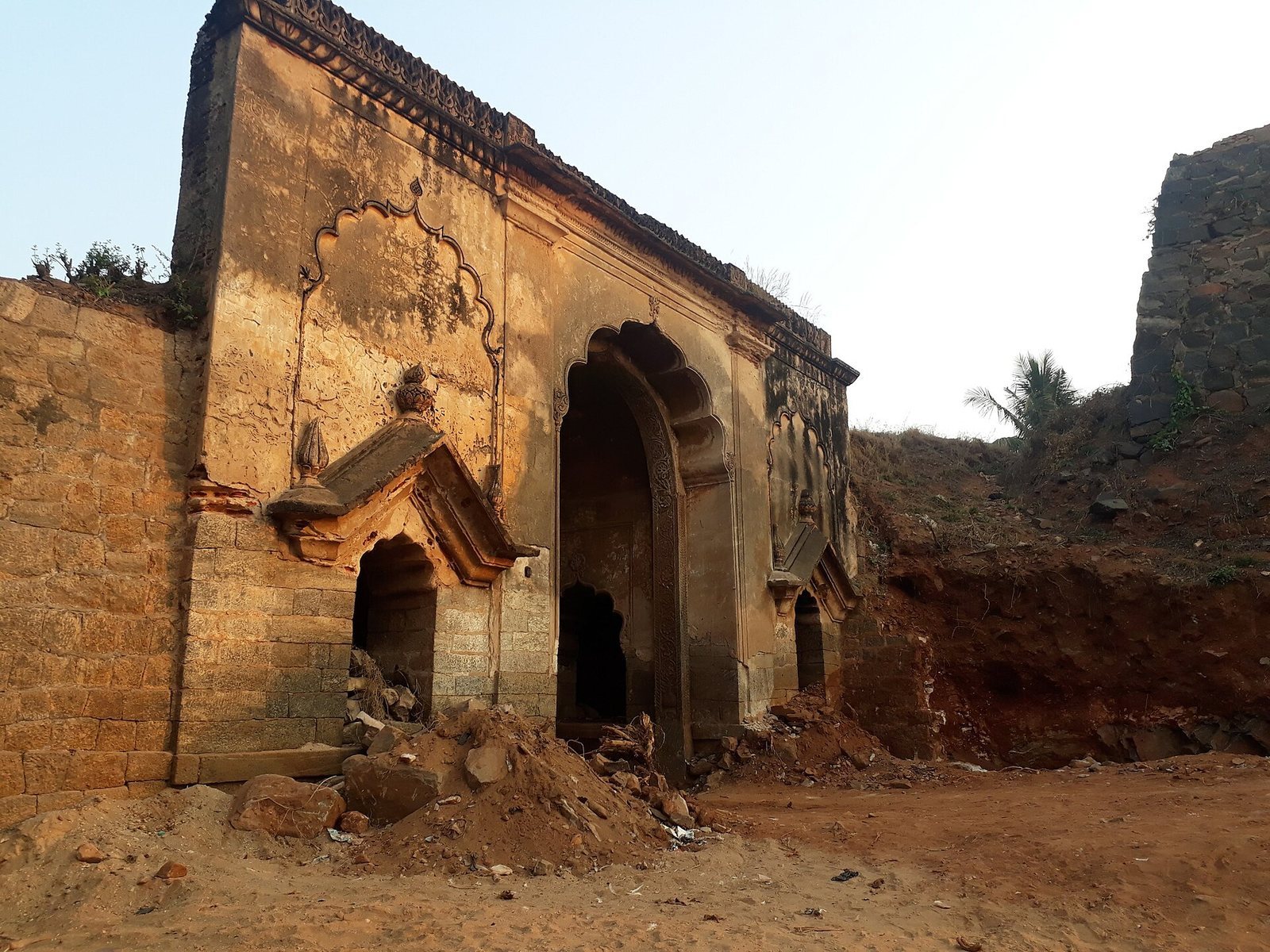
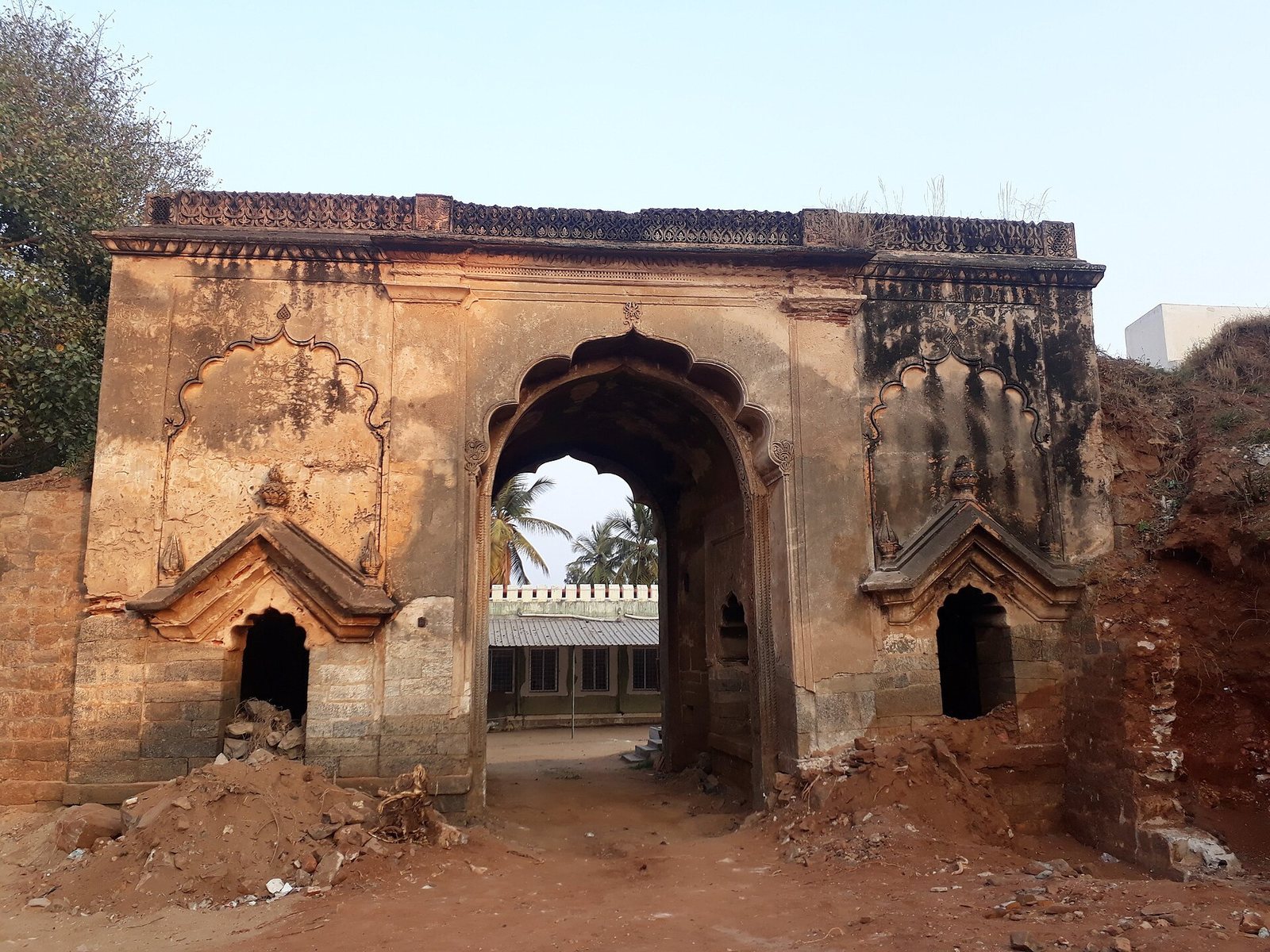
The fort’s layout brings together defensive works, religious buildings, and other structures. The Kaveri River borders its western and northern sides, and the fort is also described as protected by rivers on three sides. Seven gates and two underground dungeons are among its features.
Fortifications and dungeons
Walls and river setting
Fort walls survive near the breach made during the British assault and near the place where Tipu Sultan’s body was found. These sections preserve physical links to the fort’s capture in 1799.
Northern dungeons
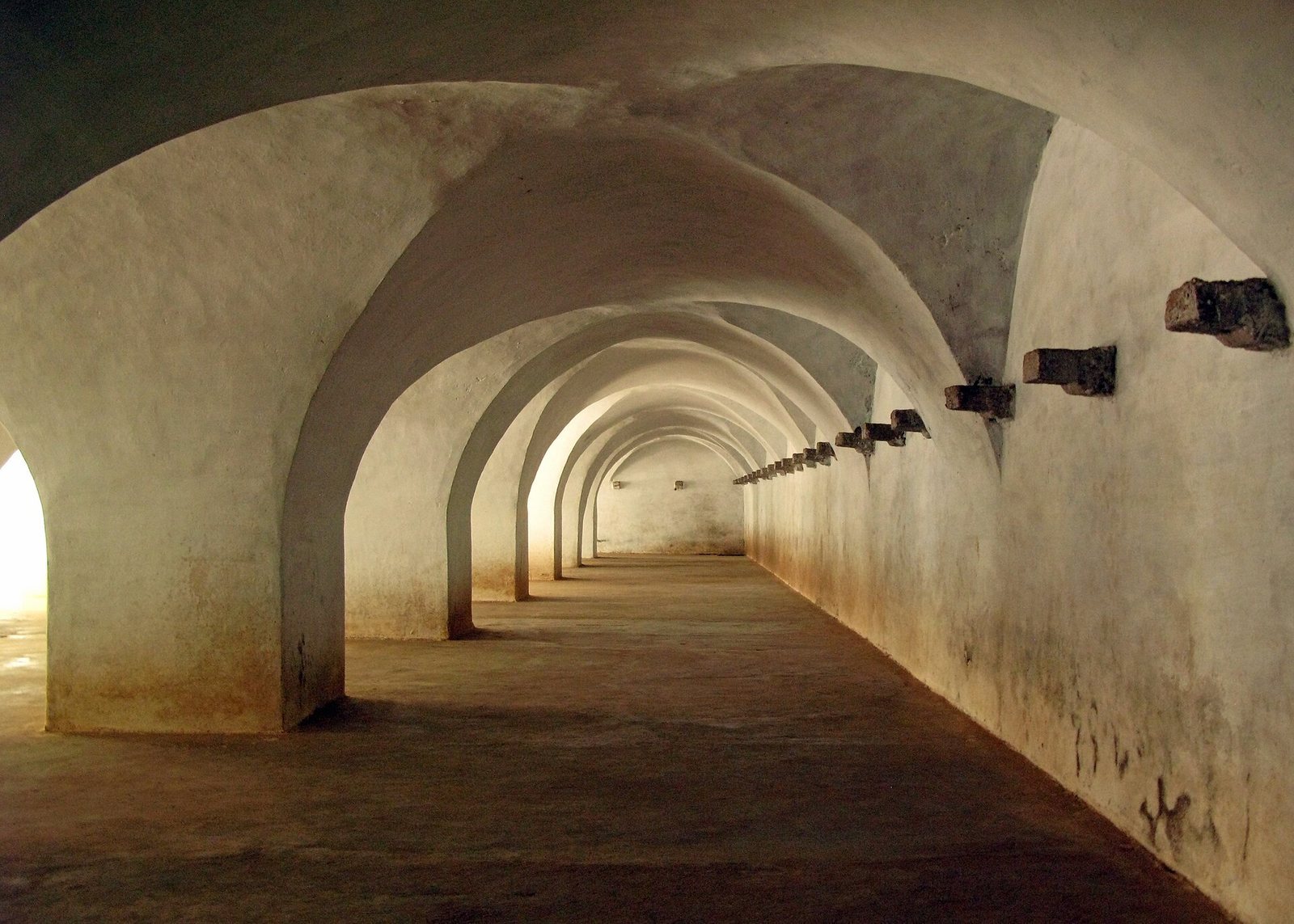
The two dungeons lie in the northern part of the fort and are known as Colonel Bailey’s Dungeon and Thomas Inman’s Dungeon. European prisoners are believed to have been confined in them.
Religious buildings
Ranganathaswamy and Narasimhaswamy temples
Ranganathaswamy Temple stands in an open area on the western side of the fort. Its construction is attributed to Ramanuja, with grants from Vishnuvardhana, a Hoysala ruler of the twelfth century. Narasimhaswamy Temple stands on the other side of the open area and contains a statue of Sri Kanthirava.
Juma Masjid
Juma Masjid, also called Masjid-e-Ala, was built by Tipu Sultan. Its Indo-Islamic architectural style combines Indian building traditions with Islamic influences. The mosque includes a minaret, a tower associated with a mosque.
Palaces and other features
Former palaces
The fort once contained Lal Mahal and Tipu Sultan’s palace. Both were demolished when British forces captured the fort in 1799. Tipu’s palace stood opposite the main entrance of Ranganathaswamy Temple.
Gumbaj and other structures
Gumbaj, a domed tomb building, contains Tipu Sultan’s tomb. Daria Daulat Bagh, an armory, and a bathing ghat, a set of steps beside water, are also identified within the site.
Obelisks and battle remains
Obelisk monuments, tall, tapering structures with pointed tops, are among the fort’s features. The British Museum holds Tipu Sultan’s sword and ring, believed to have been taken during the battle by Arthur Henry Cole, the son of the Earl of Enniskillen.