Holy Trinity Church, Uppsala: A Medieval Parish Church in Sweden
Site at a Glance
- Country
- Sweden
- Primary era
- Medieval
- Eras represented
- Medieval, Modern
- Civilizations
- Swedish
- Site type
- Religious
- Remains
- Church
On this page12 sections
History
Holy Trinity Church is a medieval church in Uppsala, Sweden; its present building is a basilica, a church with a long central nave and side aisles, dating to the 14th century. It is the principal church of its namesake parish, a local congregation, in the Diocese of Uppsala, a regional church district. The church belongs to the Church of Sweden, a Lutheran church, although it stands outside its parish’s boundaries.
Medieval foundation and expansion
The present church is thought to be the third built on this site. Its oldest surviving part is the sacristy, a room for preparing services and storing objects used in worship. Built in the late 13th century against an earlier wooden church, it predates the current main building.
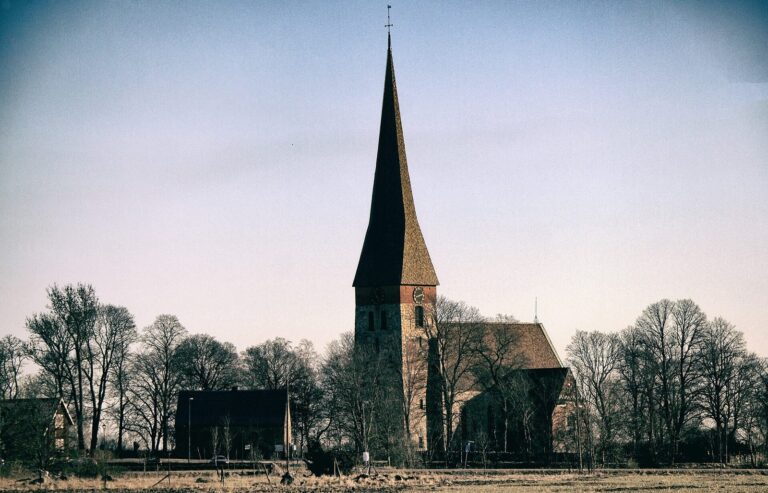
The present basilica was constructed and consecrated during the 14th century. Its north and south transepts, the crosswise arms that project from the nave, were added in the 15th century. A low, sturdy tower was built late in the Middle Ages, possibly during that same century.
Early modern changes
A city fire in 1702 destroyed the church’s tall medieval spire, which was replaced with a roof. During renovation in 1802, almost all the medieval furnishings were sold, including the altar, altarpiece, pulpit and baptismal font.
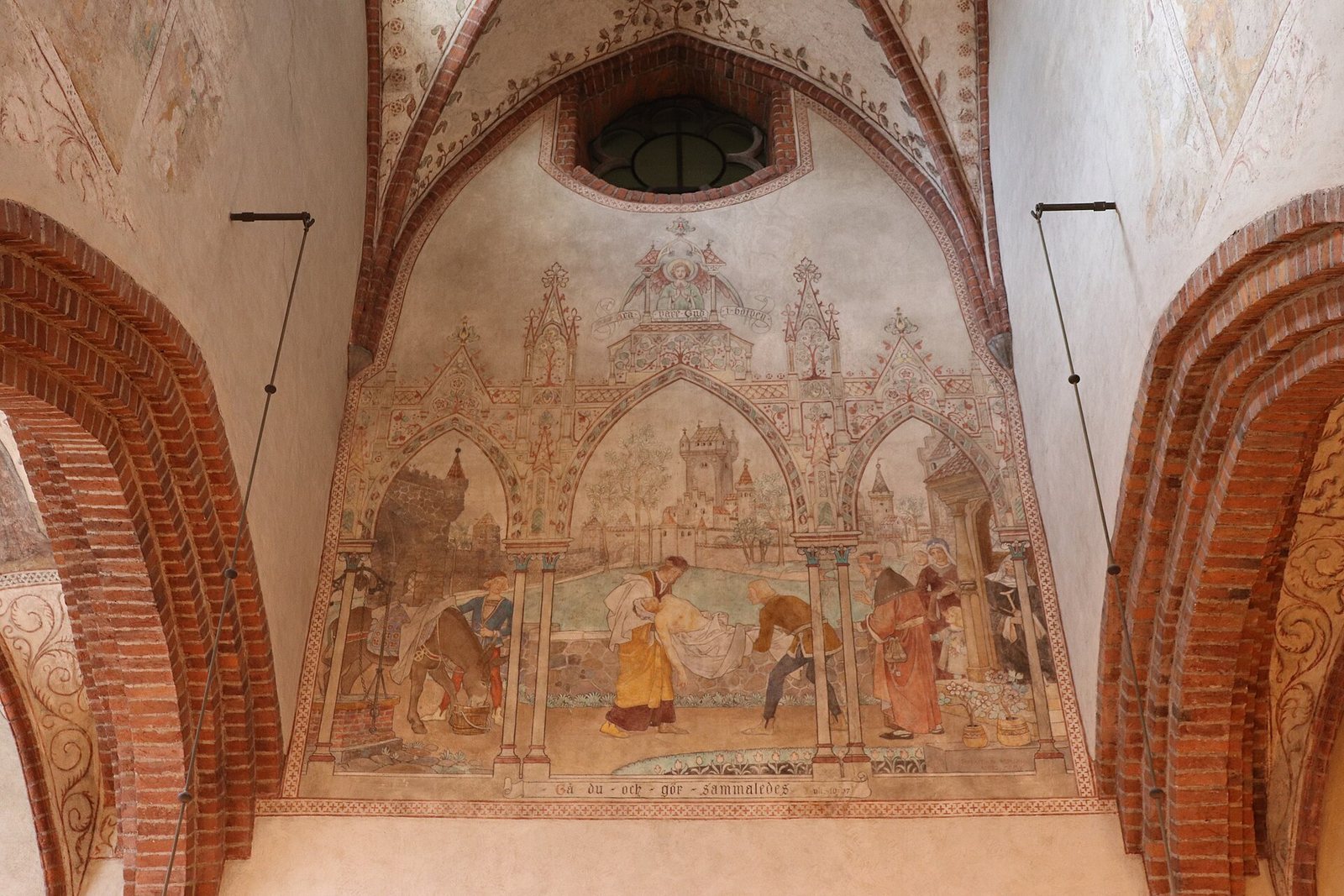
The church’s medieval paintings were covered with whitewash in the 18th century. They were revealed in 1905 and extensively restored. Further cleaning and conservation followed in the 1950s, the 1970s and 2016.
Organs and 20th-century history
An organ with five stops, controls that select groups of pipes to produce different sounds, was repaired by Anders Bruce in 1636. Niclas Söderström carried out another repair in 1745. Pehr Gullbergson and Jonas Wengström of Lillkyrka built an 18-stop organ in 1839; Daniel Wallenström restored and enlarged it in 1867, bringing it to 21 stops.
Åkerman & Lund Orgelfabriks AB built an organ for the church in 1905, but it was later destroyed in a fire. Furtwängler & Hammer of Hannover made another in 1920–21. In 1934–35, Bo Wedrup of Uppsala revised its arrangement of stops. The altered instrument had 48 stops, three hand keyboards and a foot-operated keyboard. A separate organ, probably made in the early 19th century, was moved to the church and enlarged by Wedrup in 1934. Robert Gustavsson Orgelbyggeri AB of Härnösand built the current organ in 1993; Ulf Oldaeus designed its facade in 1991.
Nathan Söderblom, a Swedish Lutheran theologian and archbishop, served as the parish’s vicar for thirteen years. During the Second World War, the parish took responsibility for helping refugees. A memorial stone from Nidaros Cathedral, the medieval cathedral in Trondheim, conveys Norway’s gratitude for this work. The church is recognized as ecclesiastical cultural heritage, a category for historically important church property.
Remains
Plan and medieval fabric
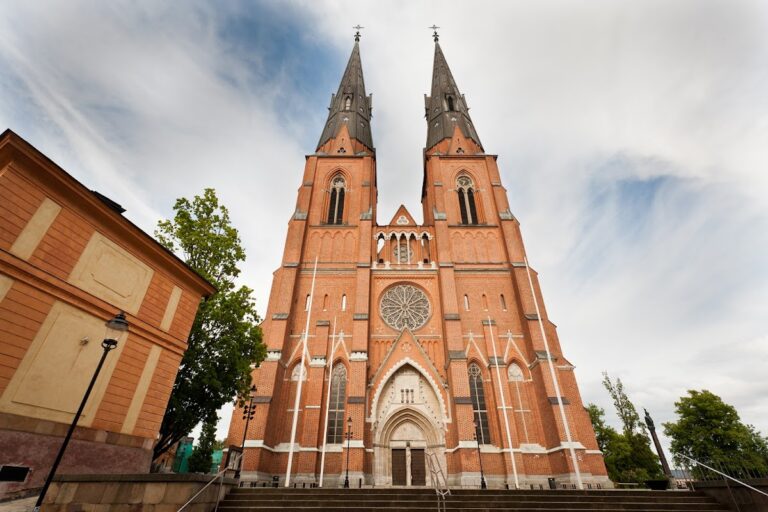
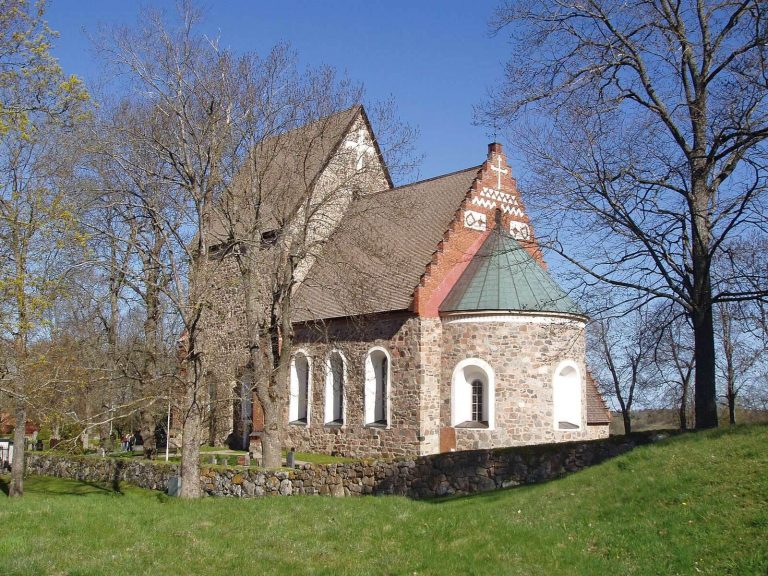
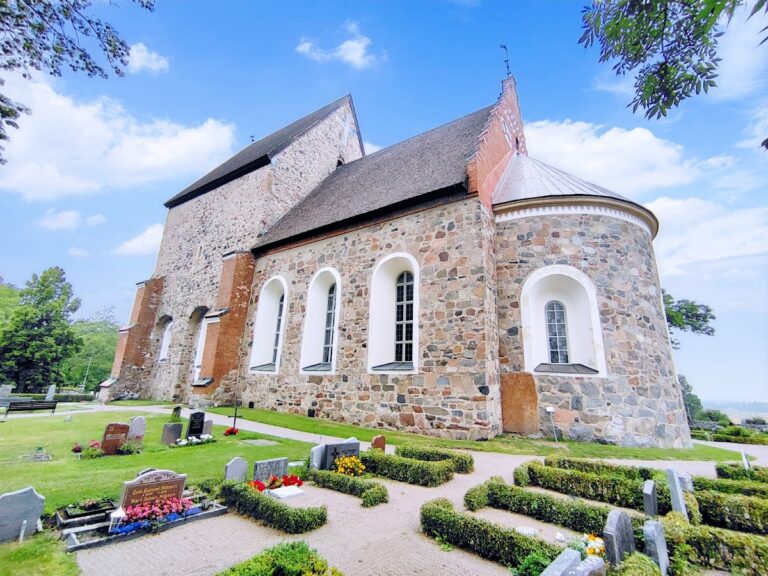
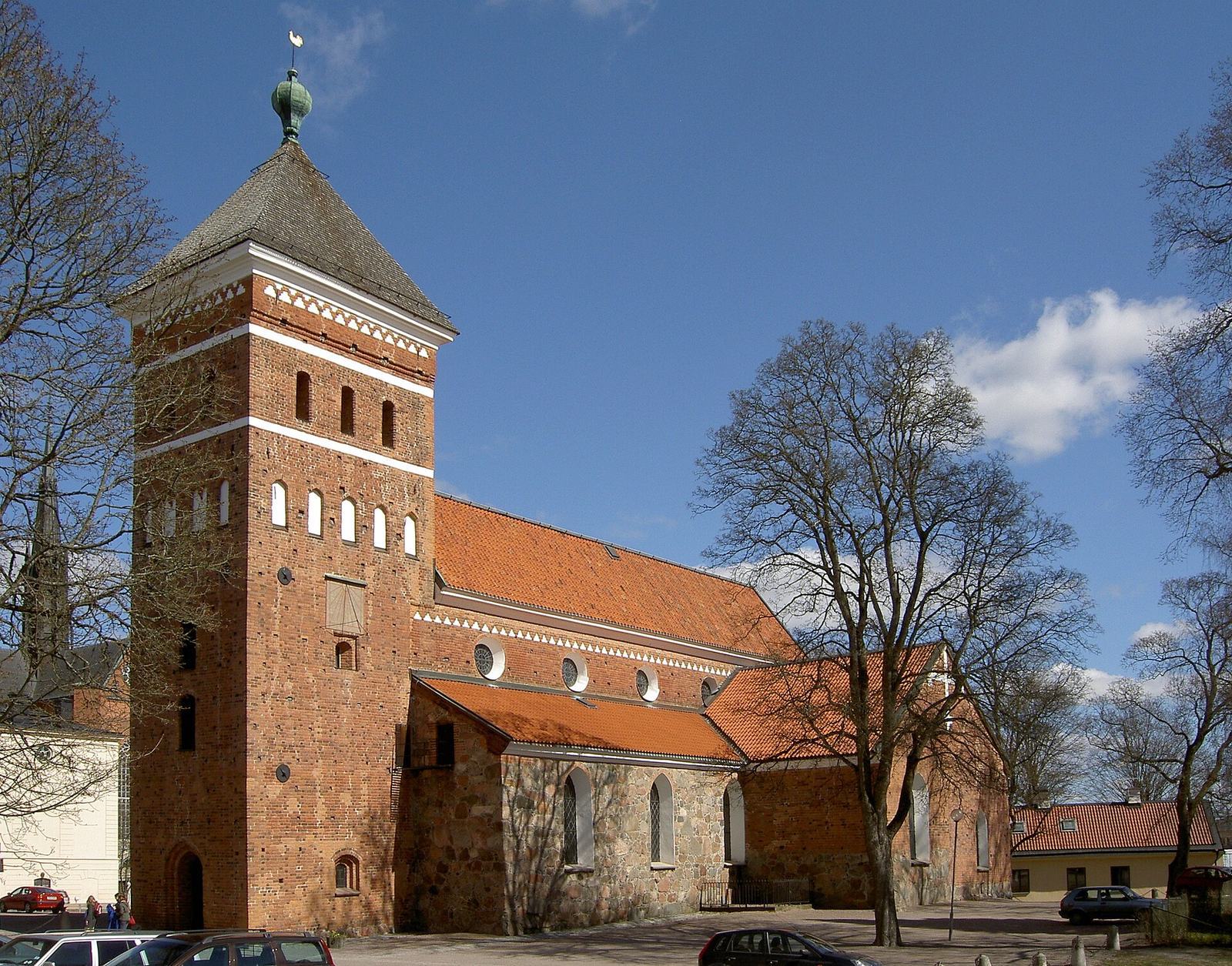
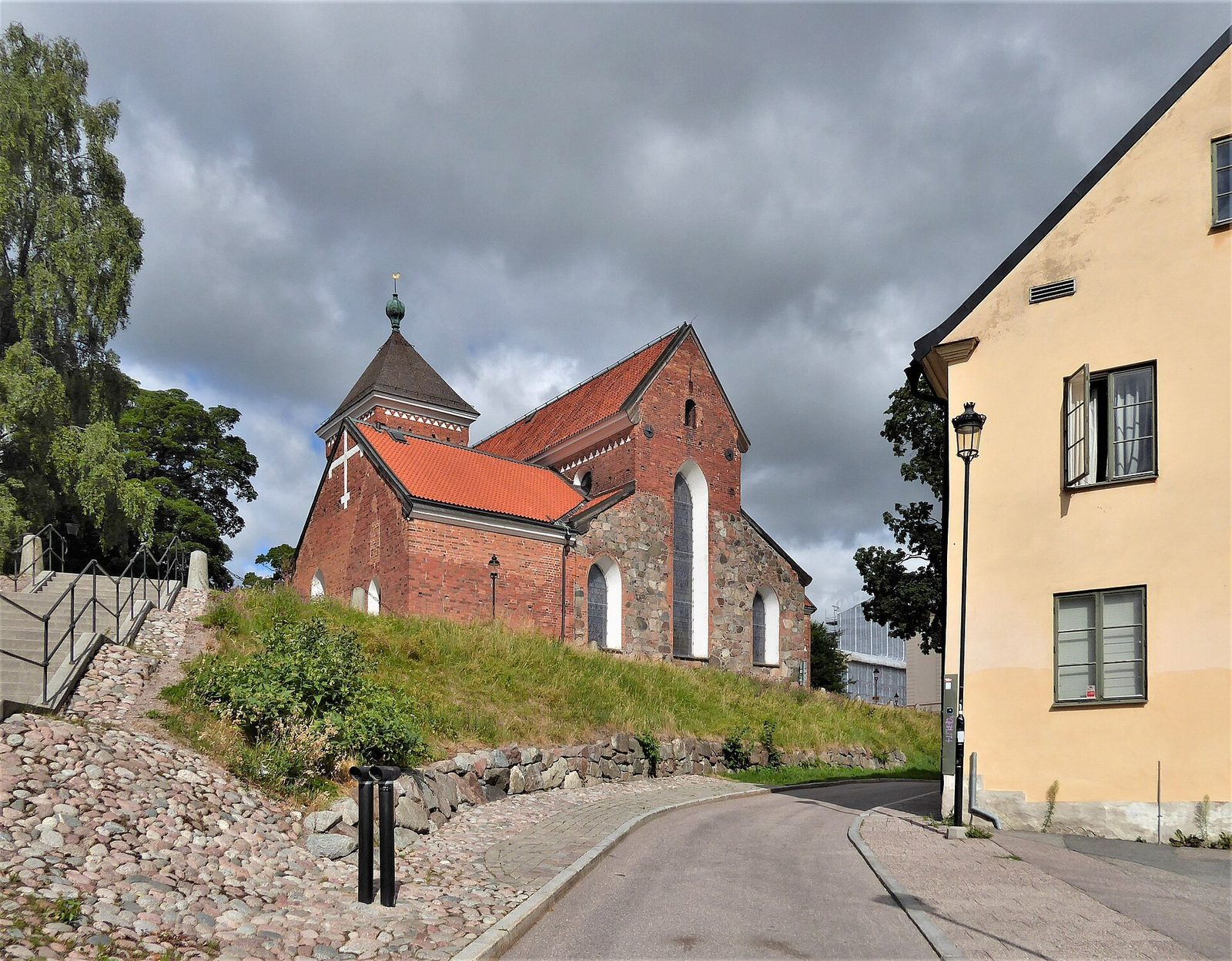
The church stands about 120 metres south of Uppsala Cathedral and has a churchyard. Its three-aisled basilica has a long central nave flanked by side aisles. Grey stone forms the lower parts of the building, with brick above. The sacristy is attached to the church, while the north and south transepts extend across the main body. A low, square tower rises above the church.
Paintings and medieval sculpture
Fifteenth-century paintings by Albertus Pictor, a Swedish medieval painter known for church decoration, cover the vaults and the walls of the Mary Choir. Three surviving medieval wooden sculptures are displayed above the sacristy door.
Choir and furnishings
The altar, built in 1905, incorporates an original altar slab bearing consecration crosses, ritual marks associated with the altar’s dedication. The pulpit also dates to 1905. Nathan Söderblom’s handwritten words, “For the truth shall make you free,” appear beneath its rail. A chair behind the pulpit may be more than 300 years old; it is nearly twice the height of an ordinary chair and was used by the priest while preaching.
A portrait of Söderblom by Louis Sparre, a Finnish-Swedish artist, hangs in the south choir. Early-20th-century stained-glass windows portray Saint Birgitta, a 14th-century religious figure who founded the Bridgettine order; the early-17th-century Swedish king Gustav II Adolf; and Johan Olof Wallin, a Lutheran archbishop and hymn writer. The present baptismal font is wheel-thrown ceramic. Uppsala Ekeby donated it in 1981 as the company was closing.
Tower and associated features
A heavily restored medieval sundial on the tower’s south side displays Swedish standard time, also called winter time. Two 19th-century bells hang in the tower. Their tones are F1 and G-sharp1, and their weights are approximately 700 and 1,200 kilograms. A gravestone lies beside the nave’s south wall. The adjoining parsonage is a former medieval tithe barn, a building traditionally used to store payments made in agricultural produce.
Organs
North-side organ
The current organ stands in the north side chapel. It has mechanical action and slider chests, which direct air to selected pipes. Its range is 56 notes on the hand keyboards and 30 on the pedal keyboard.
Choir organ
The separate organ transferred to the church in 1934 stands in the north part of the choir. Its stops, which Wedrup installed when he renovated and enlarged the instrument, probably date from around the same period as the organ itself.