Ishida Castle: A Late-Edo Coastal Fortress in Japan
Site at a Glance
- Country
- Japan
- Primary era
- Early Modern
- Eras represented
- Early Modern
- Civilizations
- Tokugawa
- Site type
- Military
- Remains
- Castle
On this page9 sections
History
Ishida Castle, also known as Fukue Castle, is a former coastal castle in Ikeda-machi, Gotō City, Nagasaki Prefecture, Japan. Built by the Gotō clan and completed in 1863, near the end of the Edo period, the era of Tokugawa shogunate rule from 1603 to 1868, it served as the clan’s residence and the seat of Fukue Domain, a feudal territory governed by a lord. Designed as a sea castle, a coastal fortress planned in relation to surrounding water, it became one of Japan’s latest-built castles and, alongside Matsumae Castle, an important example of late-Edo castle construction.
From clan residence to government seat
The Gotō clan’s earlier residence burned in 1614. In 1637, an administrative compound at Ishida became the domain government seat. The clan repeatedly sought permission to build a castle, but financial difficulties held up the plans.
Construction for coastal defense
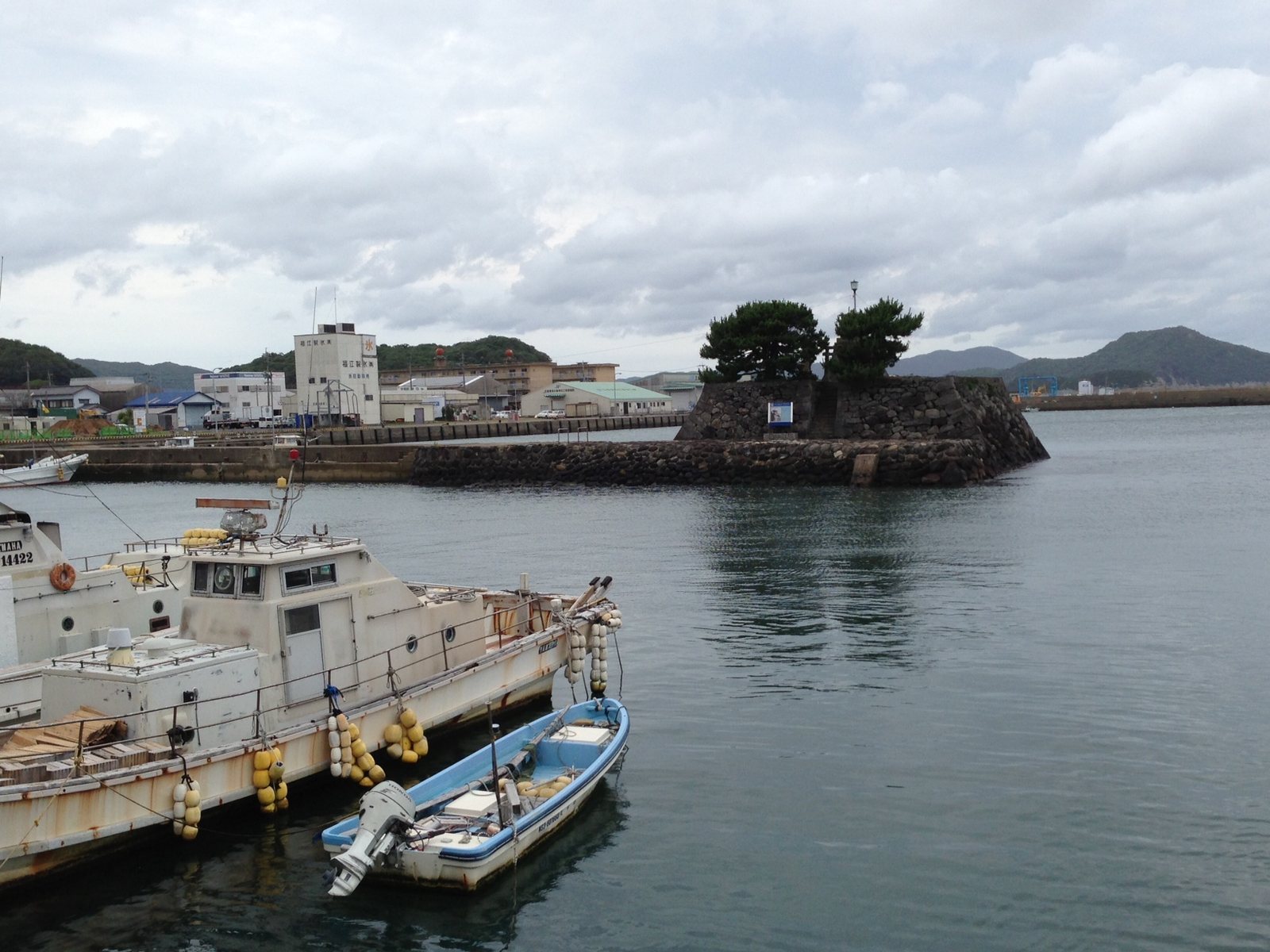
Preparatory work included a night beacon at the mouth of the Fukue River in 1846 and a breakwater, completed in 1848, to protect the planned castle from waves. Permission to build was granted in 1849, during the tenure of the preceding lord, with the aim of monitoring foreign ships and defending the coast. Financial constraints and the challenges of the coastal site prolonged construction, while assistance from Tomie Domain and others helped. The project took 14 years, and Gotō Morinori, the domain’s last lord, oversaw its completion in 1863. Batteries within the water-surrounded castle were intended to counter the perceived threat from foreign ships.
Beginning in 1858, a retirement residence and garden for the preceding lord were created over two years in the second bailey, an enclosed area within a castle. The garden’s design is traditionally attributed to the lord, and a monk from Kyoto was engaged to create it.
Abolition and later recognition
The castle was abolished in 1872, and its main bailey was demolished. The castle ruins are a Nagasaki Prefecture historic site. The Gotō clan garden is a National Place of Scenic Beauty, recognized for its example of Edo-period garden design in the provinces, the uncommon survival of gardens within castle grounds, the written record of its creation, and the preservation of a building with the garden. In 2017, Ishida Castle was selected as number 187 on the modern Continued 100 Fine Castles of Japan list.
Remains
The castle’s plan included main, second, and north baileys, enclosed by inner and outer moats. The site now lies in the city center, but when the castle was built, the sea surrounded it. Earthen defenses and stonework formed part of the layout, with much of the masonry built from naturally shaped fieldstones. The former main bailey is occupied by Nagasaki Prefectural Gotō High School; the north bailey contains the Gotō Tourism and History Museum and Fukue Cultural Center.
Fortifications and layout
Walls, gates, and bridge
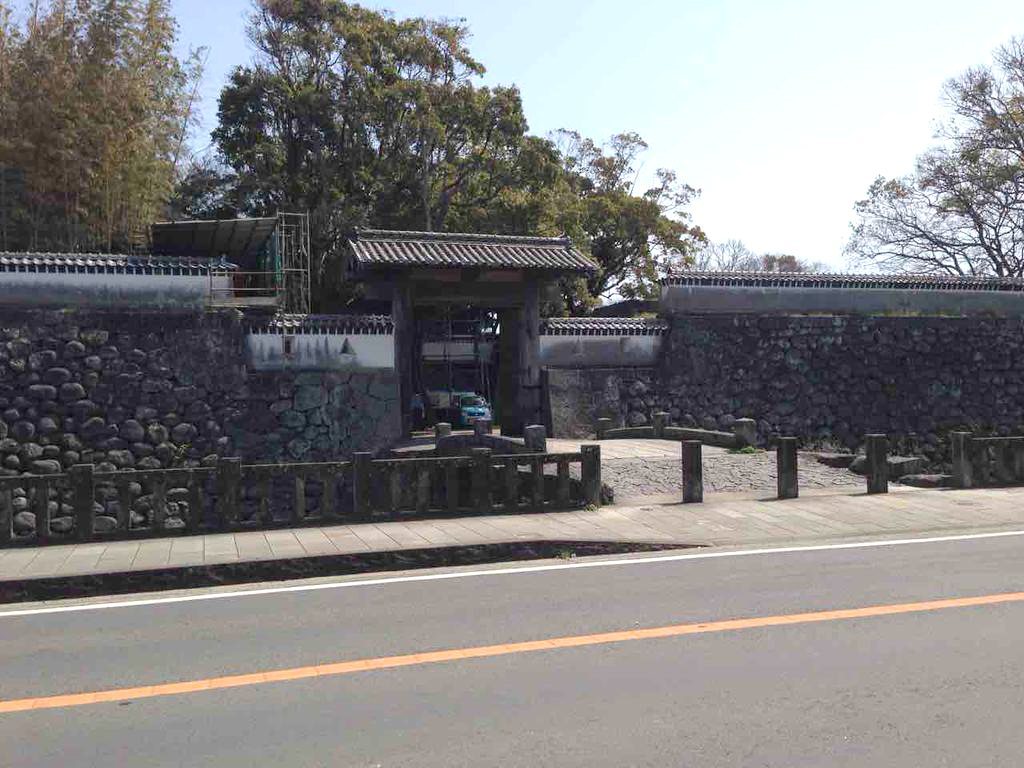
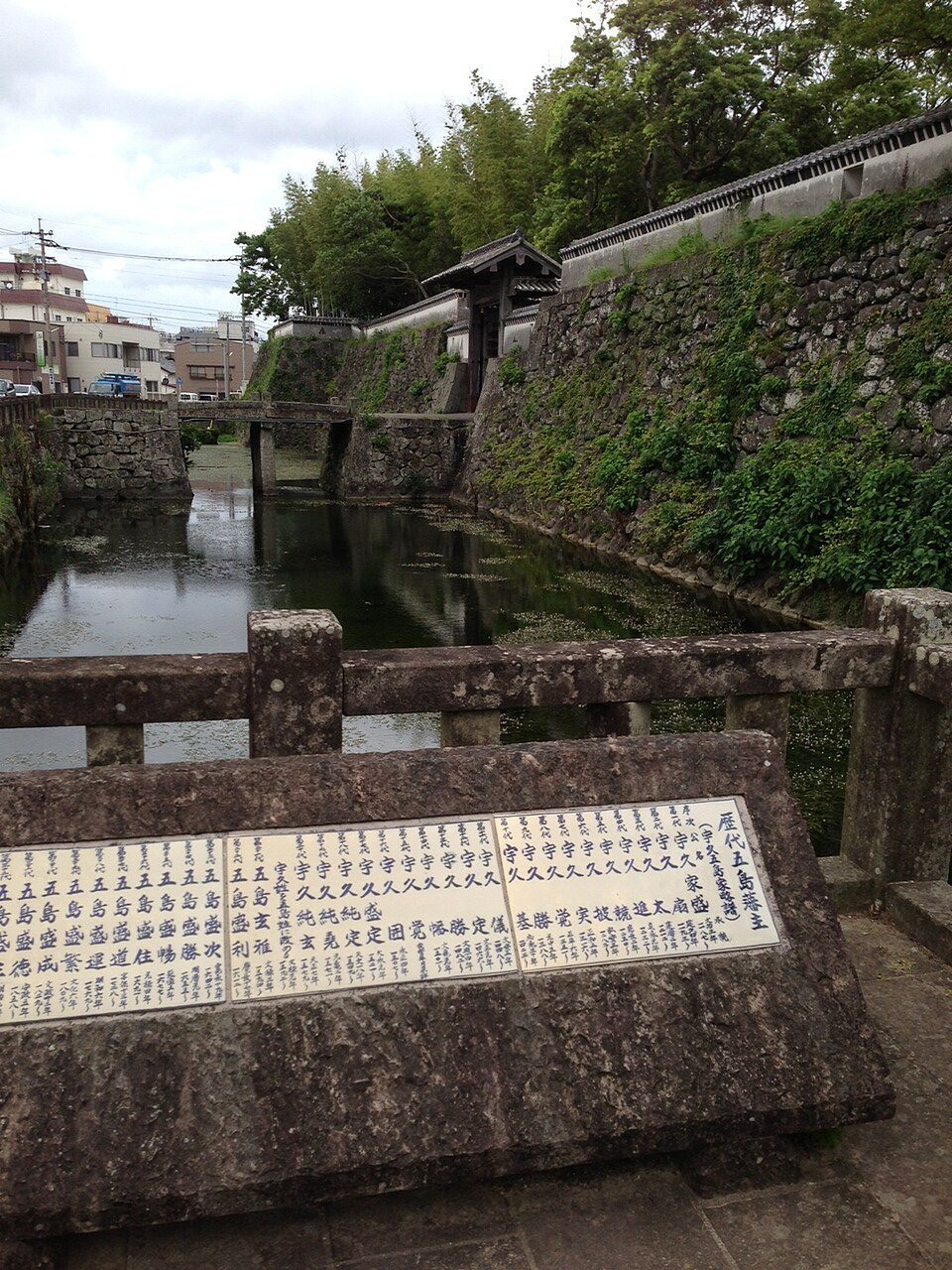
Surviving features include turrets, gates, sections of earthen wall, stone walls, moats, and earthworks. The rear gate remains, although its timber and other components have been replaced repeatedly. Sections of earthen wall and a stone bridge also survive.
Main-bailey tower and coastal defenses
A two-tiered, two-story turret in the main bailey served as the castle’s principal tower. Coastal-defense batteries formed part of the fortifications.
Gotō clan garden
The garden remains in the second bailey. It is a strolling garden arranged around a pond shaped like the character for “heart,” and its design draws on the garden of Kinkakuji, a Zen Buddhist temple in Kyoto known for its Golden Pavilion. The garden’s stones and artificial hill are made entirely from lava from Mount Onidake. Its plantings include areca and sago palms, bird’s-nest ferns, and fragrant olives. The associated building is preserved with the garden.