Qin State and Empire: Sites and Map
Qin frontier building formed part of the first Chinese empire’s attempt to defend and administer its northern territories. The Great Wall connects this short dynasty, which ruled unified China from 221 to 206 BC, with a much longer history of walls built by rival states and later emperors.
Primary Function: All
Type: All
Country: All
Popularity: All
Rating: All
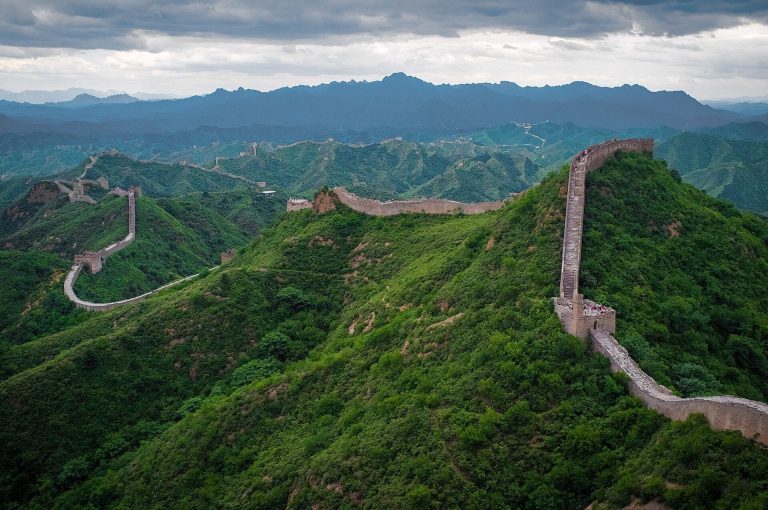
The Great Wall of China is a multi-period network of walls, forts, passes, towers, trenches, and natural barriers built by successive Chinese states…
For details on how to use the maps, which sites are included, how popularity and ratings are determined, and how sites are classified, see the help page.
The Great Wall and the northern frontier
Before unification, several states built walls to protect their own territories. After defeating those states, Qin Shi Huang dismantled some internal barriers and ordered construction along the empire’s northern frontier. The general Meng Tian directed campaigns and defensive works in the region of the Ordos, where the Yellow River bends around the northern edge of present-day Shaanxi.
The Great Wall of China was consequently a developing system of regional defences. Existing stretches could be incorporated into new works, with local terrain affecting their course. These northern defences were associated with Qin’s struggle against the Xiongnu, a powerful grouping of peoples on the steppe.
Earth walls and later stone ramparts
Early builders used materials available along the route, including earth, rubble and stone. Rammed earth was made by packing soil in successive layers between temporary timber forms. Compaction produced a firm wall without requiring a continuous supply of fired bricks, although exposed earthworks have weathered over the following centuries.
The tall, brick-faced ramparts and closely spaced towers familiar from photographs chiefly belong to the Ming dynasty, more than a millennium and a half later. Their routes also differ from the Qin frontier. The linked site article brings together these successive phases, while the map places the wider wall system in its geographical setting.
Open the wall’s map marker or grid card for its full site article and the history of its successive building campaigns.