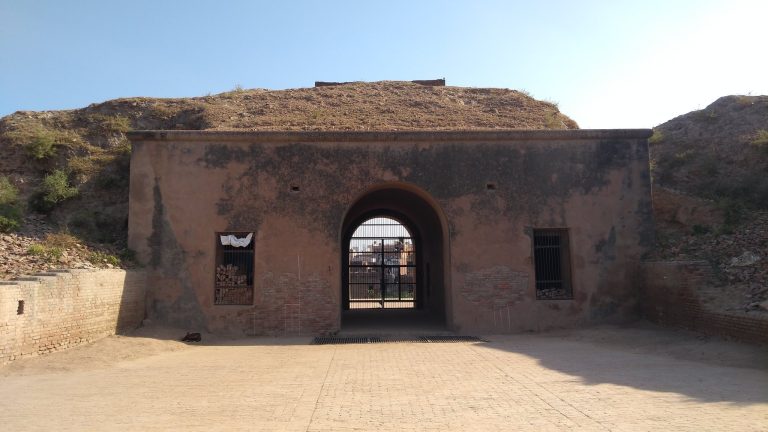
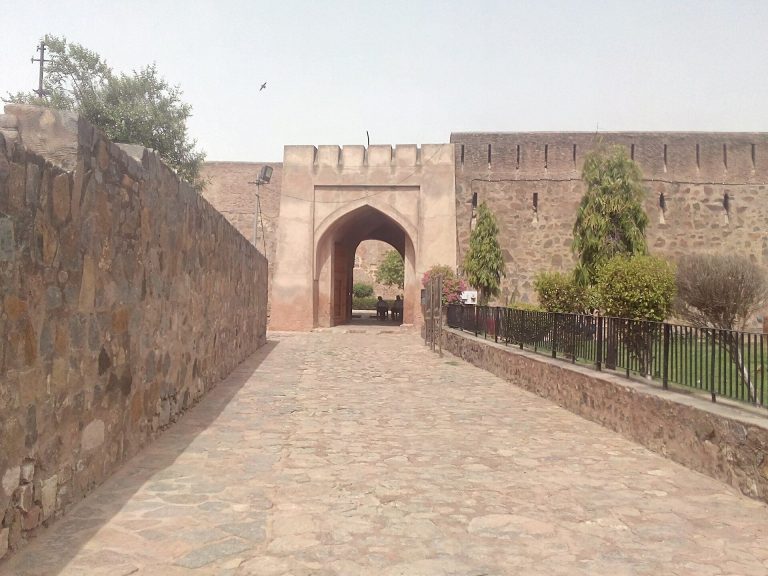
Rakhigarhi: An Indus Valley Civilization Settlement in Haryana, India
Site at a Glance
- Popularity
- Very High
- Country
- India
- Primary era
- Bronze Age
- Eras represented
- Bronze Age
- Civilizations
- Indus Valley
- Site type
- City
On this page17 sections
History
Rakhigarhi is an archaeological settlement associated with the Indus Valley Civilization, a Bronze Age urban civilization of South Asia, in Rakhi Shahpur and Rakhi Khas, Haryana, India. Its earliest occupation may date to around 4600 BCE, and the site developed through pre-Harappan, Early Harappan and Mature Harappan phases. It became a major settlement and regional trading centre.
Early and Mature Harappan development
Archaeological interpretations identify an early Sothi phase followed by Early Harappan occupation, dated to about 3300–2600 BCE. The Early Harappan settlement was arranged according to a plan. Evidence from the earliest occupation has also been interpreted as pointing to farming and animal herding.
A flood deposited more than half a metre of sediment and destroyed the Early Harappan city. People later rebuilt the settlement in a different form during the Mature Harappan phase, about 2600–1900 BCE. Seals, ornaments and weights found at Rakhigarhi indicate active exchange. The weights resemble those used at other Indus settlements, evidence of standardized weighing practices.
Flood damage and abandonment
The Mature Harappan urban settlement was eventually abandoned abruptly, probably after another major flood. Harappan occupation did not resume. The mounds now grouped under the name Rakhigarhi reflect several periods and settlement areas, rather than a single town that existed in one form at one time.
RGR-1 to RGR-5 formed the closely connected core of the Mature Harappan city. RGR-6, also known as Arda, was probably an older, separate settlement associated with the Sothi-Siswal tradition, a cultural tradition linked to communities before or alongside the Early Harappan phase. After a long period without occupation, it was settled again during the Kushan period, the era of an empire ruling parts of South and Central Asia in the first centuries CE, more than two thousand years later. RGR-7 served as a Mature Harappan cemetery.
Excavation and interpretation
The Archaeological Survey of India (ASI), India’s national archaeological and heritage agency, began excavations in 1963. In 1969, a Kurukshetra University team led by archaeologist Suraj Bhan studied the site. ASI work under archaeologist Amarendra Nath followed from 1997 to 2000, then paused for several years during a Central Bureau of Investigation inquiry into alleged misuse of funds. Many excavated objects were transferred to the National Museum in New Delhi.
Deccan College excavated at Rakhigarhi from 2011 to 2016 under archaeologist Vasant Shinde. ASI excavations resumed in 2021 and continued afterward. By 2020, roughly five percent of the archaeological area had been excavated. Interpretations of the site have also been contested. Critics have questioned the methods used in some ASI excavations and the authority held by individual excavation directors. Debate has included efforts by some ASI officials to connect Harappan culture with Vedic and Sanskrit traditions in support of claims of indigenous civilizational continuity.
Cultivation, soil removal, erosion, illegal artifact removal and sale, and building encroachment have damaged parts of the site. These pressures have affected its preservation and the scope of archaeological work.
Remains
Landscape and mound groups
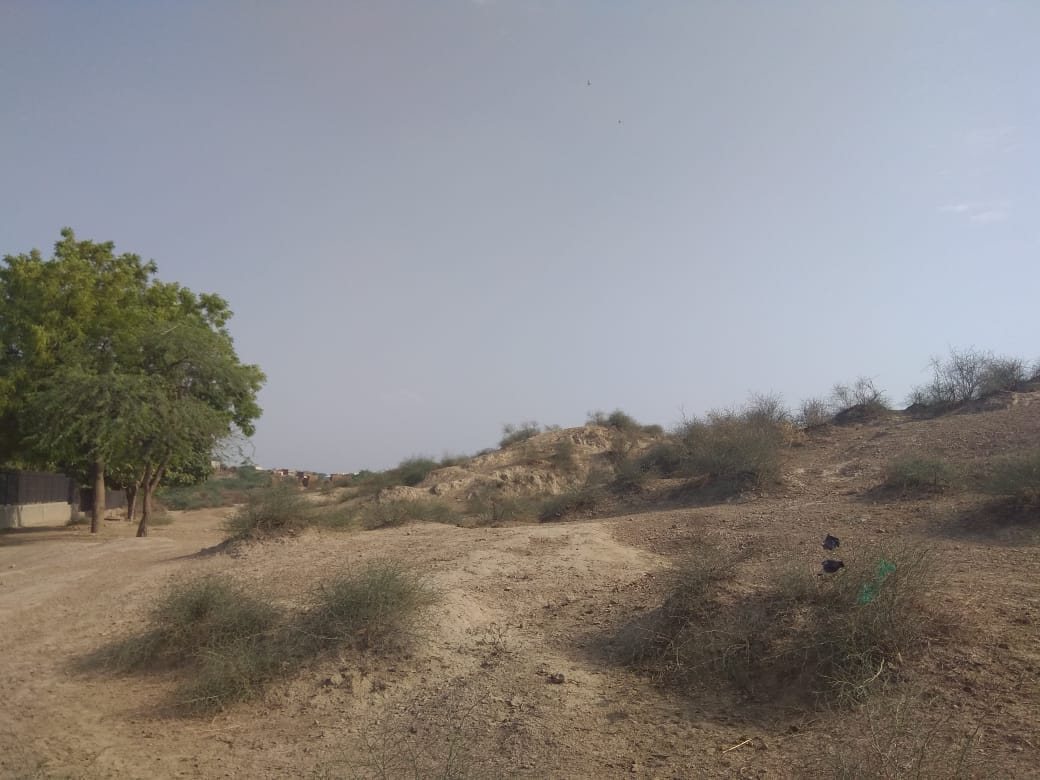
Rakhigarhi lies on the Ghaggar plain, about 27 km from the seasonal Ghaggar River. The area has also been associated with the valley of the prehistoric Drishadvati River, whose source lay in the Siwalik Hills, the outer foothills of the Himalayas. Eleven mounds, numbered RGR-1 to RGR-11, are recorded. RGR-8 and RGR-9, identified in 2014, lie beyond the main group to its northeast and southwest. RGR-10 and RGR-11 were reported by 2016.
Estimates for the integrated urban core range from about 80 to more than 100 hectares. The wider archaeological spread is estimated at roughly 300–350 hectares, including outlying remains that may not belong to a single settlement of the same period. Cultivation has heavily damaged RGR-8 and RGR-9. The village of Rakhishahpur occupies RGR-5, while buildings cover parts of RGR-4.
Urban plan and infrastructure
Excavations reveal a planned urban layout, with streets and walls arranged at consistent widths and generally rectangular houses placed along both sides of the streets. Residential quarters were distinct from production areas. Paved roads were about 1.92 m wide, and brick-lined drains carried household sewage. Houses included bathrooms connected to drainage, as well as ovens and hearths.
The settlement also had systems for collecting and storing rainwater, workshops, brick-making areas, sculpture-making workshops and trading stalls. During the Mature Harappan phase, builders raised and steadied parts of the ground with mud-brick platforms, which also helped protect the settlement from floods. One such platform has been interpreted as possibly having a religious purpose.
Storage and production
Granaries
Two granaries have been described. One, excavated between 1997 and 1999, was built of mud brick in an L-shaped plan and divided into ten smaller rooms. A second, found in 2014, contained seven rectangular storage chambers. Its floor consisted of sloping earth coated with mud. Lime and decomposed grass on the lower wall were interpreted as signs of grain storage, with the lime used against insects and the grass helping limit moisture. Its size suggests that it may have served a larger community or an elite household.
Workshops and craft materials
Craft and production areas included a metalworking space with a furnace, stone-polishing tools and about 3,000 unpolished semiprecious stones. Steatite, a soft stone used for carving, made up more than 70 percent of the recovered beads; carnelian, agate and jasper were also used. Finds and workshop evidence point to the making of bricks, sculptures and beads, alongside other craft activity.
Ritual structures
Fire altars and apsidal structures, which have a rounded or semicircular end, have been associated with ritual activity. Other features include pits enclosed by walls, which may have been used for sacrifices or other religious ceremonies.
RGR-7 cemetery
The cemetery occupied a mound some distance from the residential area. Early excavations exposed eight graves. Some pits had brick linings or brick coverings, and one contained a wooden coffin. In other examples, the grave sides were cut back beneath the earth to form an overhang above the body, with bricks laid across it as a roof-like cover.
By 2018, excavators had recorded 53 burial locations containing 46 skeletons. Examination of 37 individuals classified 17 as adults and eight as people who had not reached adulthood; the ages of the other 12 could not be determined. Sex was identified for 17 individuals, seven male and ten female. Most burials held one person lying on their back, while examples also included face-down and group interments. Graves ranged from simple pits to brick-lined structures containing pottery. Some held pots with animal remains, interpreted as offerings. Excavations at RGR-7 in 2024 uncovered burials containing 56 skeletons.
One group burial held 11 people with their heads oriented north and everyday vessels placed nearby. Three women wore shell bangles on their left wrists. A gold armlet lay near one skeleton, and semiprecious stones beside a head may have formed part of a necklace. Four complete skeletons excavated in 2015 belonged to two adult men, an adult woman and a child; pottery with grain remains and shell bangles were found around them.
Among the cemetery’s burials, an adult man estimated to have been 35–40 years old and a woman in her early twenties had been placed side by side, with the man’s head directed toward her. Their arrangement has been interpreted as possibly indicating that they were married. The man was about 177 cm tall and the woman about 171 cm. Pots in their grave may have held food and water as offerings, and an agate near the man’s collarbone may have come from a necklace.
Pottery, metalwork and other finds
Pottery and terracotta figures
Pottery from houses, workshops and graves includes bowls, jars, pots, plates, lids and cups in red, buff and brown wares. Painted decoration features geometric patterns as well as animals and plants, including fig trees; some designs were cut into the surfaces with wooden, bone or shell tools. Terracotta figures include bulls associated with the Early Harappan phase and animal and human forms from the Mature Harappan phase.
Metalwork, beads and shell objects
Copper objects include tools, arrowheads, chisels, needles, jewelry and bangles from the Early Harappan phase, and items such as knives, nails, pins, rings, mirrors, buckles and beads from the Mature Harappan phase. Similar objects were made in bronze. A bronze vessel carried decoration in gold and silver. Shell workers produced bangles, necklaces, pendants, beads, spoons, ladles and mosaics.
Bone, ivory and stone objects
Bone finds include awls, writing tools, needles, ornaments, dice, spearheads, arrowheads and fishhooks. Some bone ornaments bear engraved signs of the Indus script, which remains undeciphered. Ivory objects include tools, combs, jewelry, beads, spatulas and weights. Stone finds include hammers, sharpeners, ploughs, weights, vessels, crucibles, casting moulds and anvils.
Household and other objects
Copper tool hafts and fishhooks relate to hunting and fishing. Miniature wheels and lids, sling balls and animal figurines show that people also made toys. Traces of cotton cloth have survived on silver and bronze objects.