Jebel Hafeet Beehive Tombs: An Early Bronze Age Burial Site
Site at a Glance
- Popularity
- Very Low
- Country
- United Arab Emirates
- Primary era
- Bronze Age
- Eras represented
- Bronze Age
- Civilizations
- Unclassified
- Site type
- Burial
- Remains
- Necropolis
History
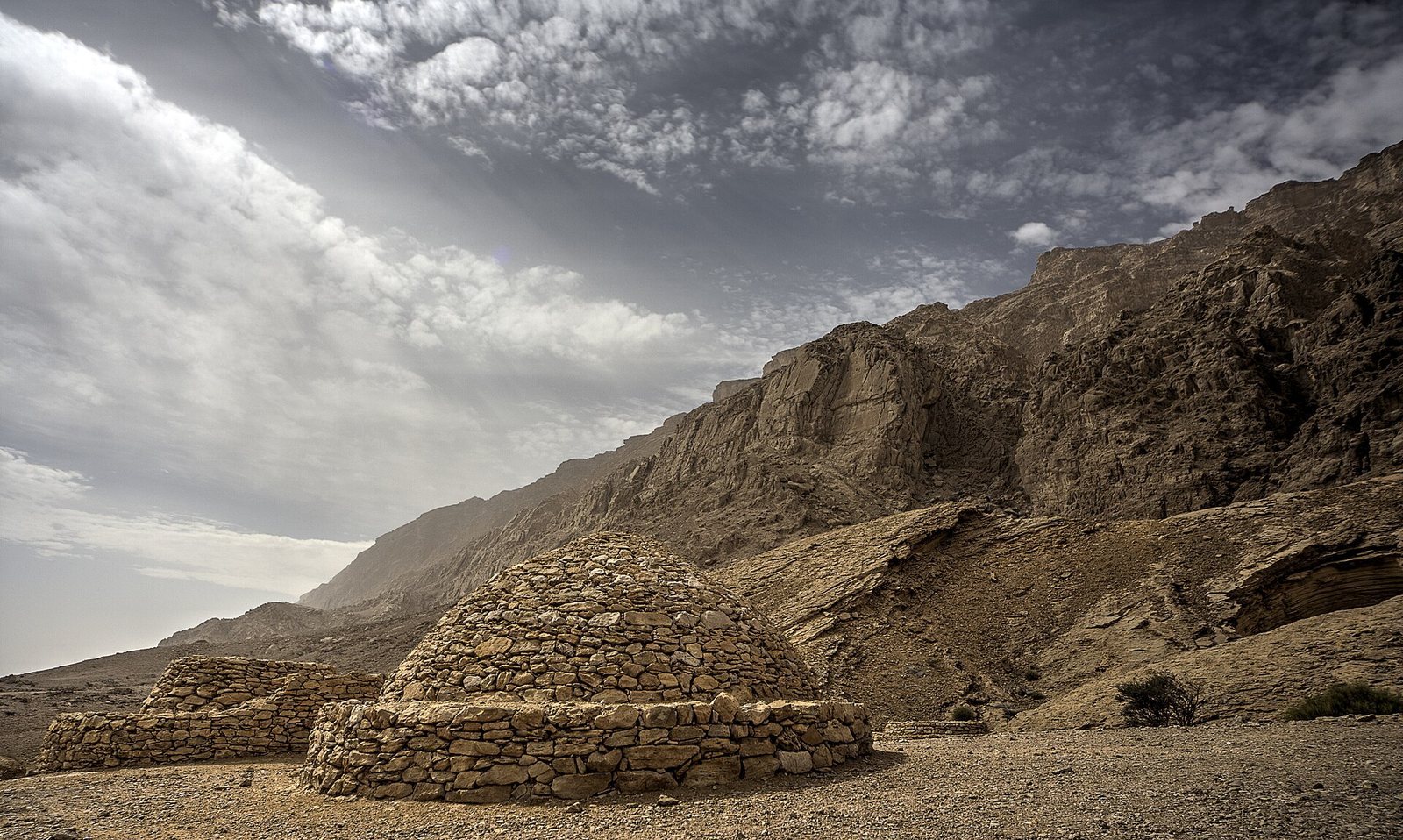
The Jebel Hafeet Beehive Tombs are a group of burial structures at the foothills of Jebel Hafeet near Mezyad in the United Arab Emirates. A cluster of tombs found here gave its name to the Hafit Period, an early phase of the Bronze Age dated to 3200–2600 BCE. The Bronze Age was a prehistoric period when bronze became widely used for tools and other objects.
The tombs were discovered in 1950 and excavated by Danish archaeologists in 1959. Their finds provide evidence of ancient connections beyond the region.
The tombs form part of the Cultural Sites of Al Ain (Hafit, Hili, Bidaa Bint Saud and Oases Areas), a UNESCO World Heritage property inscribed in 2011. UNESCO, the United Nations Educational, Scientific and Cultural Organization, maintains a World Heritage List that recognizes places of cultural or natural significance. Jebel Hafeet was recognized as part of a national park in 2017 and incorporated into the Sheikh Zayed Network of Protected Areas in 2018.
Remains
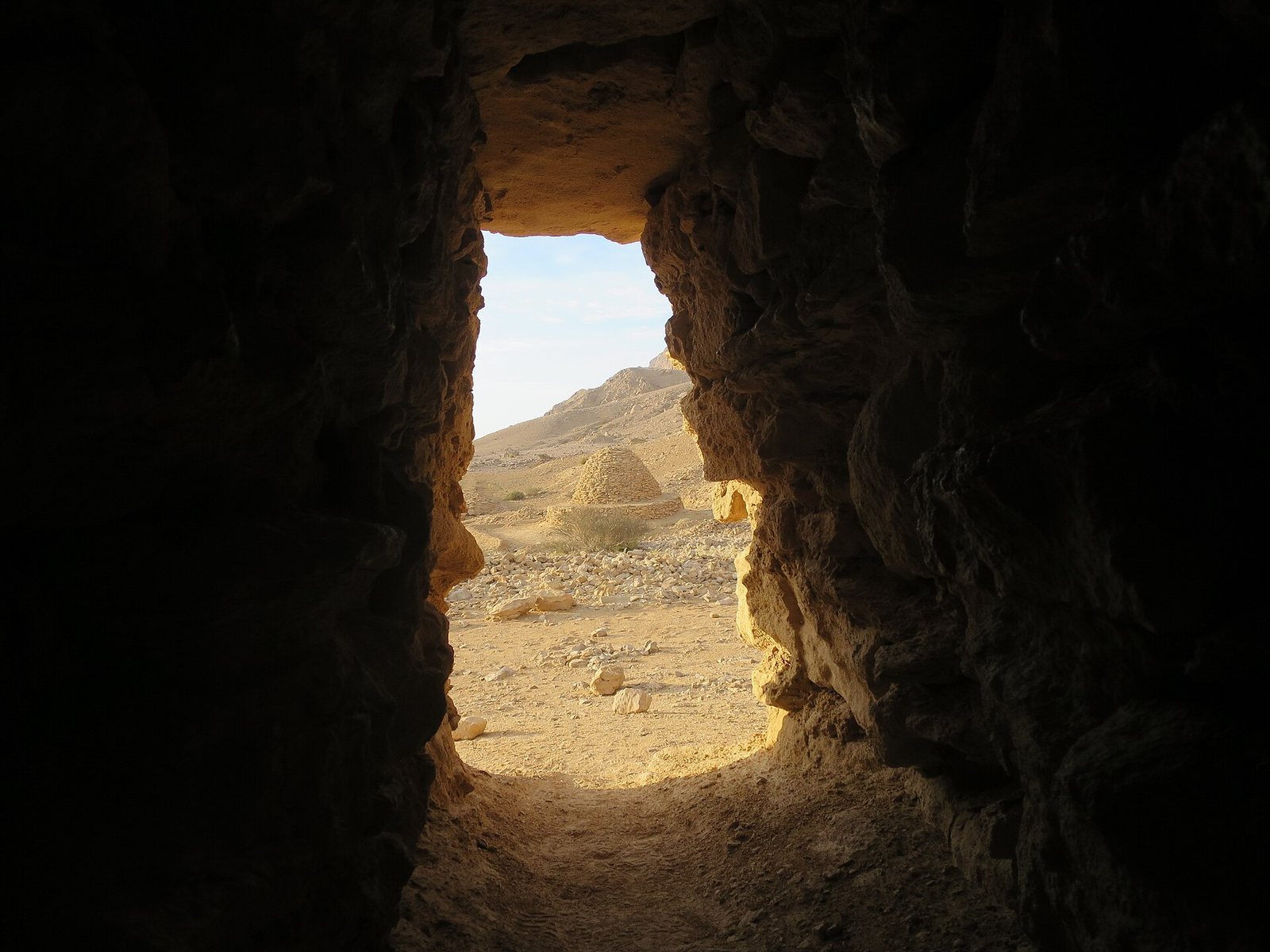
The group comprises about 500 beehive tombs, burial structures shaped like beehives, at the foothills of Jebel Hafeet near Mezyad. Building work has partly destroyed graves on the north side, while tombs to the south are preserved.
Some tombs contained human skeletons, with bronze objects and pearls found in some burials. Excavated finds also include ceramic vessels and copper artifacts. Ceramics from Mesopotamia and artifacts from ancient Iran and the Indus Valley indicate trading relationships in antiquity.