Archaeological Museum of Cherchell: A Collection of Caesarea of Mauretania
Site at a Glance
- Rating
- 4.4
- Popularity
- Low
- Country
- Algeria
- Primary era
- Classical
- External website
- Open
- Eras represented
- Classical, Medieval, Early Modern
- Civilizations
- Ancient Greek, Byzantine, Carthaginian, Ottoman, Roman
- Site type
- Museum
On this page15 sections
History
The Archaeological Museum of Cherchell is a museum in Cherchell, Algeria, presenting the history of the city from prehistory through the Punic, Greek, Roman, Byzantine, Ottoman, and Islamic periods. Its collections are closely connected with Caesarea of Mauretania, the Roman-era city that became the capital of Mauretania Caesariensis. During the Roman period, Caesarea was a wealthy center, and under Juba II, the client king of Mauretania under Roman influence, a theater, library, and other public buildings were established around 25 BC. Juba II also assembled an important collection of marble sculpture, helping give the city a strong artistic tradition.
Formation of the collections
Archaeological discoveries increased after the arrival of the French in 1840 and the construction of the modern town. In 1844, the finds were placed in a small mosque belonging to the Berkani family. An earthquake destroyed the building in 1846, after which the objects were moved to an open gallery in the courtyard of a Moorish-style house.
The municipality demolished the gallery premises in 1853, and the collections were transferred to another building on Abdelhak Street, within the area of the former Caesarea. Several valuable pieces were later sent to the Louvre in Paris and to the National Museum of Antiquities and Islamic Arts in Algiers. In 1855, the remaining objects were stored at a hotel. The continuing discoveries and the importance of the ancient material led Governor-General Charles Jonnart to decide that Cherchell needed a purpose-built museum.
Creation and development of the museum
The museum opened to the public in 1908. A new building was constructed in 1979 because the earlier premises could no longer hold the archaeological finds being recovered. Much of the collection comes from excavations in Cherchell and its surrounding area, with particular emphasis on Greco-Roman antiquities. These include imported or commissioned works associated with the period of Juba II and sculptures made locally.
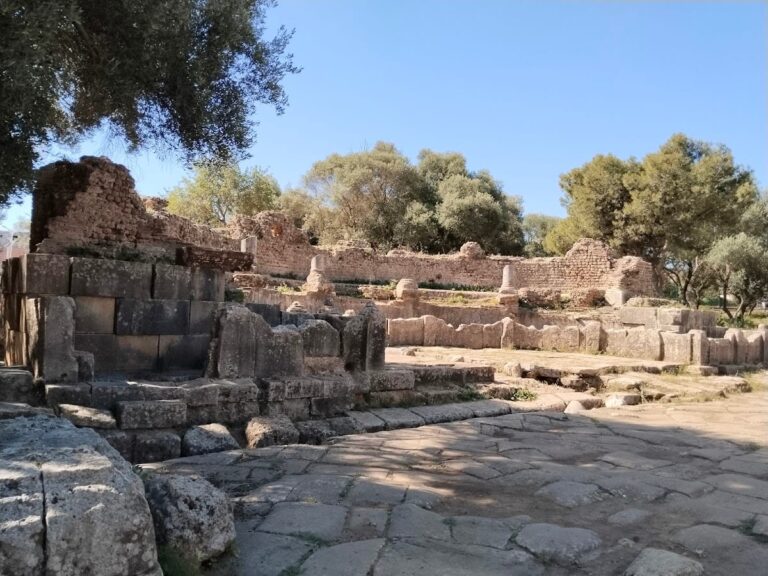
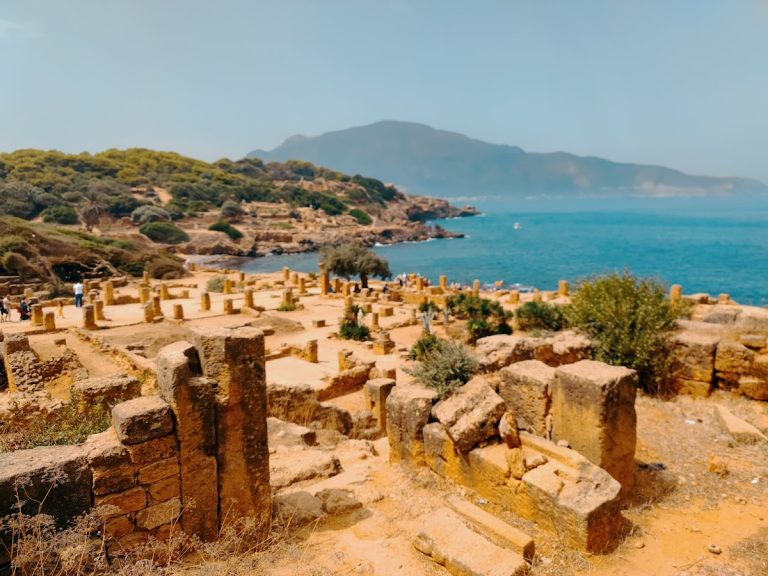
Excavation and research connected with the museum included Victor Waille’s clearing of the Three Graces mosaic in 1886, four years after its discovery, and Jean Glénat’s excavations in 1921 and 1923. Work in the western sector of the ancient city continued during the 1920s and 1930s. Investigations also revealed partial remains of the Roman theater, Roman baths, and Civic Basilica on the outskirts of Cherchell.
The museum’s archaeological holdings have been regarded as containing fine examples of Roman and Greek antiquities in Africa. Its wider historical scope includes local Ottoman history from the sixteenth century to the beginning of the nineteenth century. The collections include Ottoman objects recovered from the waters off the Cherchell coast, locally made domestic ceramics, architectural elements, and a wooden minbar, or raised mosque pulpit, from Cherchell’s Great Mosque dating to 1573 to 1574. Researchers regard the minbar as a locally produced work of art.
Research, conservation, and public memory
The museum’s galleries bring together everyday and funerary objects, Roman art, and mosaics kept for conservation. Its holdings include stelae and inscriptions with honorific, commemorative, funerary, and religious purposes. Greek inscriptions are represented, while Latin inscriptions, mostly funerary, numbered about 200 in 1924. Conservators associated with the museum included Jean Glénat in 1925 and 1926, Aïcha Merazka from 2011 to 2016, and Nadjoua Atif-Hamza from 2016 onward.
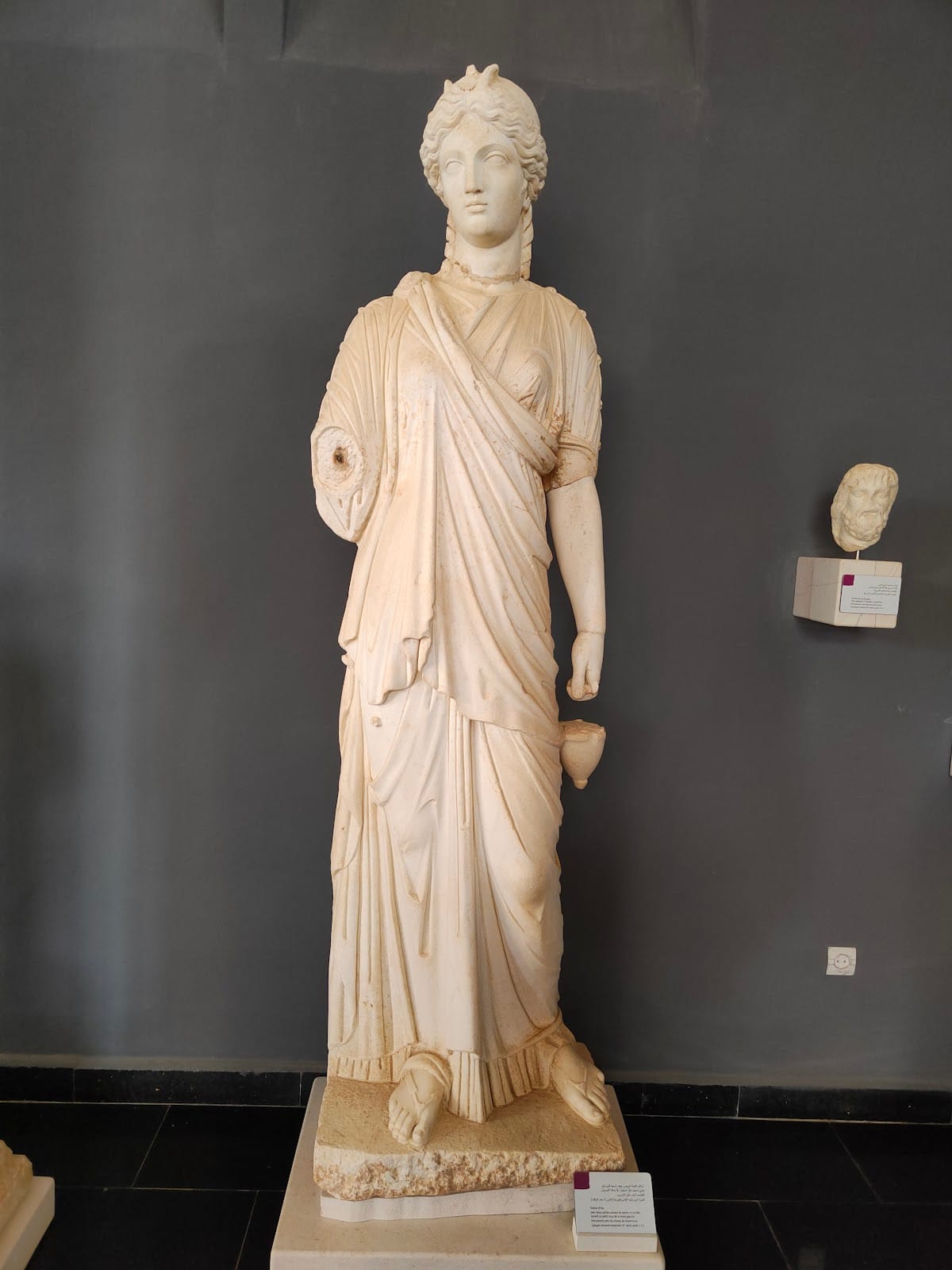
The museum’s statue of Isis was also used in Algerian public imagery. In 1948, its face was reproduced on an Algerian 1,000-franc banknote, linking one of Cherchell’s ancient religious sculptures with the visual culture of the modern state.
Remains
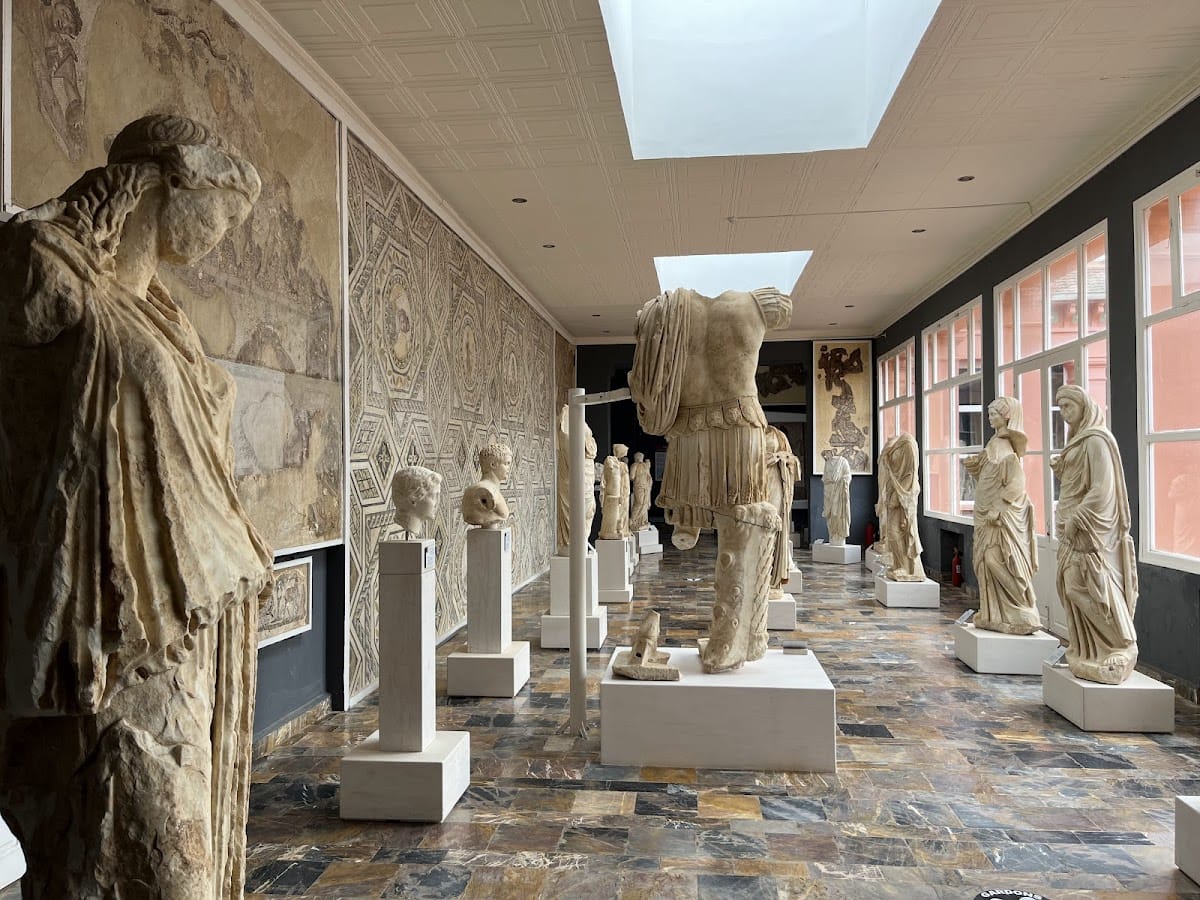
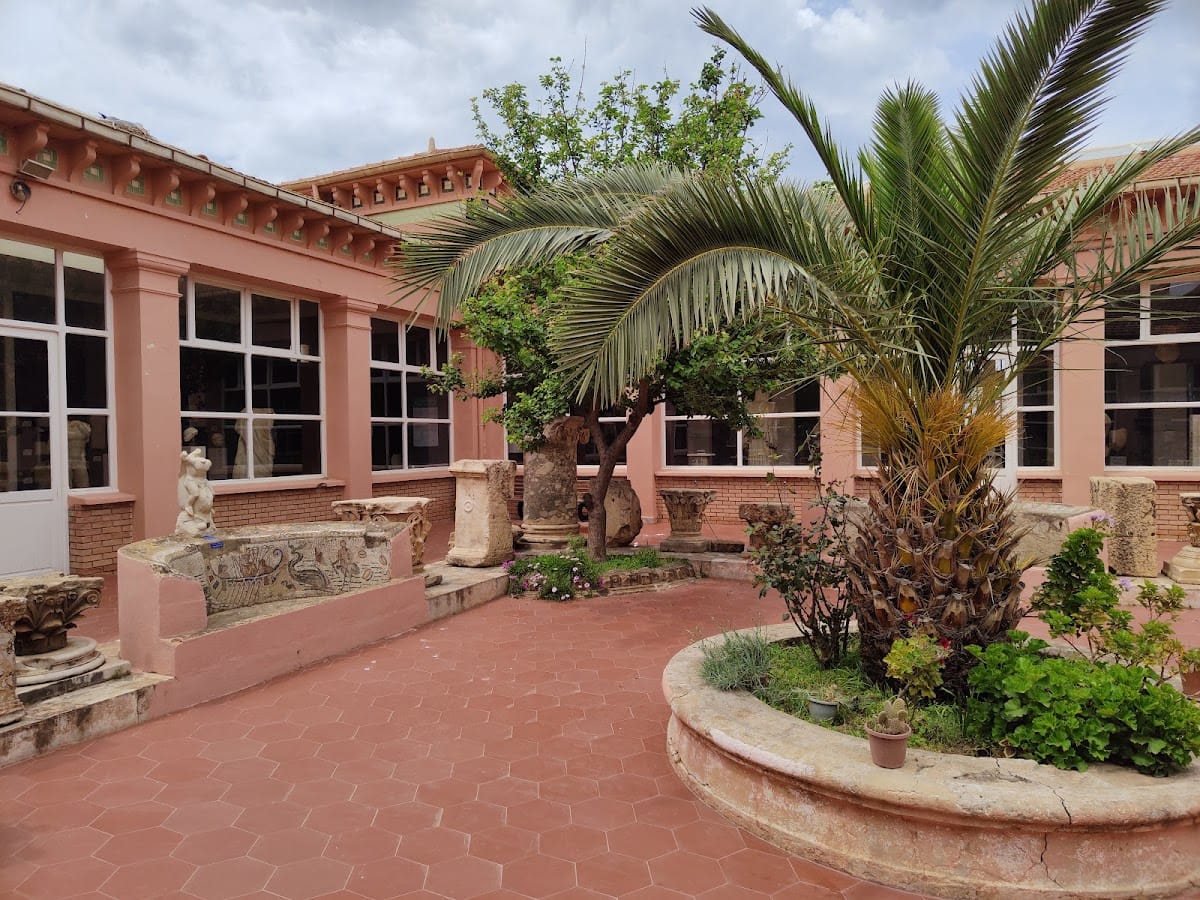
The museum’s displays are arranged in several galleries and present objects from ancient buildings, domestic spaces, religious settings, and later Ottoman contexts. Coins, jewelry, pottery, lamps, vases, funerary stelae, sarcophagi, sculptures, relief fragments, villa fresco fragments, and architectural pieces appear alongside the mosaics. Marble sculpture and architectural fragments include busts and heads, pilaster capitals, column capitals decorated with water-leaf and floral motifs, twisted column fragments, sculpted revetment, and sarcophagi bearing inscriptions and ornament.
Greco-Roman sculpture and inscriptions
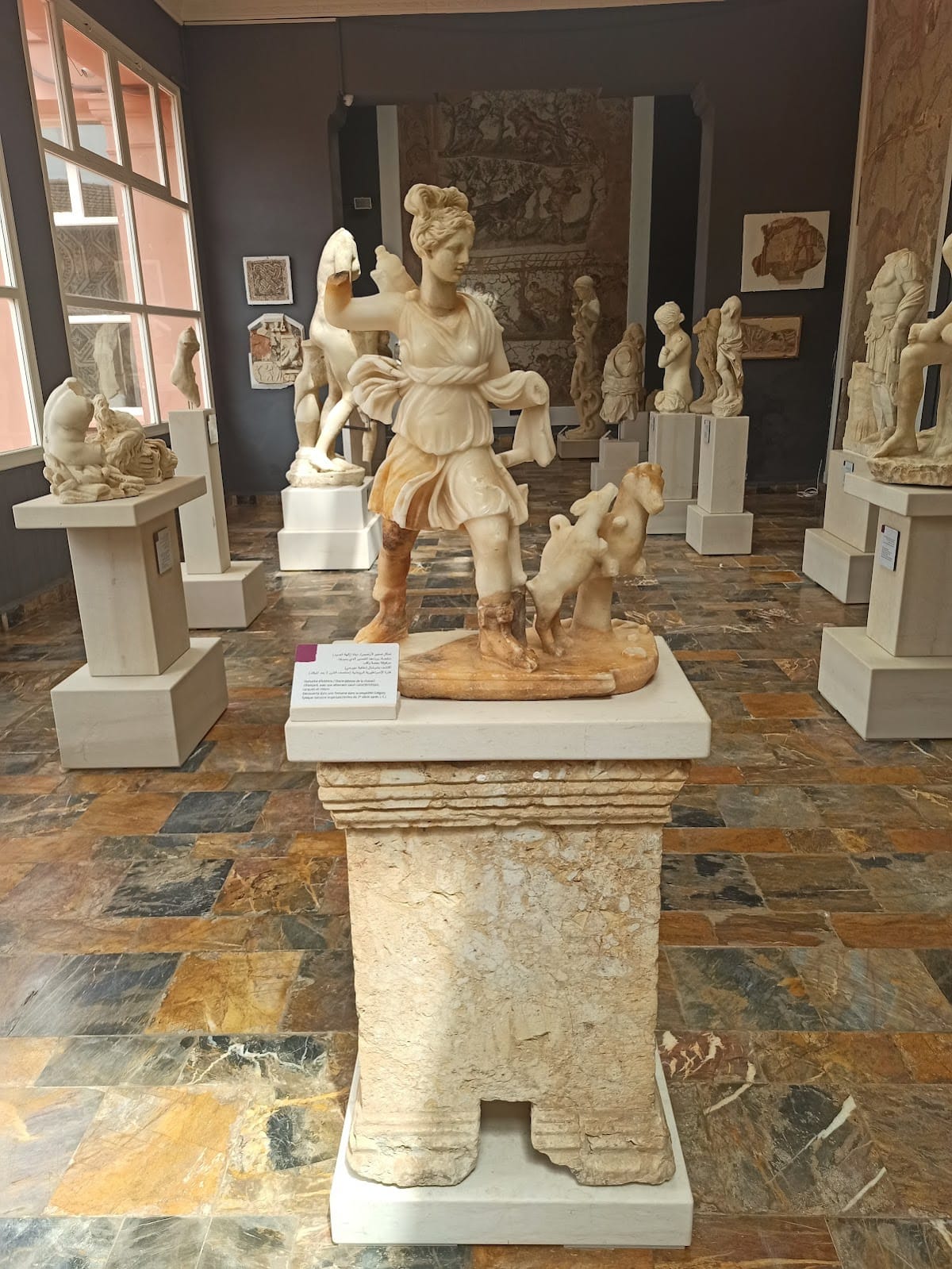
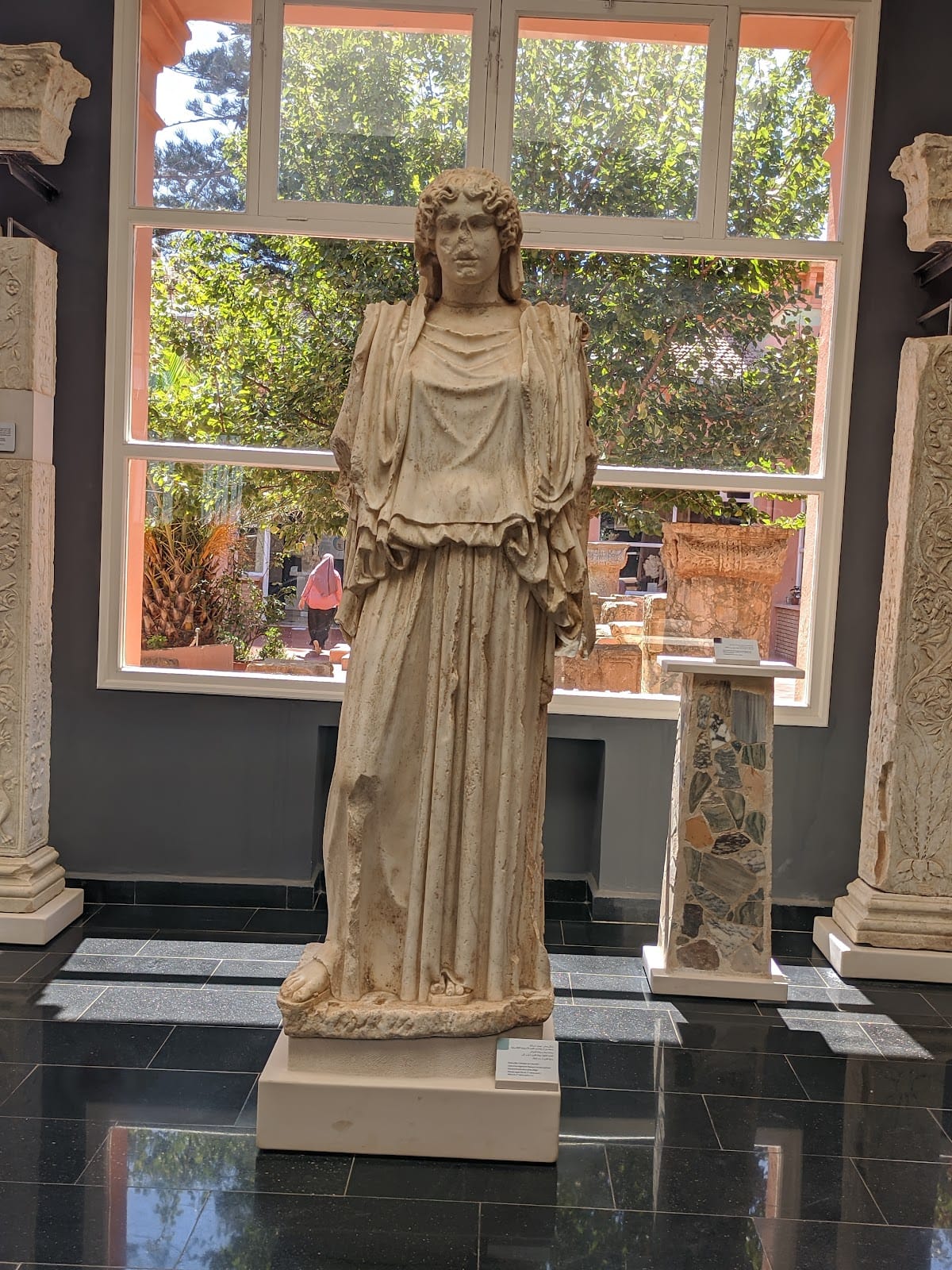
The Roman and Greco-Roman sculpture includes heads or busts of philosophers, Greek-derived Roman deities, Juba I, Juba II, Cleopatra Selene II, Cleopatra VII, Ptolemy of Mauretania, the goddess Caesarea, Isis, and a priest of Cybele. Cleopatra Selene II was the wife of Juba II and the daughter of Cleopatra VII and Mark Antony. Other works include figures of Demeter, Diana, Asclepius, Hercules, and Pluto, as well as a sphinx relief.
The museum also preserves a young Bacchus mosaic and a mosaic of two peacocks. Its inscribed material ranges from Greek texts to Latin funerary inscriptions. Ottoman funerary stelae include complete and well-preserved examples as well as fragments. Their inscriptions and decoration combine written, vegetal, and symbolic motifs, while their forms include lobed and semicircular types.
Mosaic collection
An inventory made in 2005 listed 195 complete or fragmentary mosaics. Many are dated chiefly by style because their precise archaeological contexts are not known. The most common technique is opus tessellatum, in which small pieces called tesserae are set into mortar to create geometric, vegetal, or figurative floor decoration. Early black-and-white designs, generally associated with public buildings, were followed by more refined polychrome work from the end of the second century AD. Fourth- and fifth-century mosaics show stronger shading, modeled forms, relief effects, and exuberant geometric and vegetal patterns.
The mosaics use four principal decorative approaches: geometric covering designs, floral or vegetal decoration, figurative scenes, and inscriptions. Their subjects include agriculture, daily activities, leisure, and episodes from mythology.
Bacchic Triumph Mosaic
The mosaic of the Bacchic triumph was excavated in two stages, partly in 1926 and completely in 1934. It originally covered the floor of a reception room in a house and measures 7.08 by 3.84 meters. Its central panel, measuring 1.33 by 1.07 meters, shows Dionysus, the Greek god of wine, vegetation, and ecstasy, standing on a chariot drawn by two tigers. One tiger drinks from a krater on the ground, while the other turns its head toward the viewer.
Dionysus wears a flowing robe and leafy diadem and carries a thyrsus, his symbolic staff with a pine-cone tip. A muscular satyr beside the team appears to hold a javelin and wears a goat-skin nebris. The mosaic uses fine limestone, marble, and glass-paste tesserae measuring about 6 to 10 millimeters across, with nine colors and eighteen shades. A neighboring geometric mosaic measures 3.75 by 2.13 meters and combines black triangles with white hexagons, each containing a swastika motif.
Three Graces Mosaic
The Three Graces mosaic was discovered in 1882 in a luxurious house known as the House of the Julii, a name taken from an honorific inscription found there. It occupied the vestibule of a large room with an apse, a curved end, and was cleared in 1886 by Victor Waille, who separated it from its surrounding border. The mosaic now measures 2.48 by 2.07 meters.
Three nude figures stand against a white background, holding one another by the shoulders. The end figures hold floral garlands. Limestone, marble, and terracotta tesserae measuring 8 to 20 millimeters across create beige, yellow ochre, red ochre, brown, and pink tones. The Three Graces were Greek goddesses associated with beauty, grace, and festivity.
Muses Mosaic
A large mosaic discovered during excavations in 1921 and 1923 decorated a rectangular room in a luxurious house. The excavations cleared large private baths measuring about 30 by 20 meters. The mosaic measures 9.30 by 4.50 meters and uses limestone, marble, terracotta, and some glass-paste tesserae in nine colors and fourteen shades.
Its geometric ground consists of eight-pointed stars formed by overlapping squares and cross-shaped motifs made from small lozenges. Circular medallions within the stars contain female busts representing the Muses, the nine Greek goddesses associated with the arts and intellectual disciplines. Six medallions survive, while losses were filled with plaster. Melpomene holds a tragic mask, Terpsichore carries a six-stringed lyre, and Calliope holds a scroll. The ninth Muse in the central cross lacks an identifying attribute.
Agricultural Labors Mosaic
The mosaic known as the Agricultural Labors was found in 1925 in an unidentified building in the western sector of the ancient city, during excavations carried out between 1925 and 1935. It measures 5.25 by 3.50 meters, including a 57-centimeter border of acanthus scrolls. Its exceptionally fine tesserae measure 3 to 9 millimeters across.
The central scene is divided into four horizontal bands, each about one to 1.35 meters high. The upper two depict plowing and sowing, while the lower two show workers hoeing vines. Peasants in short tunics, leggings, and sandals work among olive trees. One carries a basket around his neck and scatters seed, followed by two oxen pulling a plow. In another scene, a plow team faces a peasant raising a stick.
The lower scenes show a leafless vine trained on a trellis supported by three large vertical posts. Two workers hoe the vines in the first register, with a third partly visible at the edge. Below them, another laborer hoes a vine while a bearded overseer holding a stick watches.
Animal-Combat Mosaic
Excavations during the construction of a local tennis court in 1958 exposed the deteriorated remains of two houses. One contained a large peristyle, a colonnaded court surrounded by columns, with porticoes decorated by mosaics. In 1963, a reception room was cleared; its square entrance measured 4 by 4.95 meters and was covered by a well-preserved mosaic.
The animal-combat mosaic is arranged in two registers and uses limestone, marble, and terracotta tesserae in seven colors and fifteen shades. Below, a green panther with black spots attacks a fleeing deer, while a curly-maned lion bites an onager. Above, a lion devours an onager and a green panther attacks a bull colored yellow and garnet. The animals have carefully rendered postures and musculature. Finds of terra sigillata, a fine Roman tableware, suggest a date in the fourth or fifth century, although an Alexandrian source for the composition has also been proposed.
Nymphaeum Mosaics
In 1940, an hydraulic installation and a house were uncovered in the central part of the ancient city. Two semicircular nymphaeum basins, monumental fountain installations, flanked a peristyle. Each basin measured 2.60 meters in diameter and 60 centimeters in depth.
Mosaics decorated the edges of the basins. One showed the triumph of Neptune, while the other depicted Ulysses and the Sirens. Their floors used simple black lines on a white ground to represent the sea. Excavation badly damaged the mosaics, which were restored with glass-paste tesserae. The fine pieces, made from limestone, marble, terracotta, and glass paste, measure 3 to 10 millimeters across and provide eleven colors and twenty shades.
The Ulysses-and-the-Sirens scene shows Ulysses tied to the mast of a ship with raised ends, accompanied by two companions. Large dolphins swim beside the vessel. On the shore, nude Sirens with long bird legs stand on either side, holding musical instruments.
Vintage Mosaic
The mosaic of the Vintage was discovered in 1958 when construction of a new tennis court exposed two buildings. It decorated the large ceremonial room of the eastern building and remains well preserved. Measuring 4.40 by 3.70 meters, it uses tesserae 3 to 14 millimeters across, with nine colors and twenty-three shades.
Its central design presents a trellis from above, formed by a grid of wooden rods supported by posts and covered with vine branches, grapes, and birds. Workers harvest grapes around it. A butcher with a dog cuts up an animal tied to a vine post, another man holds a hare, and a standing figure appears to be waterproofing a dolium, a large storage jar. A damaged section once showed grape pressing; feet and a chute carrying juice remain visible.
Ottoman and Islamic material
The museum’s Ottoman and Islamic holdings include locally produced plates, dishes, cups, candlesticks, gargoulettes, jars, cooking pots, ewers, and lamps. Some vessels are complete and others are fragmentary, while some carry decoration and others have plain surfaces. Architectural elements include bases, columns, and capitals.
The collection also includes richly decorated paterae, shallow vessels used for drinking or ceremonial purposes, attributed to Byzantine silversmiths. Ottoman cannons and projectiles recovered from the waters off the Cherchell coast represent artillery used with fortresses and walls, field artillery, and shipboard guns. Together with the wooden minbar from the Great Mosque, these objects extend the museum’s physical record beyond the ancient city and into the later history of Cherchell.