Sarcophagi of Karajía: Chachapoyas Anthropomorphic Coffins in Peru
Site at a Glance
- Rating
- 4.6
- Popularity
- Low
- Country
- Peru
- Primary era
- Medieval
- Eras represented
- Medieval
- Civilizations
- Chachapoya
- Site type
- Burial
- Remains
- Necropolis
On this page7 sections
History
The Sarcophagi of Karajía are a Chachapoyas funerary complex in Luya, Amazonas, Peru, created during the Late Intermediate Period of the central Andes and dated to around AD 1460. The Chachapoyas were a pre-Inca society of the northern Peruvian Andes known for cliffside tombs and human-shaped burial monuments. At Karajía, the dead were placed in anthropomorphic coffins, meaning containers whose external form follows the human body, in a protected and difficult-to-reach location.
Chachapoyas Funerary Tradition
The Karajía sarcophagi belong to a wider Chachapoyas practice of placing the dead in elevated cliffside settings. The location protected the burials from ordinary access and connected the funerary monument with the ravine landscape. The custom was described in the Mercurio Peruano, an eighteenth-century Peruvian periodical, in 1791. That account associated cliffside mausoleums with important people or local chiefs, indicating that the burials were linked to social standing and authority.
The sarcophagi have also been interpreted as representations of anthropomorphic funerary bundles associated with coastal and highland traditions during the Tiahuanaco-Huari period. Their faces have been compared with Recuay stone monoliths, Chancay cuchimilcos, which are human-form ceramic figures, and the figure shown on a Lambayeque tumi, a ceremonial knife or blade. These relationships place the Karajía figures within broader Andean traditions of representing the human form in funerary and ritual contexts.
Early Descriptions and Archaeological Work
Interest in the funerary monuments continued in the twentieth century. Louis Langlois drew attention to the practice in 1939, followed by Henry and Paule Reichlen in 1950. In 1985, the Peruvian archaeologist Federico Kauffmann Doig led an expedition to the principal Karajía group after receiving information from Carlos Torres. Members of the Club Andino Peruano, a Peruvian mountaineering organization, helped the archaeological team reach the difficult site. At that time, the group was considered the most important known concentration of Chachapoyas sarcophagi and was found largely intact.
Further investigations expanded knowledge of the regional tradition. The Antisuyo expeditions, archaeological research expeditions directed by Kauffmann Doig and Giancarlo Ligabue, documented other sarcophagus groups at Tingorbamba and Chipuric. Radiocarbon analysis of organic remains from Karajía placed the burials around AD 1460, within the Late Intermediate Period and close to the Inca conquest of the Chachapoyas in the 1470s.
The site is officially designated the Karajía Archaeological Monumental Zone and is recognized as Cultural Heritage of the Nation of Peru. In 2019, the official spelling was corrected from the Spanish form “Carajía” to “Karajía.”
Remains
Ravine Setting and Sarcophagus Group
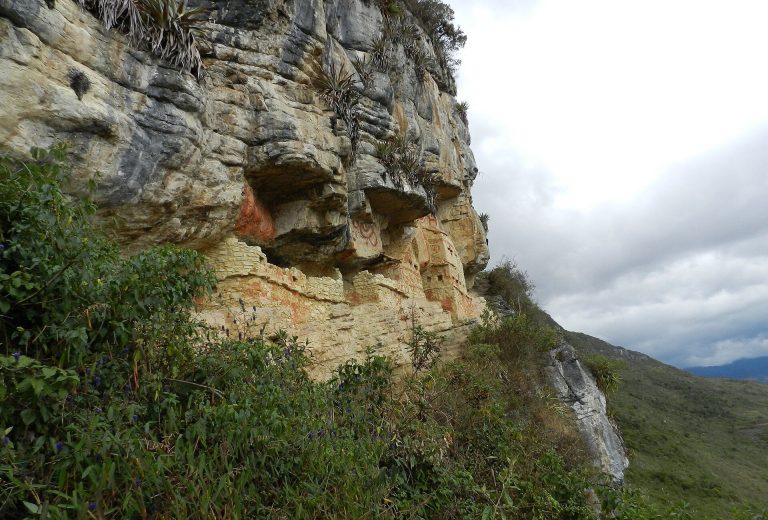
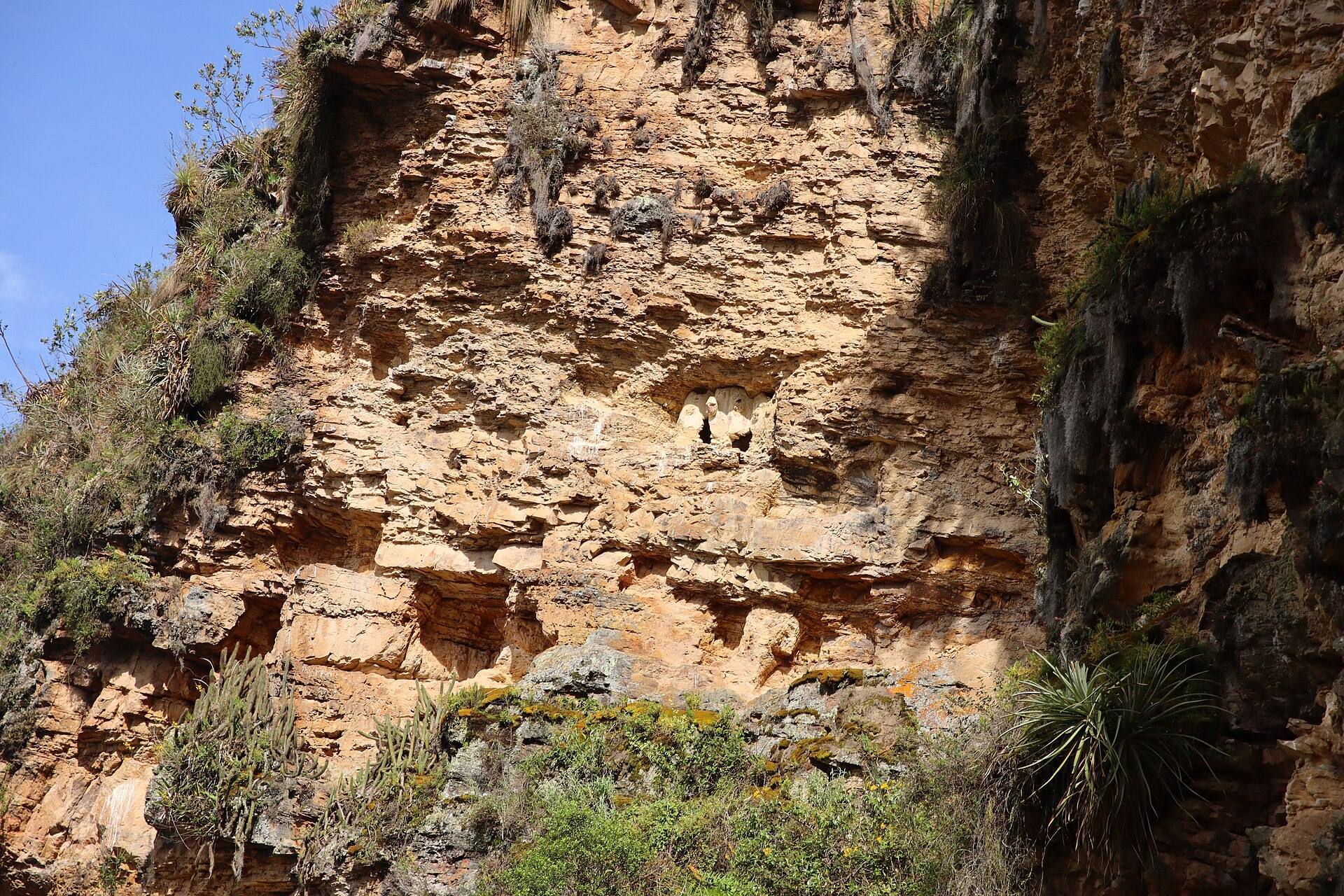
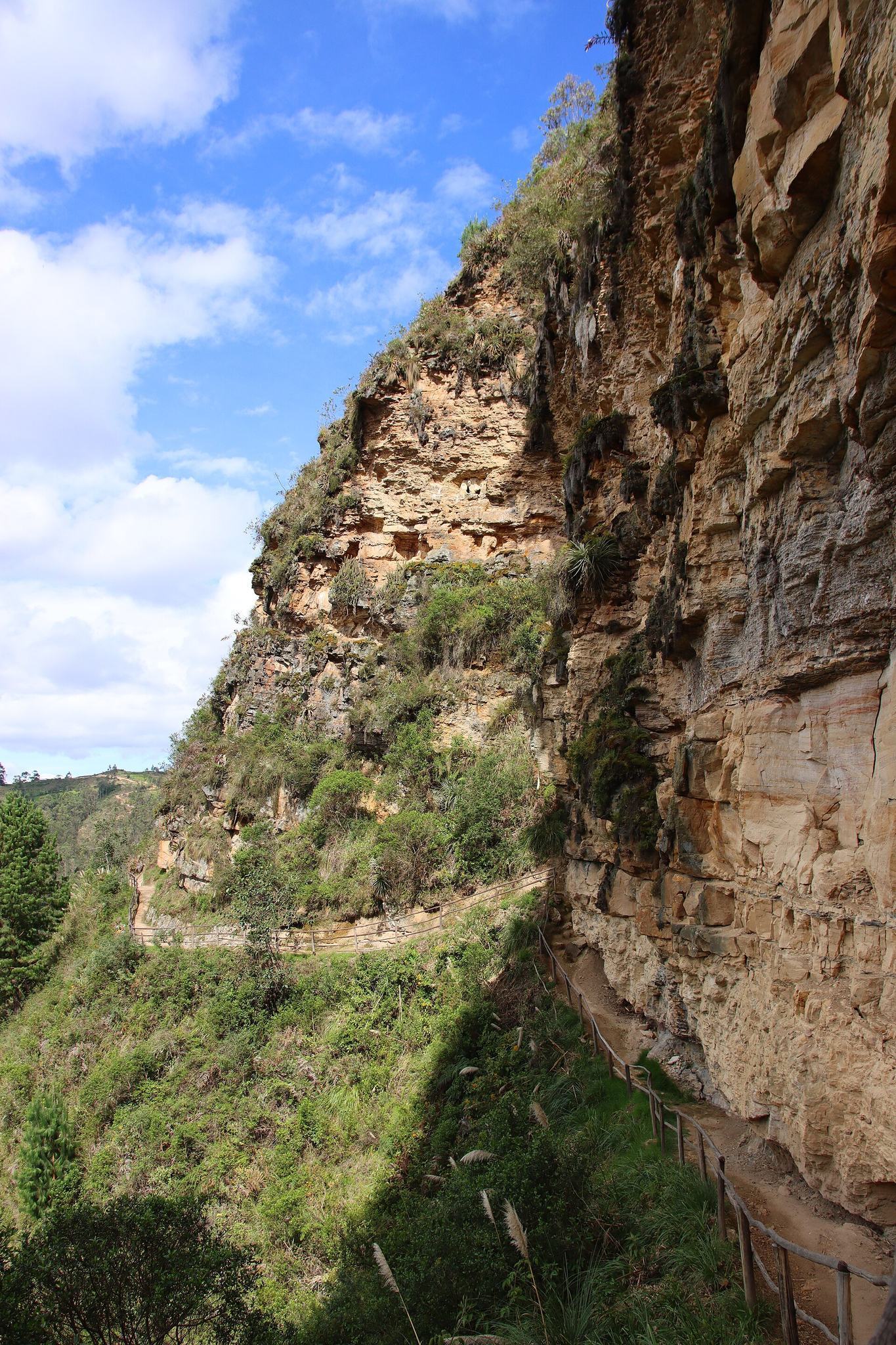
The principal group occupies a cave or rock recess on the wall of a ravine, more than 200 metres above the gorge floor. Reaching it required a climb of approximately 24 metres over near-vertical rock. A rocky overhang sheltered the figures from weather, while the elevated position and difficult approach helped limit damage from looting and predators.
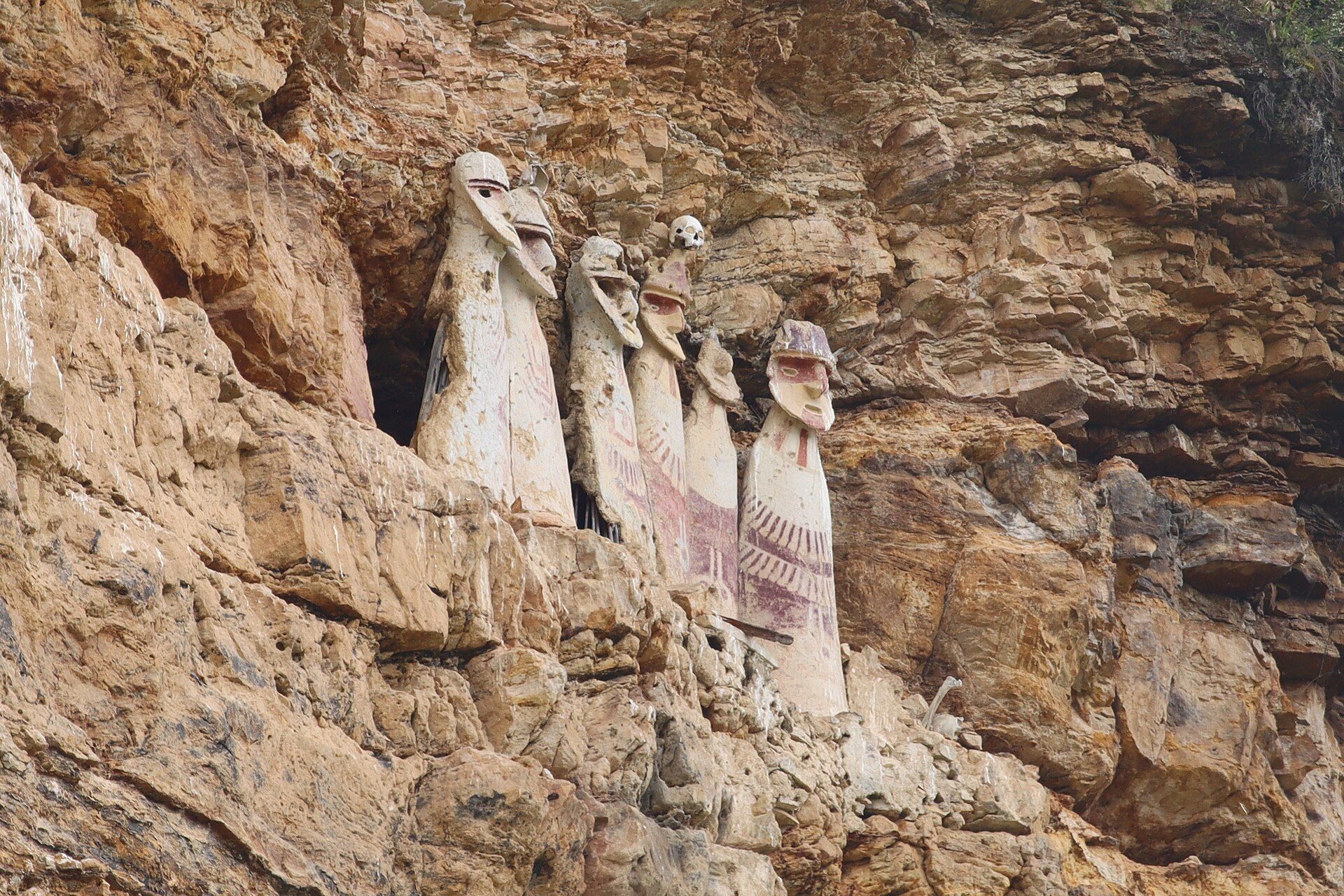
The group originally contained eight sarcophagi joined laterally. Seven remain standing today. One, probably the third in the arrangement, collapsed during the 1928 earthquake and fell into the ravine. Its loss opened holes in the sides of neighboring sarcophagi, enabling their contents to be examined without forcing open the surviving examples.
Anthropomorphic Forms and Painted Surfaces
The surviving figures are large, human-shaped capsules that reach approximately 2.5 metres in height. Their elongated bodies were designed to hold one deceased person. Each was made from clay mixed with small branches, sticks, stones, grasses, straw, and other dry plant material, applied over a framework of reeds or branches. The head and part of the chest are solid, while the body takes the form of a capsule.
A white coating covered the bodies and heads, which were then decorated with two shades of red paint. Geometric patterns and details of the body or ornaments appear on the surfaces, and some motifs have been interpreted as symbols connected with protective deities. The heads received sculptural treatment, including prominent noses and projecting jaws. Their faces reproduce the appearance of funerary masks made from crescent-shaped wooden boards that represented the jaw and were later copied in clay.
Burial Contents and Evidence of Status
Human skulls were found above some of the sarcophagus heads and have been interpreted as trophy skulls associated with power and status. Inside the opened sarcophagus, a seated mummy rested on animal skin and was wrapped in funerary textiles. Ceramic vessels and other offerings accompanied the burial. After openings appeared in the structures, rodents and birds of prey disturbed the interment. Archaeologists removed the mummy and its associated belongings for preservation.