Varadharajaperumal Temple, Thirubuvanai: A Chola Vishnu Temple
Site at a Glance
- Rating
- 4.8
- Popularity
- Low
- Country
- India
- Primary era
- Medieval
- Eras represented
- Medieval
- Civilizations
- Chola
- Site type
- Religious
- Remains
- Temple
On this page7 sections
History
Varadharajaperumal Temple, Thirubuvanai, is a Hindu Vishnu temple in Thirubhuvanai, India, attributed to the Chola king Parantaka I and built during the 10th-century Chola period in the Dravidian architectural tradition. Also known as Thirubuvanai Temple and Thodatri Perumal Temple, it was formerly called Setangi Vinnagar. Its principal deities are Varadaraja Perumal, an aspect of Vishnu associated with preservation and protection, and Perundevi Thayar, identified with Lakshmi.
Chola Educational and Devotional Institution
Inscriptions from the reign of Rajaraja Chola show that an educational institution operated at the temple. A further inscription from the 30th regnal year of Rajadhiraja I, around AD 1048, describes instruction in several Vedic traditions, including the Rig Veda, Yajur Veda, Chandoga Sama, Talavakra Sama, Apurva, Vajasaneya, and the Bodhayaniya Sathashatandha Sutra. The curriculum also included explanations of the sastras and epics such as the Ramayana. Teachers and students received paddy as remuneration.
Inscriptions from the Rajadhiraja Chola period also record recitations of the Tiruvaymoli, the major devotional composition of Nammalvar, one of the Alvar poet-saints devoted to Vishnu. These records connect the temple with both formal learning and Tamil Vaishnava religious practice.
Later History and Continuing Worship
During the 17th century, control of the surrounding region passed from the British to the French colonial empire. Many local temples were destroyed during the French invasion, but Varadharajaperumal Temple was spared. It follows the Vaikhanasa Agama, a Vaishnava ritual tradition governing worship and priestly duties, and remains an active place of worship while also being protected as an archaeological monument.
Priests conduct daily and festival worship, together with weekly, fortnightly, and monthly observances. Four daily services take place at approximately 7:00 a.m., noon, 6:00 p.m., and 8:00 p.m. Each includes decoration, a food offering, and the waving of lamps accompanied by Vedic mantras. Inscriptions mention festivals including the Tamil New Year in Chittirai, Vaikuntha Ekadashi in Margali, and Sankranti in Thai, followed by a Theerthavari ceremony in the Pamba River. The Archaeological Survey of India maintains and administers the temple.
Remains
Layout and Entrance
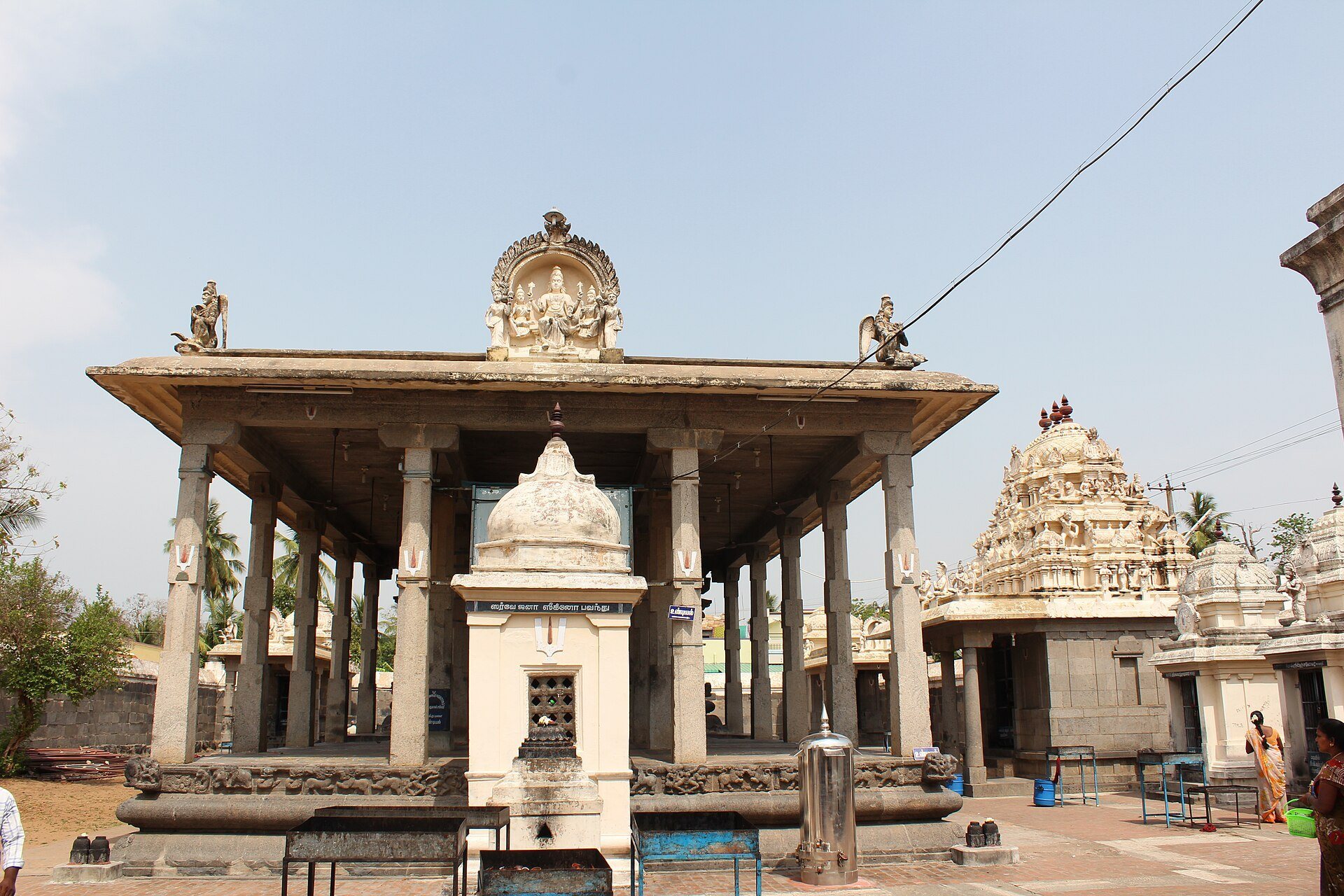
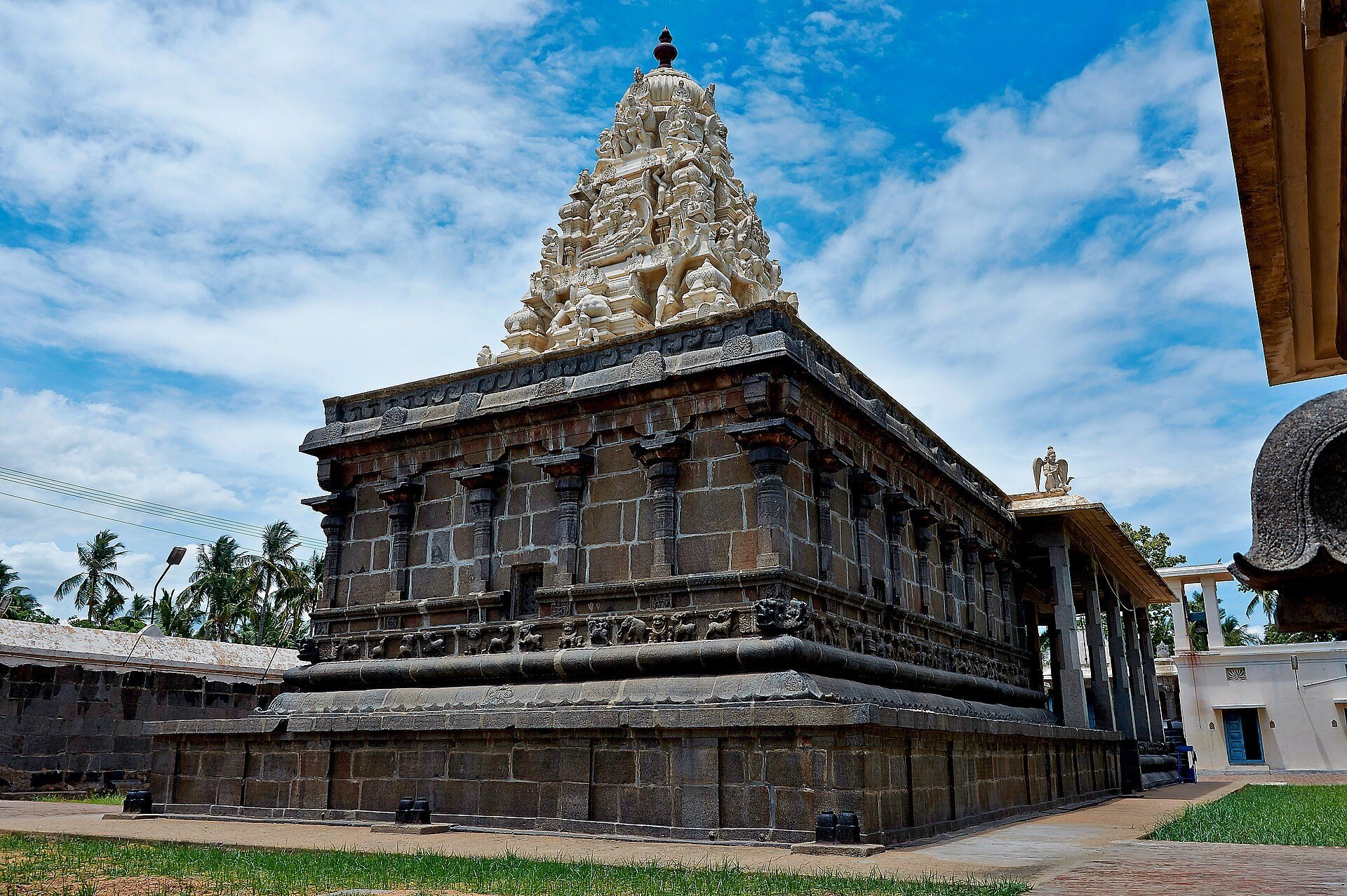
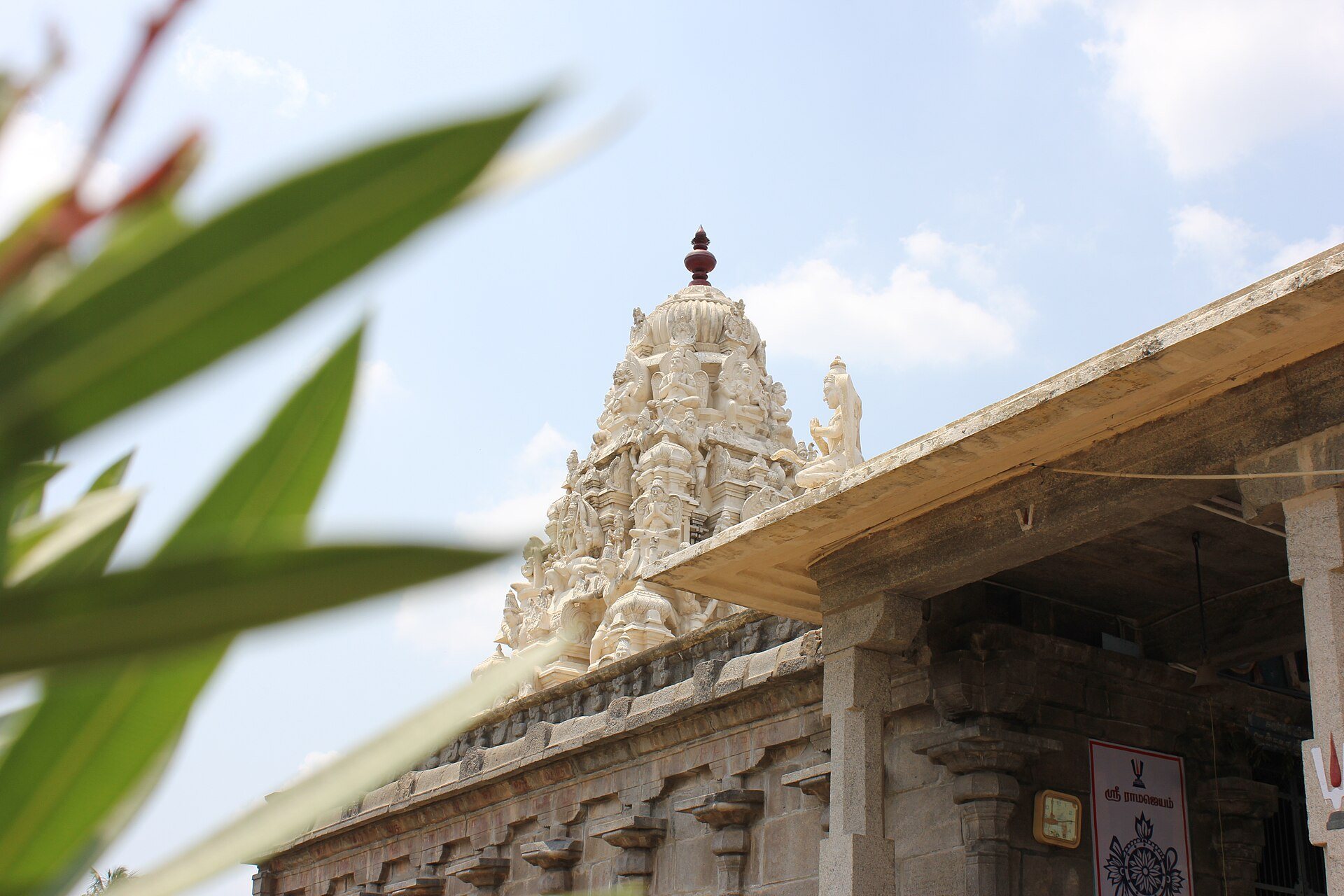
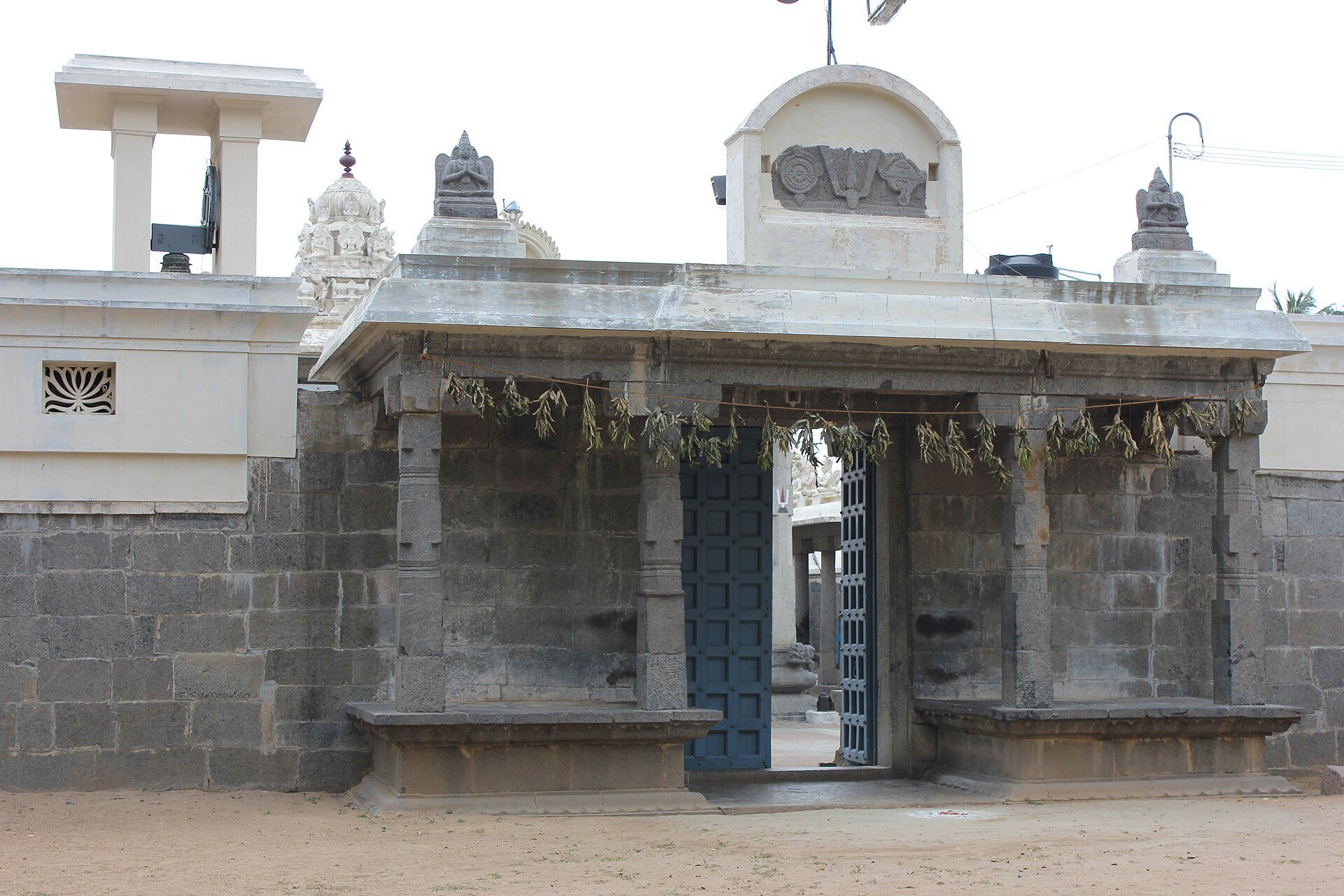
The temple follows the Dravidian architectural style and is enclosed by a granite wall that contains the subsidiary shrines. Its entrance is marked by a flat rajagopuram, a monumental gateway tower characteristic of medieval Chola temples. The spherical vimana, the tower over the sanctum, resembles those at the Viralur Boomeswar Temple and the Kowkishewar Temple at Kanchipuram. Devakoshtas, which are sculptural niches on the exterior walls, occupy the four sides of the vimana and face the cardinal directions.
Sanctum and Subsidiary Shrine
The sanctum contains a seated granite image of Varadaraja Perumal measuring approximately 5 feet, or 1.5 metres, in height. The four-armed figure holds the Panchajanya conch and a discus, while the other two hands display the Abhaya and Kadahasta mudras. Images of Sridevi and Bhudevi stand on either side. Two Dvarapalas, guardian figures positioned near sacred entrances, flank the Ardha Mandapa, the hall adjoining the sanctum.
A separate shrine for Andal stands in the second precinct and contains a festival image. Andal, a Tamil woman poet-saint, is a revered Vaishnava figure traditionally associated with devotion to Vishnu.
Carved Narrative Scenes
The temple walls carry sculpted legendary scenes, particularly episodes involving Rama and Krishna. Numerous scenes from the Ramayana and the Srimad Bhagavatam are carved on the adhisthana, the upper foundation of the sanctum. The Ramayana imagery is important for the history of Tamil religious culture because it indicates familiarity with the epic in ancient Tamil Nadu before the composition of the Kamba Ramayanam.