Ganondagan State Historic Site: A Seventeenth-Century Seneca Town in New York
Site at a Glance
- Rating
- 4.8
- Popularity
- Low
- Country
- United States
- Primary era
- Early Modern
- External website
- Open
- Eras represented
- Early Modern
- Civilizations
- Unclassified
- Site type
- City
On this page9 sections
History
Ganondagan State Historic Site is the location of the largest Seneca village of the seventeenth century, in Victor, New York, United States. Developed by the Seneca, it stood at the western gateway of Haudenosaunee territory and was known as the “Town of Peace.” The village was associated with the Peacemaker’s unification of the five founding nations of the Haudenosaunee Confederacy, an alliance of Indigenous nations governed through the Great Law of Peace.
Seneca Political and Cultural Traditions
Seneca tradition places Ganondagan at the center of the Peacemaker’s work to unite the Mohawk, Oneida, Onondaga, Cayuga, and Seneca. Jikonsase, a senior Seneca woman later known as the “Mother of Nations,” lived near the village and hosted discussions concerning the Onondaga’s place in the confederacy. Her nearby burial place remains revered and protected by the Seneca.
Ganondagan’s history also reflects Seneca social and political institutions. Their matrilineal kinship system gave women authority over inheritance, property, family affiliation, and clan membership. Seneca political ideals later became associated with the development of the United States Constitution, and in 1988 the United States Senate acknowledged the contribution of the Iroquois Confederacy to that development.
Jesuit Missions and European Visitors
The village is identified with the Jesuit Mission of St. Jacques, or St. James, described in the Jesuit Relations, reports of Catholic missionary activity and encounters in North America. In 1656, Jesuit Father Pierre-Joseph-Marie Chaumonot traveled from the Cayuga nation to Ganondagan and addressed the village elders. By the end of 1668, missions had been established among all five Haudenosaunee nations, and Father James Fremin had been assigned to the Seneca mission at Ganondagan. Growing tensions between the Seneca and the French led the Seneca to force the missionaries to leave in 1684.
René-Robert Cavelier, Sieur de La Salle, and Father René de Bréhant de Galinée reached Ganondagan through Irondequoit in August 1669. La Salle returned in 1678 with Father Louis Hennepin, who noted the presence of Jesuits Julien Garnier and Pierre Raffeix and a small bark chapel. In 1677, the English colonial official Wentworth Greenhalgh visited while seeking Haudenosaunee alliances for the British. He called the settlement Canagora or Canagorah and described about 150 houses, along with major feasting and dancing.
Descriptions of the settlement’s defenses vary. Galinée described square enclosures with tall pole palisades and stacked timber behind them, while Greenhalgh reported in 1677 that the Seneca towns were not stockaded. These differing observations provide contrasting accounts of how the village and its defensive arrangements appeared to European visitors.
French Invasion and Dispersal
On June 13, 1687, the Marquis de Denonville led 832 colonial regulars, more than 900 Canadian militia, and about 400 Indigenous allies against the Seneca. The campaign formed part of the Beaver Wars, a seventeenth-century series of conflicts over control of the North American fur trade. French forces approaching Ganondagan fought a Seneca force in July. Denonville recorded five or six French dead and 20 wounded, together with 45 Seneca dead and 60 wounded. Another contemporary report gave a smaller Seneca force of about 450 people, leaving the strength of the defending force uncertain.
Most villagers had reportedly moved to Cayuga or to a lake south of Ganondagan before the French arrived. The villagers burned their own town, and on July 14, 1687, Denonville found Ganondagan burned and a nearby fort abandoned. The French destroyed about 1.2 million bushels of stored and standing corn, along with food supplies and livestock, before destroying the Seneca village of Totiakton farther west. After the invasion, the communities known as Gandagora and Gandougarae appear to have settled first at Canandaigua and later in the region east of Canandaigua Lake.
Later Use and Preservation
During the American Revolutionary War, the 1779 Sullivan Expedition, a Continental Army campaign against Haudenosaunee communities allied with the British, attacked settlements in the wider region, including those at Geneva, Canandaigua, and along Seneca Lake. The Seneca continued to use the Ganondagan area for agriculture for more than a century after the war.
In the 1930s, Chief Freeman Johnson began efforts to preserve the property after looters started removing artifacts. Boughton Hill became a National Historic Landmark in 1964 and was added to the National Register of Historic Places, the federal inventory of historically significant places, in 1966. New York State established the historic park in 1987, and the complex is operated by New York State.
Remains
The surviving site is organized into two principal areas: the 245-acre Boughton Hill area and the 33-acre Fort Hill area. Together they represent the former settlement, its agricultural system, storage facilities, and burial landscape. The original town occupied about nine acres and contained nearly 150 longhouses, dwellings, stores, fields, livestock areas, and burial grounds. Extensive cornfields surrounded Ganondagan and supplied corn to many Haudenosaunee communities.
Boughton Hill Settlement and Burials
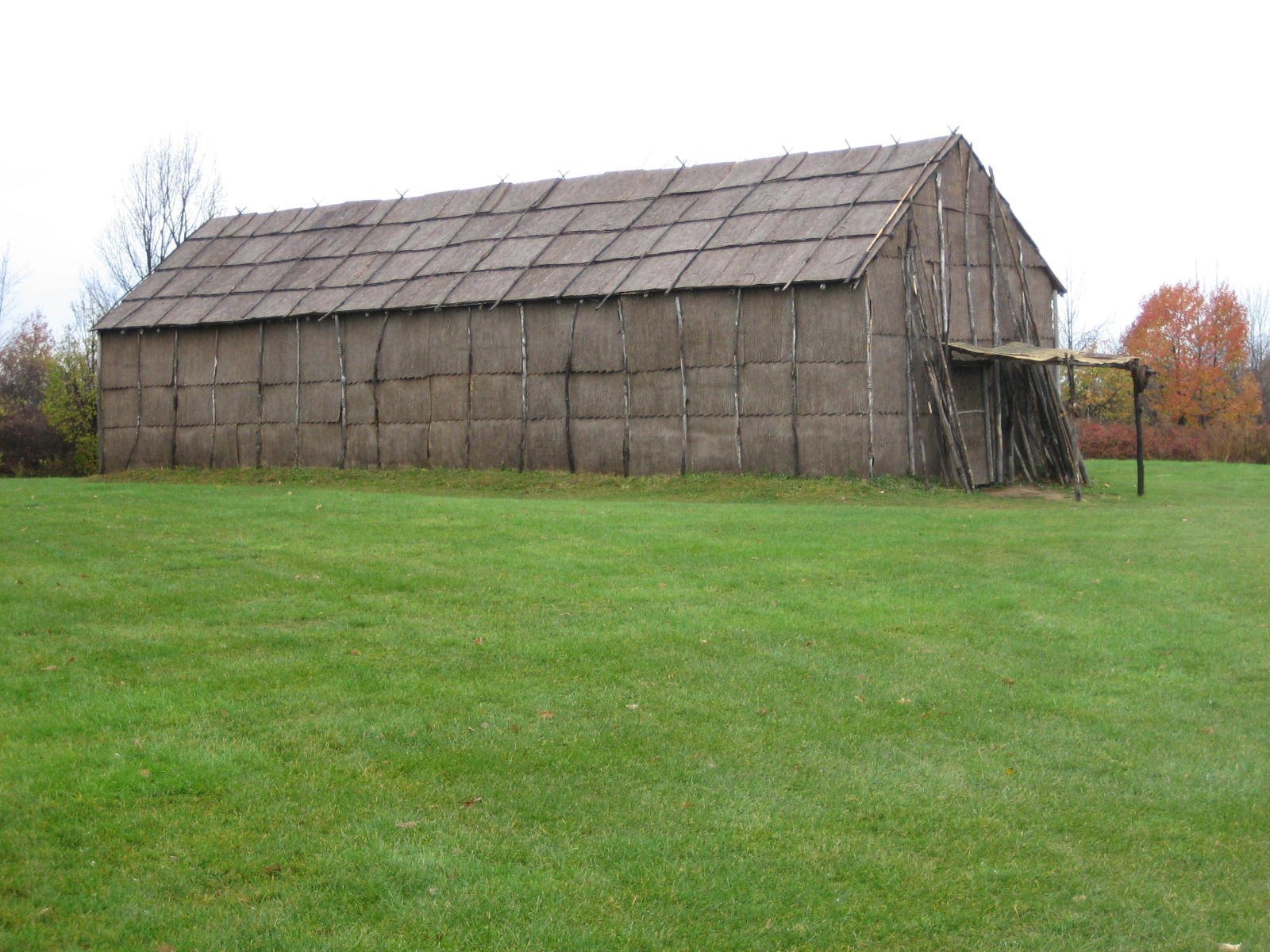
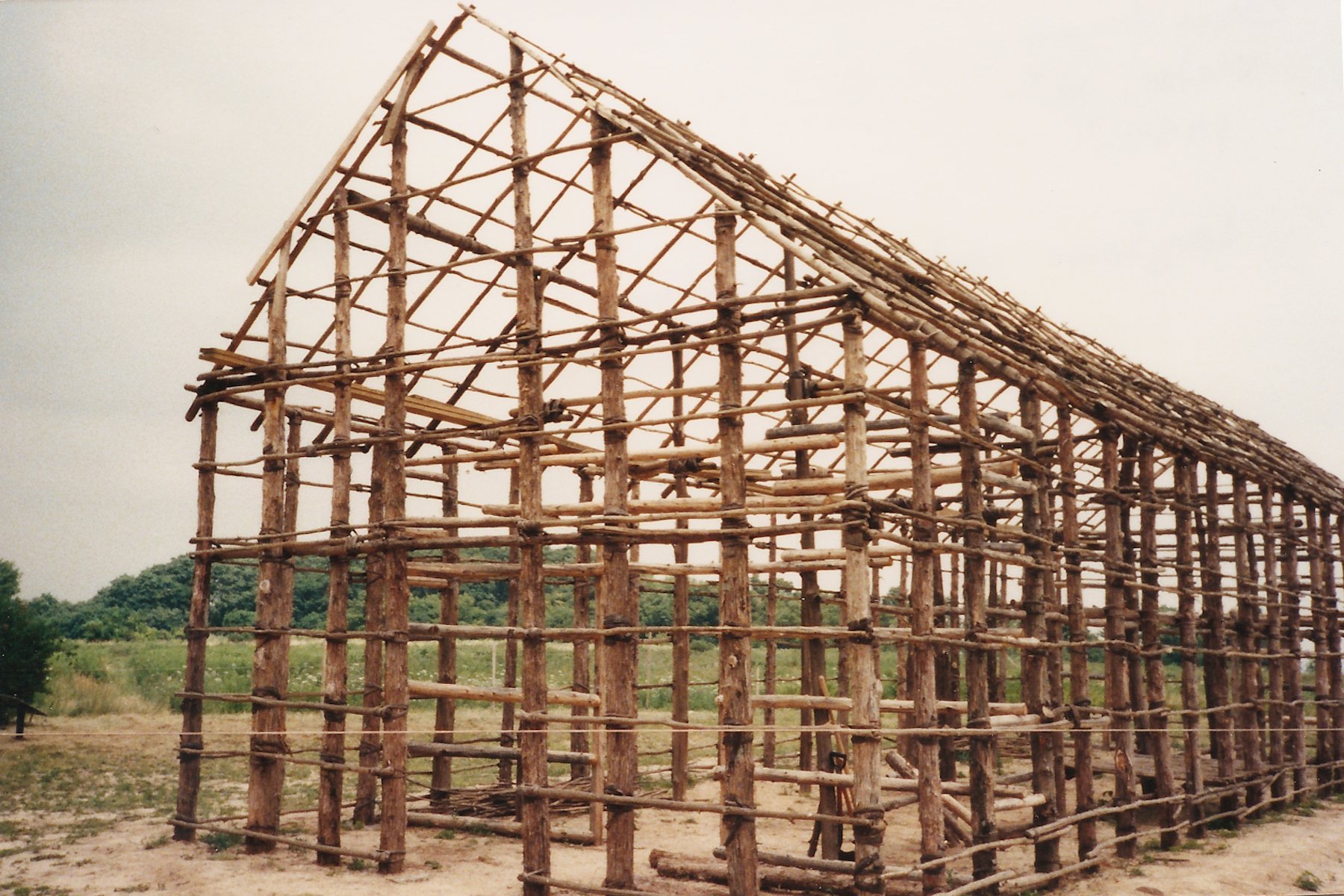
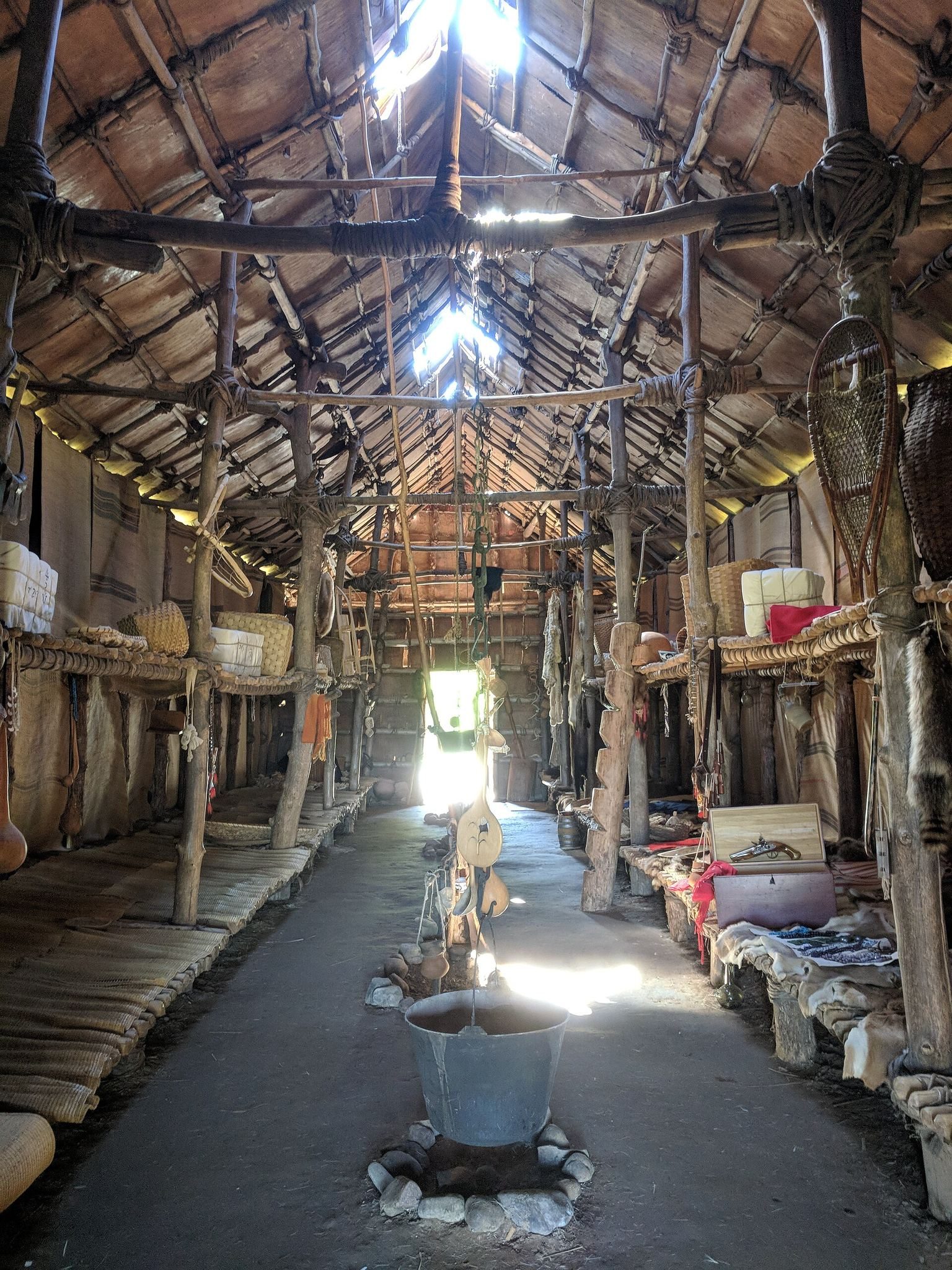
Boughton Hill contains the former village area, longhouse remains and reconstructions, and burial grounds associated with Ganondagan. A longhouse was an elongated dwelling shared by multiple Indigenous families or kin groups. The site includes a reconstructed Seneca longhouse made with bark. It represents the village’s longhouse tradition and is a modern reconstruction rather than an identified surviving seventeenth-century building. A construction date of 1670 is listed for the Ganondagan longhouse tradition represented at the site. Jikonsase’s nearby burial place is also associated with this landscape and is revered by the Seneca.
Fort Hill Granary
Fort Hill contains the location of a fortified granary, a grain-storage structure protected by defensive construction, together with associated archaeological remains. The installation served the agricultural system that made Ganondagan a Haudenosaunee “breadbasket.” Its relationship with the Boughton Hill area represents the connection between the residential settlement, surrounding fields, and protected food storage.
Landscape and Cultural Preservation
The park’s two principal areas form a wider cultural landscape extending across more than 560 acres of property. Trails cross the land, while preservation work has supported both the physical property and Seneca cultural traditions. The reconstructed longhouse, village area, agricultural setting, fortified storage location, and burial landscape together present the main components of Ganondagan’s seventeenth-century community.