Lizard Mound County Park: A Prehistoric Effigy Mound Park in Wisconsin
Site at a Glance
- Rating
- 4.5
- Popularity
- Low
- Country
- United States
- Primary era
- Medieval
- External website
- Open
- Eras represented
- Medieval
- Civilizations
- Unclassified
- Site type
- Burial
- Remains
- Necropolis
On this page8 sections
History
Lizard Mound County Park is a prehistoric Indigenous effigy-mound complex in West Bend, Wisconsin, United States. Its earthworks were built during a period generally placed between about AD 500 and AD 1000, although a park sign gives a potentially broader range of AD 650 to 1300, leaving the precise chronology uncertain.
The Mound Builders
The builders belonged to prehistoric Indigenous communities of the Upper Midwest known archaeologically for constructing burial and effigy mounds. They moved between seasonal settlements, living near rivers and lakes in summer and using sheltered upland valleys during winter. Their activities included hunting, fishing, gathering wild plants, fruits, and nuts, making tools from stone, wood, bone, and copper, and producing pottery. They may also have been the first people in Wisconsin to use the bow and arrow.
These communities created earthworks shaped as mammals, reptiles, birds, and other real or mythical creatures, along with conical, oval, and linear mounds. Burial beneath effigy mounds ended about 1,000 years ago. The practice was distinctive to the region surrounding the park, while the religious or clan meanings of individual mound shapes remain uncertain.
Loss, Investigation, and Preservation
The original group probably contained at least 60 earthworks. A field-investigation sketch made by Professor Julius L. Torney in 1883 recorded 47 mounds and noted that some had already been destroyed. Archaeological exploration in 1960 established that the dead had been placed in pits and that the effigy mounds were built over them. Clay pots, projectile points, pipes, bone harpoons, and beads could accompany the burials.
Lizard Mound County Park was established in 1950. Washington County acquired the property from the State of Wisconsin in 1986, and the park returned to state ownership in 2021. It is now managed by the Wisconsin Department of Natural Resources. The park is included in National Register of Historic Places listings for the park and for the larger regional Washington County Island Effigy Mound District. The park-wide historic district was added to the National Register on April 25, 1996.
Remains
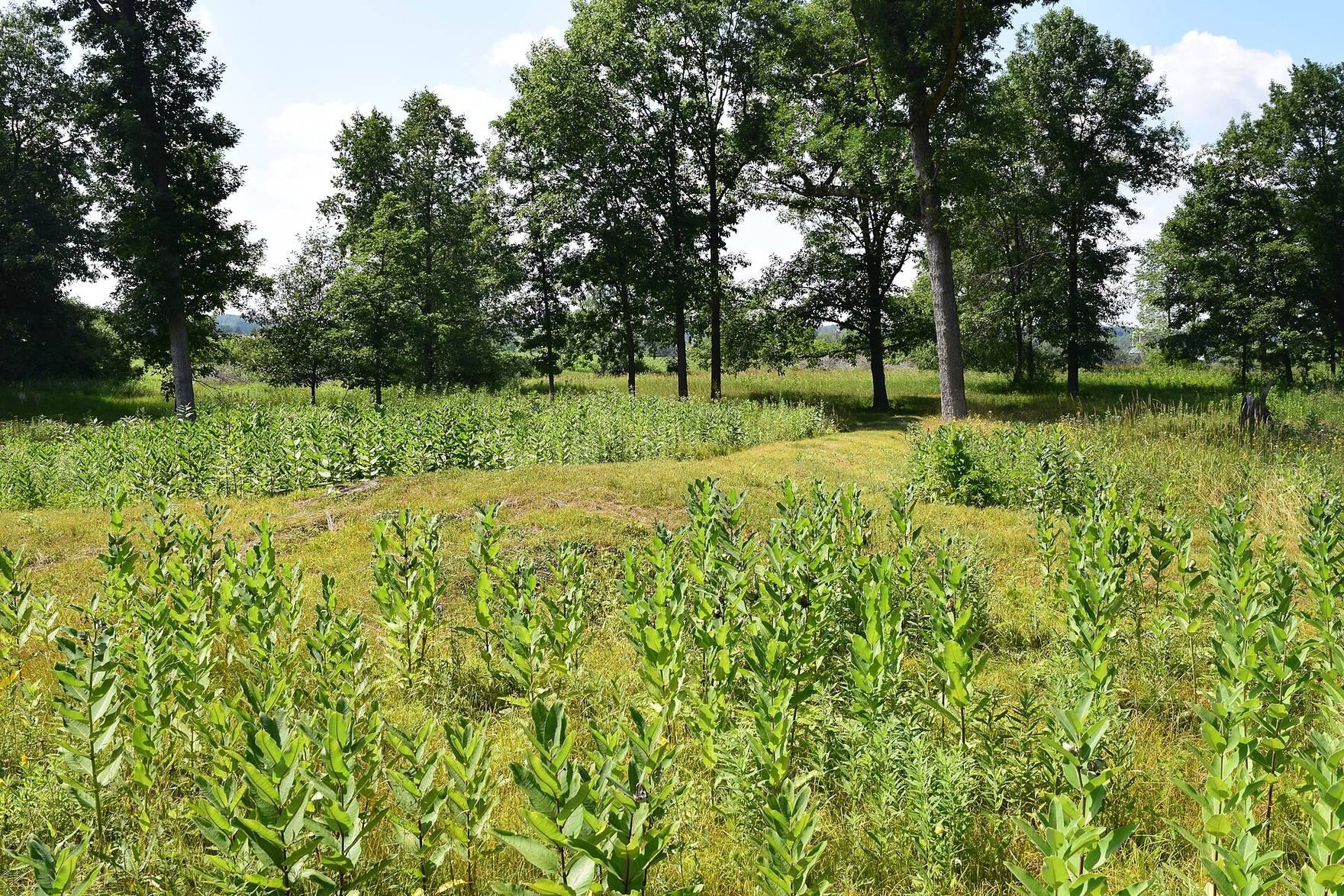
The park covers 22 acres, or 8.9 hectares, and preserves 28 well-preserved effigy mounds. Most rise more than 3 feet above the surrounding ground surface. The group includes carefully formed animal earthworks as well as conical, oval, and linear mounds, creating a varied surviving layout. A self-guided anthropological nature trail winds around the mound group, with markers explaining the culture that built the earthworks.
Animal Effigies
Bird Effigies
Two of the surviving mounds are large bird effigies. Their outlines belong to the animal-shaped portion of the group and demonstrate the range of forms preserved within the park.
Long-Tailed Forms and Lizard Mound
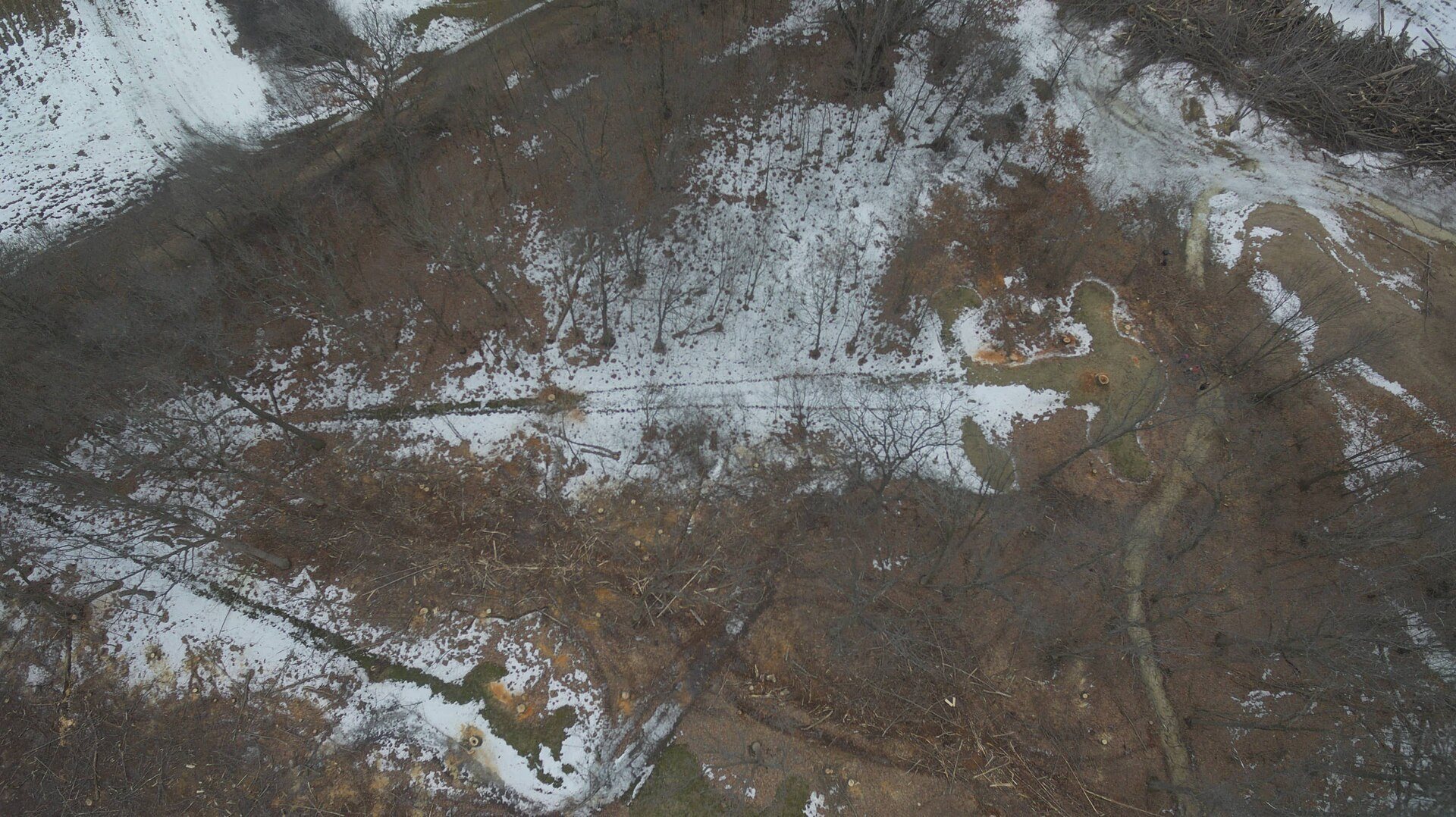
Seven mounds have long-tailed animal forms commonly called “panther” effigies. Lizard Mound may have represented the same kind of animal as these long-tailed forms, whether a panther or another creature. Its spread-eagle posture is distinctive because all four limbs are displayed.
Burial and Other Earthworks
The group also contains burial mounds shaped as animals and other creatures, together with conical, oval, and linear earthworks. Burials were placed in small pits or on carefully prepared surfaces, and earth was then built over them as a grave marker. Associated deposits could include clay pots, projectile points, pipes, bone harpoons, and beads. These construction practices connect the surviving forms with the burial use of the mound group.