Kodla Math: A Hindu Memorial Monument in Bagerhat, Bangladesh
Site at a Glance
- Rating
- 4.5
- Popularity
- Low
- Country
- Bangladesh
- Primary era
- Early Modern
- Eras represented
- Early Modern
- Civilizations
- Unclassified
- Site type
- Religious
- Remains
- Tomb
On this page6 sections
History
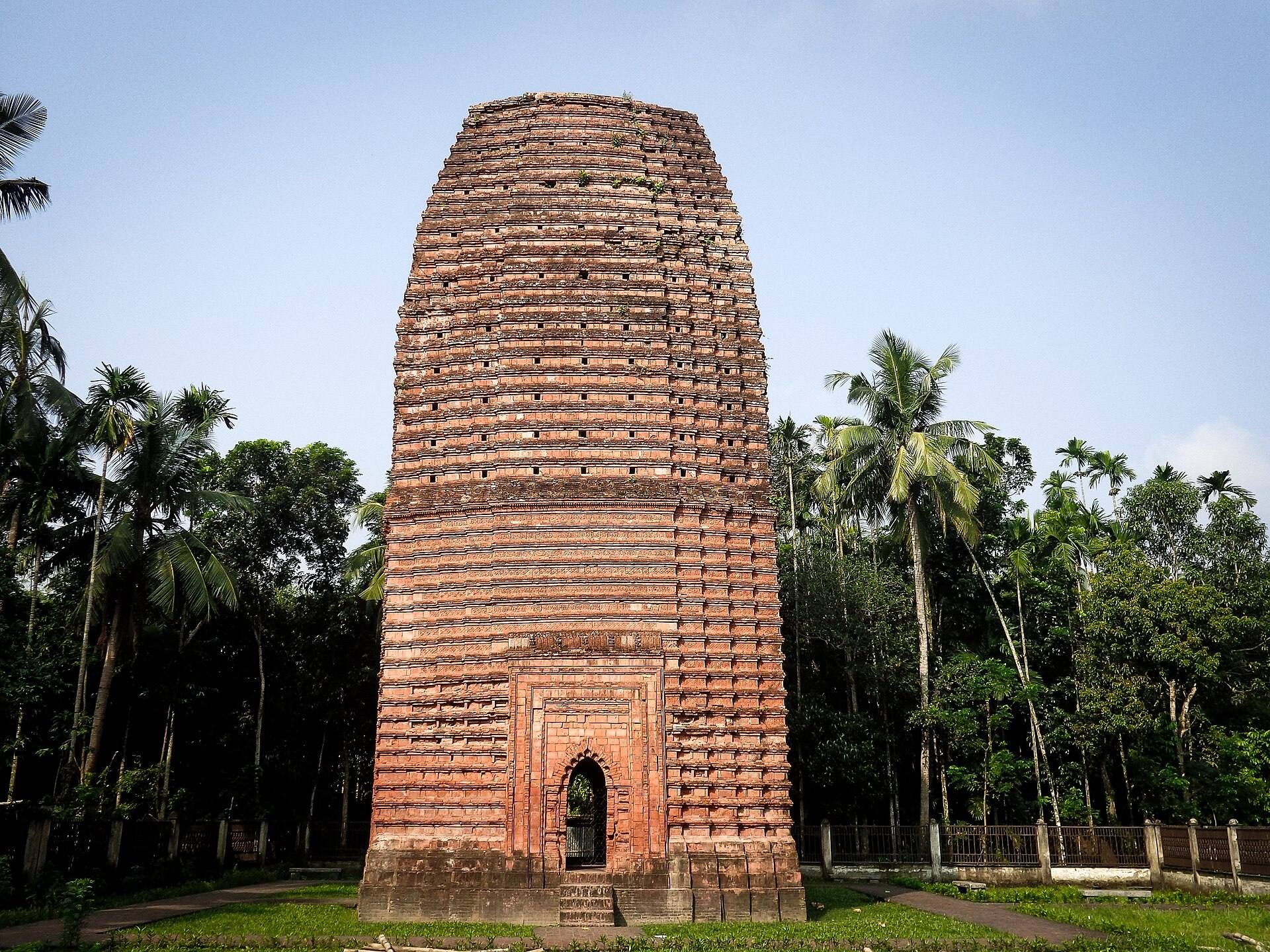
Kodla Math is a Hindu archaeological monument in Kodla village, in Barui Para Union of Bagerhat District, Bangladesh. Also known locally as Ayodhya Math, it is generally believed to date from around the seventeenth century. The building is a math, a Hindu religious or commemorative structure, rather than a temple dedicated to a deity. Its strongly rising tower and surviving inscription connect it with the religious and political world of early modern Bengal.
Origins and the inscription
An inscription above the southern entrance has not been fully deciphered. The portions that can be read have been interpreted as referring to a palace or favor associated with Tarak, described as a Brahmin named Kartik. The same reading suggests that the structure may have been built by a Brahmin named Sharmana. These interpretations remain connected to a partially recoverable text rather than a complete reading of the inscription.
The most widely accepted explanation identifies Raja Pratapaditya as the patron of Kodla Math. In this interpretation, he commissioned it as a memorial to Abilamb Saraswati, his guru and court scholar. Abilamb was also described as Pratapaditya’s friend and was known for composing poetry rapidly and extemporaneously. The monument may therefore have been associated with the samadhi of a deceased holy person, a memorial that can also mark a religious figure’s burial or final resting place.
Pratapaditya’s rule
Pratapaditya was a prominent regional ruler associated with the Baro-Bhuiyans, a group of landholding and military leaders who held substantial power in Bengal during the late medieval and early modern period. During his rule, his control covered the whole of Bagerhat and, after the death of his uncle Basanta Ray, extended as far as the Baleshwar River. Pratapaditya killed Basanta Ray and later attempted to kill his son-in-law, yet he also supported numerous scholars through stipends. This combination of political violence and patronage forms part of the historical setting in which the memorial was created.
Remains
Structure and exterior
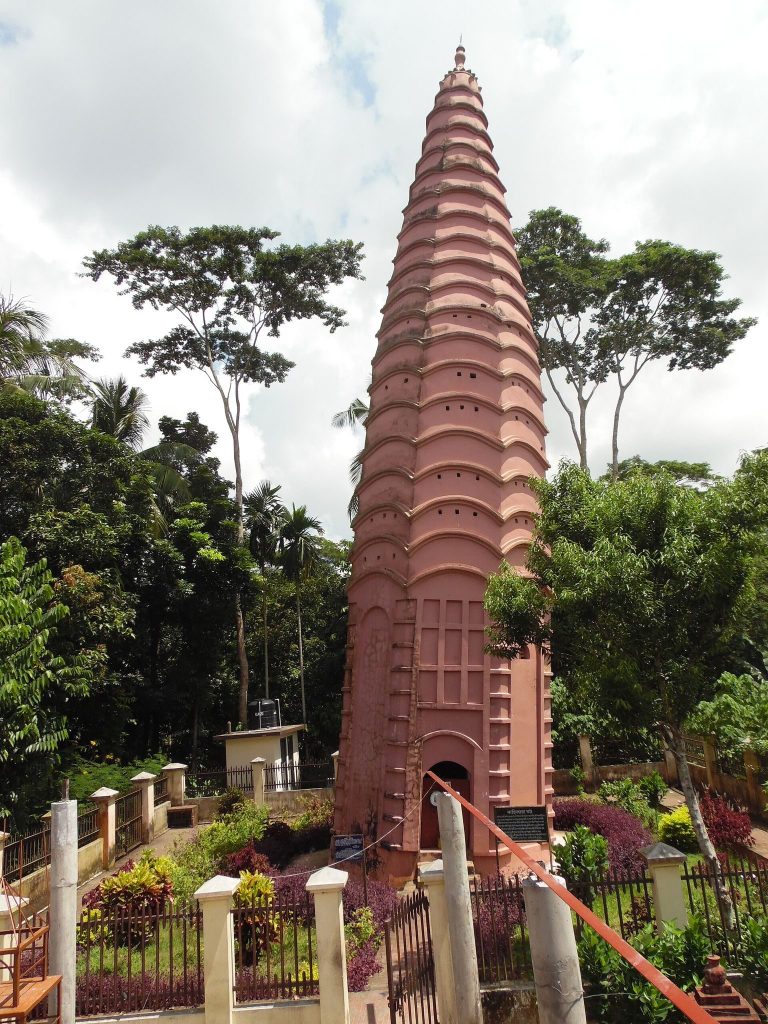
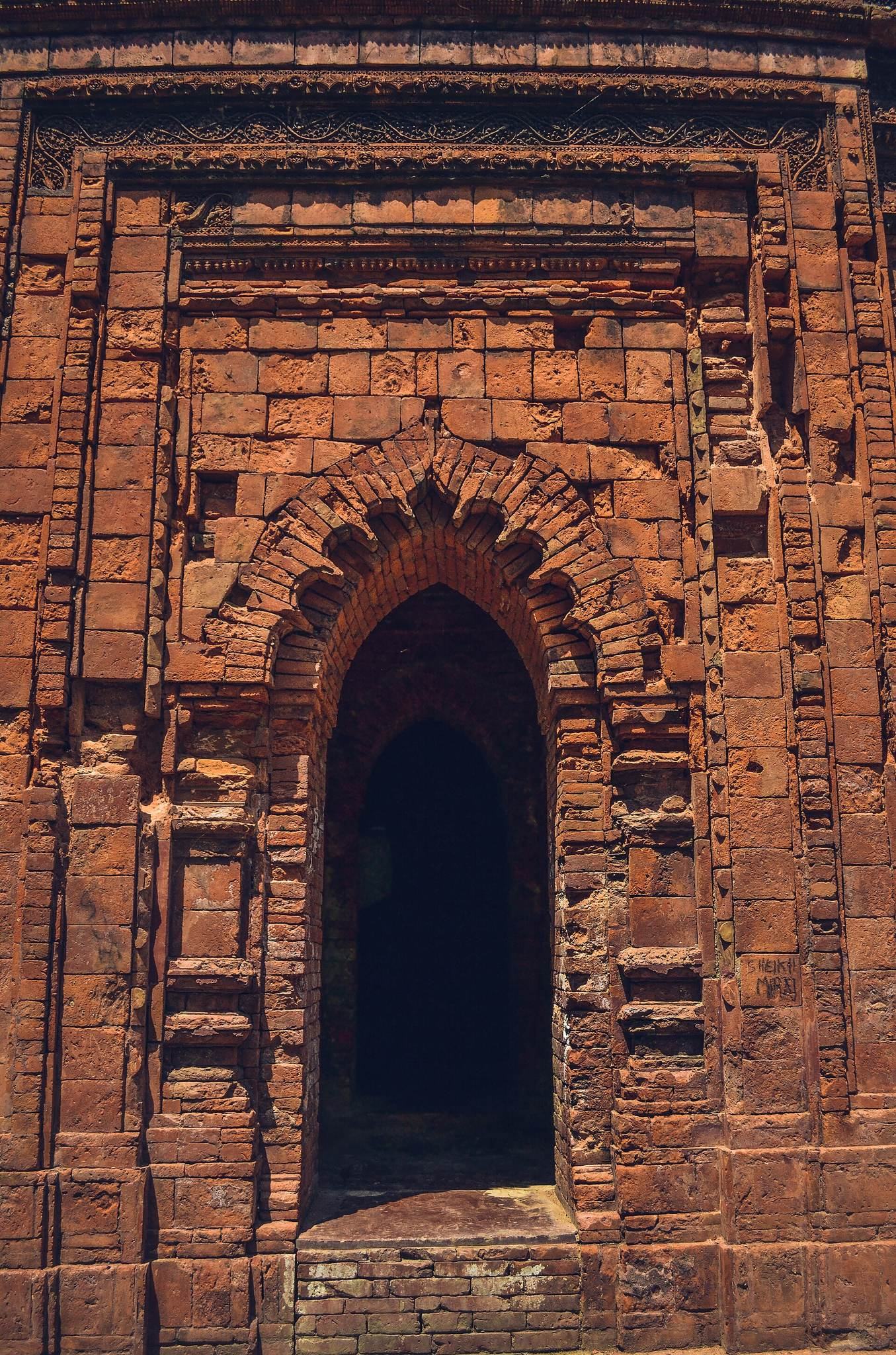
Kodla Math stands on a square, four-sided foundation and rises approximately 18.29 metres. Its walls are made of thin red, polished bricks and are about 3.17 metres thick. Each interior wall is described as 2.61 metres long. Three entrances face east, west, and south, with the southern doorway traditionally regarded as the principal entrance. The inscription connected with the monument is positioned above this entrance.
The exterior is covered with carved ornament. Each outer side is polygonal and contains five niches. Another description of the facade identifies polygonal sections made up of six flat surfaces and eleven niches. The decoration rises in successive circular bands before ending in straight horizontal lines. Together, these elements produce the monument’s strongly ascending, pyramid-like appearance.
Tower and interior space
The building’s upward-reaching form is associated with the shikhara style, a vertically rising superstructure used in South Asian temple architecture. Its design is also believed to reflect the rekha pattern, a curving or strongly ascending tower form particularly associated with Odisha architecture and used there up to the sixteenth century.
Inside, a hollow dome rises approximately 12 to 13 feet before terminating overhead. Some interpretations propose that another hollow space exists above this dome, although that possibility remains uncertain. The monument stands on the eastern bank of the Bhairab River, approximately 8 kilometres north of Bagerhat and about 6 kilometres east of Jatrapur Market.