John Brown Tannery Site: An Underground Railroad Landmark in Pennsylvania
Site at a Glance
- Rating
- 4.7
- Popularity
- Very Low
- Country
- United States
- Primary era
- Modern
- External website
- Open
- Eras represented
- Modern
- Civilizations
- Unclassified
- Site type
- Economic
- Remains
- Production Complex
On this page5 sections
History
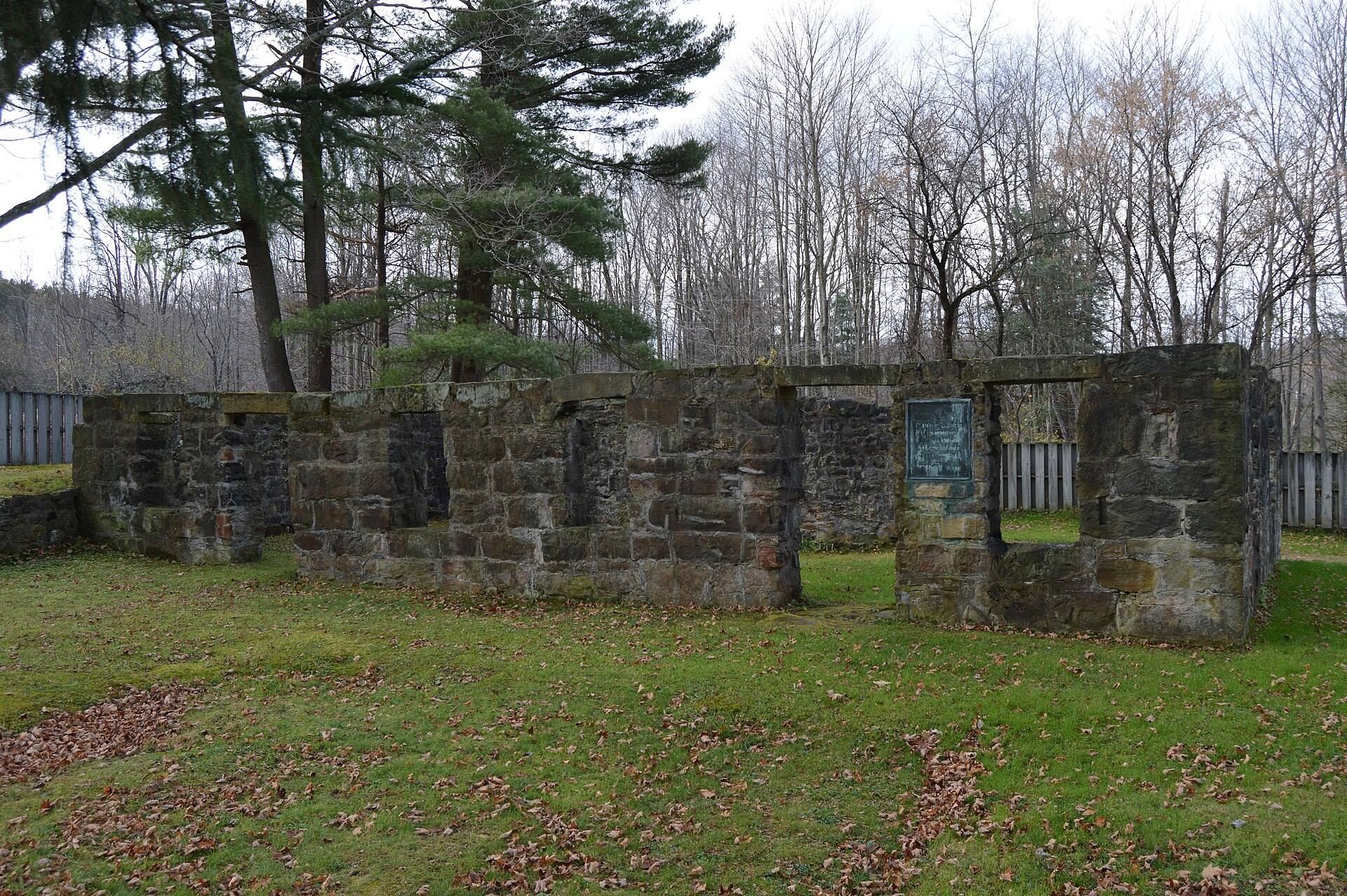
The John Brown Tannery Site in Guys Mills, Pennsylvania, United States, preserves the remains of a tannery built by abolitionist John Brown in 1825. Brown was a prominent opponent of slavery who used militant resistance and assistance to help enslaved people seek freedom. He lived at the tannery from 1825 to 1835, and the building stood about 0.25 miles (0.40 km) from the Pennsylvania and Ohio Canal.
The Tannery and the Underground Railroad
The tannery became a major stop on the Underground Railroad, a clandestine network of routes, shelters, and assistance that helped enslaved people escape to free states and Canada. During this period, Brown helped approximately 2,500 enslaved people. The site’s industrial function therefore operated alongside Brown’s efforts against slavery.
Later Industrial Use and Commemoration
In 1874, the building was converted into a cheese factory. Ten years later, it became a steam-powered grist mill, where grain was ground using steam power. A fire destroyed the building in 1907.
The site was added to the National Register of Historic Places in 1978. This federal list recognizes places in the United States for their historical or architectural importance. A community celebration called “Spirit of Freedom” takes place at the site on May 9, John Brown’s birthday.
Remains
The surviving site includes the ruins of a one-story, rectangular tannery measuring 55 by 22 feet (16.8 by 6.7 meters). These remains represent the building Brown constructed in 1825 and the industrial structure later adapted for cheese production and milling.
Barn and Burial Ground
A barn at the site contained a concealed, well-ventilated room used for enslaved people fleeing toward freedom. Nearby graves belong to Brown’s first wife, Dianthe, their four-year-old son Frederick, and an unnamed newborn son.