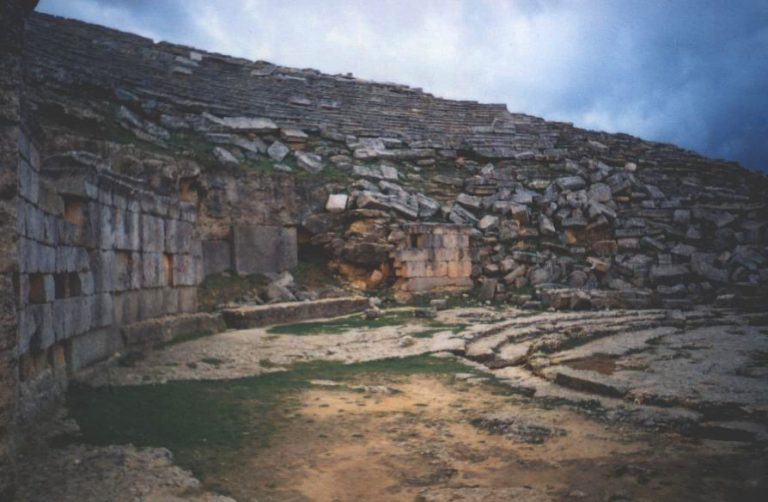
Haua Fteah: A Prehistoric Cave Site in Libya
Site at a Glance
- Rating
- 4.5
- Popularity
- Very Low
- Country
- Libya
- Primary era
- Classical
- Eras represented
- Classical
- Civilizations
- Roman
- Site type
- Domestic
- Remains
- House
On this page12 sections
History
Haua Fteah is a large karst cave near Balvo in Cyrenaica, northeastern Libya. Evidence of modern human presence there reaches back approximately 200,000 years, while the excavated sequence covers the Middle and Upper Paleolithic, Mesolithic, Neolithic, and Roman periods. This exceptionally long record has made the cave important for studying modern-human dispersal in North Africa, human responses to changing climates, and the development of agriculture.
Discovery and early excavations
Charles McBurney recognized Haua Fteah as an archaeological site in 1948. Excavations directed by McBurney and his team took place from 1950 to 1955. The first trench opened on the western side of the cave in 1951, followed by a horizontal trench above it and a deep sounding trench in 1952. Together, these excavations reached a depth of 14 metres. Work then stopped for several decades.
McBurney divided the cave’s deposits into seven cultural phases using their layered sequence. Radiocarbon dates were first obtained from wood charcoal and bone fragments. Material from both the earlier excavations and later fieldwork was subsequently reassessed with several newer dating methods, refining the chronology of human activity in the cave.
Renewed research
Investigation resumed in 2007 with the Cyrenaica Prehistory Project, directed by Graeme Barker of Cambridge. Seven excavation seasons were completed between 2007 and 2013. The project examined the sequence of occupation, the environmental and climatic history preserved in the deposits, and the ways people adapted to environmental change through archaeological, geomorphological, and palaeoecological research.
The earliest cultural phase dates to approximately 80,000 to 65,000 years ago. The second phase broadly belongs to 65,000 to 40,000 years ago, with newer dating placing its principal finds approximately between 73,000 and 43,000 years ago. A human mandible found in August 1952 belongs to this phase and dates to approximately 73,000 to 65,000 years ago. It was first regarded as closely related to Neanderthals, but later research identified it as belonging to a fully modern human, Homo sapiens.
The third phase dates to approximately 40,000 to 15,000 years ago and is associated with the Dabban blade industry. The fourth phase dates to approximately 14,000 to 10,000 years ago, the fifth to 10,000 to 7,000 years ago, and the sixth to approximately 7,000 to 4,700 years ago. The sixth phase is associated with Neolithic activity. The seventh and latest phase belongs to the Roman period, when structures and hearths show that the cave was used for keeping or sheltering animals.
Erosion and the accumulation of heavy sedimentary layers have affected the cave since McBurney’s excavations, covering parts of the original archaeological deposit. Haua Fteah is included on Libya’s tentative World Heritage List. The origins of the Dabban industry remain unresolved, and further excavation has been considered necessary to clarify interpretations of the cave’s earliest Upper Paleolithic evidence.
Remains
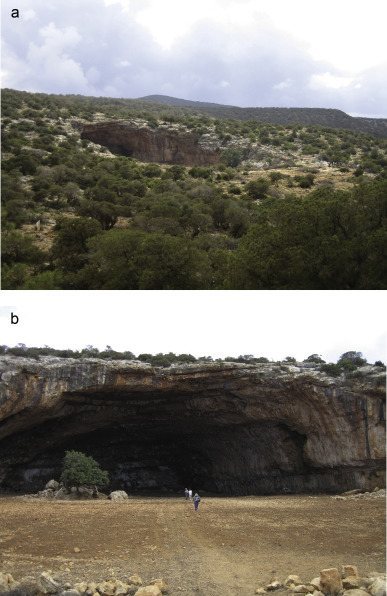
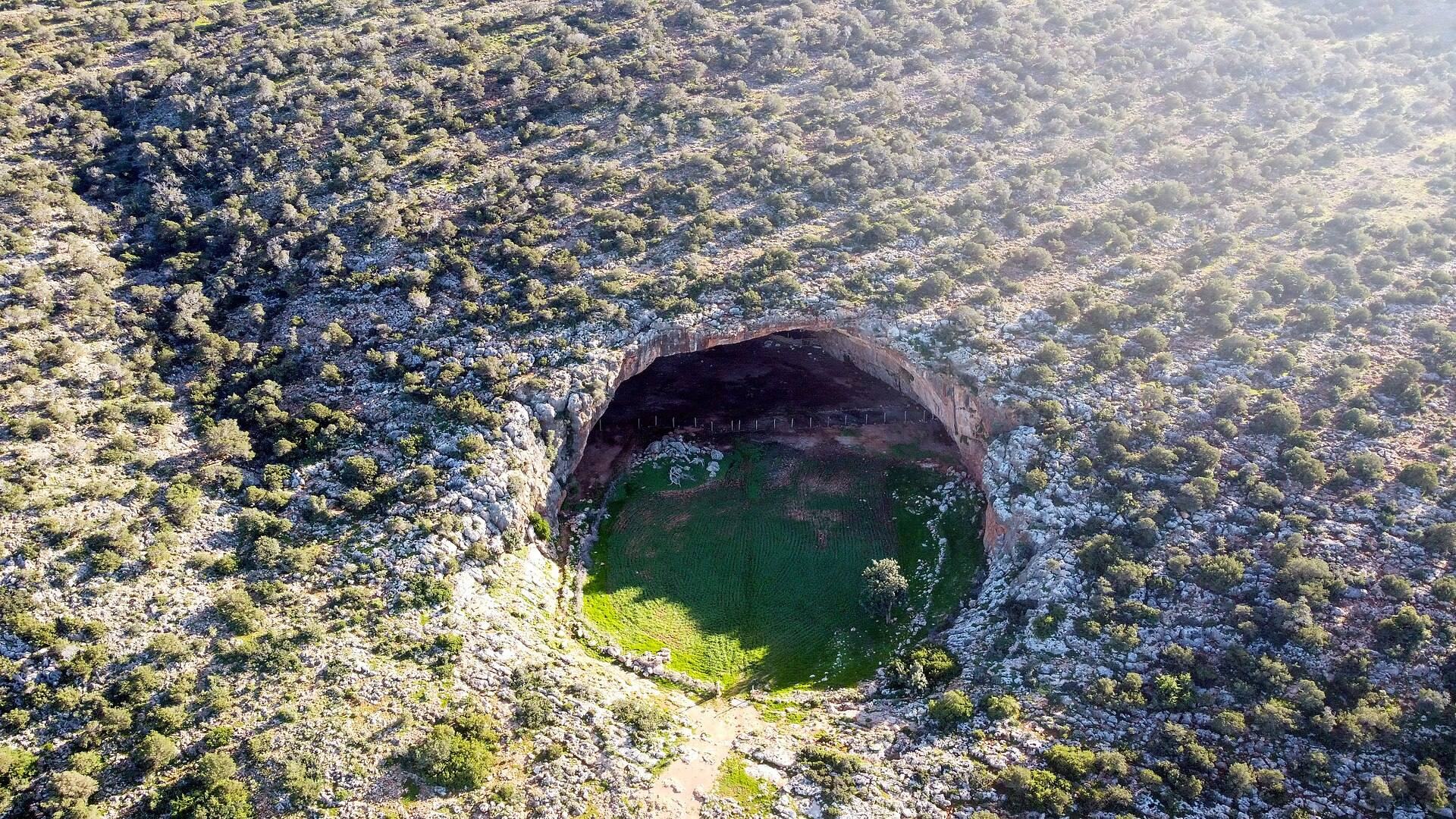
Haua Fteah is a karst cave, formed in soluble rock through dissolution and erosion, approximately 1 kilometre from the coast. It lies near the northern side of a plateau at the base of Jebel Akhdar, or the Green Mountain. The entrance faces north toward the Mediterranean and is approximately 50 metres high and 20 metres wide. The cave extends about 80 metres into the rock.
Cave formation and layered deposits
The term “haua” describes a characteristic cave form found along Libya’s coastal region. Marine erosion during the early Pleistocene, the geological epoch marked by repeated glacial and interglacial cycles, helped shape the cave in its present form. Its horizontal deposits are distinguished by different sediment types and preserve environmental changes across the Pleistocene.
These layers include evidence for a period when the shoreline stood approximately 6 metres above its present level during the final Riss-Würm interglacial, an older term for a warm interval between major glaciations. They also preserve conditions from the last glacial period, when sea level stood approximately 20 metres below its present level. Excavation through the deposits reached a total depth of 14 metres in the original trench system.
Prehistoric archaeological layers
Early Paleolithic occupations
The earliest phase contained flake and blade artefacts. The second phase, found at about 19 to 28 feet below the surface, contained Levallois-Mousterian flints, small hearths, food remains, and accumulations of bone. Levallois technology prepared a stone core to produce flakes of predetermined shapes, while the Mousterian was a Middle Paleolithic stone-tool tradition.
The human mandible
The mandible from the second phase consists of the left ascending ramus and part of the condylar process, with the second and third molars still attached. The wisdom tooth had emerged but was only slightly exposed, suggesting that the individual was approximately 18 to 25 years old at death. The middle portion of the bone survived, while its lateral portion was partly destroyed.
Dabban blade industry
The third phase contained Dabban blades in layers approximately 18 to 9 feet below the surface. These blades belong to an early blade-and-burin industry and are regarded as among the earliest blade technologies of the Upper Paleolithic. They are known from Haua Fteah and one other nearby site.
Later Stone Age and Mesolithic deposits
The fourth phase, approximately 8 to 7 feet below the surface, contained a midden, an accumulation of discarded food remains and refuse. It consisted mainly of mammal bones and teeth, large quantities of limpet and cockle shells, and land snails. Later Stone Age microlithic tools were also found there. A microlith is a small stone tool or stone component often used in hunting and composite implements.
The fifth phase, approximately 7 to 6 feet below the surface, contained Mesolithic microlithic tools and ceramic remains.
Neolithic activity
The sixth phase, approximately 5 to 4 feet below the surface, contained Neolithic pottery fragments, bones from domesticated animals, flint fragments, finished tools, flake scrapers, arrowheads, a bifacial knife, pressure-flaked trihedral rods, and drill heads. Decorated ostrich eggs and pierced marine shells were also common. The shell perforations were probably made for consumption-related purposes with small bladed tools.
Roman-period use
The seventh phase occupies the deposits approximately 4 to 0 feet below the surface. It contained Roman-period structures, identifiable hearths, and pottery of both local and Roman origin. The surviving remains indicate that the cave was used for keeping or sheltering animals during this period.