The White Lady: A San Rock-Art Complex in Namibia
Site at a Glance
- Rating
- 4.3
- Popularity
- Low
- Country
- Namibia
- Primary era
- Classical
- Eras represented
- Classical
- Civilizations
- San
- Site type
- Civic
- Remains
- Rock Art
On this page7 sections
History
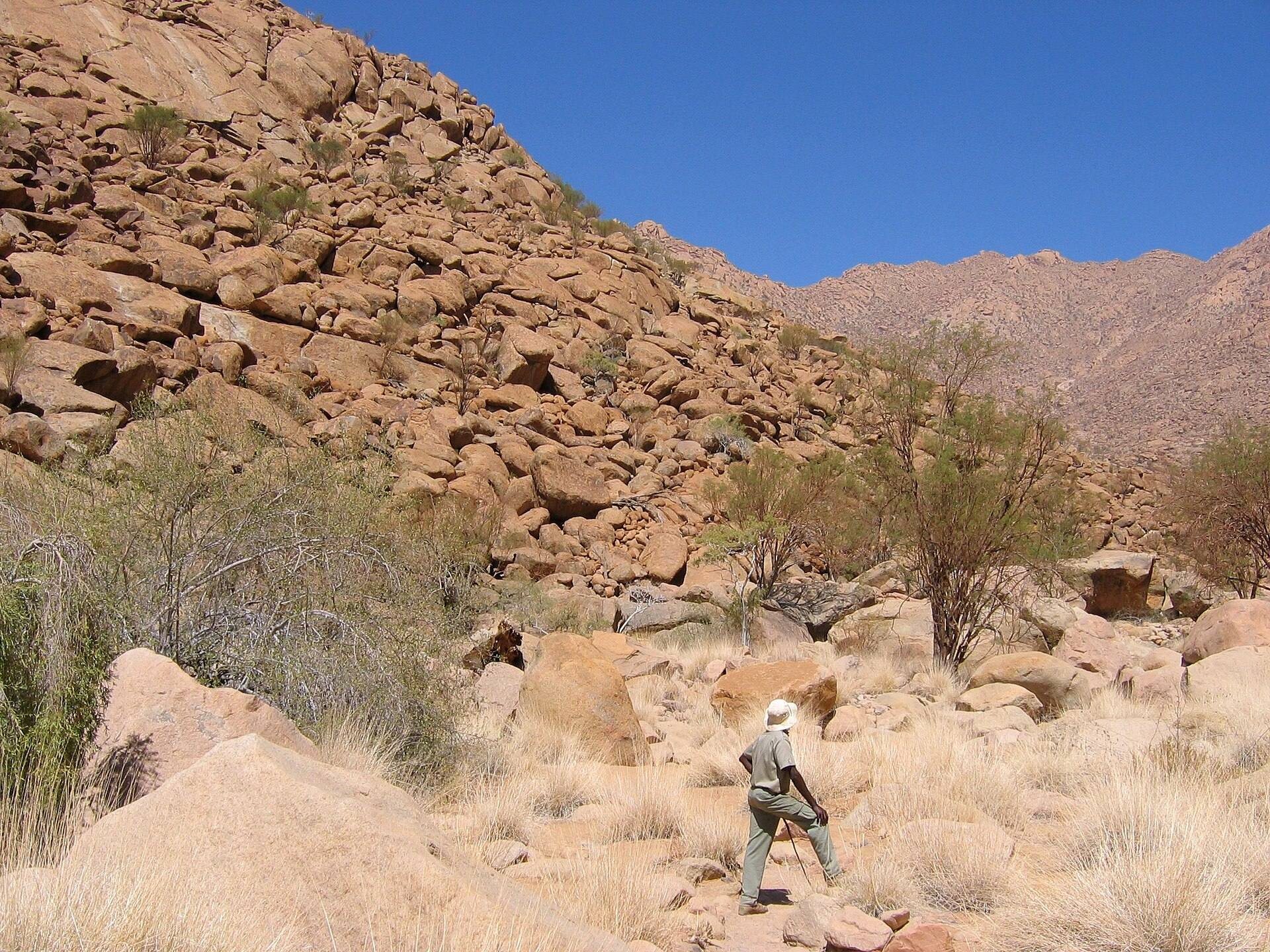
The White Lady is a San rock-art complex at Arixa Ams in Namibia, within the Brandberg Massif of Damaraland near Uis. The paintings are generally considered to be at least about 1,800 years old and form part of a much larger San rock-art tradition across the massif.
Discovery and changing interpretations
Reinhard Maack, a German explorer, geologist, topographer, and cartographer surveying the Brandberg for the German colonial authorities, found the paintings in 1918. He made several hand-drawn copies that were later sent or published in Europe. Maack described the principal human figure as a “warrior” and commented on what he regarded as an Egyptian-Mediterranean appearance.
In 1929, Maack’s notes came to the attention of the French anthropologist and archaeologist Henri Breuil in Cape Town. Breuil compared the central figure with athlete figures from Knossos, an important archaeological site on Crete associated with the Minoan civilization. He suggested that travelers from the eastern Mediterranean might have reached the Brandberg, and introduced the name “White Lady.” After visiting the site in 1945, he continued to publish theories proposing a Mediterranean origin.
Breuil’s interpretation encouraged later claims of European, Middle Eastern, and specifically Phoenician origins. The Phoenicians were an ancient seafaring people of the eastern Mediterranean. These theories were rejected or largely abandoned during the second half of the twentieth century, while attribution to San artists became the prevailing interpretation. Some earlier non-African theories also reflected racist attempts in southern Africa to deny the San and other African peoples authorship of sophisticated ancient art.
Protection and scientific study
The paintings have deteriorated since their discovery. For several decades, visitors poured water over them to intensify their colors for photographs, causing rapid fading. The site is now protected as Namibian national heritage, and access is restricted to authorized or official guides. Bags and bottles are excluded from the final part of the approach to help protect the paintings.
Chromatographic analysis, a chemical method used to study paint composition and aging, found that the pigments no longer contain the proteins originally present in them. The Brandberg contains more than 1,000 San-painted rock surfaces, with over 45,000 human and animal figures across the massif, placing the White Lady complex within a wider regional tradition that also extends elsewhere in Damaraland.
Remains
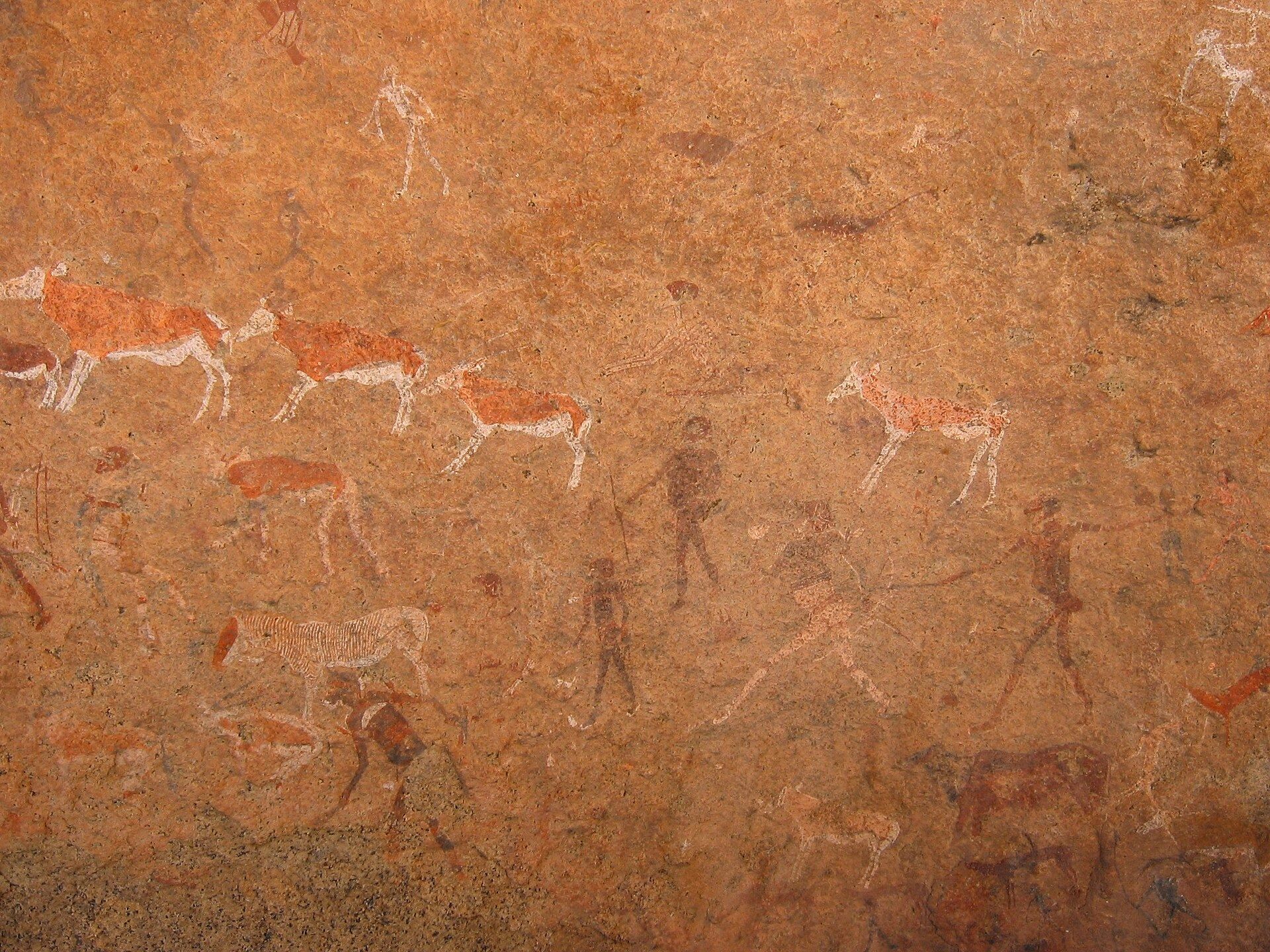
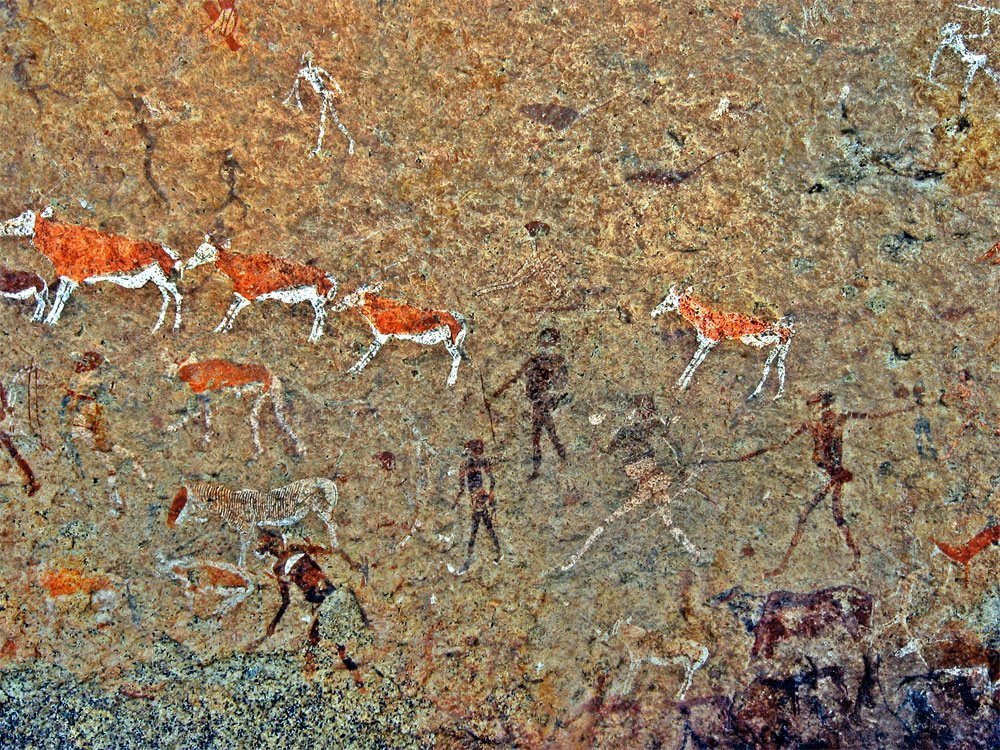
The paintings occupy a small natural rock shelter, meaning an overhang or shallow cave that offers partial protection from weather. Known as Maack Shelter, it lies deep within the Brandberg Massif in the normally dry Tsisab Gorge. The White Lady Group covers a rock panel approximately 5.5 by 1.5 metres and contains numerous human and animal figures, including several probably depicted oryxes, large antelopes found in southern Africa.
The painted figures
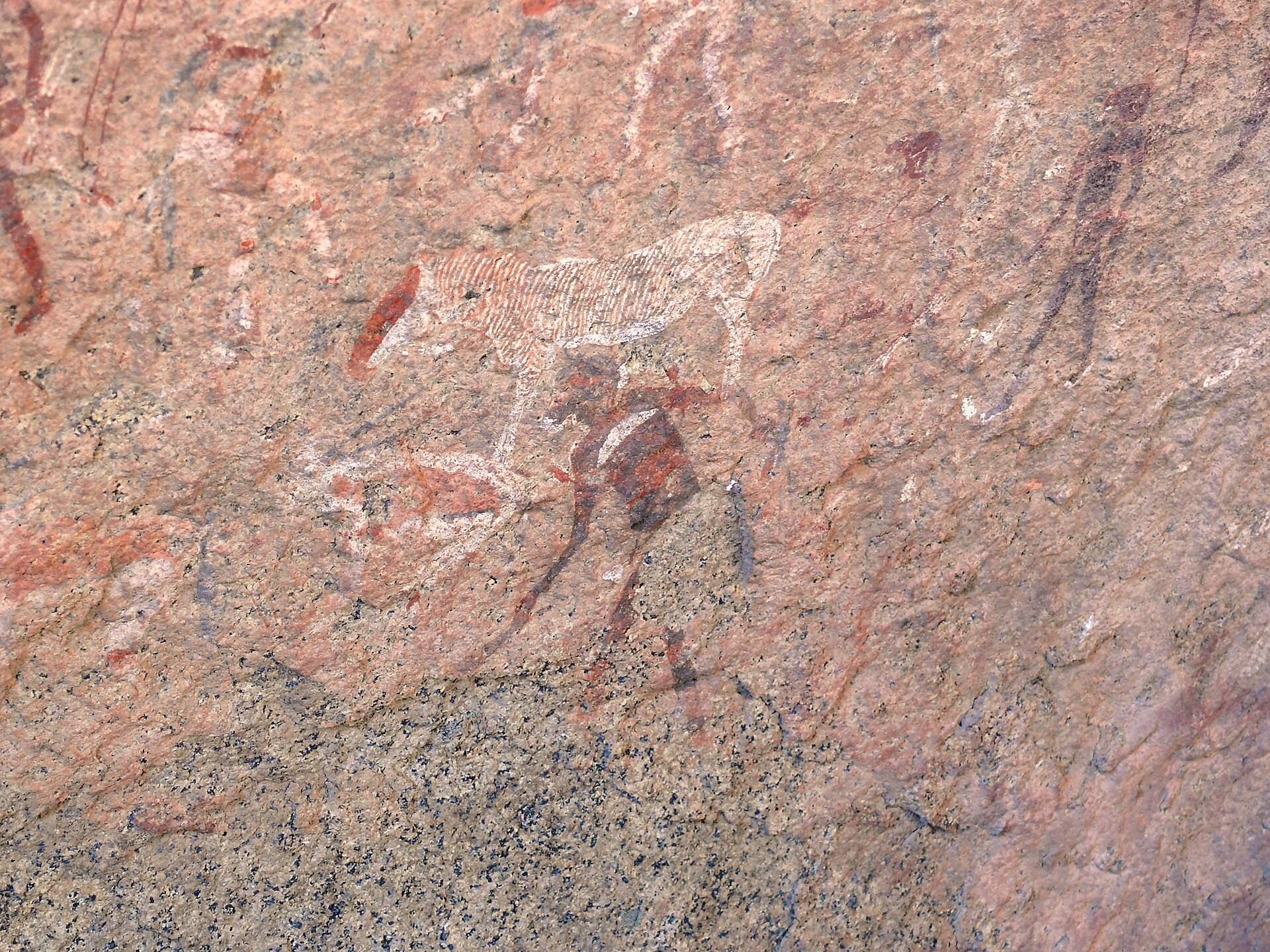
The figure called the White Lady is the most detailed human image in the group, measuring approximately 39.5 by 29 centimetres. Other human figures are less detailed and appear predominantly black or predominantly white. All the other human figures wear some form of footwear.
The principal figure has decorative coverings or attachments on the arms, elbows, knees, pelvis, and chest. The figure may also have a genital ornament or garment, holds a bow in one hand, and carries an object variously interpreted as a rattle, cup, or goblet in the other. The pale appearance of the arms and legs has been understood either as body paint or as attached decorative elements. One oryx has distinctly human legs, creating a notable transformation within the painted composition.
Interpretations of the scene
The composition is generally interpreted as a ritual dance, with the White Lady understood by many interpretations to be a shaman, a ritual specialist believed to mediate between human and supernatural realms. This identification describes an interpretation of the scene rather than an established personal identity. An alternative reading sees the composition as a hunting episode because of the bow and oryxes. Another regards the figure as a young person whose body was covered with white clay during a ritual, possibly one connected with circumcision.
Paint and present condition
The pigments probably include ochre, charcoal, manganese, iron-rich stone powders, hematite, and calcium carbonate. Binding agents, which help paint adhere to rock, include egg white, blood serum, casein, and other organic liquids. The paintings have faded and suffered severe damage. A metal wire mesh formerly placed in front of them was replaced by two metal bars after visitor protests, improving visibility while retaining a protective barrier.