Kotosh: A Preceramic Ceremonial Site in Peru
Site at a Glance
- Rating
- 4.3
- Popularity
- Medium
- Country
- Peru
- Primary era
- Bronze Age
- Eras represented
- Bronze Age, Iron Age, Classical
- Civilizations
- Unclassified
- Site type
- Religious
- Remains
- Sanctuary
On this page6 sections
History
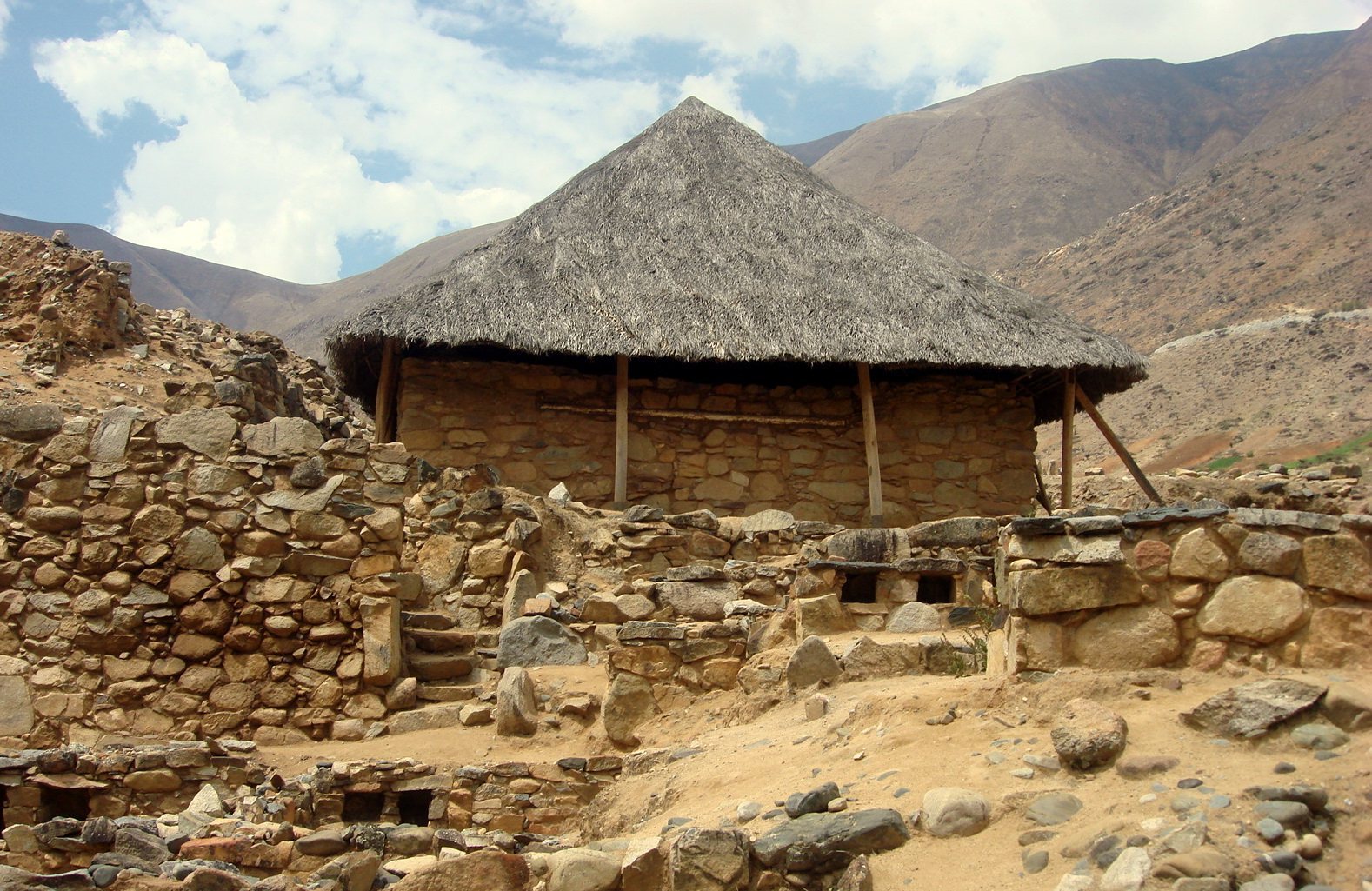
Kotosh is an archaeological site near Huánuco in Peru, on a small plain beside the right bank of the Higueras River. Its superimposed buildings preserve a long sequence of occupation from the Late Archaic, the late preceramic period before widespread pottery production in the Andes, into the Early Intermediate period. The site is especially known for the Temple of the Crossed Hands, a ceremonial building dating to around 1800 BC and associated with an early Andean religious tradition.
Early Occupation and Ceramic Phases
The earliest recognized phase, Kotosh Mito, dates to around 1800 BC and was preceramic. It belongs to the Kotosh Religious Tradition, also called the Mito Tradition or the Tradition of the Sacred Fire Altars. This archaeological classification describes ceremonial buildings with sunken floors and central hearths, apparently used for burning offerings. Related remains at La Galgada, Huaricoto, Tantamayo, Caral, and Huacaloma indicate that the pattern extended across the north-central Peruvian Andes, from the coast toward the forest margin.
The Wairajirca phase, dated approximately to 1750 to 1150 BC, introduced pottery at Kotosh. Its vessels were gray or polished brown and black, with incised designs and decoration applied after firing in red, white, and yellow. The Kotosh phase, dated to around 1000 BC, is associated with maize cultivation. Its pottery included engraved and sgraffito decoration, made by scratching through a surface layer, as well as stirrup handles, which rise above vessels in a looped form.
Later occupation continued through the Chavín phase, whose pottery was associated with Chavín, a major Formative-period cultural tradition of the ancient Peruvian Andes known for distinctive ceramics and religious imagery. The Sajarapatac, San Blas, and Higueras phases belonged to the Early Intermediate period, a later Andean era marked by regional cultural and political developments after the Formative period. Pottery from the Sajarapatac and San Blas phases was painted white over red paste.
Rediscovery and Archaeological Interpretation
During the Viceroyalty of Peru, Kotosh was regarded as a pre-Hispanic huaca, a sacred place or ancient ceremonial monument in the Andean cultural world. Treasure hunters looted the site, and before its rediscovery in the 1930s the remains appeared to be a natural mound. In 1934, Javier Pulgar Vidal identified pre-Inca pottery fragments there. Julio César Tello visited the following year, recognized the site’s archaeological importance, and connected its pottery with Chavín pottery. He interpreted Kotosh as an important link in the emergence of Peruvian civilization and in the movement of cultural traditions between the jungle and the highlands.
Research resumed in 1960, when the University of Tokyo sent an expedition directed by Seiichi Izumi, with Toshinico Sono, Kazuo Terada, and other specialists. The team cleared the remains of a preceramic sanctuary later named the Temple of the Crossed Hands because of its modeled clay reliefs. Izumi returned with a larger team in 1963, and the temple was fully excavated. The absence of pottery in the building confirmed its preceramic character and supported an approximate date around 1800 BC. Pottery first appeared in the structure immediately above it, known as the Temple of the Niches, helping establish Kotosh’s long ceramic sequence into the Early Intermediate period.
Kotosh is regarded as a very early example of religious architecture in Peru and the Americas. The meaning of the Crossed Hands reliefs remains uncertain. Japanese researchers proposed associations with friendship, approach, or benevolence, while other interpretations connect them with a religious rite. The reliefs may also have formed part of a larger effigy whose remaining sections no longer survive. Kotosh is recognized as Cultural Heritage of the Nation of Peru.
Remains
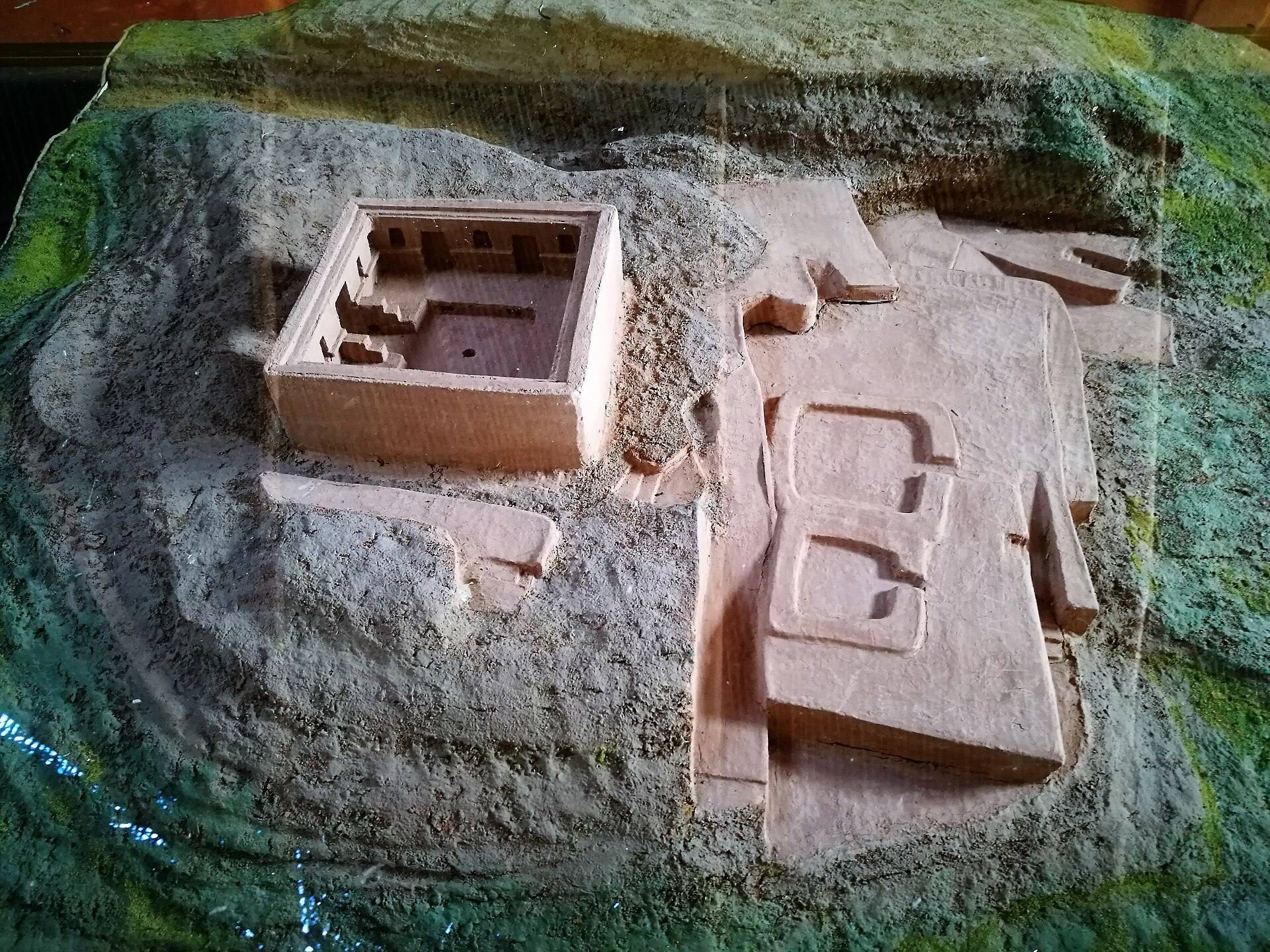
The site is formed by buildings placed one above another on platforms filled with earth, rounded stones, worked stones, and clay. The structures were built from cut stone set in clay and generally had quadrangular plans. Individual rooms were usually about 4 to 6 meters long, although some structures exceeded 10 meters. Rooms had no windows and probably carried flat roofs. Their floors were arranged on two levels, with a lower sunken area surrounded by a raised surface that functioned as a bench.
Rooms and Ceremonial Installations
A small pit in the center of each lower floor served as a hearth. An underground ventilation channel connected the hearth to the exterior and carried smoke away from the room. Interior walls, and sometimes the walls around the sunken floors, contained niches of different sizes. Some rooms also carried simple paintings or reliefs depicting crossed arms. These recurring features define the architectural and ritual pattern associated with the Kotosh Religious Tradition.
Temple of the Crossed Hands
The Temple of the Crossed Hands is a rectangular ceremonial building measuring approximately 9.5 by 9.3 meters. Its entrance was through a doorway about 2.15 meters high. The walls rose approximately 2.4 to 2.8 meters and were covered with fine white-cream clay plaster. Niches and large trapezoidal recesses shaped the interior surfaces.
Under two niches, modeled terracotta reliefs represent crossed arms or hands. They were carefully protected during excavation, although their original meaning remains uncertain. The reliefs may have belonged to a larger effigy whose other parts no longer survive. Like other buildings linked with the Kotosh tradition, the temple had a sunken lower floor, a central hearth, and an underground conduit that carried smoke outside.